
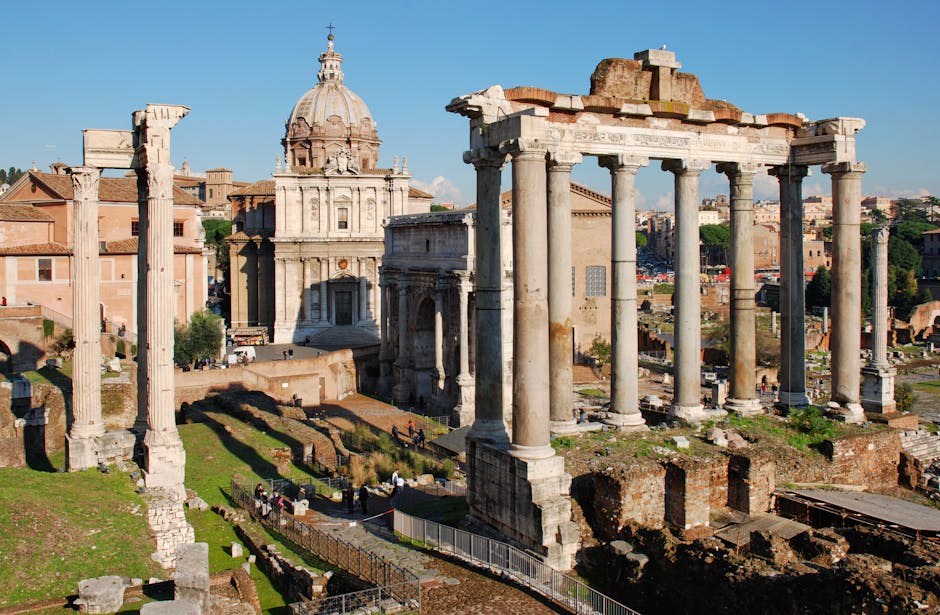
Introduction: The Triumph and Tragedy of the Roman Empire
The Roman Empire, once the mightiest civilization the world had ever seen, fascinates historians and enthusiasts alike with its remarkable narrative woven over centuries. Imagine a city founded in the 8th century BC that would grow to dominate the Mediterranean basin, the terrain of Europe, and parts of Asia and North Africa. The civilization was a staggering tapestry of conquests, cultural evolutions, and political intrigue. With its influence still felt today, the empire’s story is not merely one of territorial expansion but also one of significant advancements in engineering, law, and governance. Yet, the empire’s splendid arc of history is juxtaposed with a poignant decline, inviting curiosity about how such grandeur could crumble. The Roman Empire is a poignant reminder that all great civilizations are subject to the forces of human behavior, political upheaval, and social change.
Historical Background and Context
The ancient city of Rome was founded in 753 BC, according to myth, by Romulus and Remus. Initially a small settlement, it grew rapidly due to its strategic location on the Italian Peninsula and its access to the Mediterranean Sea. By the 509 BC establishment of the Roman Republic, the framework for expansion was set. The Republic’s political system featured a complex mix of democratic and oligarchic elements that allowed for a balance of power.
Rome’s military prowess became legendary as it engaged in numerous conflicts, including the Punic Wars against Carthage from 264 BC to 146 BC, which not only showcased the military might of Rome but also helped it gain control over the western Mediterranean. The establishment of the Roman Empire came after a series of civil wars and the rise of Julius Caesar, who was appointed dictator for life in 44 BC, only to be assassinated the same year, leading to a power vacuum that ultimately resulted in Augustus becoming the first emperor in 27 BC.
The empire’s aerial expansion continued with conquests in Europe, North Africa, and parts of Asia, marking a golden age characterized by peace, stability, and economic prosperity known as the Pax Romana (27 BC – AD 180). Such affluence facilitated the exchange of goods and ideas, promoting a blend of cultures that contributed to Roman innovation, from aqueducts to monumental architecture like the Colosseum.
However, the subsequent centuries saw a decline shaped by economic troubles, military overreach, invasions from barbarian tribes, and internal strife. The division of the empire into Eastern and Western halves in AD 285 by Emperor Diocletian marked a critical juncture in its history. Despite the resilience of the Eastern Roman Empire, known as the Byzantine Empire, the Western Roman Empire succumbed to various pressures and officially fell in AD 476. Understanding the complex factors behind the rise and fall of this powerful empire provides vital insights into the nature of civilization itself.
Key Events, Battles, and Developments
The Punic Wars (264 BC – 146 BC)
These three wars between Rome and Carthage were pivotal in establishing Rome’s dominance. The First Punic War (264–241 BC) was largely a naval conflict, with Rome’s emergence as a major naval force following the Battle of Mylae in 260 BC. The Second Punic War (218–201 BC) saw Hannibal’s legendary crossing of the Alps and his decisive victories at battles like the Battle of Cannae in 216 BC. However, Rome ultimately triumphed in 202 BC at the Battle of Zama, leading to the destruction of Carthage in the Third Punic War.
Julius Caesar’s Ascendancy (49 BC – 44 BC)
Julius Caesar’s crossing of the Rubicon River in 49 BC epitomized defiance against the Senate, igniting a civil war. His conquest of Gaul (58–50 BC) not only expanded Roman territory but also endeared him to the Roman populace. Caesar declared himself dictator for life, paving the way for monumental reforms and centralization of authority. His assassination on the Ides of March in 44 BC illustrated the political tensions of the era and the complexities of power in Roman society.
The Establishment of the Empire (27 BC)
Following Caesar’s death, a power struggle led to the rise of Augustus, who established the Roman Empire. Augustus’ reign initiated the Pax Romana period, characterized by relative peace across the empire, infrastructural development, and the spread of culture and trade.
The Year of the Four Emperors (AD 69)
This year marked a significant crisis in Rome, with Galba, Otho, Vitellius, and Vespasian all vying for power in rapid succession. Vespasian ultimately emerged victorious, stabilizing the empire after a year of turmoil, reinforcing the role of the Julio-Claudian imperial line.
The Crisis of the Third Century (AD 235-284)
Marked by economic instability, military defeats, and plagues, the Crisis of the Third Century led to a fragmentation of the empire into independent regions. The empire’s recovery began under Emperor Aurelian, who reunited many territories.
The Fall of the Western Roman Empire (AD 476)
The deposition of the last emperor, Romulus Augustulus, by the Germanic king Odoacer symbolizes the traditional date of the fall of the Western Roman Empire. This event marked a definitive end to centuries of Roman civilization in the west and set the stage for what would become the Middle Ages.
Important Figures and Their Roles
Julius Caesar
Perhaps the most famous figure in Roman history, Julius Caesar’s influence transcends his military conquests. A skilled politician, he implemented vast reforms across the empire, including changes to the calendar (the Julian calendar), and fostered public works projects. His ambition and disregard for the Senate set the stage for the end of the Roman Republic and the rise of imperial governance.
Augustus (Gaius Octavius)
Recognized as the first Roman emperor, Augustus initiated a transformative era in Roman history. His policies redefined governance and established a framework that balanced the needs of the Senate while ensuring imperial authority. He also expanded the empire’s borders and invested in infrastructure, promoting the arts.
Nero
Known for his extravagance and tyrannical rule, Nero typified the challenges faced during the Julio-Claudian period. His reign saw considerable advancements in arts but was haunted by controversies, including accusations of fires set to rebuild Rome in his image.
Diocletian
Diocletian’s reign marked a critical transformation in the administrative structure of the Roman Empire. He enacted significant reforms to stabilize the empire amid chaos, dividing it into a tetrarchy to ensure more efficient governance. His efforts delayed the inevitable decline of the Western Empire.
Causes and Consequences
Causes of Decline
The factors that contributed to the decline of the Roman Empire were multifaceted. Economic strife and over-reliance on slave labor undermined agricultural productivity, while military overreach stretched resources thin. Social unrest and class disparities created internal conflict, further complicating governance as emperors struggled to maintain control over diverse territories.
Consequences of Fall
The fall of the Roman Empire led to significant consequences that reverberated throughout history. The political vacuum left behind spurred the rise of barbarian kingdoms and laid the groundwork for the feudal system in medieval Europe. The fragmentation of the once-unified empire resulted in various cultures emerging, contributing to the rich tapestry of European civilization.
Global Impact and Legacy
The legacy of the Roman Empire is profound; its contributions to law, governance, and engineering remain critical in contemporary societies. Roman law principles have influenced modern legal systems globally, while concepts of citizenship and governance continue to shape democratic ideals. Architectural innovations such as aqueducts and roads laid the groundwork for urban development. Furthermore, the Latin language evolved into the Romance languages spoken by millions today, reflecting the empire’s cultural impact.
Fascinating Little-Known Facts
1. The Roman Empire was known to have an extensive road system, totaling over 250,000 miles, which facilitated trade and military movement.
2. Emperor Gaius Caligula was known to have allegedly appointed his horse, Incitatus, as a consul, reflecting the eccentricities of some emperors.
3. The role of women in the Roman Empire was more dynamic than often portrayed; various women, such as Livia Drusilla, wielded substantial influence over political decisions.
Conclusion: The Relevance of Roman History Today
The history of the Roman Empire serves as a powerful reminder of our shared human experience. The empire’s rise and fall encapsulate themes of ambition, governance, and societal evolution that continue to be relevant today. Understanding these dynamics can illuminate contemporary issues ranging from political corruption to the complexities of multicultural governance. As we confront modern challenges, the lessons derived from the Roman narrative can offer valuable perspectives on resilience, adaptability, and the cyclical nature of history.