
Introduction: The Twilight of an Empire
The fall of the Byzantine Empire in 1453 stands as one of the most significant turning points in world history. This event not only marked the end of a civilization that had lasted over a thousand years but also heralded the rise of the Ottoman Empire, which would reshape the political landscape of Europe and the Middle East. The enchanting city of Constantinople, once the jewel of the Roman Empire and a bastion of Christian civilization, fell to the relentless tides of change that swept across the globe. As the city’s walls crumbled under the weight of cannon fire and the ferocity of determination from Sultan Mehmed II’s forces, the echoes of its rich history intermingled with the cries of the defeated. This article will delve into the intricate tapestry of the Byzantine Empire, exploring its historical context, key events leading to its demise, prominent figures who shaped its fate, and the enduring consequences of its fall.
But why does the fall of an empire that suffered decline during the late Middle Ages resonate with us today? In an era where geopolitical tensions are frequently rekindled, understanding the past allows us to reflect critically on our own time. The transition from one great power to another offers invaluable lessons on the complexities of cultural interactions, military strategy, and the ironies of human ambition.
Join us as we traverse the annals of history, shedding light on the Byzantine Empire’s legacy while examining how its fall still reverberates through modern society.
Historical Background and Context
The Byzantine Empire, often referred to as the Eastern Roman Empire, originated as the eastern half of the Roman Empire. Its capital, Constantinople, was founded by Emperor Constantine the Great in 330 AD and became a bastion of Christianity, culture, and trade. Positioned strategically between Europe and Asia, its geographical location facilitated trade routes connecting diverse cultures and economies. The empire fostered advancements in art, literature, architecture, and law, which were crucial in shaping the medieval world.
Despite its cultural and economic success, the Byzantine Empire faced numerous challenges over the centuries. The rise of Islam in the 7th century, coupled with internal strife and external invasions, diminished its territories and resources. The empire’s borders continually shrank, losing significant lands to the Seljuk Turks and, later, the Ottoman Empire. By the 14th century, the Byzantine Empire was a mere shadow of its former self, having lost vast swathes of its territory and population.
Unequal socio-economic conditions and political corruption exacerbated its vulnerabilities. The Byzantine aristocracy often prioritized personal gain over the common wealth, leading to a divide between the elites and the impoverished masses. Additionally, external threats grew ever more menacing; the rise of the Ottoman Turks, under leaders such as Osman I and Orhan I, began to encroach upon Byzantine territories, culminating in a series of devastating battles.
Throughout the later medieval period, the empire struggled to maintain a semblance of unity and defense. A lack of cohesion within its leadership, coupled with the consequences of the Fourth Crusade in 1204, which resulted in a brief Latin occupation of Constantinople, left profound scars. By the time we reached the 15th century, the Byzantine Empire was grappling with internal conflicts and external aggression that would ultimately lead to its downfall.
Key Events, Battles, and Developments
To understand the fall of the Byzantine Empire, one must examine the critical events that paved the way for its demise. Each significant occurrence served as a stepping stone towards the inevitable collapse of the empire in 1453.
The Conquests of the Ottoman Empire
In the late 13th and early 14th centuries, the nascent Ottoman Empire began to flourish. With military prowess and strategic alliances, the Ottomans expanded rapidly, capturing key territories once held by the Byzantines. The conquest of Bursa in 1306 marked the foundation of Ottoman power and was soon followed by the capture of Adrianople (modern Edirne) in 1361. These events weakened the Byzantine hold on its remaining territories and established the Ottomans as a formidable force.
The Fall of Constantinople: Prelude to Disaster
The 15th century heralded the onset of existential threats to the Byzantine Empire. Between 1431 and 1444, a series of failed attempts to halt Ottoman expansion were made by Byzantine leaders, including the famous John VIII Palaiologos, who sought aid from Western European powers.
One of the watershed moments leading to the fall of Constantinople was the Battle of Varna in 1444. This battle was fought between the Ottomans and a Christian coalition led by King Władysław III of Poland and Hungary. The defeat of the Christian forces virtually eliminated military hope for the Byzantines, emphasizing their isolation as they faced the Ottomans alone.
The Siege Begins
The culmination of the Byzantine struggle came in April 1453 when Sultan Mehmed II unleashed a full-scale siege on Constantinople. The defenders, led by Emperor Constantine XI, were vastly outnumbered. Historians estimate the Byzantine forces numbered around 7,000, contrasted sharply with Mehmed’s massive army of up to 100,000 troops.
The siege began on April 6, 1453, with artillery bombardments targeting the city’s formidable walls. The Ottomans utilized advanced firearm technology, such as the great bombards designed by urban, a Hungarian engineer, to breach the mighty Theodosian Walls. After weeks of relentless assaults, the walls were finally compromised on May 22, 1453.
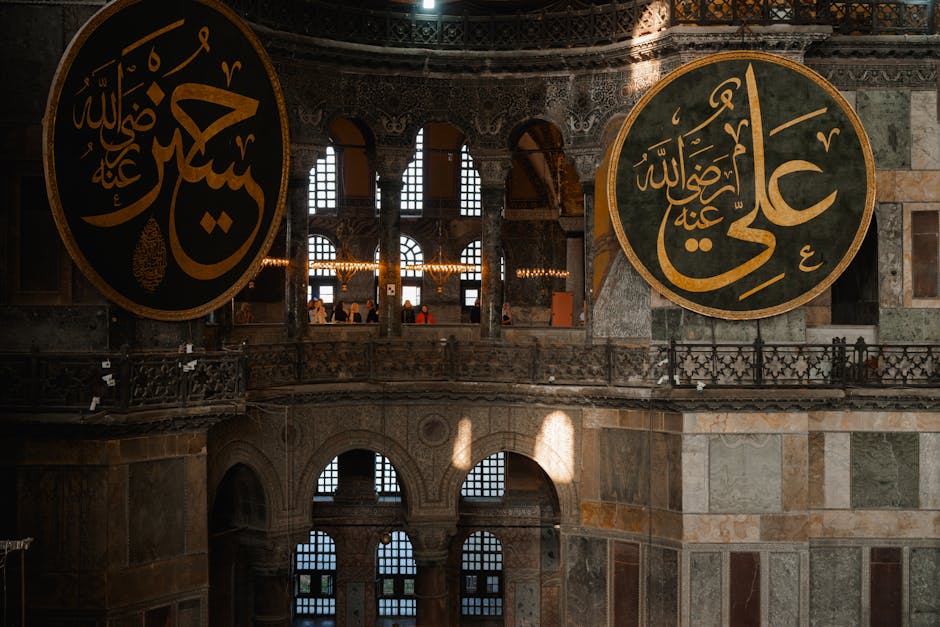
The final assault on May 29, 1453, saw Mehmed’s forces storm into the city, meeting fierce resistance from the defenders but ultimately overwhelming them. The first target for the Ottoman troops was the Hagia Sophia, a former cathedral adorned with beautiful mosaics and artifacts, which was then converted into a mosque. Emperor Constantine XI died during the final melee, earning him the title of the last Byzantine Emperor, a martyr whose defense of the city has been celebrated in subsequent history.
Important Figures and Their Roles
The fall of the Byzantine Empire was not solely the result of external pressures; key figures played pivotal roles throughout the saga.
Constantine XI Palaiologos
Emperor Constantine XI, the last Byzantine Emperor, exemplified courage and commitment to his people. His determination to defend Constantinople against overwhelming odds has turned him into a symbol of resistance. He sought military assistance from Western powers, but his pleas fell largely on deaf ears. In the face of adversity, he vowed to defend his city or die fighting for it—a promise he fulfilled on that fateful day in May 1453.
Mehmed II
Sultan Mehmed II, known as Mehmed the Conqueror, was as an astute military strategist and leader. His youthful ambitions were directed toward expanding Ottoman power and consolidating the territories under his control. By employing cutting-edge artillery technology and orchestrating effective tactics, he transformed the Ottomans into a dominant force in the region. His vision for Constantinople extended beyond conquest; he aimed to position it as the capital of his empire and a center of Islamic learning and culture.
Giovanni Caboto
Giovanni Caboto, commonly known as John Cabot, was an Italian explorer inspired by the discovery of new lands for European powers. While not directly involved in the fall of the Byzantine Empire, his expeditions reflect the wider shift in geopolitical interests occurring in Europe, as powers began to explore beyond the Mediterranean, turning their eyes toward the New World. This diversion of attention among European powers contributed to the isolation of the Byzantines during their hour of need.
Causes and Consequences
Causes of the Fall
The fall of the Byzantine Empire was precipitated by several interwoven factors. The empire’s vulnerability stemmed from long-standing internal divisions and cultural strife. The estrangement between the Catholic West and the Orthodox East, particularly after the Fourth Crusade in 1204, contributed significantly to a decline in Roman Catholic support for the Byzantine cause.
Moreover, external pressures from the rapidly growing Ottoman Empire compounded existing vulnerabilities. The conquest of critical territories and cities by the Ottomans diverted resources away from Constantinople and produced a state of desperation among the Byzantines. Recurrent military defeats, especially at the hands of the Ottomans in previous decades, weakened the Empire’s resolve to rally support or effectively defend itself.
Consequences of the Fall
The fall of Constantinople marked the end of Christian rule in the ancient city, resulting in profound cultural and political ramifications. The world saw a shift in power dynamics in Eastern Europe, as the Ottoman Empire expanded its dominion over the Balkans, the Middle East, and Northern Africa.
Strategically, the capture of Constantinople transitioned the center of trade and culture from the Eastern Mediterranean to Istanbul, leading to significant economic changes and facilitating the rise of the Ottoman Empire as a dominant force. The Greek Orthodox Christians under Ottoman rule were kept on the margins, leading to a period of religious and cultural suppression, while the Ottomans sought to fortify their Muslim identity.
Global Impact and Legacy
The global impact of the Byzantine Empire’s fall extends far beyond its geographical confines. The power vacuum created by the empire’s collapse contributed to the bureaucratic global power structure that defined the modern state system.
Culturally, the fall precipitated the migration of scholars, artists, and theologians to Western Europe, thus igniting the flames of the Renaissance. The connection to ancient Roman and Greek philosophy was revived, catalyzing the intellectual resurgence that would shape the course of Western civilization for centuries to come.
Fascinating Little-Known Facts
Many aspects of the Byzantine Empire’s fall remain overshadowed by its more widely known narratives. One intriguing tidbit is that the Ottomans relied heavily on the expertise of captured Byzantine engineers and architects to bolster their fortifications and military technology. Additionally, the use of gunpowder artillery was revolutionary during this siege; it transformed the nature of warfare, resulting in a marked transition from traditional methods.
Furthermore, Emperor Constantine XI’s determination to govern a dying empire has led to countless legends and tales, including reports of him shedding his imperial garb and charging into battle incognito, a symbol of his absolute commitment to his city’s defense.
Conclusion: Modern Relevance
The fall of the Byzantine Empire serves as a poignant reminder of the intricate dynamics of political power and cultural identity. Modern societies can draw numerous parallels between the struggles of the Byzantines and contemporary challenges faced by nations worldwide. The fall highlights the importance of unity, adaptive governance, and the impact of external forces on national sovereignty.
By understanding the events that led to the fall of such a remarkable civilization, we can draw lessons about the significance of resilience during turbulent times. In a world increasingly characterized by geopolitical tensions and conflicts over resources, the Byzantine experience is a cautionary tale that emphasizes the virtues of diplomacy and the need for collaborative efforts among nations. Likewise, it showcases how cultural interchanges can foster innovation and collective growth, emphasizing the importance of open dialogue in maintaining peace and stability.