
Introduction
The fall of the Byzantine Empire is one of the most captivating and tragic narratives of history. Spanning over a millennium, from the establishment of Constantinople in 330 AD to its dramatic conquest by the Ottoman Turks in 1453, the Empire’s evolution mirrors the struggles, triumphs, and resilience of civilizations. Imagine a city, known as the ‘Queen of Cities,’ with sprawling walls and intricate mosaics, that for centuries stood as a bastion of Christianity and Greek-Roman heritage, crumbling under the weight of relentless sieges and transformations. Each stone of Constantinople whispers tales of valor, betrayal, and the relentless march of time that can reshape destinies. The significance of this moment stretches far beyond the walls of the ancient city; it resonates through global history, impacting trade routes, religious dynamics, and the very fabric of European politics.
As we delve into this historical saga, it is pivotal to recognize that this narrative is not merely about a city falling but rather about a civilization transitioning, navigating through the stormy seas of conflict and resilience. The Byzantine Empire, the continuation of the Eastern Roman Empire, was a melting pot of cultural exchanges, a bridge between east and west. Its ultimate fate wasn’t solely the result of invasion but intertwined with socio-political dynamics, economic challenges, and the evolving landscape of power. Join us as we explore the intricate tapestry of the Byzantine Empire’s decline, focusing on the pivotal moments, key players, and the profound implications of its fall, not just for the region but for the whole world.
Historical Background and Context
The Byzantine Empire, often hailed as the eastern extension of the Roman Empire, was established in 330 AD when Emperor Constantine the Great dedicated the city of Byzantium as the new capital, renaming it Constantinople. This strategic location, bridging Europe and Asia, made it a critical hub for trade and cultural exchanges, facilitating the blending of Greco-Roman traditions with Eastern influences. The Empire flourished during its early years, especially under the rule of Emperor Justinian I (527-565), who sought to reconquer the lost western territories of Rome and implemented legal reforms that would leave a profound impact on subsequent European legal systems.
By the 11th century, however, the Empire began to face significant internal strife, military setbacks, and external pressures. The Seljuk Turks’ victory at the Battle of Manzikert in 1071 significantly weakened Byzantine control over Anatolia, leading to the progressive loss of territories and the rise of regional powers. Concurrently, the First Crusade (1096-1099) added to the complexity of the Empire’s situation; initially perceived as a potential ally, the western Crusaders ultimately contributed to further fragmentation and conflict within Byzantine lands.
Throughout the 12th and 13th centuries, the Empire’s fortunes fluctuated, with intermittent periods of recovery overshadowed by civil conflicts and external threats. The Fourth Crusade in 1204 was particularly devastating; instead of reaching the Holy Land, the Crusaders turned their sights towards Constantinople, leading to a brutal sack of the city. For the next several decades, Byzantium fell under the control of Latin rulers, only to be reestablished in 1261 under the Palaiologos dynasty. Despite this restoration, the Empire had significantly diminished and was beset by financial difficulties and territorial losses.
By the late 14th century, the Ottoman Empire emerged as a formidable power in the region, exploiting the weakened Byzantine state. The Byzantine rulers, notably Emperor Manuel II Palaiologos, sought diplomatic solutions, attempting to garner Western support against the Ottomans, but these efforts were hampered by religious divisions and a lack of resources. By the early 15th century, the Empire had become a shadow of its former self, with Constantinople itself encircled by Ottoman advances. The socio-political and economic landscape of the Balkans and Asia Minor had shifted dramatically, leading to a precarious existence for the Byzantines, culminating in the Siege of Constantinople in 1453, a defining moment in both European and Middle Eastern history.
Key Events, Battles, and Developments
The Battle of Manzikert (1071)
A turning point in Byzantine history, the Battle of Manzikert, fought on August 26, 1071, pitted the Byzantine army against the Seljuk Turks led by Alp Arslan. The Byzantines, commanded by Emperor Romanos IV Diogenes, faced a catastrophic defeat that marked the beginning of the end for Byzantine control over Anatolia. The loss not only diminished military morale but also opened the gates for Turkish settlements, effectively altering the demographic and cultural fabric of the region forever. This defeat led to internal dissent within the Empire, galvanizing local lords and factions to assert their independence.
The First Crusade (1096-1099)
The First Crusade, launched in response to Pope Urban II’s call in 1095, intended to reclaim Jerusalem from Muslim control. However, for the Byzantine Empire, the Crusade had mixed outcomes. Initially a source of hope, the crusaders’ arrival led to increased tensions with the local populace and heightened military conflicts. Although they successfully captured Jerusalem in 1099, the crusaders also established several Latin states, which further eroded Byzantine authority in the region. The Crusades opened trade routes and cultural exchanges but also laid the groundwork for divisions that would prove detrimental in later centuries.
The Sack of Constantinople (1204)
Perhaps the most infamous event in Byzantine history, the Sack of Constantinople during the Fourth Crusade marked a critical blow to the Empire. In April 1204, crusaders diverted from their original mission and attacked the well-defended city, resulting in three days of rampant looting, destruction, and violence. The wealth of the city was plundered, countless religious artifacts were desecrated, and the administrative structure of the Empire was left in shambles. The establishment of the Latin Empire, lasting until 1261, significantly weakened Byzantine cultural and political life, setting the stage for its eventual decline.
Recapture of Constantinople (1261)
In 1261, Byzantine forces managed to retake Constantinople, marking a brief resurgence of the Empire under the Palaiologos dynasty. However, this recovery was superficial. The Empire was fragmented and continuously under threat from external forces, particularly from the rising Ottoman power, which gradually began engulfing the surrounding territories. Although a semblance of stability was regained, the underlying fragility was evident, making the Empire vulnerable to further incursions.
The Siege of Constantinople (1453)
The final assault on the Byzantine capital occurred on May 29, 1453, marking the end of a storied era. Led by Sultan Mehmed II, the Ottomans employed advanced artillery, including massive cannons, to breach the city’s formidable walls. The Byzantine defenders, led by Emperor Constantine XI, fought valiantly but were ultimately overwhelmed. The city’s fall symbolized not only the end of the Byzantine Empire but also the transition of power from Christian Europe to the Islamic Ottoman Empire. The impact of this siege reverberated through the ages, reshaping the political and cultural landscape of Europe and Asia.
Important Figures and Their Roles
Emperor Constantine the Great (c. 272-337)
As the founder of Constantinople and the first Roman emperor to convert to Christianity, Constantine’s legacy set the stage for the Byzantine Empire’s identity. His establishment of the city as a capital significantly influenced both the political and religious landscape of the time, allowing for the dissemination of Christianity as a unifying factor across the Empire.
Emperor Justinian I (482-565)
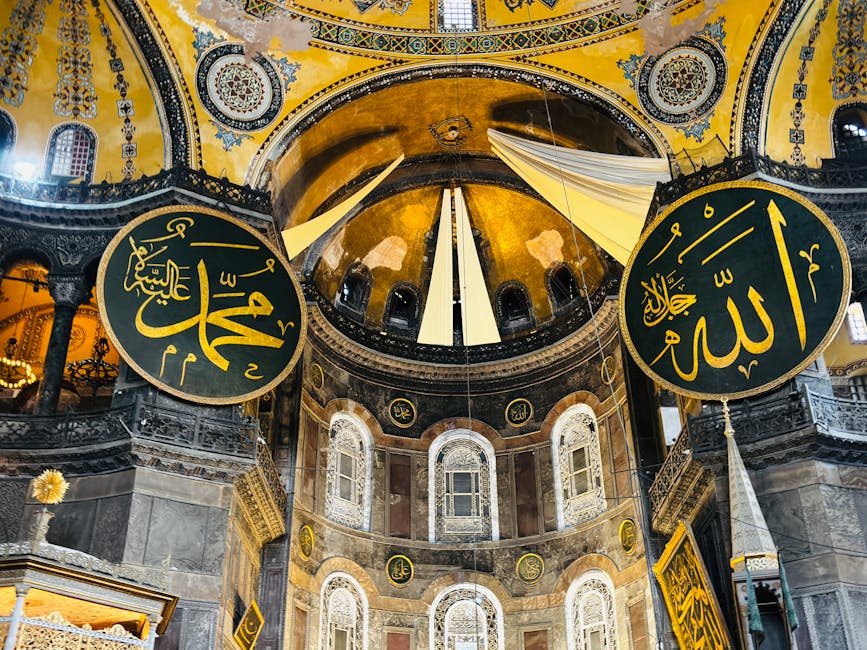
Justinian I is often regarded as one of the greatest Byzantine emperors. His ambitious military campaigns sought to reclaim the western provinces of the former Roman Empire, and his codification of Roman law into the Corpus Juris Civilis remains influential in legal systems today. His reign coincided with the Empire’s cultural zenith, epitomized by projects such as the Hagia Sophia. His efforts laid critical foundations for governance and legal practices in Europe.
Emperor Manuel II Palaiologos (1350-1425)
Manuel II Palaiologos navigated a challenging period marked by Ottoman expansion. His diplomatic attempts, including forging alliances with Western powers, reflected the Empire’s desperate yet resilient struggle for survival. His travels to Western Europe, where he advocated for aid against the Ottomans, highlight the complexities of religion and politics he faced. Despite his efforts, the Byzantine Empire continued to decline under mounting pressures.
Sultan Mehmed II (1432-1481)
Mehmed II, known as Mehmed the Conqueror, played a pivotal role in the fall of Constantinople. His strategic military tactics, including the utilization of unprecedented artillery bombardments, showcased the evolution of warfare that spelled doom for the Byzantine defenses. His conquest in 1453 not only marked the end of the Byzantine Empire but also established his reputation as a formidable ruler, laying the groundwork for the Ottoman Empire’s expansion into Europe.
Causes and Consequences
Causes of the Fall
The decline of the Byzantine Empire resulted from a confluence of factors. Internally, political divisions and civil wars weakened the centralized authority, leading to power struggles among aristocratic factions. Financial mismanagement and reliance on foreign mercenaries further crippled the military capabilities. Externally, the rise of the Ottoman Empire, coupled with the strategic errors of the Byzantine leadership, compounded these internal issues, creating an environment ripe for conquest.
Consequences of the Fall
The fall of Constantinople in 1453 had far-reaching consequences. It marked the end of Christian Byzantium, catalyzing the spread of Islam in the Balkans. The conquest transformed Constantinople into Istanbul, reshaping trade routes and facilitating the Ottomans’ control over the Mediterranean and beyond. This event prompted a significant reorientation in European geopolitics and culture, influencing the Renaissance movement as Greek scholars fled the city, bringing with them invaluable knowledge and texts. The consequences extended beyond immediate territorial losses, impacting religious dynamics and sowing seeds of conflict that would shape emergent national identities in Europe.
Global Impact and Legacy
The legacy of the Byzantine Empire’s fall persists in contemporary society. Its cultural contributions lay the groundwork for the Renaissance, with renewed interest in ancient Greek and Roman philosophies, art, and architecture. The Eastern Orthodox Church, which maintained its traditions and doctrines amidst Ottoman rule, continued to influence religious practices in Eastern Europe, notably in Russia and the Balkans. The Ottomans, inheriting Byzantine administrative systems, went on to establish a vast empire that would leave an indelible mark on world history.
Moreover, the fall of Constantinople prompted a series of exploratory endeavors by European states seeking new trade routes. This shift eventually facilitated the Age of Discovery, dramatically altering global commerce and interactions among civilizations. The intricate dynamics arising from the fall continue to inform discussions on empire, culture, and the discord that has characterized Christian-Muslim relations over centuries.
Fascinating Little-Known Facts
1. The Byzantine Empire had a distinct Greek identity, yet continued to consider itself a continuation of the Roman Empire, often using Roman titles and symbols long after the Western Roman Empire fell.
2. The Ottomans employed an innovative military strategy, using large cannons to break the formidable walls of Constantinople, marking a turning point in siege warfare.
3. Emperor Constantine XI, the last Byzantine emperor, reportedly wore the imperial regalia during the final battle, proclaiming his commitment to defending the Empire until the very end.
4. Many Byzantine scholars migrated to the West after the fall, bringing with them critical texts that played a pivotal role in the European Renaissance.
5. The term “Byzantine” in modern parlance often connotes complexity and intrigue, reflecting the intricate politics and culture of the Empire.
Conclusion: Modern Relevance
The fall of the Byzantine Empire serves as a poignant reminder of the impermanence of power and the profound transformations that shape the course of history. In today’s world, the narratives surrounding empires and their legacies resonate through ongoing geopolitical tensions, cultural identities, and religious interactions. The multicultural exchanges spawned during the Byzantine era can still be felt, influencing contemporary societies worldwide. By reflecting on the lessons learned from the Byzantine decline, we can gain insight into current global challenges, especially in addressing divisions and fostering dialogue among diverse cultures. The echoes of the Byzantine Empire continue to remind us of the importance of resilience, adaptability, and the shared humanity that transcends time and borders.