
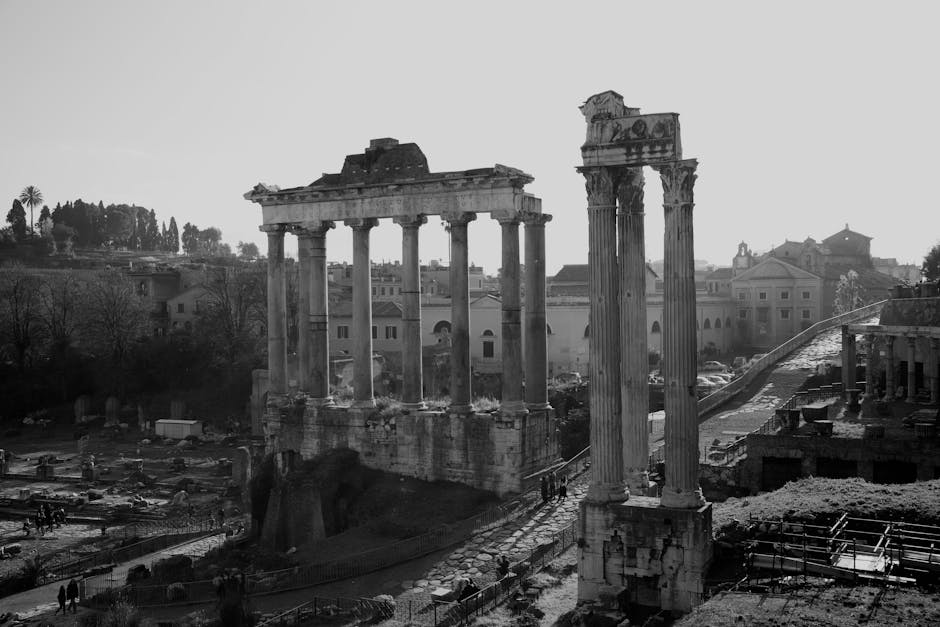
Introduction: The Eternal City’s Enduring Legacy
In the annals of history, few civilizations have left as profound an imprint on the world as ancient Rome. From its origins as a modest settlement on the banks of the Tiber River to its status as the sprawling heart of an empire that dominated vast territories across Europe, North Africa, and the Middle East, Rome’s legacy is as rich and complex as the city itself. But what is it about Rome that continues to inspire awe and fascination centuries after its fall? The ruins scattered across the Italian landscape, the monumental architecture, and the intricate mosaics whisper tales of glory and power, of arts and culture, of resilience in the face of adversities—carefully curated stories echoing through time. This article ventures into the depths of ancient Rome, examining its historical context, significant events, influential figures, and the repercussions of its rise and eventual decline.
But even as ancient Rome fell into disarray, its principles of governance, engineering, architecture, and law have survived and flourished, indelibly linking its legacy to our contemporary civilization. In a world where democracy is woven into the fabric of numerous societies, where public infrastructure continues to expand on Roman blueprints, and where legal systems echo Roman jurisprudence, the relevance of ancient Rome remains poignant. Join us on this journey as we delve into the foundations of the Roman Empire, explore its most significant moments, unravel the lives of its most remarkable figures, and examine the consequences of its enduring legacy.
Historical Background and Context
The roots of ancient Rome can be traced back to 753 B.C., founded by Romulus, who, according to legend, became the first king after engaging in a fratricidal conflict with his brother Remus. This mythical foundation sets the stage for over a millennium of evolution, struggle, and transformation. In its inception, Rome was merely a hamlet nestled among the hills, yet it possessed geographical advantages that would later contribute to its immense expansion. The city’s location at the center of the Italian peninsula provided access to fertile lands, ample resources, and strategic control over trade routes.
In the centuries following its founding, Rome underwent significant political and social changes. Initially ruled by kings, the power shifted dramatically in 509 B.C. when the monarchy was abolished, leading to the establishment of the Roman Republic. The Republic’s governance system, characterized by a complex structure of checks and balances, would set an enduring precedent for future democratic practices. The Senate emerged as a principal political body representing the elite patrician class, while the plebeians, representing the common folk, began to demand greater rights, leading to the Conflict of the Orders—a series of struggles for political equality.
During this pivotal period, Rome began to expand its territory, initially engaging in conflicts with neighboring tribes and eventually launching campaigns against significant powers like Carthage during the Punic Wars (264–146 B.C.). The result of these conflicts not only amplified Rome’s territory but also introduced new cultures, ideas, and economic benefits through military conquests. The integration of the conquered peoples into the Roman framework showcased Rome’s political acumen and adaptability, allowing Rome to absorb various influences and cultivate a diverse society.
By the end of the Republic in the early first century B.C., Rome faced an internal crisis characterized by political corruption, economic disparity, and social upheaval. The rise of powerful military generals such as Julius Caesar catalyzed the transition from a republican system to authoritarian rule, leading to the establishment of the Roman Empire in 27 B.C. when Augustus (formerly known as Octavian) was named the first emperor. The new imperial era heralded a time of unprecedented peace and prosperity, known as the Pax Romana, which lasted around 200 years, during which Rome truly flourished.
Key Events, Battles, and Developments
From the inception of Rome as a nascent city-state, it has been marked by a series of pivotal events and battles that shaped its trajectory and legacy. Each significant moment contributed intricately to the tapestry of Roman history, illustrating its rise and fall.
The Punic Wars (264–146 B.C.)
The ferocious confrontations between Rome and Carthage arose from economic rivalry and territorial disputes that ultimately engulfed the Mediterranean. The first Punic War (264–241 B.C.) initiated in Sicily, where a series of naval battles culminated in Rome’s victory and solidified its naval prowess. In the second Punic War (218–201 B.C.), the legendary general Hannibal famously crossed the Alps, inflicting staggering defeats on Roman legions at the Battles of Trebia, Lake Trasimene, and Zama. Rome eventually triumphed in 202 B.C., affirming its dominance in the Western Mediterranean.
The Ceasarean Era and Civil Wars
Julius Caesar’s ascent during the late Republic heralded radical transformations. His crossing of the Rubicon River in 49 B.C. signified a direct challenge to the Senate, sparking civil war. The key Battle of Pharsalus in 48 B.C. saw Caesar decisively defeat Pompey, a crucial rival. However, his subsequent assassination on the Ides of March in 44 B.C. unleashed further political turmoil, leading to the rise of Octavian and the establishment of the Roman Empire, cementing Augustus’s rule.
The Pax Romana (27 B.C. to A.D. 180)
This period marked a golden age in Roman history characterized by stability, cultural achievements, and territorial expansion. Under emperors like Augustus, Tiberius, and Hadrian, Rome saw the flourishing of arts, literature, and architecture—exemplified by projects like the construction of the Pantheon and the Colosseum, consolidating its influence across the empire.
Decline and Fall of the Western Roman Empire
As the empire sprawled, cracks began to appear. By the third century A.D., internal strife, economic problems, and barbarian invasions precipitated profound changes. The pivotal Battle of Adrianople in 378 A.D. showcased the vulnerability of Roman legions against the Gothic forces and symbolized the waning power of Rome.
In 395 A.D., the empire was divided into Eastern and Western regions for administrative efficiency, but this bifurcation further accelerated the fall of the Western Roman Empire. The notorious sack of Rome by the Visigoths in 410 A.D., followed by the fall of significant territories, culminated in the official end of the Western Roman Empire in 476 A.D., with the deposition of the last emperor, Romulus Augustulus. While the Eastern Roman Empire, known as the Byzantine Empire, survived until 1453, the fall of the West marked a pivotal shift in the course of Western history.
Important Figures and Their Roles
Ancient Rome comprises a remarkable roster of individuals whose influences transcended their time. Their legacies reverberated across nations and eras, shaping political ideology, military strategy, and cultural expressions.
Romulus and Remus
As the legendary founders of Rome, Romulus and Remus embody the spirit of Rome’s origins. Their tale underscores the themes of conflict and resilience inherent in Roman identity.
Julius Caesar
A towering figure in Roman history, Julius Caesar’s military conquests and political maneuvering dismantled the Republic and laid the groundwork for the Empire. His reforms in Rome, expansion of citizenship, and ambitious building programs steered Rome into a new era.
Augustus
As the first Roman Emperor, Augustus’ reign marked a transformation from republic to imperial rule, embodying a blend of power and public service. His influence extended over a vast territory, ushering in a time of peace and prosperity known as the Pax Romana.
Hadrian
Known for his substantial architectural contributions, Emperor Hadrian was instrumental in consolidating the empire’s frontiers and promoting cultural integration. His construction of Hadrian’s Wall revolving around the Northern border reflected his commitment to the empire’s security and stability.
Causes and Consequences of Rome’s Rise and Fall
The ascent of ancient Rome can be attributed to diverse factors that fostered its growth, while its decline was equally multifaceted, marked by a confluence of internal and external pressures.
Causes of Rome’s Rise
Rome’s early geographical advantages, military strength, and organizational capability played crucial roles in its expansion. The sophisticated political system, allowing for greater participation from various societal classes, fostered stability and unity. Moreover, securing alliances through military conquest and integration of conquered peoples into the Roman framework strengthened Rome’s predominance, facilitating trade and boosting economic prosperity.
Consequences of Rome’s Fall
The disintegration of the Western Roman Empire triggered immense changes across Europe, leading to societal and political chaos known as the Dark Ages. However, it also kindled the genesis of feudalism, leading to the eventual rise of nation-states, while the Eastern Roman Empire continued to flourish for centuries, preserving crucial elements of classical knowledge.
Global Impact and Legacy of Ancient Rome
The effects of ancient Rome’s character stretch well beyond the confines of Italy, establishing the bedrock for various aspects of modern civilization. Its political systems, legal principles, and architectural styles continue to influence countless facets of life.
Political and Legal Systems
Many contemporary democracies draw from the Roman republican model, including principles emphasizing civic participation and checks and balances. The foundation of modern legal systems also finds its roots in Roman law, such as the presumption of innocence and concepts of justice and equity.
Architecture and Engineering
The Roman innovations in architecture, such as the use of arches, domes, and concrete, laid the groundwork for many of the structures we see today. From grand public buildings to aqueducts, their engineering feats form enduring symbols of ingenuity and resilience.
Fascinating Little-Known Facts About Ancient Rome
While the grand narratives often dominate the discourse regarding ancient Rome, numerous lesser-known facts highlight the uniqueness and complexity of the civilization. Did you know that the Romans invented concrete thousands of years ago, leading to advances in construction? Their mastery of road-building led to an extensive network of thoroughfares, enabling swift military and trade movement throughout Europe. Additionally, their intricate plumbing systems laid the groundwork for modern sanitation, emphasizing Rome’s advancements in public health and urban living.
Conclusion: A Legacy That Resounds Through Time
The enduring legacy of ancient Rome reminds us that the lessons of the past continue to shape our present and future. Through its achievements, both remarkable and flawed, Rome embodies the complexities of human society, revealing narratives of ambition, cultures that meld, and the eternal struggle for governance and justice. As we navigate the challenges of modern life, the principles of democracy, justice, and civic responsibility call us back to the lessons learned within the walls of this ancient city. Understanding Rome’s intricate tapestry encourages us to recognize the continuity of human connections across time, reminding us that the past is not merely a distant memory, but rather a vital part of our shared journey. Ancient Rome stands not only as a historical reference point but as a timeless source of inspiration, urging us to learn, adapt, and persevere as we march forward into the future.