
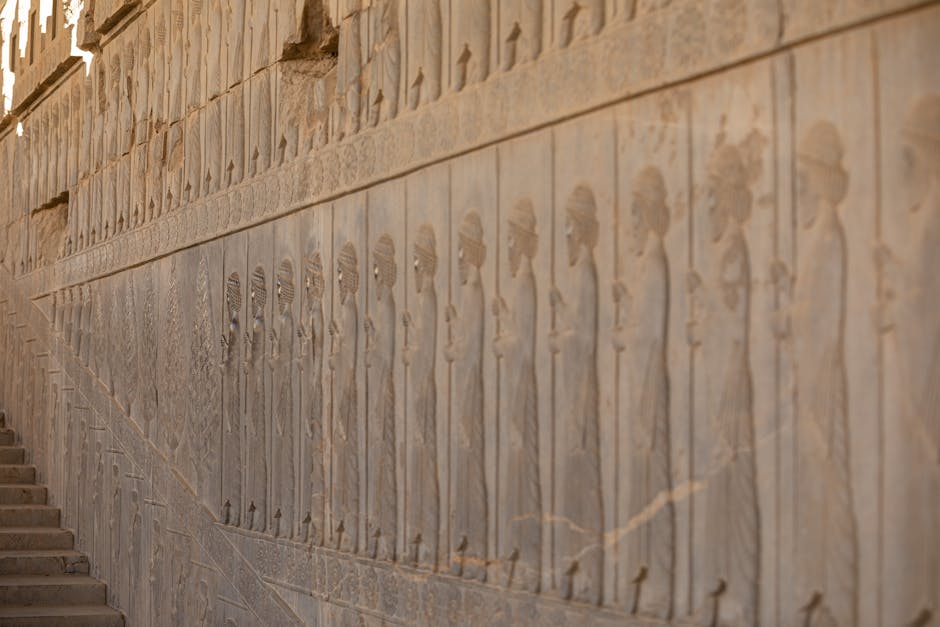
Introduction: A Tapestry of Cultures and Power
The story of the Persian Empire is one woven with grand ambitions, sweeping conquests, and a rich tapestry of cultures that spanned three continents. At its height around 500 BC, the empire reached from the Indus Valley in the east to the shores of the Aegean Sea in the west, and down to the deserts of Arabia in the south. The scale and influence of the Persian Empire were so profound that they set the foundations for future civilizations, changing the course of history for thousands of years. But what led to the rise of this monumental empire, and how did it decline? This article delves into the history behind the Persian Empire, exploring its chronological journey from inception to its eventual fall. We will uncover not only the key events and incredible figures that shaped the empire but also the cultural nuances and political maneuvers that made it a force to reckon with. Whether you are a history buff or a casual reader, the myriad tales of triumph and defeat of one of the world’s most powerful empires promise to captivate your mind.
The Persian Empire, known for its remarkable governance and its distinctive approach to cultural diversity, serves as an important lesson in managing vast territories and disparate peoples. As we peel back the layers of history, we encounter not just the grandiose palaces and monumental architecture but also the daily life of its citizens, the challenges they faced, and the ideological philosophies that influenced their governance. Join us as we traverse through time to understand the rise and fall of an empire that once ruled the known world.
Historical Background and Context
To understand the Persian Empire, one must first appreciate the historical context of its emergence. The history of Persia can be traced back to the early civilizations of the Iranian plateau, specifically the Elamites and the Medes. The ancient civilization of Elam flourished from around 2700 BC and significantly contributed to the rich cultural fabric of the region. However, the story really begins in the first millennium BC with the rise of the Medes. By the 7th century BC, the Medes had established a significant power base, conquering much of the Iranian plateau and laying groundwork for what would eventually become the Persian Empire under Cyrus the Great.
Cyrus II, better known as Cyrus the Great, ascended to the throne around 559 BC, marking a pivotal moment in Persian history. His innovative strategies and respect for the cultures and practices of the lands he conquered allowed him to amass an empire of unprecedented size. The Achaemenid dynasty, as it came to be known, was characterized by a unique system of governance that integrated various cultures into its administrative framework while maintaining a Persian identity.
One of the distinctive features of the Persian Empire was its highly efficient use of local governance. Instead of imposing a singular Persian culture upon conquered lands, Cyrus opted for a model of tolerance, establishing satrapies—semi-autonomous regions governed by local leaders under the supervision of a Persian satrap. This form of governmental structure not only minimized resistance but fostered loyalty among subdued populations. The construction of the Royal Road also facilitated trade and communication, demonstrating the centrality of infrastructure in the empire’s expansion.
As the empire grew, so did its challenges. Internal strife and the complexities of managing a vast multicultural empire created tensions that would eventually lead to its decline. The Persian Empire faced significant external threats as well, particularly from Greece, which had its own ambitions and conflicts to contend with. The interplay between these internal and external factors sets the stage for understanding the trajectory of the Persian Empire.
Key Events, Battles, and Developments
The history of the Persian Empire is punctuated by numerous key events and battles that shaped its development and, ultimately, its decline. Battles like the ones at Marathon and Thermopylae, and monumental events such as the conquests of Lydia and Babylonia, underscore the complexities of Persian expansion.
1. The Rise of the Achaemenid Empire (559-550 BC)
Cyrus the Great’s ascendance marked the genesis of the Achaemenid dynasty. He unified the Medes and Persians and then turned his sights on Lydia, one of the most powerful states in Asia Minor. In 546 BC, the Lydian king Croesus was defeated at the Battle of Thymbra, significantly expanding Persian territory. Following this, Cyrus captured Babylon in 539 BC, where he became renowned for his policy of tolerance, allowing exiled Jews to return to Jerusalem and rebuilding their temple.
2. Darius I and the Expansion of the Empire (522-486 BC)
Cyrus’s successors, including Darius I, significantly influenced the empire’s growth. Darius I introduced administrative reforms that segmented the vast territory into satrapies, thus enhancing control and organization. He is best known for the invasion of Greece, which would set the stage for decades of conflict. The Battle of Marathon in 490 BC became a cornerstone moment in this conflict, where a vastly outnumbered Athenian army defeated the Persian forces. Following Marathon, Darius’s son Xerxes I would launch a second invasion in 480 BC, leading to the iconic battles of Thermopylae and Salamis.
3. The Battles of Thermopylae and Salamis (480 BC)
In 480 BC, King Xerxes I led a monumental campaign against the Greek city-states. At Thermopylae, the famous stand of King Leonidas and his 300 Spartans, albeit a tactical loss, symbolized the courage of the Greek resistance against a larger foe. Shortly thereafter, the Persian navy faced a crushing defeat at the Battle of Salamis, which would shift the balance of power in the Mediterranean. This defeat marked the beginning of the decline of Persian influence in Greece.
4. The Fall of the Persian Empire (334-330 BC)
The Achaemenid Empire faced external turmoil from Alexander the Great, who initiated his campaign against Persia in 334 BC. The decisive battles of Granicus (334 BC), Issus (333 BC), and Gaugamela (331 BC) led to the catastrophic fall of the Persian Empire. Darius III, the last Achaemenid king, was ultimately defeated, leading many of the Persian territories to fall into the hands of Alexander by 330 BC.
Important Figures and Their Roles
The narrative of the Persian Empire is enriched by a multitude of figures whose leadership, vision, and strategies influenced its trajectory significantly.
Cyrus the Great (c. 600-530 BC) is synonymous with the empire’s founding. His military genius and diplomatic tolerance fostered a sense of unity amidst diversity and earned him a near-mythical status in history. His actions, particularly his decisions regarding Babylonian captives, reflected a progressive approach that encouraged loyalty and cooperation.
Darius I (circa 550-486 BC), often termed Darius the Great, expanded the empire, initiated monumental architectural projects including the construction of Persepolis, and established the Royal Road. His administrative legacy set the stage for efficient governance, with innovations like standardized weights and measures contributing to commerce and trade.
Xerxes I (519-465 BC), the son of Darius, showcases the transforming nature of leadership styles during political transitions. His invasion of Greece underscores the dive headfirst into conflict, resulting in substantial initial successes but eventual failures that led to the empire’s waning control in the region.
Artaxerxes I (c. 465-424 BC), the son of Xerxes, attempted to stabilize the empire following the setbacks in Greece. He focused on internal governance and promoting regional stability, which illustrates the empire’s struggles with maintaining control over its extensive territories.
Causes and Consequences
The rise and fall of the Persian Empire can be attributed to a complex interplay of internal and external factors. The initial causes of ascendancy included effective leadership, cultural tolerance, and efficient administrative frameworks.
However, as the empire expanded, several consequences unfolded. Internal divisions increasingly strained resources, leading to civil unrest and difficulty in managing diverse populations. The luxurious lifestyles at the royal courts, combined with the monumental projects of kings, took further tolls on the treasury, reflecting the disparity between the elite and the common populace.
External threats, particularly from the Greek city-states and later from Macedonia under Alexander the Great, compounded these issues. The critical turning points, notably the Persian Wars and the rise of formidable adversaries, showcase how the empire was ultimately overwhelmed by the very strategies it once employed against others.
Global Impact and Legacy
The Persian Empire’s global impact resonates throughout history. It served as a model of governance, showcasing the complexities and potentialities of managing a vast, multicultural population.
Moreover, the cultural exchanges initiated during the Achaemenid Empire laid the groundwork for the Hellenistic period as Greek culture permeated the territories previously controlled by Persia. The diplomacy and administrative practices introduced by the Persians influenced subsequent empires, setting benchmarks for governance that would echo through time.
Even in today’s reality, the Persian legacy persists in forms of political structures observed in modern governance and administration. Tolerance and diversity remain hallmarks of successful communities, reminding us of the Persian Empire’s innovative approaches to multicultural management.
Fascinating Little-Known Facts
The history of the Persian Empire is replete with intriguing anecdotes and facts that may not be widely known:
- Cyrus the Great’s Cylinder: Often regarded as the first charter of human rights, this artifact celebrates the liberation of Babylon and showcases Cyrus’s progressive policies regarding religious freedom.
- The Ziggurat: The architecture of the Persian Empire included polytheistic influences from previous civilizations, most famously evident in their structures like ziggurats, which echoed an ancient style.
- The Royal Road: Stretching approximately 2,500 kilometers, the road facilitated trade and communication across the empire. It was so efficient that postal services developed pre-modern postal systems.
Conclusion: Modern Relevance
The rise and fall of the Persian Empire offers a wealth of insights relevant to contemporary discussions about governance, cultural diversity, and diplomacy. The lessons drawn from the management of a vast empire resonate with modern states trying to balance regional autonomy with centralized governance. The issues faced by the Persians serve as cautionary tales about the pitfalls of neglecting internal discontent and external threats. As we navigate through the challenges of a globalized world, the stories from ancient Persia remind us of the importance of inclusivity and the power of cultural collaboration in achieving lasting peace and unity. The legacy of the Persian Empire continues to inspire not just scholars, but anyone who seeks to understand the dynamics of power, culture, and society on a grand scale. Their achievements laid the groundwork for civilization as we know it today, reminding us that even the mightiest of empires must reckon with the complexities of human nature and history.