
Introduction
Have you ever wondered what it would be like to govern one of the largest empires in history? The Achaemenid Empire, often overshadowed by its successors like the Roman Empire, stands as a monumental testament to the sophistication of ancient civilizations. At its height, this expansive realm stretched from the Indus Valley in the east all the way to Thrace in the west, encompassing a diversity of cultures, languages, and peoples. Its remarkable achievements in administration, architecture, and culture were interspersed with stories of betrayal, power struggles, and eventual downfall. But beyond the grandeur of its history, the Achaemenid Empire serves as a mirror reflecting the complexities of governance and the intricate fabrics that weave societies together.
This article delves deep into the Achaemenid Empire, tracing its origins and the historical context leading to its formation. We will explore key events and developments that shaped its destiny, introduce influential figures who played pivotal roles, analyze the causes and consequences of its rise and fall, and finally discuss the global impact and legacy that resonates even today. As we journey through this fascinating epoch, you will discover not just the facts, but the stories that give life to an empire that once reigned supreme.
Historical Background and Context
The roots of the Achaemenid Empire can be traced back to the early 6th century BCE when the Persians, a nomadic people originally from the region of modern-day Iran, began to establish themselves as a formidable force in the region. They initially inhabited the southwestern portion of Iran known as Persis, which served as their political and cultural heartland. Influenced by neighboring Mesopotamian civilizations, the Persians began adopting aspects of their governance and culture. This assimilation was pivotal, as it set the stage for the future empire’s unique blend of cultures and administrative systems.
Before the rise of the Achaemenids, the Persian territory was under the influence of the Median Empire. However, a young and ambitious leader named Cyrus II, later known as Cyrus the Great, emerged as a key figure in uniting the various Persian tribes and laying the groundwork for what would become one of the largest empires in the ancient world.
Cyrus’s character was marked by both military prowess and a philosophical attitude towards governance. He famously integrated a policy of tolerance towards the customs and religions of the conquered peoples. This was a stark contrast to previous empires which often imposed their beliefs and cultures on subjugated lands. The significance of this approach cannot be underestimated, as it not only fostered loyalty among diverse populations but also enabled peaceful transitions of power when engulfing new territories.
The empire began to flourish with a series of territorial expansions, including conquests of the Median Empire, Lydia, and Babylon. This expansion led to the establishment of a centralized administration geared towards cultivating trade, communication, and cultural exchange. Hence, the Achaemenid Empire emerged not merely as a result of military power, but also through effective governance that facilitated integration among diverse peoples.
By the time of Cyrus’s successors, including Cambyses II and Darius I, the empire had established a system of satrapies (provinces), a complex network of roads, and even an early postal system. This administrative framework allowed the Achaemenids to manage their vast territories efficiently, maintaining control over a myriad of local customs while ensuring the empire’s overall unity. As such, the Achaemenid Empire was not just a collection of conquests but rather a sophisticated network of governance that laid the foundation for future empires.
Key Events, Battles, and Developments
The Rise of Cyrus the Great (circa 559-530 BCE)
Cyrus the Great ascended to power around 559 BCE and marked the beginning of a significant shift in the balance of power in the ancient world. In 550 BCE, he decisively defeated Astyages, the king of the Medes, thereby unifying the Medes and Persians under one rule. This victory not only solidified his authority but also provided the resources and military strength necessary for further conquests.
Conquest of Lydia (546 BCE)
One of Cyrus’s most remarkable achievements was the conquest of Lydia around 546 BCE. Lydia, famous for its wealth and the invention of coinage, fell to Cyrus after a series of strategic military maneuvers. The legendary king of Lydia, Croesus, believed himself invincible and consulted the Oracle of Delphi, which foretold that he would destroy a mighty empire. Little did he know that the empire would be his own. Cyrus’s forces captured the Lydian capital of Sardis, leading to greater expansion into Asia Minor.
Conquest of Babylon (539 BCE)
The conquest of Babylon in 539 BCE stands out as one of the most significant events in the history of the Achaemenid Empire. Babylon was not only a vital city in Mesopotamia but also a center of culture and power. Cyrus entered the city peacefully, and historical accounts suggest he was seen as a liberator rather than a conqueror. The famous Cyrus Cylinder, often referred to as the world’s first charter of human rights, echoes this sentiment by promoting religious tolerance and restoring temples, thus reflecting Cyrus’s diplomatic approach.
Darius I Takes the Throne (522-486 BCE)
After the death of Cyrus, the empire saw some instability and succession disputes. However, Darius I ascended to the throne in 522 BCE and significantly expanded the empire’s borders—reaching as far as the Indus River in the east and Thrace in the west. Under his reign, important infrastructures such as the Royal Road, spanning approximately 2,500 kilometers, were developed, facilitating trade and communication across the empire. This road connected the major cities of Susa, Persepolis, and Sardis, positioning the empire strategically for economic flourishing.
The Ionic Revolt (499-493 BCE)
Despite its strength, the empire faced revolts, such as the Ionian Revolt. Beginning in 499 BCE, the Greek cities of Ionia sought independence from Persian rule. This uprising prompted Darius to send military campaigns across the Aegean Sea, marking the beginning of ongoing tensions between Persia and the Greek city-states. The significance of this revolt lies not just in military encounters but also in how it led to the formation of alliances among the Greeks.
The Battle of Marathon (490 BCE)
The Battle of Marathon in 490 BCE was a pivotal moment in the Greco-Persian Wars, where the Athenians defeated a much larger Persian force. This defeat not only thwarted Darius’s ambitions in Greece but also ignited a sense of Greek unity among the city-states. Eventually, Darius faced a backlash from his other provinces, indicating that maintaining a vast empire was fraught with challenges.
The Reign of Xerxes I (486-465 BCE)
Following Darius’s death, his son Xerxes I attempted to continue the policies of expansion. Most notably, he invaded Greece in 480 BCE, culminating in the famous Battles of Thermopylae and Salamis. Though initially successful, Xerxes’s defeat at Salamis marked a significant turning point that showcased the resilience of Greek city-states and set the stage for Persia’s eventual decline.
The Fall of the Achaemenid Empire (330 BCE)
The final blow to the Achaemenid Empire came at the hands of Alexander the Great. In 334 BCE, Alexander invaded Persia, rapidly defeating the Persian forces in a series of battles, including the decisive Battle of Gaugamela in 331 BCE. The fall of Darius III marked the collapse of the Achaemenid Empire and the beginnings of Hellenistic civilization. Shortly thereafter, Alexander’s conquests spread Greek culture throughout Persia, forever altering the region’s tapestry.
Important Figures and Their Roles
Cyrus the Great
Cyrus II, known as Cyrus the Great, is perhaps the most significant figure in the establishment of the Achaemenid Empire. His strategic acumen in warfare and diplomatic skills enabled him to unify the various Persian tribes and conquer neighboring empires, laying the foundation for Persia’s colossal growth. His reign demonstrated a balance of power and governance that was uncommon for the time, promoting a respect for local customs that would later be seen as pioneering.
Darius I
Darius I, often hailed as one of Persia’s greatest kings, further developed the infrastructure and governance systems established by Cyrus. His effective administration witnessed the introduction of the Satrapy system that allowed for local rule under the broader imperial framework. Darius I’s managerial innovations set a precedent for future empires, incorporating diverse peoples while maintaining control over vast territories.
Xerxes I
Xerxes I’s ambition to avenge his father’s defeat at Salamis led him to launch a massive military campaign against Greece. Despite his initial successes, his defeat stirred a wave of change across the empire. His reign exemplified the challenges faced by leaders who tried to maintain control over a multicultural empire.
Darius III
Darius III presents a contrasting figure as the last king of the Achaemenid Empire who faced the onslaught of Alexander the Great. Despite his efforts to consolidate and maintain his rule, he struggled to rally his forces effectively against the invading Macedonian army. His defeat marked the end of the Achaemenid lineage and an era in Persian history.
Causes and Consequences
Causes of the Achaemenid Empire’s Rise
Several key factors contributed to the rapid rise of the Achaemenid Empire. First, the unification of the Persian tribes under Cyrus created a formidable political entity capable of standing against existing empires. Additionally, Cyrus’s diplomatic approach to governance, characterized by respect for local customs and religions, fostered loyalty and stability within the empire. Moreover, the economic prosperity derived from efficient trade routes fostered by the Royal Road provided the logistical backbone necessary for military and administrative endeavors.
Consequences of the Achaemenid Empire’s Fall
The fall of the Achaemenid Empire had profound consequences, both regionally and globally. After Alexander’s victory over Darius III in 330 BCE, Persian territories fell under Hellenistic influence, leading to a cultural blending of Greek and Persian traditions. The resulting fusion set the groundwork for future civilizations and had lasting impacts on art, philosophy, and governance throughout the region. Additionally, the collapse prompted the subsequent rise of other empires, such as the Seleucid Empire, marking a shift in the power dynamics of the ancient world.
Global Impact and Legacy
The Achaemenid Empire left an indelible mark on the course of history. Its legacy of effective administration influenced the governance strategies of later empires, including the Romans, Byzantines, and even the Ottomans. The concepts of tolerating diverse cultures and religions within a unified political framework echo through history, fostering dialogues that resonate through the ages. Moreover, the Achaemenid innovations in communication, infrastructure, and economic practices set foundational precedents for modern governance and management systems.
In contemporary times, elements of Persian culture and governance can still be seen in various societies. The concept of a bureaucratic state that respects local customs and encourages trade continues to shape nation-states worldwide today. Ultimately, the Achaemenid Empire serves as a profound reminder of the complexities of human civilizations and the cyclical nature of power and culture.
Fascinating Little-Known Facts
- The Cyrus Cylinder, often referred to as the first declaration of human rights, has been hailed as a significant artifact symbolizing liberty and equality.
- The Achaemenid Empire was one of the first to utilize a postal service, enabling rapid communication across its vast territories.
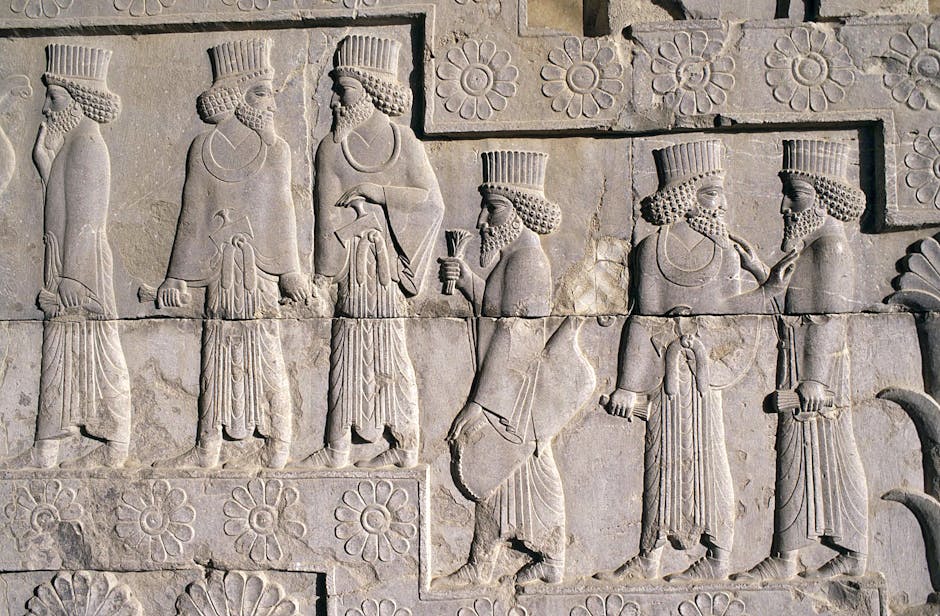
- Persia’s capital city, Persepolis, was a marvel of architecture, adorned with intricate carvings and monumental staircases, which symbolize the empire’s grandeur and sophisticated artistry.
- The Persian official language was Aramaic, which was used across the empire to facilitate communication between the diverse population.
- Unlike many conquerors, Cyrus the Great’s policy of restoring temples and respecting local religions helped solidify allegiance from conquered peoples, a significant contrast to other imperial strategies.
Conclusion: Modern Relevance
The Achaemenid Empire stands as a pivotal chapter in world history, illustrating the dynamics between power, governance, and cultural exchange. Its rise and fall carry lessons that resonate today: the importance of unity in diversity, the efficacy of diplomacy, and the realizable dream of a tolerant and decentralized governance. As we survey the modern geopolitical landscape, the echoes of the Achaemenid experience remind us of the ongoing challenges of diversity, integration, and power dynamics that define contemporary society. Understanding the history of one of the greatest empires not only enriches our historical knowledge but also provides insights relevant to our contemporary world.
In a globalized era where multiple cultures collide, the Achaemenid legacy teaches us that cooperation and respect for diversity can lead to stability and progress. As nations navigate the complexities of globalization, the principles of governance and human rights established by the Achaemenid Empire continue to offer valuable guidance for fostering peaceful coexistence in today’s interconnected world.