
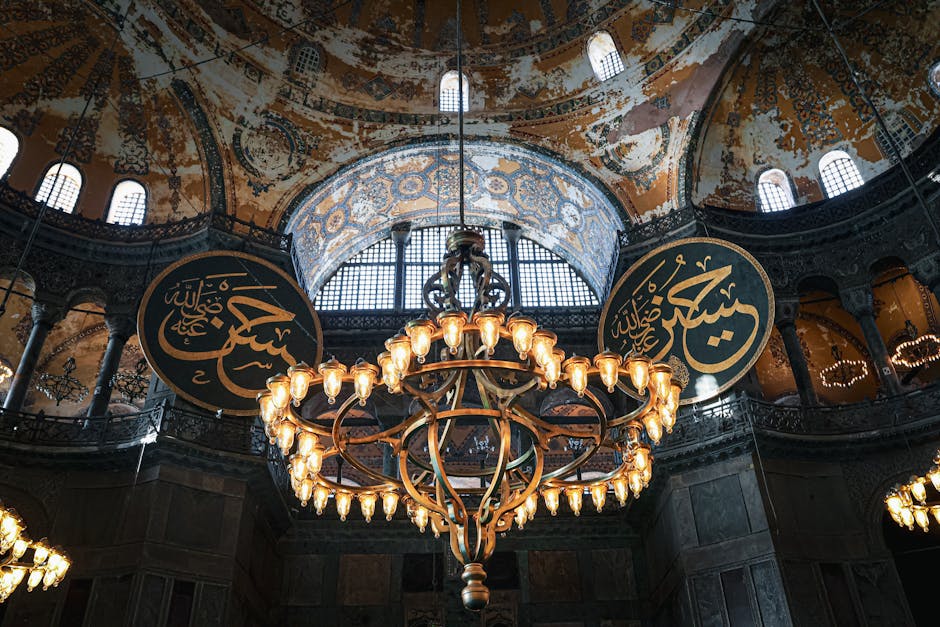
Introduction: The Echoes of Byzantium
The Byzantine Empire, often overshadowed by its Roman predecessor, stood resilient as a formidable power for over a millennium. Its complex tapestry of culture, politics, and religion not only shaped the course of European history but also laid the foundation for the modern world. Imagine a civilization that guarded the flame of knowledge during the dark ages, where scholars copied ancient texts and artists created breathtaking mosaics that still dazzle today. The Byzantine Empire was a beacon of light in a turbulent era, creating pathways of trade and communication that would influence distant lands. This article aspires to unveil the rich narrative of Byzantium, exploring its inception, notable events, pivotal characters, and lasting impact on global history. All this will be revealed in such vivid detail that you will feel as if you are walking through the vibrant streets of Constantinople itself.
Join us on this enlightening journey as we delve into the annals of the Byzantine Empire, a civilization where echoes of the past continue to resonate in our contemporary society.
Historical Background and Context
The roots of the Byzantine Empire intertwine firmly with the legacy of Ancient Rome, marking the phase of history characterized by a distinct yet continuous evolution. Officially commencing in 330 AD when Emperor Constantine the Great declared Byzantium as the new capital of the Roman Empire and renamed it Constantinople, this empire emerged not merely as a political successor but as a transformative cultural and religious entity. A junction of East and West, Constantinople thrived at the crossroads of trade routes that connected Europe with Asia and Africa, invigorating its economy and cultural richness.
Byzantium’s evolution was heavily influenced by the political fragmentation of the Roman Empire and a series of barbarian invasions that marked its decline. In 476 AD, the Western Roman Empire fell to Germanic tribes led by Odoacer, but the Eastern Roman Empire, known as Byzantium, survived. This was mainly attributed to its strategic geographic location and formidable defensive walls. Under the rule of Emperor Justinian I (527–565 AD), Byzantium reached its zenith; this era was marked by territorial expansion, legal reforms, and the promotion of Christianity as the state religion.
The empire’s cultural and religious landscape was a rich mosaic of influences, incorporating elements from Greek, Roman, and Christian traditions. The Orthodox Church, which emerged as a considerable power, not only dictated spiritual matters but also influenced political affairs, intertwining religion and governance. Latin initially dominated the administrative language, but by the 7th century, Greek gained prevalence, reflecting the empire’s evolving identity. As centuries progressed, the Byzantine Empire continued to face various challenges, including invasions from the Persians, Arabs, and later, the Ottomans, yet it remained an enduring bastion of art, culture, and intellect, flourishing until its ultimate fall in 1453.
Key Events, Battles, and Developments
The Reign of Justinian and Theodora (527-565)
One of the most transformative periods in Byzantine history was during the reign of Emperor Justinian I. Ascending the throne in 527, Justinian aimed to restore the territorial integrity of the fallen Western Roman Empire. His ambitious military campaigns, directed by the general Belisarius, sought to reclaim territories in North Africa and Italy, briefly re-establishing Roman influence over these regions. Notable events included the Battle of Dara in 530 against the Persians and the reconquest of Rome in 536.
The Nika Riots (532)
The Nika Riots erupted in 532, rooted in socio-economic tensions and dissatisfaction with Justinian’s rule. The riots, during a chariot race at the Hippodrome, quickly escalated, leading to significant violence as factions clashed. To quell the uprising, Justinian ordered a brutal crackdown, resulting in thousands of deaths. The rebellion ultimately led to significant architectural endeavors, including the construction of the Hagia Sophia, a marvel that symbolizes Byzantine architectural innovation.
The Plague of Justinian (541-542)
In 541, the Mediterranean basin was struck by a catastrophic outbreak known as the Plague of Justinian, originating from Asia. It decimated the population, with estimates suggesting it claimed the lives of over 25 million people, profoundly impacting the empire’s economy and military capability. The ramifications of this epidemic contributed to the weakening of Byzantine strategic resources, hastening political instability.
The Iconoclast Controversy (726-843)
The Iconoclast Controversy defined a significant ideological rift within the Byzantine Church. Premiering in 726 under Emperor Leo III, the controversy centered on the use of religious images (icons) and the ensuing conflict between iconoclasts, who opposed them, and iconodules, who supported their veneration. This controversial period, which saw the destruction of numerous icons and significant theological debates, highlighted the intricate relationship between politics and religion within the empire.
Fall of Constantinople (1453)
The Byzantine Empire, despite its numerous challenges, held out until the formidable siege of 1453 when Sultan Mehmed II, known as “the Conqueror,” launched a well-coordinated assault on the city. The fall of Constantinople marked not only the end of Byzantine rule but opened a new chapter in European history, leading to the rise of the Ottoman Empire. The city’s powerful fortifications held resilient against the initial assaults but eventually succumbed. This iconic event led to massive socio-political changes and signaled the shift of the center of power in the region.
Important Figures and Their Roles
Justinian I
An emperor whose ambition and efforts left an indelible mark on the Byzantine Empire. Justinian’s reign was characterized by military conquests aimed at restoring Roman glory, significant legal reforms codified in the Corpus Juris Civilis, and unrelenting support for the Church. His cultural patronage resulted in monumental architecture, epitomized by the Hagia Sophia, a reflection of the empire’s rich Christian heritage.
Theodora
Justinian’s wife, Theodora, was an influential co-regent with a remarkable story of transformation. Coming from modest beginnings as an actress, she rose to become an astute political figure, advocating for women’s rights and influencing her husband’s decisions during crises. Theodora’s efforts to quell the Nika Riots demonstrate her significant role in safeguarding the Empire.
Basil II
Reigning from 976 to 1025, Basil II, also known as “Basil the Bulgar Slayer,” is remembered as one of the empire’s greatest military leaders. His relentless campaigns against the Bulgarians concluded with their subjugation and incorporation into the Byzantine realm. Under his rule, the empire saw a resurgence of military power and economic strength, highlighting a peak before its eventual decline.
Mehmed II
Although a pivotal figure in the demise of the Byzantine Empire, Mehmed II, the Ottoman Sultan, is significant for his vision to expand Ottoman territory. His tactical acumen and modern siege techniques were instrumental in the successful capture of Constantinople, setting the stage for the rise of an Islamic Empire that transformed the geopolitical landscape of Europe and Asia.
Causes and Consequences
Causes of the Decline
The causes behind the decline of the Byzantine Empire are multifaceted. Internally, political instability and corruption weakened administrative efficiency. Religious divisions stemming from the Iconoclast Controversy further fragmented the empire, breeding dissent. Externally, relentless invasions from emerging powers like the Seljuk Turks and later the Ottomans strained military resources. Additionally, the decline of trade routes as a result of the rise of Western European powers and the impact of the Crusades destabilized the economic foundation of Byzantium.
Consequences of the Fall
The fall of Constantinople in 1453 signaled the end of the Byzantine Empire and also heralded the rise of the Ottoman Empire as a dominant force in Southeastern Europe and the Mediterranean region. It influenced European socio-political shifts, prompting the Renaissance as scholars fled from the city, bringing classical knowledge back to the West. Furthermore, the fall intensified the ongoing conflicts between Christian Europe and the Islamic empires, shaping early modern history.
Global Impact and Legacy
The impact of the Byzantine Empire extends beyond military conquests or territorial gains. Its intellectual heritage played a pivotal role in the preservation and transmission of classical knowledge through the Middle Ages, serving as a conduit for Greek and Roman texts, philosophy, and cultural practices that ultimately fueled the Renaissance. The establishment of Orthodox Christianity as a major denomination has continued to influence religious practices globally, forging a legacy evident in modern Eastern European cultures.
Architecturally, structures like the Hagia Sophia stand as timeless artifacts reflecting Byzantine ingenuity, becoming models for future architectural endeavors across the regions once touched by the empire. Furthermore, the legal codes developed during the Byzantine period, including Justinian’s Code, have forged foundational frameworks for contemporary legal systems. Through its tapestry of contributions, the Byzantine Empire’s legacy permeates many aspects of modern society.
Fascinating Little-Known Facts
1. The term “Byzantine” is a modern designation; contemporarily, the empire considered itself the Roman Empire.
2. The Byzantine Empire was one of the first to develop military tactics that utilized the Greek fire, an incendiary device that prolonged naval supremacy in the Mediterranean.
3. Justinian commissioned a massive compendium of Roman law, which later influenced legal systems in the Western world.
4. The Byzantine economy was heavily reliant on silk production, leading to espionage as their secret remained a highly guarded imperial monopoly.
5. The diplomacy of the Byzantine Empire set the groundwork for future international relations, emphasizing negotiations over brute military force.
Conclusion: The Modern Relevance of the Byzantine Empire
The Byzantine Empire, despite its eventual decline, exemplifies resilience and adaptability throughout the changing tides of history. Its contributions to culture, law, and diplomacy resonate distinctly in the present. From the architectural marvels that adorn our cities to the legal frameworks that govern our societies, the influence of Byzantium remains palpable. As modern political entities grapple with issues of territoriality, religion, and cultural diversity, the lessons gleaned from Byzantine history remain pertinent.
In commemorating this extraordinary civilization, we uncover not merely an echo of the past but a vibrant legacy that encourages the fusion of knowledge, culture, and understanding among diverse peoples in our interconnected world.