
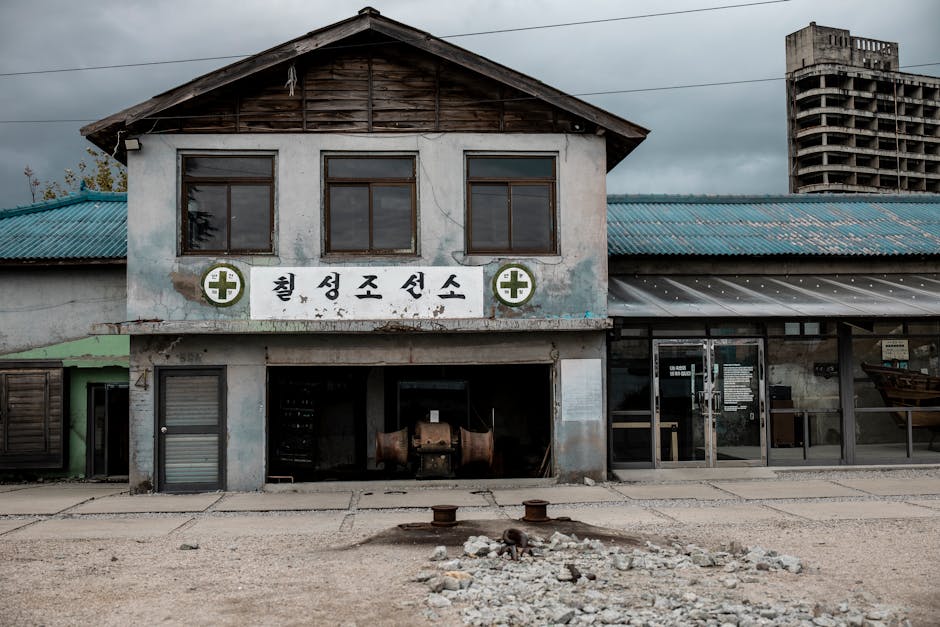
Introduction: The Forgotten War
The Korean War, often dubbed ‘The Forgotten War,’ rages on in the backdrop of histories: a conflict that represented not just a territorial struggle but a poignant tug-of-war between ideologies. With its brutal battlefield episodes, complex international alignments, and a lingering influence that continues to shape global dynamics, the Korean War remains a critical chapter in the annals of modern history. Despite numerous conflicts garnering more attention, the Korean War’s repercussions extend far beyond the Korean Peninsula, seeping into geopolitics, military strategies, and even cultural narratives. How did a war that ended over six decades ago continue to resonate in today’s era of international relations? The answer lies in the enduring legacy of the Cold War, the ideological divides of the mid-20th century, and the socio-political ripples that originated from this crucial historical event.
This article delves deep into the intricate tapestry of the Korean War, analyzing its historical context, pivotal battles, key figures, and long-lasting impacts. Through this captivating exploration, we seek to unravel the complexity of a conflict that not only influenced generations but also set the stage for international diplomacy and conflict management in the Asia-Pacific region today.
Historical Background and Context
The Korean War erupted on June 25, 1950, when North Korean forces crossed the 38th parallel, launching a full-scale invasion of South Korea. To understand the depth of this conflict, one must first explore Korea’s historical background that led to the divisions between the North and South. Korea was under Japanese colonial rule from 1910 to 1945. The end of World War II left Korea liberated but divided, subsequently becoming a pawn in the Cold War’s ideological battle. In August 1945, following Japan’s surrender, Korea was divided into two zones along the 38th parallel: the Soviet Union controlled the north, while the United States took charge of the south. This division was initially intended to be temporary; however, as the Cold War tensions escalated, the divide became more entrenched.
The establishment of two separate governments in 1948 further solidified this split. The Democratic People’s Republic of Korea (North Korea) was proclaimed in the north under Kim Il-sung, while the Republic of Korea (South Korea) was established in the south with Syngman Rhee as its president. Both leaders sought to unify Korea under their respective regimes, leading to heightened border clashes in the early 1950s. The ideological divide grew increasingly stark: North Korea, a communist state supported by the Soviet Union and China, was counterpoised against a capitalist South Korea backed by the United States and other Western allies. This backdrop of political tension set the stage for the conflict that would escalate into full warfare.
The tensions that preceded the Korean War were marked by a series of confrontations along the border. The United Nations played a role in mediating the growing conflict, but their influence was minimal due to the polarized international community aligned with either communism or capitalism. The lack of diplomatic resolution to the mounting skirmishes was coupled with increasing military preparations on both sides. Political figures in both North and South Korea made incendiary statements, encouraging their respective populace to prepare for a decisive conflict, a conflict that was not just about territory but also about global ideological supremacy.
Key Events, Battles, and Developments
The Korean War unfolded through intense battles and strategic maneuvers, shaping the course of the conflict over its three-year duration. One of the most significant early events was the surprise invasion of South Korea by North Korean forces on June 25, 1950. Within days, North Korean troops captured Seoul, the South Korean capital, and advanced deep into South Korean territory.
Invasion and Early Stages (June – September 1950)
The rapid advance of the North Korean People’s Army (KPA) took South Korea and its Western allies by surprise. By early July 1950, the KPA had pushed the South Korean army to the brink of collapse. Responding to the crisis, President Harry Truman ordered U.S. forces to Korea, marking a crucial point in history. On July 7, the first American ground troops arrived in Pusan, South Korea, to assist in repelling the invasion.
In July, the United Nations Security Council passed resolution 83, which called for member states to assist South Korea. This led to a multinational combined forces operation under General Douglas MacArthur, who would take command of the United Nations forces.
The Pusan Perimeter (August – September 1950)
By August, the North Korean army had captured most of South Korea, albeit with the South Korean and American forces holding a small foothold known as the Pusan Perimeter. This defensive line became a significant stronghold for UN forces, culminating in fierce assaults and several successful counterattacks. One key battle during this phase was the Battle of Taegu (August 1-31), where UN troops managed to hold their ground against superior North Korean forces.
Inchon Landing (September 15, 1950)
The tide of war began to turn with the daring Inchon Landing on September 15, 1950. General MacArthur orchestrated an amphibious assault at Inchon, which succeeded despite considerable risks and challenges. This maneuver effectively cut off North Korean forces from their supply lines and allowed UN troops to push inland. Within days, Seoul was recaptured on September 28. The successful landing represented a high point in UN military strategy but also marked the beginning of a new phase of conflict.
Advance into North Korea (October 1950)
Following the recapture of Seoul, UN forces advanced into North Korea, making significant territorial gains. By October 1950, they had reached the Yalu River, the border with China. However, this advance alarmed China, which viewed the UN’s presence on its border as a direct threat. UN forces believed that they could achieve a quick victory, but miscalculations about China’s willingness to enter the conflict proved detrimental.
China Enters the War (November 1950)
On November 25, 1950, China launched a massive counter-offensive known as the Second Phase Offensive. Chinese forces, fighting alongside North Korean troops, struck against UN forces, overwhelming their positions and pushing them back. This development marked a critical change in the war, leading to a retreat of UN forces and a protracted stalemate on the frontlines.
The Stalemate and Armistice (1951 – 1953)
As the conflict settled into a stalemate, fighting continued along the Korean Front, notably in battles like the Battle of Bloody Ridge and the Battle of Pork Chop Hill. The war devolved into trench warfare, reminiscent of World War I, with both sides suffering tremendous casualties without substantial gains.
Efforts to negotiate a ceasefire began in July 1951 but faced numerous complications, including disputes over prisoner exchanges and the demarcation of a new border. The war ultimately ground on until an armistice was signed on July 27, 1953, effectively ending hostilities, though a formal peace treaty was never ratified. The 38th parallel became a heavily militarized boundary, dividing the Korean peninsula into two separate nations.
Important Figures and Their Roles
The Korean War featured several pivotal figures, each playing a significant role that would impact both military operations and geopolitical strategies.
Kim Il-sung
The leader of North Korea, Kim Il-sung, was a central figure in initiating the conflict. A staunch communist, he sought to unify Korea under North Korean leadership and was supported by the Soviet Union and China in his ambitions. His military strategy, though initially successful, led to catastrophic consequences as the war escalated.
Syngman Rhee
On the opposite side, Syngman Rhee emerged as a controversial yet pivotal leader for South Korea. Rhee’s staunch anti-communism and firm control over South Korean politics played a crucial role in mobilizing national and international support. However, his governance style often drew criticism both domestically and internationally.
General Douglas MacArthur
As commander of the United Nations forces, General Douglas MacArthur was instrumental in the early successes of the war. His bold decision to execute the Inchon Landing showcased his strategic acumen. However, his controversial approach and direct clashes with President Truman concerning the prosecution of the war ultimately led to his dismissal in April 1951.
General Matthew Ridgway
Following MacArthur’s removal, General Matthew Ridgway took over US and UN forces. His leadership was crucial in stabilizing the frontlines and countering the Chinese offensives. Ridgway’s successful defensive strategies during the stalemate shifted the operational focus back to holding territory and engaging in negotiations for an armistice.
Causes and Consequences
The causes of the Korean War stemmed primarily from the broader context of the Cold War, nationalistic fervor, and the unprecedented ideological struggle between communism and capitalism. Historic grievances over colonial rule, growing tensions between the Soviet Union and the United States, and the global realignment post-World War II fostered a volatile environment that erupted into war.
Among the significant consequences of the war was the division of Korea into two distinct nations, a split that remains today. The security dynamics in East Asia were dramatically reshaped, with the establishment of military alliances and defense strategies aimed at curbing communism. The repercussions of the war extended globally, influencing U.S. foreign policy, relations with China, and the subsequent conflicts in Vietnam and beyond.
Global Impact and Legacy
The Korean War’s impact and legacy resonate profoundly in contemporary geopolitics. The stalemate established a precedent for future Cold War engagements in other regions, creating a geopolitical template that would persist through the following decades. The invalidation of the North’s ambitions to unify Korea militarily set the stage for a decades-long military standoff, resulting in the continued presence of U.S. troops in Korea and the militarization of the Korean Peninsula.
Additionally, the war reshaped United Nations operations and underscored the necessity for international cooperation in conflict resolution, even if ideological differences persisted. The Korean conflict also highlighted the risks associated with nuclear proliferation, further motivating international arms control discussions. Today, the repercussions of the Korean War echo in the ongoing tensions between North and South Korea, with nuclear threats and international diplomacy remaining pivotal issues on the global stage.
Fascinating Little-Known Facts
1. The Korean War was the first military conflict in which the United Nations played a significant role. More than 50 countries contributed troops, medical support, and supplies.
2. The war was characterized by an intense propaganda campaign from both sides, using posters and media to sway public opinion. In North Korea, Kim Il-sung was portrayed as a national hero and savior.
3. The prolonged effects of the Korean War included a lasting ceasefire but no formal peace treaty, leaving both Koreas technically still at war.
4. The conflict had a substantial impact on the Korean economy, with the South emerging as one of the world’s leading economies, contrasting with the North’s persistent hardship.
Conclusion: Modern Relevance
The narrative of the Korean War, often overshadowed by other global conflicts, offers essential insights into contemporary international relations and national security. As we continue to navigate a world rife with ideological divides, the lessons drawn from this forgotten war resonate today. The need for diplomacy, understanding historical grievances, and recognizing the ramifications of military interventions are as essential now as they were in the 1950s. The unresolved tensions between North Korea and the global community raise crucial questions about security, military alliances, and the pursuit of lasting peace. In remembering the Korean War, we not only honor the sacrifices made but also reaffirm our commitment to a future where dialogue supersedes conflict, and unity replaces division.