
Introduction: The Allure of Ancient Rome
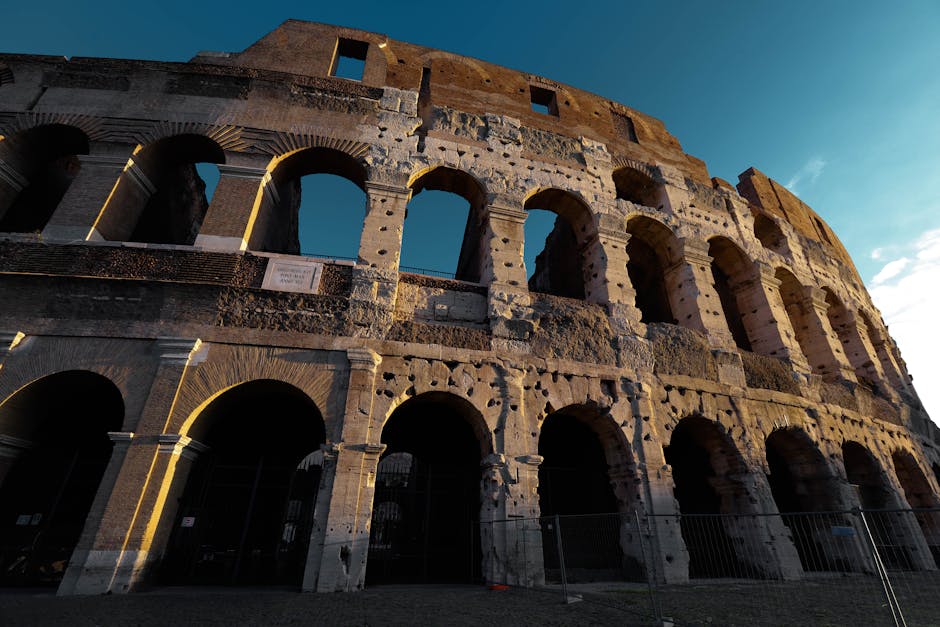
When we think of one of the most influential and powerful civilizations in human history, the Roman Empire often comes to mind. Known for its remarkable architectural accomplishments, awe-inspiring military tactics, and innovative governance, the legacy of Rome continues to shape the modern world in countless ways. From the majestic Colosseum that once hosted gladiator battles to the sophisticated legal systems that inspire contemporary laws, the narrative of Rome is as riveting as any tale penned by fiction writers. It is a civilization filled with intriguing characters, monumental battles, and profound cultural transformations that offer insight into the complexities of human nature, ambition, and the quest for power.
But what fueled the rise of this empire that stretched across three continents and endured for over a millennium? How did it manage to unify diverse cultures under a singular banner, and what ultimately led to its decline? This article delves into the historical background, pivotal events, crucial figures, and transformative consequences of the Roman Empire, painting a vivid picture of a society that once dominated the ancient world.
The story of Rome is not merely one of triumph but also of tragedy, marked by wars, political strife, and eventual disintegration. Yet, understanding the nuances of its journey provides valuable lessons about the dynamics of power and civilization. Prepare to embark on an exploratory journey through time, as we unravel the saga of the Roman Empire, its glory, and its fall.
Historical Background and Context
The origins of Rome date back to 753 BC, according to legend, with the mythological tale of Romulus and Remus, twin brothers who were said to have been raised by a she-wolf. However, Rome’s establishment as a significant power stemmed from its strategic location on the Italian Peninsula, which allowed it to control trade routes and military movements across the Mediterranean.
Initial settlements around the Tiber River evolved into a monarchy, which, by around 509 BC, transitioned into a republic—a system of government that would profoundly shape political ideologies across centuries. The Roman Republic was marked by a complex structure of elected officials, including consuls and senators, which demonstrated a delicate balance of power between different social classes.
Throughout the Early Republic (509 BC – 27 BC), Rome faced internal struggles, including class conflicts known as the Conflict of the Orders, where plebeians (commoners) sought political representation against the patricians (aristocracy). The resulting achievements—such as the establishment of the Tribune of the Plebs—illustrated the contentious yet progressive nature of Roman governance.
By the 3rd century BC, Rome began to expand aggressively, marking the beginning of the Punic Wars (264 – 146 BC), a series of three wars against Carthage that would define its military prowess. The outcome of these conflicts solidified Rome’s dominance over the western Mediterranean, leading to an era of vast territorial expansions. The Republic transitioned into an empire with the rise of Caesar Augustus in 27 BC, a pivotal moment that heralded the Pax Romana, a period of relative peace and prosperity.
Yet, the mighty empire was not without its vulnerabilities, including political corruption, economic strife, and increasing pressures from external tribes. By the late 2nd century AD, these internal and external challenges began to fragment the once-unified empire.
Key Events, Battles, and Developments
The annals of Roman history are filled with defining moments that shaped its trajectory. Among these, several key events stand out for their historical significance.
The Punic Wars (264 – 146 BC)
As previously mentioned, the Punic Wars were a series of three significant military conflicts fought between Rome and the North African city-state of Carthage. The first war, which began in 264 BC, primarily revolved around control over Sicily. The Roman navy, though inexperienced, managed to secure a crucial victory at the Battle of Mylae in 260 BC, allowing them to establish dominance over the island.
The Second Punic War (218 – 201 BC) is perhaps the most famous, mainly due to the Carthaginian general Hannibal Barca, who marched his army, including war elephants, across the Alps into Italy. Hannibal achieved a spectacular victory at the Battle of Cannae in 216 BC, which remains a classic example of military tactics. However, Rome regrouped and, under the leadership of Scipio Africanus, defeated Hannibal at the Battle of Zama in 202 BC, ending the war.
The Third Punic War culminated in 146 BC, when Rome, consumed by fear of Carthaginian resurgence, besieged the city. The resulting destruction of Carthage further established Roman influence in the Mediterranean, but it also set the stage for internal strife as wealth poured into Rome.
The Rise of Julius Caesar (49 BC)
Julius Caesar, a military general and statesman, played a crucial role in the demise of the Roman Republic. After a successful military campaign in Gaul, where he expanded Roman territory significantly, Caesar crossed the Rubicon River in 49 BC, igniting a civil war against his rival Pompey. His famous declaration, “The die is cast,” exemplified his commitment to seizing power.
The ensuing conflict saw Caesar emerge victorious and he subsequently declared himself dictator for life, effectively ending the republic’s system of checks and balances. Julius Caesar’s reign ended abruptly with his assassination on the Ides of March (March 15, 44 BC), leading to another round of civil wars that ultimately resulted in the rise of his grandnephew Octavian.
The Establishment of the Roman Empire (27 BC)
In 27 BC, the Roman Republic transformed into the Roman Empire under the leadership of Octavian, who took the name Augustus. This marked the beginning of the Pax Romana, a 200-year period of relative peace, stability, and flourishing culture.
Augustus implemented numerous reforms, including restructuring the tax system and establishing a standing army. His reign laid the groundwork for a prosperous empire that would witness significant architectural achievements, including the construction of the Pantheon and the Colosseum.
The Crisis of the Third Century (235 – 284 AD)
While the early centuries of the empire were characterized by growth and wealth, the Crisis of the Third Century marked a tumultuous period of instability, military defeats, and economic decline. This era was highlighted by numerous short-lived emperors, external invasions from groups like the Goths and Persians, and internal revolts.
Diocletian became emperor in 284 AD and implemented sweeping reforms, including dividing the empire into eastern and western halves to improve administrative efficiency. He introduced the Edict on Maximum Prices in an attempt to curb inflation and stabilize the economy.
The Fall of the Western Roman Empire (476 AD)
The traditional date for the fall of the Western Roman Empire is 476 AD, when the last Roman emperor, Romulus Augustulus, was deposed by the Germanic king Odoacer, marking the end of Roman rule in the west. This event, while symbolic, resulted from centuries of decline driven by internal strife, political corruption, economic challenges, and relentless barbarian invasions.
Important Figures and Their Roles
The story of the Roman Empire is punctuated by influential figures who shaped its history, from its founding to its eventual decline.
Romulus
Romulus, the mythological figure credited with founding Rome, symbolizes the aspirational qualities of the republic. His story embodies themes of war, survival, and the relentless human spirit.
Julius Caesar
Julius Caesar remains one of the most significant figures in Roman history. His military conquests expanded Roman territory, and his political maneuvers paved the way for the end of the republic. By declaring himself dictator, he altered the course of governance in Rome, steering it towards imperial rule.
Augustus (Octavian)
Augustus, the first emperor of Rome, is credited with bringing about the Pax Romana. His reign marked a turning point in history as he transformed the republic into the empire, establishing a foundational framework for governance that would endure for centuries.
Nero
Nero, infamous for his tyrannical rule, exemplifies the volatile nature of imperial power. His reign was marked by extravagance, persecution of Christians, and the Great Fire of Rome in 64 AD, which devastated the city and deepened his unpopularity.
Diocletian
Diocletian’s reforms in the late 3rd century AD addressed profound issues faced by the empire. His establishment of the Tetrarchy—dividing power among four rulers—was an attempt to stabilize an empire in crisis, ultimately laying groundwork for the Eastern and Western Roman Empires.
Causes and Consequences
The rise and fall of the Roman Empire serve as a testament to the complexity of historical processes. Several interconnected factors led to its ascendancy and eventual decline.
Causes of the Empire’s Rise
Strategic geographical location, a disciplined military, and agrarian economic strength underpinned much of Rome’s rise. Wealth from conquests fueled public works and infrastructure improvements, which in turn stimulated economic growth and cultural achievements.
Moreover, social structures and innovations in governance fostered relative stability, allowing Rome to adapt to the challenges of an evolving world. The ability to forge alliances and successfully assimilate diverse cultures contributed to the empire’s longevity.
Consequences of the Empire’s Fall
The fall of the Western Roman Empire in 476 AD resulted in the fragmentation of Europe into various kingdoms. It ended centuries of Roman governance and Germanic tribes began to carve their own paths in history. This period, known as the Dark Ages, saw a decline in literacy and urban centers, marking a significant cultural and historical shift.
However, the Eastern Roman Empire, or Byzantine Empire, continued to prosper for nearly a thousand years after the fall of its western counterpart. The legacy of Roman law, governance, and culture would later inspire Renaissance thinkers and modern political systems.
Global Impact and Legacy
The impact of the Roman Empire on global history cannot be overstated. From its legal systems to infrastructure, the influence of Roman governance endures in contemporary society.
The Latin language evolved into the Romance languages spoken across Europe today, while Roman law and principles continue to inform modern legal systems around the world. The concept of a Senate and citizenship rights can be traced back to Roman governance.
Moreover, the cultural influences of Roman art, architecture, and philosophy permeate various aspects of modern life. Works by Virgil, Cicero, and Seneca still resonate in literature and ethics courses, shaping the moral framework of countless societies.
Fascinating Little-Known Facts
1. **Roman Concrete**: The durability of Roman concrete has allowed many ancient structures to survive for centuries. The innovative mixture of volcanic ash, lime, and seawater contributes to its resilience.
2. **Public Toilets**: Ancient Romans pioneered public sanitation systems with communal toilets, showcasing an advanced understanding of hygiene and infrastructure.
3. **The Colosseum’s Scale**: The Colosseum, capable of seating 50,000 spectators, featured complex engineering, including retractable roofs, raising the architectural standards of its time.
Conclusion: The Modern Relevance of Roman History
The Roman Empire’s journey from a small settlement to a vast empire serves as a compelling narrative of ambition and achievement, but it also serves as a cautionary tale about the susceptibility of great powers to internal decay and external threats. The complexities of governance, cultural integration, and socio-economic challenges Rome faced mirror those confronted by modern nations in today’s interconnected world.
Understanding the rise and fall of the Roman Empire offers not only lessons in leadership, politics, and society but also reflects ongoing themes relevant in contemporary discussions about power, prosperity, and cultural heritage. As we remember and study this defining chapter of human history, the legacy of the Roman Empire remains a guiding light in comprehending our own world.