
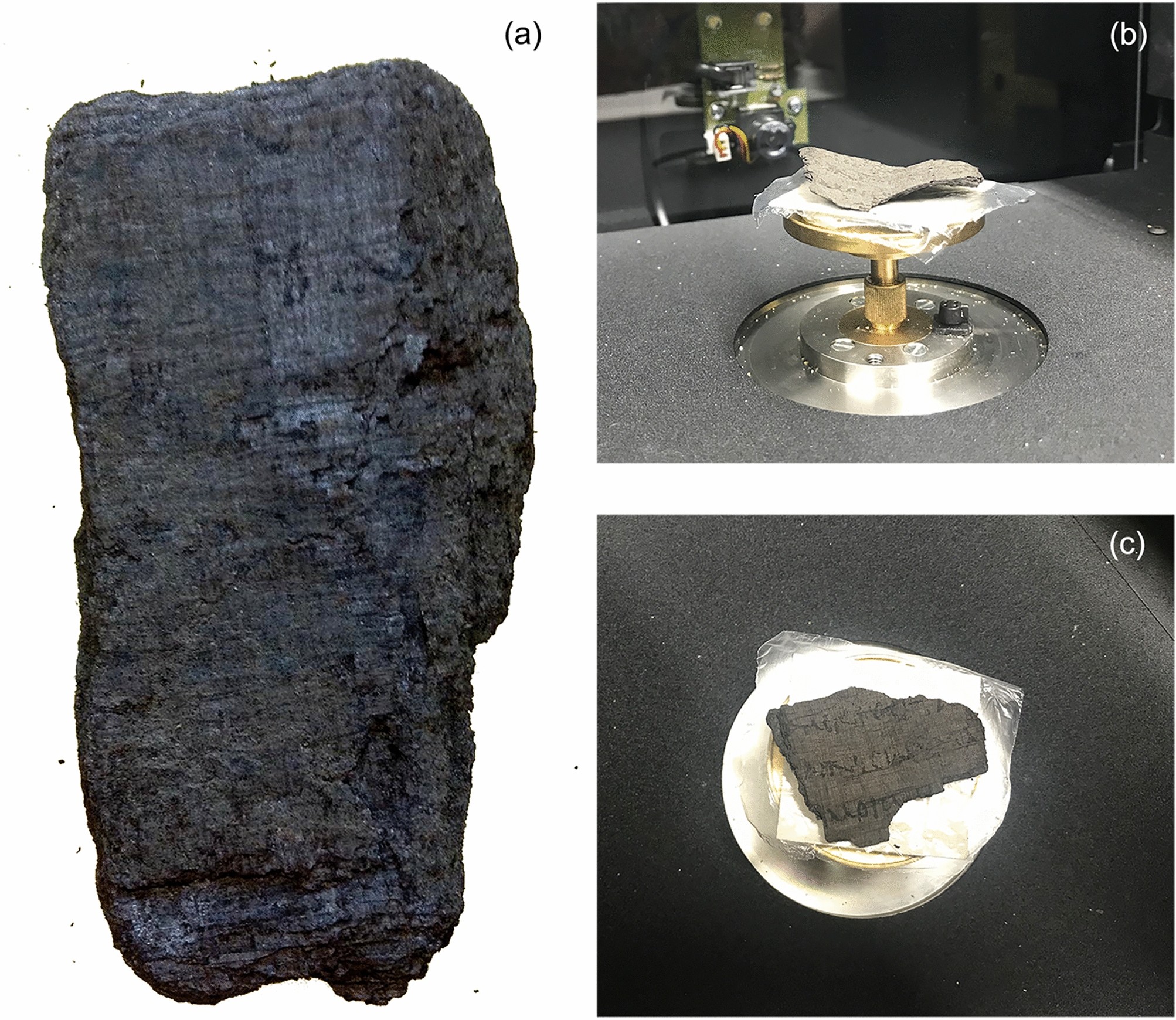

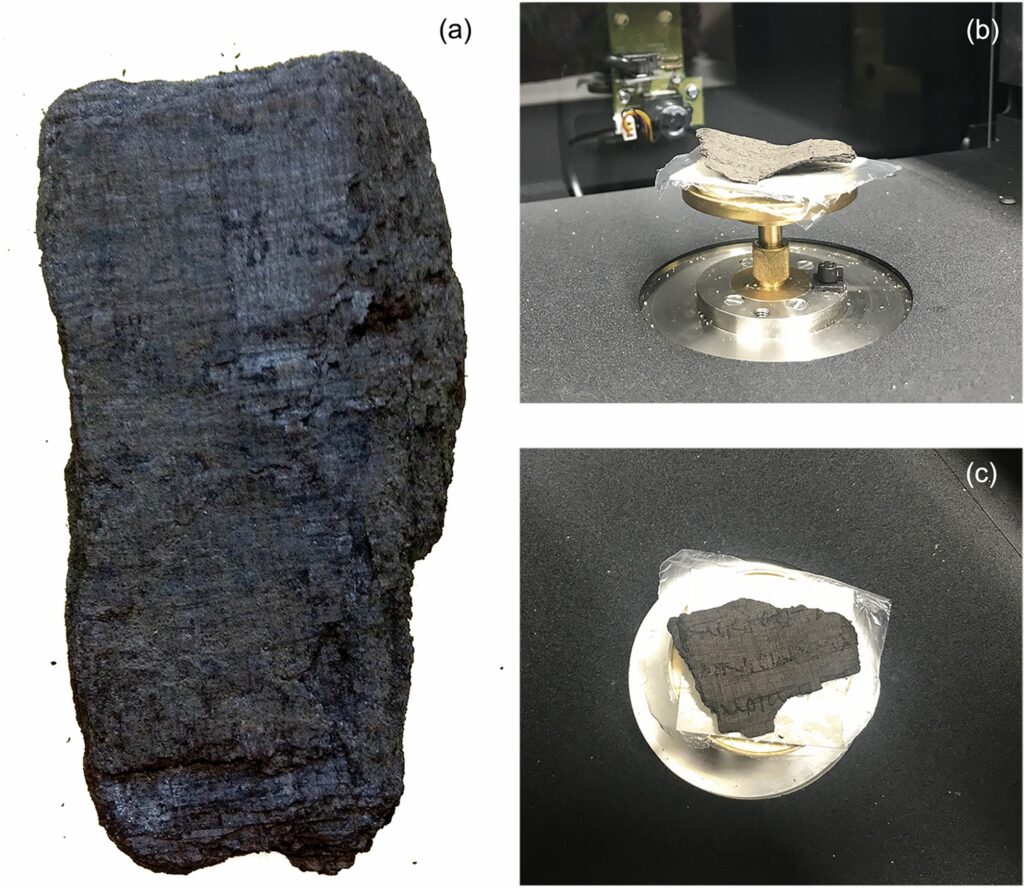
The Herculaneum papyri are often described as a lost library waiting to be opened. That image captures their promise but hides the evidence problem. More than 1,800 papyrus scrolls were found in the Villa of the Papyri after Mount Vesuvius buried Herculaneum in 79 CE. The scrolls survived as carbonized, extremely fragile objects. They preserve a rare body of ancient writing, but they do not arrive as a clean catalogue of titles, authors and complete books.
A library preserved by catastrophe
Excavations in the 1750s recovered the scrolls from a villa whose ownership remains a matter of scholarly discussion. The National Endowment for the Humanities describes the collection as the only large-scale library from the classical world to have survived in its entirety. That claim needs a careful reading: the physical cache survived as a collection, yet many individual scrolls are damaged, compacted or only partly identified. “Survived” does not mean “readable.”
The eruption created the unusual preservation conditions. Heat and volcanic material removed moisture from the papyrus and turned the rolls into coal-like cylinders. The same process that protected them also made them dangerous to handle. Early attempts to unroll some scrolls damaged layers and text. The Herculaneum Society records that the excavated material represents perhaps 800 original volumes, a reminder that the count of fragments and the count of books are not the same thing.
Why ordinary opening is the wrong goal
A conventional scroll can be opened layer by layer. A carbonized Herculaneum roll may crumble when touched, and its ink can be difficult to distinguish from the carbonized papyrus around it. This makes the physical object both the archive and the barrier. A successful method must preserve the original while creating a usable representation of its interior.
That is the purpose of virtual unwrapping. Researchers combine X-ray computed tomography with software that maps the folded layers into a digital surface. The scan does not magically translate Greek. It first has to locate the geometry of the rolled sheet; then researchers must detect marks, separate ink from background and reconstruct letter forms. Each stage introduces questions that must remain visible in the final reading.
What imaging changed
The NEH’s account of the project traces work by Brent Seales and collaborators at the University of Kentucky. Their methods developed through earlier efforts to read damaged manuscripts and were adapted to the particular difficulties of Herculaneum. In 2023 and 2024, machine-learning tools supported by NEH helped identify Greek letters and passages from scans of previously unreadable scrolls. The first recoveries were small but historically important: they demonstrated that text could be made legible without mechanically opening the roll.
The achievement is best understood as a change in access, not as a completed translation of the library. A detected word is not the same as a secure reconstruction of an entire argument. Scholars still have to test the segmentation, compare letter shapes, assess damaged areas and identify the language and author. The Vesuvius Challenge’s open data and competition model accelerated this work, but open computation does not remove the need for philological review.
What the scrolls can and cannot tell us
The collection can expand our knowledge of ancient philosophy, literary transmission and the reading habits of an elite household. Existing scholarship has associated many scrolls with Philodemus, an Epicurean philosopher, while other identifications and fragments continue to be studied. New readings may change the balance of surviving evidence because ancient works known only through quotations could appear in fuller form.
The scrolls cannot, by themselves, represent “what Romans thought.” A library is a selection shaped by its owner, time and place. Its concentration on philosophical material says something about the household that assembled it, not necessarily about every social group in Herculaneum. Nor can a machine-learning output be treated as a neutral voice from antiquity: it is a proposed reading built from scans, algorithms, comparisons and human editorial decisions.
The evidence chain
A responsible account therefore keeps four layers separate: the archaeological context of the villa; the physical condition of each scroll; the scan and computational reconstruction; and the scholarly interpretation of the recovered text. Confidence rises when independent images, repeatable methods and linguistic analysis agree. Uncertainty should remain attached to broken lines, ambiguous letters and claims about authorship.
The Herculaneum papyri matter because they make preservation and interpretation inseparable. Technology may reveal writing without opening a fragile object, but it cannot turn partial evidence into certainty. The most useful future library will be one in which readers can see both the recovered words and the chain of decisions that made those words readable.
Sources
- National Endowment for the Humanities, Reading the Invisible Library
- NEH, Students decipher Herculaneum scrolls
- Herculaneum Society, Papyri
- Wikipedia, Herculaneum papyri, with cited bibliography