
HistoryZ material evidence
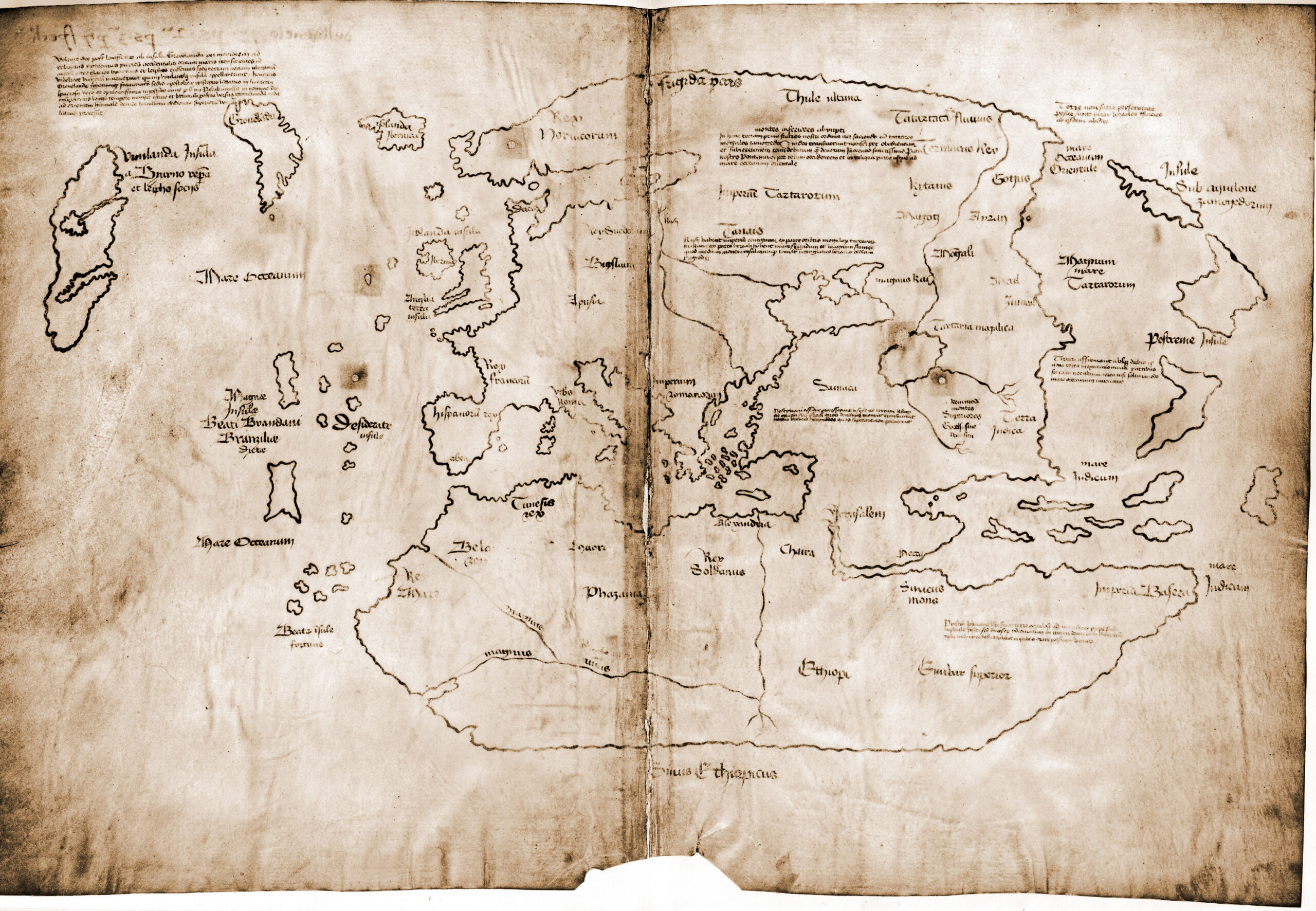
A map that promised too much
When Yale University announced the Vinland Map in 1965, the object seemed to place a European depiction of part of North America before Columbus. Its appeal came from the apparent fit between a medieval-looking map, Norse voyages known from texts, and a modern desire for a dramatic first. Those are separate propositions. Norse presence at L’Anse aux Meadows is supported by archaeology; the map’s authenticity had to stand on its own materials and provenance.
That distinction prevents a common mistake: rejecting the map does not erase Norse Atlantic travel, and accepting Norse travel does not authenticate this particular sheet.
Provenance was always part of the problem
The map surfaced on the antiquarian market without a secure chain back to a medieval archive. It was associated with two genuine medieval texts, the Tartar Relation and part of Vincent of Beauvais’s Speculum historiale, but association is not the same as proof that all three objects were made together. Researchers examined wormholes, bindings and ownership history because a convincing object needs both compatible materials and a documented path.
A provenance gap does not by itself prove forgery. It does reduce the number of independent facts available to test a seller’s story and makes physical analysis more important.
What pigment analysis added
Earlier studies produced argument over titanium compounds in the ink. Yale’s 2021 assessment reported modern titanium compound throughout the map’s lines and concluded that the ink was manufactured in the twentieth century. The analysis also identified an inscription on the reverse that had been altered to make the map appear connected to the medieval Speculum volume.
The strength of this result is not that titanium has a modern reputation; it is that the mapped distribution and chemical form were inconsistent with a fifteenth-century drawing medium. A scientific claim should be reported with the institution, method and object areas tested, not compressed into ‘a machine said fake.’
What testing cannot reconstruct
Material evidence can show that the ink is modern, but it cannot automatically name the forger, establish the exact year of manufacture or recover every transaction before the map reached Yale. Those are different historical questions requiring correspondence, dealer records, handwriting comparison and provenance research.
The parchment may be genuinely old while the drawing is modern. Reusing historic material is one way a fabricated object can pass superficial inspection. Dating the support therefore cannot date every mark placed on it.
A practical authenticity checklist
For any spectacular manuscript claim, ask whether the repository supplies a stable catalogue record, whether the provenance predates the publicity, whether tests sample the relevant ink or pigment, and whether another laboratory could reproduce the result. Check whether the proposed date fits script, geography and companion documents without relying on one convenient resemblance.
The Vinland Map is now most useful as a case study in changing questions. It once asked whether a medieval mapmaker depicted America. The better-supported question is how a modern object acquired authority, survived decades of debate and was ultimately constrained by evidence from its own ink.
Keep related claims separate
The map debate also demonstrates why a genuine historical background cannot validate a disputed object. Medieval Icelandic narratives, archaeological evidence from Newfoundland and the history of European cartography are three bodies of evidence with different dates and limits. A researcher may accept one while questioning another. When reporting a laboratory result, retain that separation: say what was measured, what conclusion follows about the ink, and which larger questions remain independent. This approach avoids both sensational extremes—the claim that one map rewrites all Atlantic history and the claim that exposing a forgery makes the documented Norse site disappear. It also lets future provenance discoveries refine who made the map without reopening a material conclusion unsupported by new testing.
Sources and verification notes
- Yale University Library, “Analyzing the Vinland Map: Its Inks and Parchment”
- Beinecke Library, Vinland Map research context
- UNESCO, L’Anse aux Meadows National Historic Site
- Wikimedia Commons image and rights record

Image licence: Public domain; creator/source: Yale University Press. Editorial review completed against the linked institutional records.