
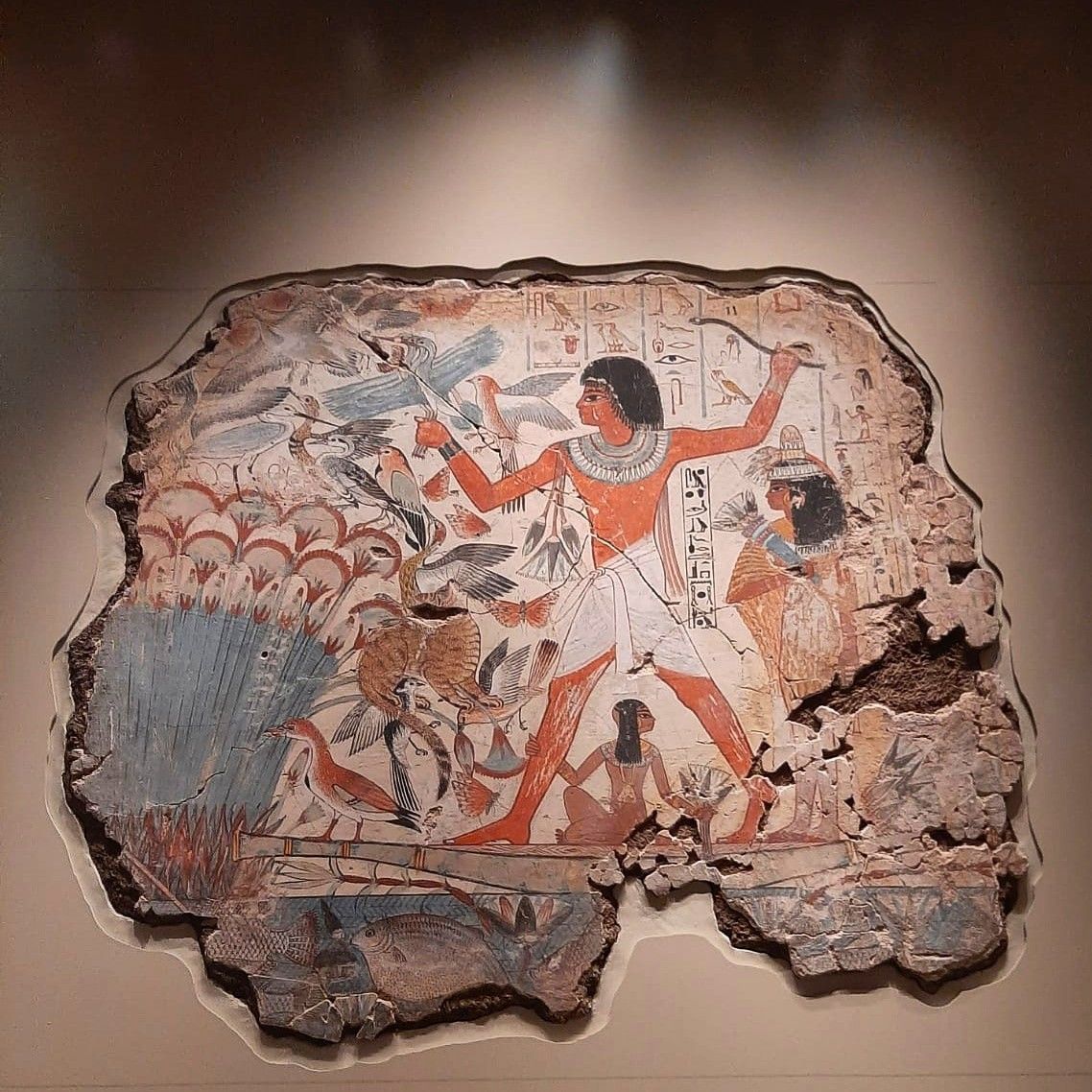

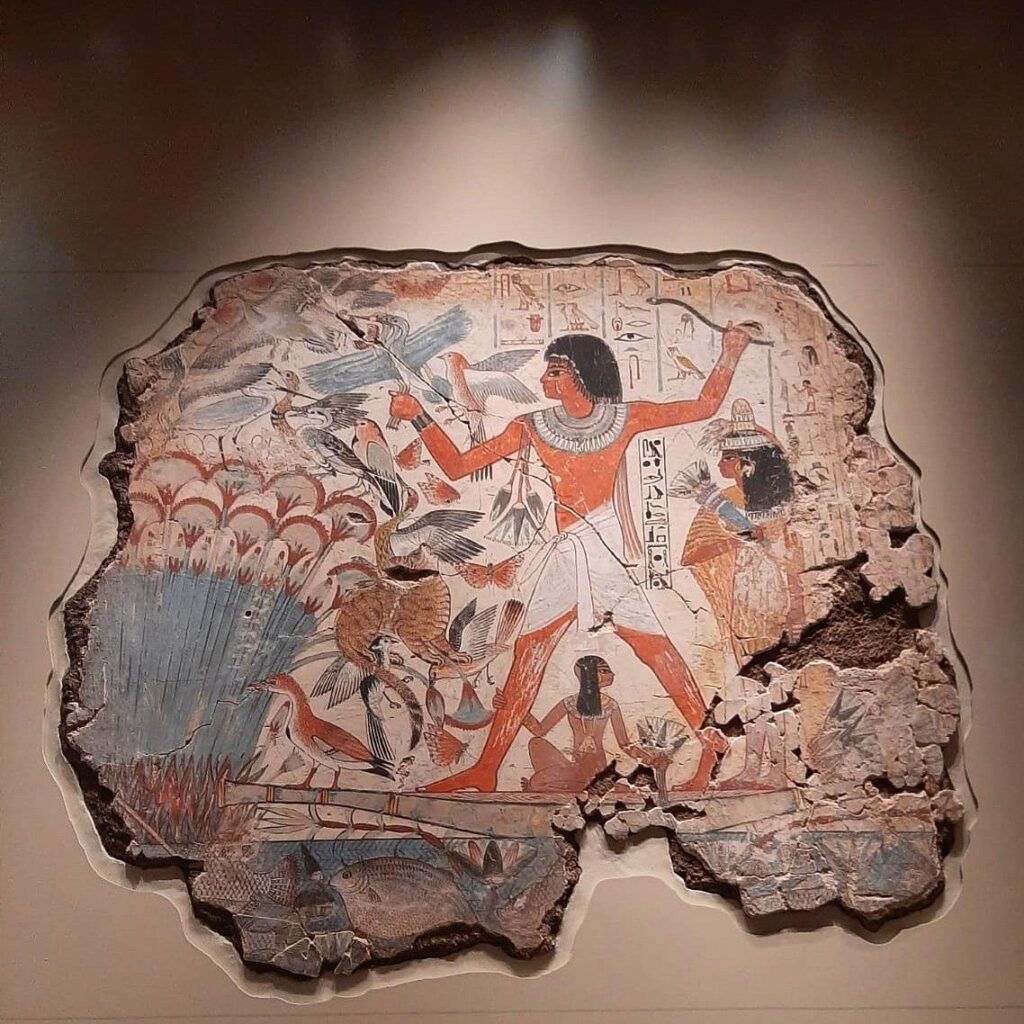
A cat catches birds, fish gather below a boat, and Nebamun stands above the crowded marsh. The scene rewards close looking, but its liveliness does not make it a snapshot of an ordinary working day. It is a decorated fragment from a tomb chapel, made to present a particular person’s life and remembrance.
Start with the identifiable fragment
The British Museum identifies the fowling scene as EA37977. Its catalogue describes Nebamun standing in a small boat, accompanied by his wife and daughter. A cat catches birds among the papyrus; fish and lotus plants fill other parts of the composition. Those details can be checked against the pictured fragment rather than borrowed from a general account of Egyptian art.
For a classroom discussion, make two columns: what is visible, and what is being inferred. The position of the boat is visible. A claim about how often this family went hunting needs other evidence. The size of Nebamun’s figure is visible, but it should not be turned into a measurement of his actual height.
The display has a history too
The museum’s gallery account reports extensive conservation between 2001 and 2007. Dated newspaper found in a nineteenth-century plaster mount helped establish that the paintings were mounted and displayed from 1832. The present edges and arrangement therefore need to be considered alongside the fragments’ modern treatment, not assumed to reproduce an intact chapel wall.
| Question | Evidence to examine |
|---|---|
| Which scene is this? | Object number, caption and the actual pictured fragment. |
| What is shown? | People, birds, plants, gestures and surviving inscriptions. |
| What changed after removal? | Mounting and conservation records. |
| What can it say about society? | Comparison with other objects, texts and archaeological contexts. |
A portrait of a life is not a census
The useful historical question is how the chapel presents Nebamun, rather than whether every pictured activity happened exactly as painted. A richly ordered landscape can communicate abundance and status without recording the experience of everyone who lived nearby. This is an interpretive caution, not a claim that the artist fabricated each detail.
Keep the object number with any reproduced detail. If a crop excludes the boat, family or surrounding marsh, say so: the reader otherwise loses the relationships that make the composition intelligible. The licensed photograph above records the displayed fragment; it is not a reconstruction of the whole tomb.
Sources and image license
- https://en.wikipedia.org/wiki/Nebamun
- https://commons.wikimedia.org/wiki/File:Fowling_in_the_marshes,_fragment_of_wall_painting_from_the_Tomb_of_Nebamun,_1350_BCE,_18th_Dynasty._Thebes,_Upper_Egypt,_British_Museum,_London.jpg
- https://www.britishmuseum.org/collection/galleries/egyptian-life-and-death