
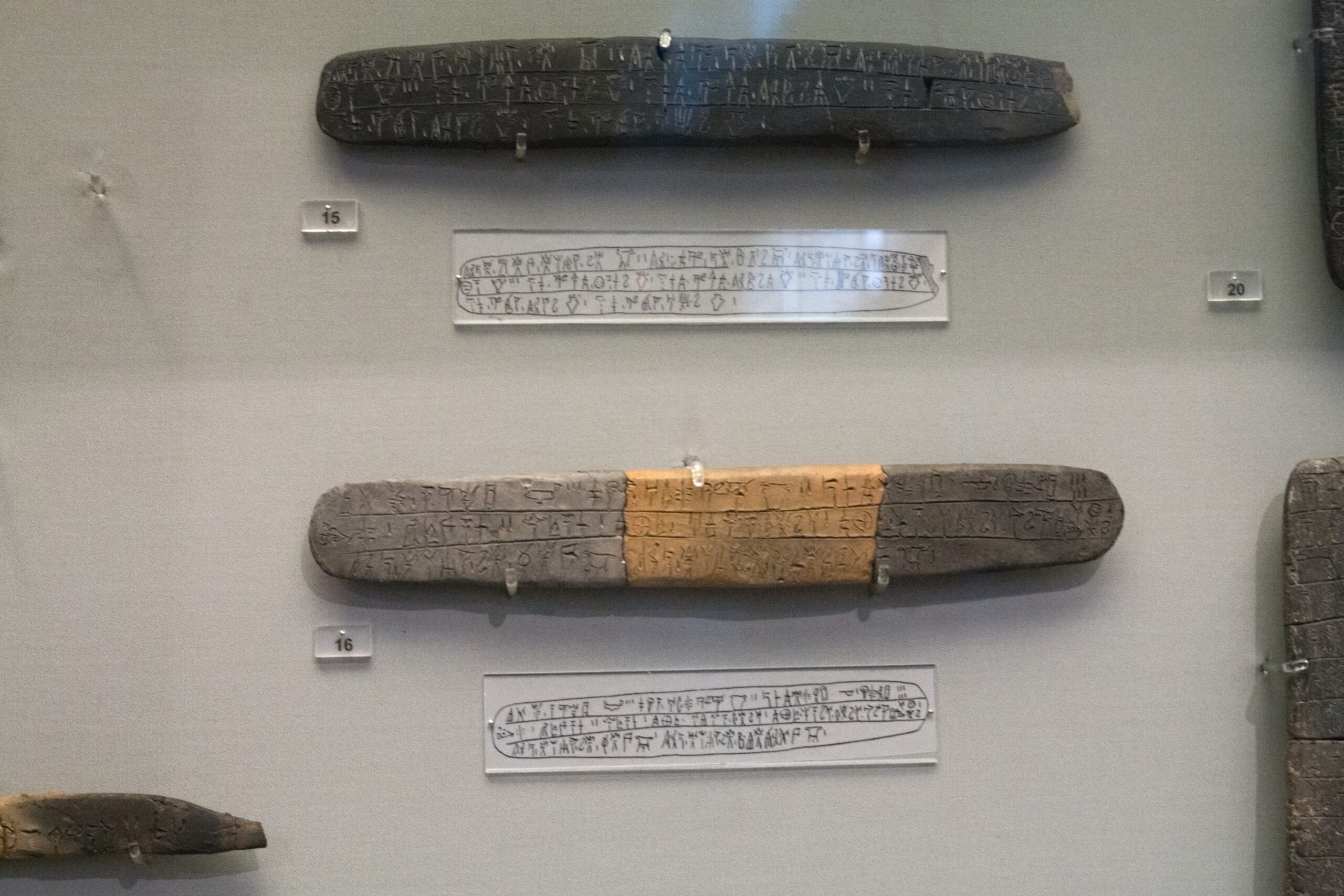

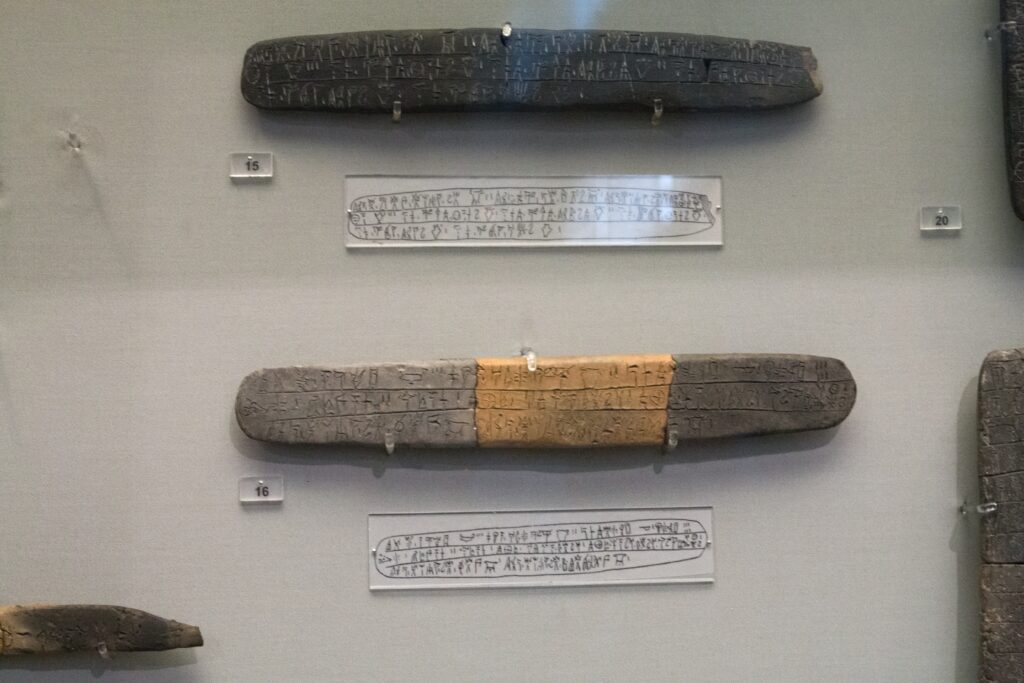
Linear B tablets are among the most important written evidence for the Mycenaean Greek world, but they are also easy to overread. They are not histories, poems or royal inscriptions. Most are administrative records from palatial centers such as Knossos and Pylos: allocations, lists, personnel, animals, vessels and offerings written in a syllabic script adapted from earlier Aegean writing. Their strength is precision about palace bookkeeping; their weakness is silence about nearly everything outside that administrative frame.
The decipherment by Michael Ventris, building on work by scholars including Alice Kober, showed that the script recorded an early form of Greek. That changed Aegean history because it pushed written Greek centuries before the alphabet. Yet decipherment did not turn every tablet into a transparent window. The records are terse, full of abbreviations and commodity signs, and often preserved only because palace fires baked what would otherwise have been temporary clay notes.
That accident of preservation matters. A tablet may survive because a building burned, not because the text was meant for long-term memory. Many entries are snapshots of a bureaucratic moment. They can indicate what a palace counted, requisitioned or redistributed, but they cannot by themselves prove how ordinary households understood authority or how every village economy functioned.
Linear B is strongest when historians aggregate evidence. Repeated terms, locations and commodity patterns reveal palatial oversight of textiles, bronze, land, livestock and religious offerings. Handwriting analysis can identify scribal groups and office practices. Comparisons between Pylos, Knossos and other sites help separate local routine from broader Mycenaean administration.
The narrowness of the evidence is not a flaw; it is the reason the tablets are so valuable. They anchor claims about Mycenaean Greece in specific records rather than later legend. The best use of Linear B is therefore disciplined: cite the tablet or class of tablets, distinguish reading from inference, and resist converting palace accounts into a full social narrative.
One tablet, three levels of evidence: AN1910.218
A concrete starting point is the Ashmolean Museum’s clay tablet AN1910.218. The catalogue places it around 1350 BCE, gives dimensions of 10.5 by 10.7 centimetres and describes a record of female workers. It also notes that Arthur Evans recognised the subject from human pictorial signs without deciphering the script. Recognising a sign’s subject and reading the language are therefore different achievements.
The featured photograph above shows a tablet from Pylos, not this Ashmolean object. It illustrates the material and writing system; it must not be treated as a photograph or transcription of AN1910.218. Follow the linked museum record for the particular object discussed here.
| Evidence layer | Supported statement | Unanswered question |
|---|---|---|
| Object catalogue | AN1910.218 is an identified clay tablet with a stated date, size and subject. | The entry is not a full sign-by-sign edition or translation. |
| Administrative subject | The museum identifies female workers in the record. | A list alone does not establish each worker’s wages, consent, household or legal status. |
| Modern historical reading | A palace administration chose to record people as a countable category. | That bureaucratic perspective is not the workers’ own account of their lives. |
The last distinction changes the story we can tell. A record can make people visible while leaving their voices absent. Calling it evidence for organised work is narrower than calling it a complete description of Mycenaean labour. The broader claim would require a textual edition, related entries, find context and an argument about what the administrative categories meant.
Why decipherment and preservation answer different questions
Cambridge’s account of the decipherment dates Ventris’s breakthrough to 1952 and describes Chadwick’s early contribution and their joint 1953 publication. This supports the history of reading the script; it is not an edition of the Ashmolean tablet.
The Ashmolean’s teaching resource describes worker records and the survival of clay through burning. Preservation explains why a record is available to us. Decipherment explains how its writing became readable. Neither supplies the experiences omitted by the original bookkeeping.
A defensible conclusion
AN1910.218 gives this general discussion an identifiable anchor: a museum object, not an unspecified “palace tablet.” The record supports a claim about what an administrator recorded. It does not support an invented biography of a worker. That boundary is useful rather than disappointing: it tells us which historical questions the surviving material can actually answer.
Updated 5 October 2026: Added a completed evidence comparison and direct records. The original publication address is unchanged.
Sources
- Cambridge Linear B photographic archive
- Cambridge Mycenaean Epigraphy Group
- Ashmolean AN1910.218: object record and bibliography
- Cambridge: decipherment chronology
- Ashmolean: ancient Greece teaching resource
- Wikimedia Commons image licensing and attribution page