
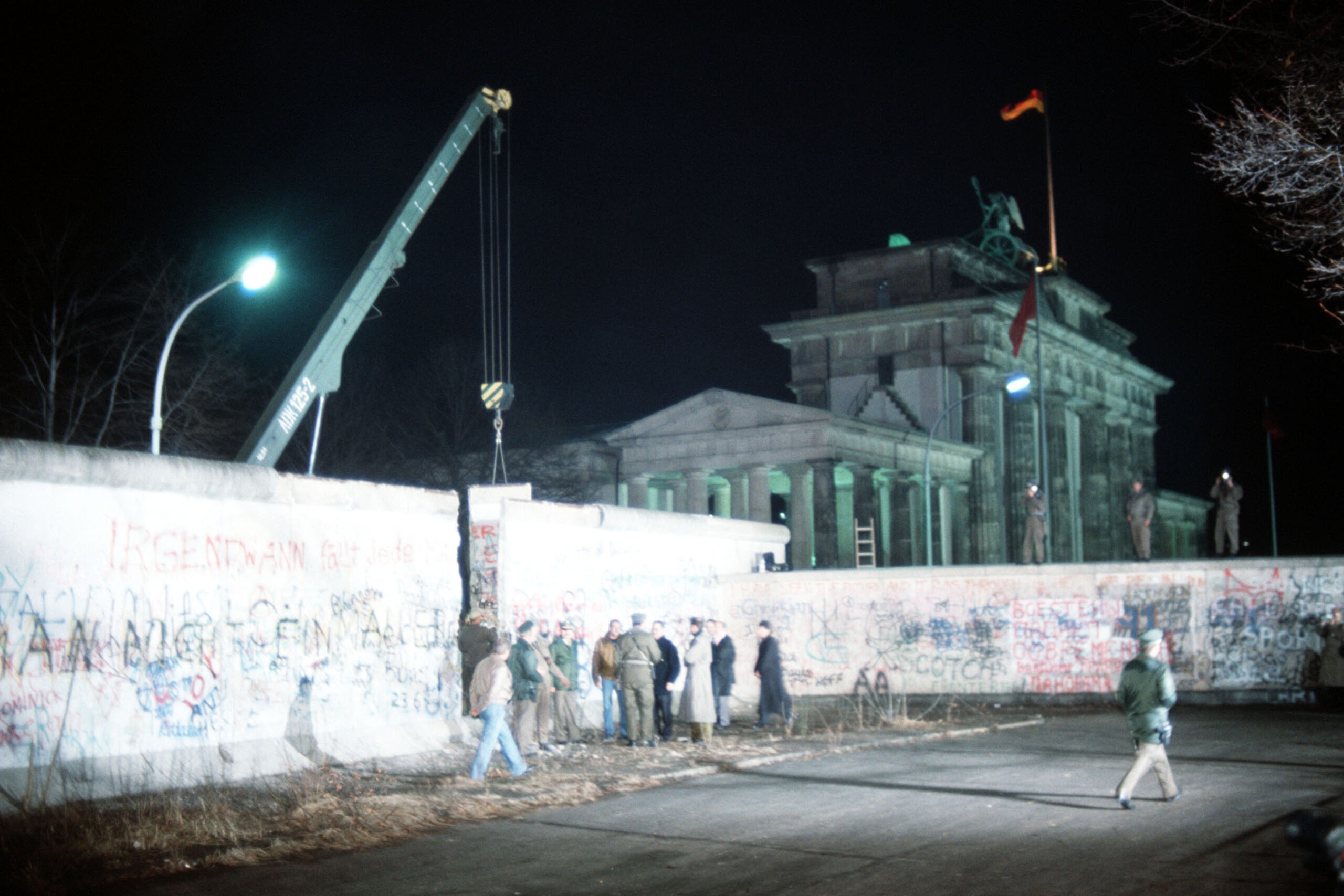

On 9 November 1989, East Germany did not begin the evening with a clearly communicated order to open the Berlin Wall immediately. A new travel rule, a televised press conference, news reports, crowds at the checkpoints, and decisions by border personnel turned a policy announcement into an event the existing chain of command could no longer contain. The sequence matters because the famous answer “immediately, without delay” was only one link.
Before the press conference: pressure on the travel system
The announcement came during the GDR’s wider political crisis and the peaceful revolution. This background explains why a change to travel rules carried unusual force, but it should not be used to skip over the decisions made that evening. The German federal government’s chronology and the Federal Archives reunification portal provide starting points for the surrounding months and primary records.
The announcement reached the public before the border system was ready
Near the end of the televised press conference, Politburo member Günter Schabowski described new provisions for private travel. When asked when they applied, his answer was widely understood to mean immediately. Berlin’s official history page places the announcement shortly before 7 p.m. and identifies the press conference as the trigger for that night’s rush to the crossings.
The distinction is important. A press statement can change public expectations before the officials who must carry it out have received a workable instruction. The U.S. National Archives’ anniversary account describes the statement as being interpreted to mean that exit visas would be granted without exception, after which thousands went to Bornholmer Strasse and overwhelmed the existing border-control situation.
News transmission changed the situation at the checkpoints
Television and radio did more than preserve the announcement for historians. They carried an actionable understanding of it to a large audience. People arrived expecting the newly announced freedom to be honoured. Border guards faced a growing crowd without a settled procedure that matched what viewers believed they had just heard.
This is why the causal chain cannot be reduced to “one official misspoke” or, at the other extreme, “the Wall simply fell because the government ordered it.” The policy text, Schabowski’s delivery, media summaries, the public response and checkpoint decisions interacted. Removing any one link produces a cleaner story but a worse explanation.
Bornholmer Strasse was the first crossing to yield
Berlin’s account of the Bornholmer Strasse memorial identifies it as the first border crossing opened that evening. That local sequence connects a citywide announcement to a physical place: a crowd gathered, pressure increased, and the crossing opened. Other crossings followed, turning one breached control point into a general collapse of restrictions across the Wall.
The photographs made later that night and in the following days document celebration and movement, but they do not by themselves reveal what an official knew at a particular moment. For that question, use the timed press record, contemporary broadcasts, checkpoint reports and later testimony together.
What can safely be concluded
The available record supports a narrow but powerful conclusion: the GDR announced new travel provisions publicly before its border apparatus had a consistent way to implement the message people heard. The resulting crowds and checkpoint decisions opened the Wall in practice on the night of 9 November 1989.
Whether Schabowski’s delivery should be described as an accident, misunderstanding or improvised presentation remains a question that deserves careful sourcing rather than a slogan. The Wall’s opening was also not the same event as German reunification, which followed in October 1990.
Sources
- Berlin.de — Opening and fall of the Berlin Wall
- Berlin State Monuments Office — Bornholmer Strasse
- U.S. National Archives — 30th anniversary account and records
- German Federal Archives — November 1989