
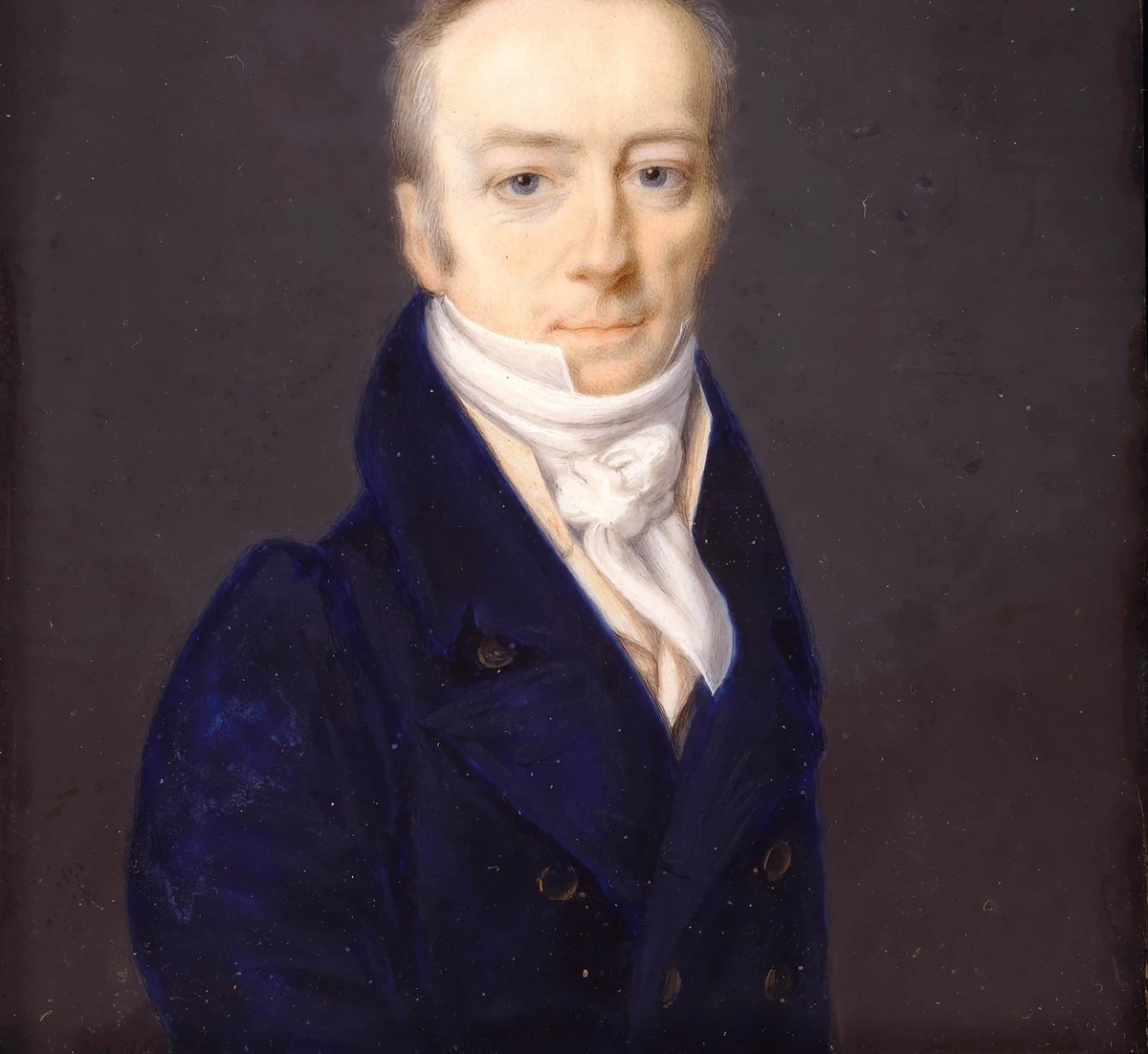
On October 23, 1826, a wealthy British chemist named James Smithson wrote a will containing one of the strangest gifts in American history. Smithson had never visited the United States. He held no American office, owned no American institution, and had no known family connection that required him to support the young republic. Yet his will stated that, if his nephew died without heirs, Smithson’s estate should pass to the United States to establish in Washington an institution for “the increase & diffusion of knowledge among men.”[1]
That contingent clause eventually created the Smithsonian Institution, which marks its 180th anniversary on August 10, 2026.[2] The basic chain of events is well documented. The harder question is motive: why did Smithson choose America at all? The surviving evidence suggests several plausible influences – his Enlightenment faith in science, his experience of Britain’s class system, and his interest in societies organized around merit rather than inherited rank. But there is no surviving letter in which Smithson plainly explains his choice. The most accurate answer is therefore more interesting than a single neat story: we know what he ordered, we know the world of ideas that shaped him, but the decisive personal reason remains unproven.
Quick Facts
- James Smithson: British chemist and mineralogist, born in Paris around 1765 and died in Genoa in 1829.
- Will: Written on October 23, 1826.
- Condition: Smithson’s estate first went to his nephew, Henry James Hungerford; the United States would inherit only if the nephew died without qualifying heirs.
- Trigger: Hungerford died unmarried and without heirs in Pisa on June 5, 1835.
- Bequest recovered: U.S. agent Richard Rush brought the estate to America in 1838.
- Value on arrival: The gold was reminted at the U.S. Mint for $508,318.46.
- Smithsonian founded: The Organic Act became law on August 10, 1846.
The Will Was a Contingency, Not an Immediate Gift to America
The first point often lost in retellings is that Smithson did not simply leave all his money directly to the United States. His 1826 will made his nephew, Henry James Hungerford, the primary beneficiary. Only if Hungerford died without children who could inherit under the terms of the will would the estate pass to the United States.[1]
That condition mattered because it shows that the Smithsonian clause was a deliberate fallback plan. Smithson had time to decide what should happen if his family line failed, and he chose a named country, a named city, a name for the institution, and a broad mission. The wording was concise, but it was remarkably specific in institutional purpose.
Smithson died in Genoa on June 27, 1829. Hungerford survived him for nearly six years, then died unmarried and without heirs in Pisa on June 5, 1835.[3] Only at that point did the American clause become operative. The United States was then faced with an unusual legal and political question: could the federal government accept a foreign private inheritance and administer it as a trust?
Who Was James Smithson?
Smithson was not primarily a philanthropist during his lifetime. He was a working scientist with interests in chemistry, geology, and mineralogy. Smithsonian Institution Archives records note that he published at least 27 scientific papers. His research ranged from mineral analysis to everyday chemical questions, and his work on zinc carbonates contributed to the later naming of the mineral smithsonite in his honor.[4]
His social position was more complicated. Smithson was born out of wedlock to Elizabeth Hungerford Keate Macie and Hugh Smithson, who became the first Duke of Northumberland. Because his parents were not married, James did not inherit his father’s aristocratic title or status. He grew up financially secure, but he also lived in a society where legitimacy and inherited rank shaped social standing.[5]
At the same time, Smithson belonged to a European scientific culture that treated knowledge as an international enterprise. His surviving writings repeatedly present science as useful to humanity rather than as the property of one nation. That outlook does not by itself explain America, but it helps explain why a permanent institution devoted to knowledge was a plausible final use of his fortune.
Why America? The Strongest Historical Explanation
No single surviving document says, in effect, “I choose America because…” That distinction is essential. Historians have reconstructed Smithson’s likely motives from his scientific networks, political environment, family experience, reading, and surviving papers rather than from a definitive confession.
Historian Heather Ewing, whose archival research reconstructed much of Smithson’s world, places the bequest within the culture of the Enlightenment and the late eighteenth-century “improvement” movement. Smithson came of age among scientists who believed knowledge could weaken inherited privilege and advance society. In that intellectual setting, the United States could appear as a political experiment in which achievement and public usefulness carried more weight than aristocratic pedigree.[6]
That interpretation fits parts of Smithson’s biography. His illegitimate birth excluded him from the full status associated with his father’s aristocratic family, while his scientific career gave him another path to reputation. Smithsonian accounts also note his dissatisfaction with Britain’s class distinctions. It is therefore reasonable to see the American bequest as compatible with his preference for merit, science, and a broader public legacy.[5][6]
But “compatible with” is not the same as “proved by.” A simple story in which Smithson angrily rejected Britain because the aristocracy mistreated him goes beyond what the surviving documents can establish. His bequest may have reflected several motives at once: intellectual ideals, frustration with inherited hierarchy, concern for his posthumous reputation, and confidence that a young republic could build an institution with a universal mission.
What We Still Cannot Prove
The biggest gap is Smithson’s own explanation. Most of his personal effects, mineral collection, and many papers were destroyed when fire damaged the Smithsonian Building in January 1865.[7] Some books, documents, and records survived, but the loss narrowed the evidence available to later historians.
As a result, several popular claims should be treated cautiously. There is no surviving “smoking gun” showing that Smithson chose the United States solely to punish Britain. There is also no firm evidence that a particular American politician persuaded him, or that he had secretly visited Washington. He had not visited the United States during his lifetime, according to Smithsonian records.[5]
Even the choice of Washington rather than another American city is not directly explained in the surviving will. Washington was the federal capital and therefore a logical location for an institution entrusted to the United States, but that is an inference. Smithson named Washington; he did not leave a surviving explanation of why that city was essential to him.
How the United States Turned the Bequest Into an Institution
The strange gift did not automatically create a museum. After Hungerford’s death, President Andrew Jackson informed Congress of the bequest in December 1835. Former president John Quincy Adams, then serving in the House of Representatives, became one of the most important advocates for accepting it. A House committee concluded that Congress had the authority to accept and administer the trust.[8]
Congress authorized the United States to pursue the claim in 1836. Richard Rush, a former U.S. attorney general, treasury secretary, and diplomat, traveled to Britain as the government’s agent. After proceedings in the Court of Chancery, Rush obtained the estate, converted its assets into British gold sovereigns, and returned across the Atlantic.[9]
The shipment itself was extraordinary: 11 boxes containing 104,960 sovereigns, plus smaller sums and Smithson’s personal materials. At the U.S. Mint, the gold was reminted into American currency worth $508,318.46.[9]
Even then, the Smithsonian did not immediately exist. Congress spent years debating what Smithson’s phrase “increase and diffusion of knowledge” should mean in practice. Proposals included a national university, library, scientific institute, observatory, museum, and combinations of those ideas. The debate was partly philosophical and partly constitutional: lawmakers disagreed over both the best use of the money and the proper role of the federal government.
The impasse ended on August 10, 1846, when the act organizing the Smithsonian Institution passed the Senate and was signed by President James K. Polk. The law established a Board of Regents and provided for a building, library, scientific facilities, collections, lectures, and other mechanisms intended to fulfill Smithson’s unusually broad instruction.[10]
Timeline: From a Private Will to the Smithsonian
- October 23, 1826 – James Smithson writes his will in London.
- June 27, 1829 – Smithson dies in Genoa, Italy.
- June 5, 1835 – His nephew Henry James Hungerford dies without heirs, activating the U.S. clause.
- December 17, 1835 – President Andrew Jackson informs Congress of the bequest.
- July 1, 1836 – Congress authorizes the United States to pursue and accept the legacy.
- 1838 – Richard Rush recovers the estate and brings the gold to the United States.
- August 10, 1846 – The Smithsonian Institution is formally established by law.
- January 24, 1865 – A fire in the Smithsonian Building destroys many of Smithson’s papers and personal effects.
Why the Mystery Matters More Than a Simple Answer
The uncertainty surrounding Smithson’s motive is not a weakness in the history; it is part of the history. The case shows how historians work when the record is incomplete. A will can prove what a person ordered. Correspondence and scientific writings can reveal values and intellectual commitments. Social background can make some motives more plausible than others. But none of those forms of evidence should be silently converted into certainty.
That is especially important because Smithson’s choice has invited mythmaking for nearly two centuries. A mysterious foreign benefactor, a fortune shipped in gold, a ten-year congressional argument, and an institution that eventually became one of the world’s largest museum and research networks make an unusually neat origin story. Neat stories, however, often erase the boundary between evidence and interpretation.
The stronger historical conclusion is narrower. Smithson deliberately created a conditional bequest to the United States for a Washington institution devoted to knowledge. His life and writings make Enlightenment science, merit, and opposition to inherited social hierarchy credible parts of the explanation. Yet the exact personal calculation that made him choose America was not recorded in any surviving document historians can point to as definitive.
The Smithsonian at 180
On August 10, 2026, the Smithsonian marks 180 years since the act that formally established the institution.[2] The anniversary gives Smithson’s unusual decision new relevance because the scale of the result is far beyond anything the wording of his short will could describe in detail.
What began as a conditional inheritance became a permanent American institution combining museums, collections, archives, research, education, and public access. That transformation was not Smithson’s work alone. Congress, administrators, scientists, curators, donors, and generations of staff shaped the institution after 1846. But the legal and moral starting point remains the same: a British scientist who had never visited the country entrusted his fortune to the United States for the public advancement of knowledge.
The unanswered part of the story is therefore also the most human. Smithson succeeded in creating an enduring legacy, but he left future generations without a complete explanation of why he chose the nation that ultimately carried it out.
Conclusion
James Smithson’s bequest is often presented as a solved mystery: an outsider rejected the British class system and chose democratic America. The evidence supports parts of that interpretation, but not its certainty. Smithson’s scientific worldview, his complicated place within British aristocratic society, and the Enlightenment culture around him all help explain why the United States could have appealed to him. None proves a single motive.
What can be proved is remarkable enough. In 1826, Smithson wrote a contingency into his will that named the United States, Washington, the Smithsonian Institution, and a mission centered on knowledge. His nephew’s death activated the clause. Congress accepted the trust, recovered the fortune, debated its meaning for a decade, and finally created the institution in 1846. The Smithsonian’s origin is therefore both documented and mysterious: the mechanism is clear, while the deepest personal reason behind it remains open.
Sources & Further Reading
- James Smithson Makes His Will – Smithsonian Institution Archives. https://siarchives.si.edu/collections/siris_sic_638
- Smithsonian Extends ‘American Aspirations’ Through Smithsonian’s 180th Anniversary Aug. 10 – Smithsonian Institution. https://www.si.edu/newsdesk/events/smithsonian-extends-american-aspirations-through-smithsonians-180th-anniversary-aug
- Death of Smithson’s Nephew – Smithsonian Institution Archives. https://siarchives.si.edu/collections/siris_sic_464
- Who Was James Smithson? – Smithsonian Institution Archives. https://siarchives.si.edu/history/featured-topics/smithson-smithsonian/who-was-james-smithson
- James Smithson, Founding Donor – Smithsonian Institution Archives. https://siarchives.si.edu/history/james-smithson
- Why This Wealthy British Scientist Saw So Much Potential in the United States of America – Smithsonian Magazine / Heather Ewing. https://www.smithsonianmag.com/history/the-lost-world-of-james-smithson-148808127/
- Fire Destroys Large Parts of SI Castle – Smithsonian Institution Archives. https://siarchives.si.edu/history/this-day-smithsonian-history/january-24
- John Quincy Adams’s Speech in 24th Congress – Smithsonian Institution Archives. https://www.si.edu/object/siris_sic_4641
- Accepting Smithson’s Gift – Smithsonian Institution Archives. https://siarchives.si.edu/history/featured-topics/smithson-smithsonian/accepting-smithsons-gift
- An Act to Establish the Smithsonian Institution, 1846 – Smithsonian Institution Archives. https://siarchives.si.edu/history/featured-topics/stories/act-establish-smithsonian-institution-1846