
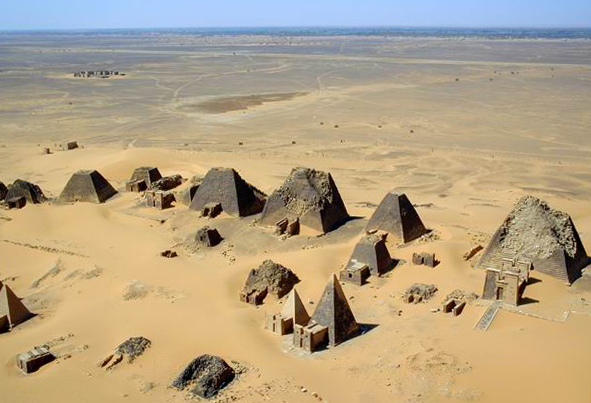

The pyramids at Meroë are often introduced as a surprise: pyramids in Sudan, smaller and steeper than the most famous monuments of Egypt. That framing attracts attention, but it can also hide the more important point. These cemeteries belong to the Kingdom of Kush, especially its later Meroitic phase, and they are evidence for local royal and elite traditions rather than a simple copy of Egyptian practice.
The archaeological setting is the key. The North, South and West cemeteries near Meroë contain many burials, including pyramids associated with rulers, queens, high officials and other elites. Their dates fall broadly from the centuries before the Common Era into the early centuries after it. The monuments therefore record a long practice of commemoration, not a single building campaign.
What can they prove? They show that Kushite elites invested in visible funerary architecture, used chapel decoration and burial assemblages to express rank, and worked within a Nile Valley world where Egyptian forms were known but adapted. What they cannot prove alone is the full political history of every ruler, the beliefs of non-elite communities, or the everyday economy that supported the cemeteries.
Modern readers should also notice condition and survival. Many pyramids were damaged by time, excavation and treasure hunting, while some have been partly restored. The surviving skyline is therefore both ancient and modern: an archaeological landscape shaped by original construction and later intervention.
The best use of Meroë is comparative but cautious. Compare the pyramids with Egyptian royal tomb traditions, but also ask what is distinctly Kushite: location, scale, chapel arrangement, royal names, and the political geography of Nubia. That keeps the site from becoming only a footnote to Egypt and lets it stand as evidence for a powerful African kingdom.
The cemetery is part of a larger Kushite landscape
UNESCO identifies three components of the World Heritage property: Meroe, Naqa and Musawwarat es-Sufra. Its account dates most royal burials at Meroe from the third century BCE onward and considers the cemeteries alongside the capital, temples and water-management structures. A pyramid photograph shows one part of this landscape, not the whole Kushite state.
Condition also matters. The record distinguishes ancient remains, damage from nineteenth-century treasure hunting and subsequent reconstruction. Before describing a pictured monument as intact ancient architecture, check which parts were reassembled or rebuilt. Compare the cemetery with settlement and temple evidence when asking how royal commemoration related to the wider society.
Sources and image license
- Wikipedia overview of the Pyramids of Meroë
- UNESCO listing: Archaeological Sites of the Island of Meroe
- Wikimedia Commons image file