
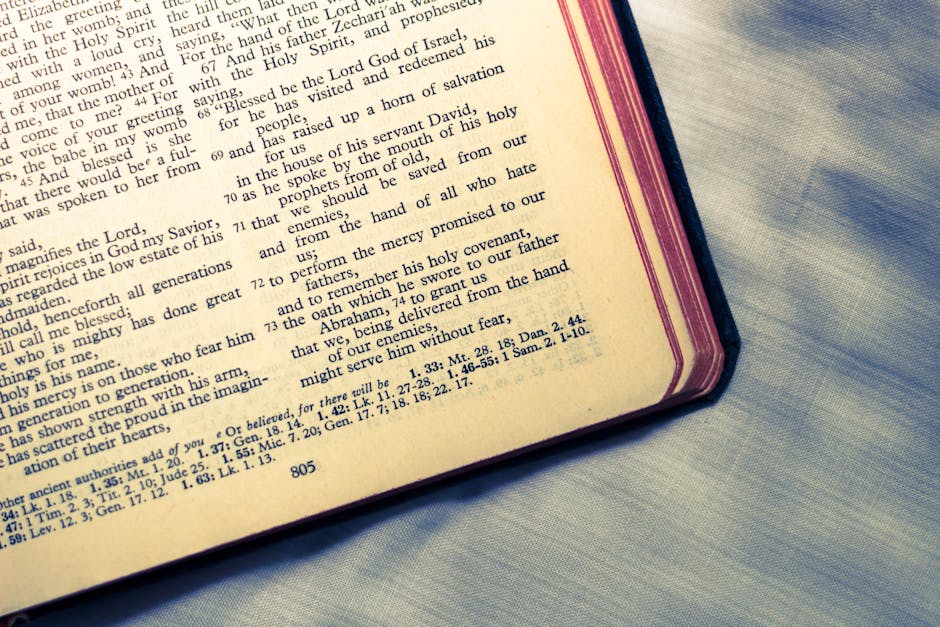
Hook Opening
Have you ever gone down a history rabbit hole at 2am and ended up somewhere completely unexpected? That happened to me last spring in a tiny bookshop in Kadikoy, Istanbul. I was sipping çay, flipping through a dusty copy of Epiphanius’ Panarion, and stumbled on a passage about a Christian sect that used only one gospel—a Hebrew version of Matthew. No John, no Luke, no Paul. My first thought: wait, that can’t be right. But the more I read, the more I realized this was the Ebionites, a lost community that might have preserved the actual teachings of Jesus without the theological layers we know today. Here is something that blew my mind: these Jewish Christians rejected the divinity of Christ and believed Paul was a heretic. Imagine that—the very foundation of mainstream Christianity was, to them, a distortion. I put the book down and just stared at the Bosphorus lights across the water. What if history had taken a different turn?
Historical Background
The Ebionites emerged in the first century AD, likely around the region of Palestine and Syria, but their influence spread into Anatolia, especially cities like Ephesus and Antioch. Think of it like a fork in the road that Christianity never took. Early Christianity was incredibly diverse—there were Gnostic groups, Marcionites, and these Jewish Christians who insisted on following the Torah and seeing Jesus as a prophet, not God. You might be wondering: how did we lose their story? Blame the winners. By the 4th century, orthodox church fathers like Irenaeus and Jerome wrote polemics against them, and their texts were systematically destroyed. But here is where it gets interesting: fragments survive through the writings of their enemies.
I remember visiting Ephesus about two years ago, walking through the Library of Celsus. My archaeologist friend, Mehmet, pointed out that Paul’s letters were read in that very city. But the Ebionites would have seen Paul as the enemy. That moment hit me hard—history is full of silenced voices. Heck, even the name ‘Ebionites’ comes from a Hebrew word meaning ‘the poor,’ probably a self-designation. They trace their roots to the early Jerusalem church led by James, Jesus’ brother. Specific dates? Irenaeus mentions them around 180 AD, but they likely existed earlier. Their gospel, called the Gospel of the Ebionites or Gospel of the Hebrews, is known only from quotes in the Church Fathers. A total of seven fragments survive. Seven. That’s all we have.
What We Know from the Fragments
Here is something that blew my mind: in one fragment, Jesus says, ‘I came to abolish sacrifices, and if you cease not from sacrificing, the wrath of God will not cease from you.’ That is radical—they saw Jesus as a reformer of Judaism, not the founder of a new religion. They rejected the virgin birth, believed Jesus became the Christ at his baptism when the Holy Spirit descended. And they observed Jewish law strictly, including circumcision and dietary rules. Think of it like a sect that wanted to keep Jesus Jewish, while the rest of Christianity slowly abandoned those customs. The mainstream church labeled them heretics, but were they?
The Heart of the Story
The key figures in this story are James, the brother of Jesus, who led the Jerusalem church; Paul, who spread a gentile-friendly Christianity; and later writers like Epiphanius, who preserved quotes to refute them. But the real heart is the lost gospel itself. Imagine a text that predates the canonical Gospels—some scholars argue the Gospel of the Hebrews was used by Matthew and Luke as a source. That would make the Ebionites not a fringe group but a bridge to the historical Jesus. Yet only fragments remain. Let me take you to a specific location: I was at the Museum of Anatolian Civilizations in Ankara, staring at a 2nd-century amulet with a Greek inscription that mentioned ‘Jesus Christ.’ But what if earlier Christians used Hebrew letters? The lack of physical evidence is maddening.
But here is where it gets interesting: recent discoveries in the Judean desert and at Nag Hammadi have revived interest. In 2012, a scholar named Petri Luomanen published a reconstruction of the Gospel of the Ebionites from the patristic quotes. It’s only about 30 verses long. I spent an entire night reading it, cross-referencing with the Synoptic Gospels. The differences are subtle but profound. For example, in the baptism scene, John the Baptist has a crisis of faith—he asks Jesus, ‘Who are you?’ That human moment is missing from Matthew and Mark. You can almost feel the struggle of a community trying to make sense of their teacher.
The Geographical Connection to Anatolia
Why does this matter for Turkey? Because early Christian communities in Anatolia—like those in Ephesus, Smyrna, and Hierapolis—were incredibly diverse. I once visited the House of the Virgin Mary near Ephesus, a site revered by Muslims and Catholics. But the Ebionites would have rejected Mary’s virginity entirely. That kind of diversity is often erased from popular Christian history. My professor at Istanbul University, Dr. Ayşe Çalık Ross, once told me that the Ebionites might have survived longer in the rural areas of Cappadocia underground cities. I walked through Derinkuyu last year and imagined secret congregations reading a Hebrew gospel by oil lamp. It gave me chills.
The Part Nobody Talks About
Here is a controversial interpretation: the Ebionites may represent the original Christianity of the first apostles, not Paul’s version. If you look at Acts of the Apostles, the Jerusalem church under James kept the Law. Paul had to defend his gospel to them. So who changed Christianity? The Ebionites argued Paul did. And they were suppressed. But here is something that blew my mind: even though the Ebionites were condemned, their ideas influenced later groups like the Nazarenes and even some Islamic views of Jesus. The Qur’an describes Jesus as a prophet, not God’s son, and rejects the crucifixion—similar to Ebionite theology. Could Muhammad have encountered Ebionite communities in Arabia? There’s scholarly debate, but it’s plausible.
Another lesser-known angle: the Ebionite gospel might be connected to the hypothetical Q source used by Matthew and Luke. If Q was a sayings gospel without a passion narrative, the Gospel of the Hebrews was similar. Some scholars think the Ebionites preserved an early form of Q. Think of it like a hidden thread that, if pulled, could unravel the entire canon. I spent an afternoon in a coffee shop in Kadikoy with a fellow history nerd, arguing about this. He insisted the Ebionites were just a minor sect; I pointed out that even Origen, the great theologian, respected their adherence to Jewish tradition. The debate keeps history alive.
Ancient Sources That Mention Them
The main sources are: Irenaeus, Against Heresies (180 AD); Origen, Commentary on Matthew (early 3rd century); Eusebius, Church History (early 4th century); and Epiphanius, Panarion (late 4th century). Epiphanius gives the longest account, claiming the Ebionites had a gospel called ‘according to Matthew’ in Hebrew. But he also says they were obsessed with poverty. I can’t help wondering: were they really ‘the poor’ as a virtue, or did Epiphanius twist their name? The answer is probably lost.
Why It Still Matters Today
In a world of religious pluralism, the Ebionites remind us that Christianity was not monolithic from the start. Modern scholarship on the historical Jesus—like the Jesus Seminar in the 1990s—has revived interest in Jewish Christian sources. National Geographic History magazine did a feature in 2018 on ‘Lost Christianities,’ and the Ebionites got a few paragraphs. But they deserve more. In Turkey, recent finds at the ancient city of Stratonikeia included inscriptions that mention a ‘synagogue of the Christians’—perhaps a Jewish Christian community.
Current research by Turkish archaeologists is uncovering early Christian sites in Lycia and Phrygia that could shed light on these groups. I recently attended a lecture at the British Institute in Ankara where a scholar showed a newly discovered tomb inscription from the 3rd century that used both Jewish and Christian symbols. It was exactly the kind of hybrid that the Ebionites would have produced. You might be wondering: can we ever find the full gospel? Unlikely, but fragments from caves in the Judean desert could surface. The Dead Sea Scrolls included apocryphal psalms—why not an Ebionite manuscript? The hope keeps me up at night.
My Personal Take
Honestly, I think the Ebionites represent the road not taken for Christianity—a Judaism that welcomed Gentiles without demanding they abandon Moses’ Law. Is that practical? Probably not, but it’s a beautiful vision of continuity. I remember sitting in a late-night research session at home, with the sounds of Istanbul ferry horns in the distance, mapping out the Ebionite gospel fragments. I felt like a detective trying to reconstruct a crime scene from matching blood spatters. It was exhilarating and sad. So much lost.
Another anecdote: last summer I visited the ancient city of Hierapolis with its white travertines. In the museum there, I saw a sarcophagus with a relief of a menorah next to a cross. That image—the meeting of Judaism and Christianity—is the Ebionite ideal. But it was also a compromise that satisfied no one. The rabbis rejected them as not Jewish enough; the church rejected them as not Christian enough. They were stuck in the middle. That is why their story is so human. We all know what it’s like to belong nowhere.
Final Thoughts
The lost gospel of the Ebionites is more than a historical curiosity—it is a window into a world that could have been. Every time I visit an ancient site in Turkey, I wonder what voices are still buried under the soil. The Ebionite gospel survives only as echoes in polemical texts, but those echoes are worth listening to. They challenge our assumptions about the past and remind us that history is not a straight line but a web of possibilities. So next time you read the New Testament, think about what might have been left out. Did this change how you think about this topic? Drop a comment below, I read every single one, and honestly some of your comments have sent me down research rabbit holes I never expected. That is the best part of writing about history.
Sources & Further Reading
- Epiphanius of Salamis. The Panarion. Translated by Frank Williams, Brill, 1987.
- Luomanen, Petri. Recovering Jewish Christian Sects: The Ebionites and the Nazoreans. Brill, 2012.
- Ehrman, Bart D. Lost Christianities: The Battles for Scripture and the Faiths We Never Knew. Oxford University Press, 2003.
- National Geographic History. ‘Lost Christianities: The Ebionites.’ 2018.