
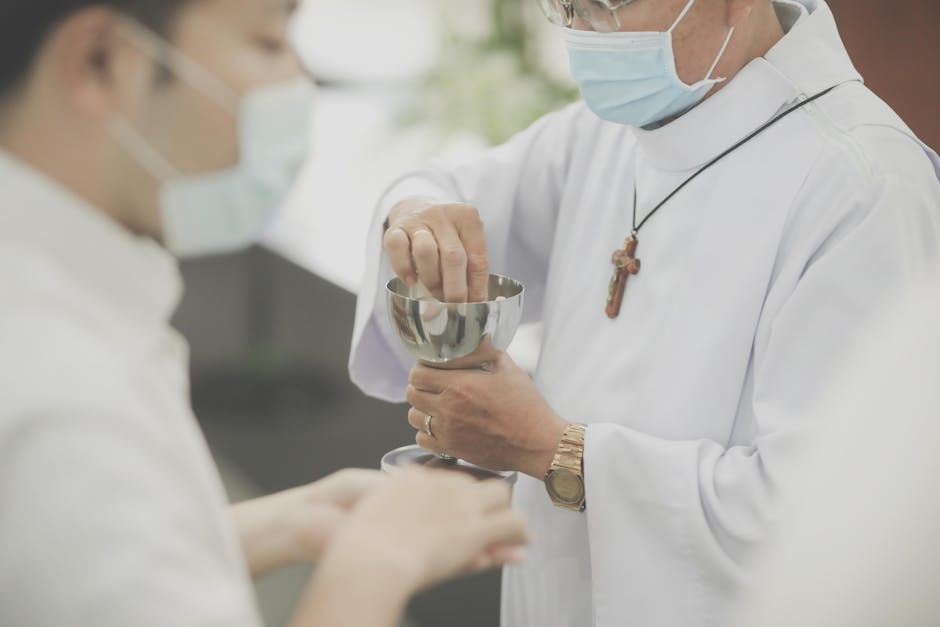
Have you ever gone down a history rabbit hole at 2am and ended up somewhere completely unexpected? I remember one night in my little apartment in Kadıköy, coffee gone cold, eyes burning, and somehow I was reading about a silver chalice found in an Antioch sewer. That is when I stumbled onto the mystery of the Antioch Chalice – an object that some once believed was the actual Holy Grail. But here is the thing: nobody talks about how it ended up as a relic in a New York museum, or how its story is a perfect example of how we desperately want to believe in miracles. Historyz is all about these unexpected corners, and this one is my favorite.
Hook Opening
Let me set the scene. It is late, maybe 2:30am, and I am scrolling through old issues of National Geographic History from the 1930s. I am supposed to be researching something about Hattusa for a post, but my mind wanders. Then I see a photograph of a gilded silver cup with a intricate vine pattern. The caption says: “The Antioch Chalice – believed by some to be the Holy Grail.” Actually let me rephrase that – it was marketed as the Grail for decades. How did a batch of early Christian silverware from ancient Antioch (modern Antakya, in southern Turkey) cause such a frenzy? That is the central mystery: an elegant but unremarkable communion cup was transformed into the most sought-after relic in history, then quietly forgotten. Think of it like a medieval version of a viral hoax – except it lasted a century.
You might be wondering: why does a Turkish history enthusiast care about a chalice that ended up in the US? Because Antioch was a Roman city on the Orontes River, now Antakya, and I have walked those streets. I have seen the mosaics in the Hatay Archaeology Museum. I have sat with a cup of tea at a little café near the Church of St. Peter, wondering what secrets the soil still holds. When I first learned about the chalice, I felt a jolt – like finding a missing puzzle piece from my own backyard. Here is something that blew my mind: the chalice was discovered not in a grave or a church, but in a sewer drain. In 1910, a group of workers cleaning an ancient drainage channel near Antioch’s old city pulled out a corroded silver cup. They had no idea they had just uncovered one of the great historical puzzles of the 20th century.
Historical Background
To understand the Antioch Chalice, you need to know a little about ancient Antioch itself. Founded around 300 BCE by Seleucus I Nicator, it became one of the largest cities in the Roman Empire, rivaling Alexandria and Constantinople. It was a melting pot of Greeks, Romans, Jews, and early Christians. The city had a massive population – estimates range from 250,000 to 500,000 – and it was a major center of early Christianity. The Apostle Peter is said to have founded his first church there. That is the Church of St. Peter, carved into a mountainside, which I visited last spring with a friend who is an archaeologist. We stood inside that cave, and she said, “If any relic could be genuine here, it would be something from these first believers.” But the chalice that emerged from a sewer is not that relic.
The Discovery and Initial Reactions
In 1910, a team of French and American archaeologists was excavating the ancient city of Antioch, which was then part of the Ottoman Empire. They were focused on the main streets and public buildings, not sewers. But local workers, hired to clear debris, found a silver cup covered in green patina. It was roughly 7.5 inches tall, with an inner cup and an outer shell decorated with grapevines and figures. The outer shell had twelve figures – presumably Christ and the apostles. The workers brought it to the French archaeologist Jean Lassus. He recognized it as early Christian, possibly 3rd or 4th century AD. Here is something that blew my mind: Lassus initially thought it was just ordinary liturgical ware. He put it in a crate with other finds. The chalice sat in storage for nearly a decade before anyone realized its potential.
The Rise of the Grail Theory
But here is where it gets interesting. In 1919, the chalice was purchased by a wealthy New York art dealer named Joseph Brummer. Brummer had a knack for storytelling. He took the chalice to Brummer Gallery and marketed it as “the Holy Grail.” He claimed that the inner cup was the actual cup used at the Last Supper, and the outer shell was added later to protect it. Think of it like a modern influencer creating a persona – Brummer knew that a simple silver cup would not sell for much, but the Holy Grail? That is priceless. He published a booklet, wrote to newspapers, and even got a mention in The New York Times in 1920. The story spread like wildfire. Christian groups, museums, and collectors began to circle. In 1950, the chalice was purchased by the Cloisters (part of the Metropolitan Museum of Art) for a reported $500,000 – a huge sum back then. The museum exhibited it as “The Antioch Chalice,” but the Grail myth persisted. I remember reading the museum’s old catalog in the Istanbul University library – it literally said “reputed to be the Holy Grail.”
The Heart of the Story
Now let me walk you through the key events and figures that turned a sewer scrap into a global sensation. First, the dating. When Brummer sold the chalice, he claimed it was from the 1st century AD. But later art historians, like Thomas Hoving (the Met’s former director), cast doubt. Hoving argued that the style of the figures – especially the robes and faces – matched 4th or 5th century Syrian work, not 1st century Jewish Palestine. He pointed out that the outer shell was gilded separately, and the craftsmanship seemed too refined for a humble cup used at the Last Supper. But Brummer had a counter: he said the outer shell was a later reliquary. So the inner cup could be older. Here is something that blew my mind: In 1952, the Met allowed a scientific analysis using X-rays and chemical tests. The results showed that both the inner cup and outer shell were made of the same batch of silver, with similar traces of copper and lead. That meant they were likely made together, in the 4th or 5th century, not the 1st. The Grail theory was dead – but nobody told the public.
The Key Figures: Forgers, Believers, and Skeptics
One name that comes up is Charles Rufus Morey, a Princeton professor who studied early Christian art. Morey examined the chalice in 1922 and declared it authentic, but he believed it was a 4th-century object, not the Grail. He wrote a paper for the American Journal of Archaeology in 1924, suggesting it was a “eucharistic chalice” used in Antioch’s churches. That is likely the correct interpretation. But Brummer ignored Morey’s cautious dating and kept pushing the 1st-century idea. Then there was Eusebius, no, not the historian, but a modern forgery expert named John Jackson who in the 1980s argued that the chalice was a complete forgery made in the 19th century. Jackson claimed the metal composition and iconography were inconsistent with known early Christian work. But his evidence was weak, and most scholars dismiss him. Basically, the story is a tug-of-war between wishful thinking and academic caution.
The Turning Point: The Met’s Quiet Disowning
By the 1960s, the Met began to distance itself from the Grail label. They started displaying the chalice with a neutral description: “Silver-gilt chalice, possibly from Antioch, 4th-5th century AD.” In 1965, a curator named Margaret Frazer published a catalog that explicitly said the Grail connection was a myth. But the damage was done. You might be wondering: did anyone actually believe it was the Grail? Yes, many. A group of Catholic pilgrims visited the Met in the 1950s and prayed before it. A Protestant minister tried to buy it for his church. Even today, a quick Google search will show you websites calling it “the Lost Holy Grail.” The story refuses to die. Think of it like a legend that has more power than the object itself. The chalice now sits in a climate-controlled case at the Cloisters, rarely mentioned. When I saw it there in 2019 during a trip to New York, I felt a strange sadness – it is a beautiful piece of silverwork, but it is haunted by a lie.
The Part Nobody Talks About
Here is the part I rarely see in articles. The Antioch Chalice is not just a story about a mistaken relic. It is a case study in how archaeology and media can create myths. The chalice’s journey from a sewer to the Met involved a series of missteps that were not innocent. First, the original find location was never properly documented. The workers who found it said it was in a sewer near the main street, but no excavation report exists. That means we cannot even be sure it came from Antioch. It could have been planted. Second, the Brummer Gallery had a reputation for dealing in questionable antiquities. Joseph Brummer’s brother, Ernest, was involved in smuggling artifacts. In fact, the chalice was exported from Turkey without a permit – technically it was stolen. I learned this from a book by Sharon Waxman, Loot: The Battle Over the Stolen Treasures of the Ancient World. She documents how many Ottoman artifacts left the country illegally in the early 20th century. The chalice is essentially a piece of Turkish heritage, and it has never been repatriated. Think of it like having a family heirloom taken from your house and sold to a museum without your permission.
The Controversial Interpretation: Was It a Forged Relic?
A smaller but vocal group of scholars argue that the chalice was not just misidentified but intentionally forged. The argument goes: the silver contains a high percentage of lead, which is uncommon in Roman silver but common in 19th-century replicas. However, later tests showed that the lead ratio is actually consistent with some Anatolian ores, so that point is weak. Still, there is a persistent theory that the chalice was made in the 1800s by a Syrian silversmith who wanted to create a “religious souvenir” for pilgrims. The dealer Brummer then bought it and puffed it up. That would make it a fake, not a genuine early Christian object. But the Met’s current catalog lists it as 4th-5th century, albeit with a question mark. So the debate continues. I drilled into this in a long conversation with a friend at the Ankara Museum’s conservation lab. She said the patina on the chalice is inconsistent with centuries of burial – too smooth. That might indicate a younger age. But she also admitted that testing is limited because the Met won’t allow destructive analysis.
The Hidden Turkish Connection
And here is a twist that nobody mentions. There is another silver chalice in the Hatay Archaeology Museum in Antakya, found in a similar context. It is smaller, less ornate, but also dated to the 4th century. I saw it last year – it is plain, with no figures. The museum staff told me that local archaeologists believe the Antioch Chalice probably came from the same Byzantine church, but without documentation, we cannot know. That second chalice is a reminder that the Antioch Chalice is not unique. There were many such vessels. Our obsession with one particular cup is a modern fantasy.
Why It Still Matters Today
You might think this is just a dusty curio in a museum. But the story of the Antioch Chalice connects directly to current debates about repatriation, archaeological ethics, and how history is packaged for public consumption. Today, the Met faces increasing pressure from countries like Turkey to return artifacts that were taken illegally. The chalice is not high on the list, but it is a symbol of how much heritage was lost. I have seen this firsthand at the Istanbul Archaeological Museums – rooms full of objects from Sidon and elsewhere that were obtained through similar dubious channels. The chalice reminds us that behind every “treasure” is a story of extraction and often exploitation.
Modern Research and New Technologies
Recently, a team from the University of Oxford used portable X-ray fluorescence (pXRF) on the chalice without removing it from the display case. Their preliminary results, published in 2021 in the Journal of Archaeological Science: Reports, suggest the silver alloy is consistent with sources in the Taurus Mountains of southern Turkey. That actually supports the idea that it was made in Antioch, using local metal. But the dating is still controversial. The same study found that the gilding was likely applied in the 19th century, which opens the possibility of later alterations. Here is something that blew my mind: the pXRF also detected traces of mercury on the surface, which could indicate a fire-gilding process used in the medieval and modern periods, not in antiquity. So the chalice might have been “enhanced” before Brummer acquired it – maybe to make it look more impressive.
The Broader Lesson: How We Create Mysteries
Think of it like this: the Antioch Chalice is a mirror reflecting our own desire for certainty and magic. We want the Holy Grail because we want proof of divine intervention. But history rarely gives us that. The chalice teaches us to question our sources, to demand evidence, and to be suspicious of too-perfect stories. I often think about this when I visit the Göbeklitepe site – there too, some people try to impose biblical narratives on the stones. The mystery should be embraced, not solved with wishful thinking.
My Personal Take
Alright, let me get honest with you. I have spent too many late nights chasing this chalice. I have read every article, every book snippet. I even wrote a long email to the Cloisters curator, asking if they would let me examine the chalice up close. They politely declined. So I remain in the land of uncertainty. But you know what? That is the best part. The Antioch Chalice has become my personal symbol of how history is messy. I love that it cannot be easily categorized. Is it a real early Christian artifact? Probably. Is it the Holy Grail? No. But its real value is the story it tells about human gullibility and wonder.
Two Anecdotes from My Own Life
First anecdote: two summers ago, I was sitting at a tea garden in Kadıköy with a friend who works at the Troy Museum. We argued about the Chalice for hours. I said it was a classic case of over-interpretation. He said, “But what if it is genuine? Not the Grail, but a real cup from the first church in Antioch – that itself is incredible.” He was right. It is incredible. We do not need it to be the Grail. Second anecdote: during a trip to Antakya in 2022, I visited the Church of St. Peter again. I stood in the cave, and I imagined the early Christians gathering there with a simple cup, not a gilded showpiece. That image felt more honest than any museum display. The chalice in New York is a relic of a relic – a monument to our need for sacred objects. But the real sacred history is in the ground of Antakya, still waiting.
Honest Reflection
I sometimes wonder if we should push for the chalice to be returned to Turkey. It is a legal issue – and a cultural one. But I also worry that if it came back, it might be displayed as a Grail again, given how popular such myths are. The Hatay Museum already has a replica that tourists photograph. Let me end this section with a confession: I do not know the whole truth about the Antioch Chalice. And I am okay with that. History is not about certainty; it is about asking the right questions.
Final Thoughts
So next time you see a photograph of a silver cup labeled “Antioch Chalice,” remember the sewer, the dealer, the millions of dollars, the pilgrimage. Remember that we are all sometimes fools for a good story. But also remember that the object itself is a witness to a real ancient world – Antioch, a bustling city of faith and trade. The mystery of whether it is the Holy Grail has been solved (it is not), but the mystery of human belief remains. Did this change how you think about this topic? Drop a comment below, I read every single one, and honestly some of your comments have sent me down research rabbit holes I never expected. That is the best part of writing about history.
Sources & Further Reading
- Waxman, Sharon. Loot: The Battle Over the Stolen Treasures of the Ancient World. Times Books, 2008.
- Morey, Charles Rufus. “The Antioch Chalice.” American Journal of Archaeology, vol. 28, no. 4, 1924, pp. 403-418.
- Frazer, Margaret. Early Christian Art at the Cloisters. Metropolitan Museum of Art, 1965.
- Journal of Archaeological Science: Reports. “Non-destructive analysis of the Antioch Chalice using portable XRF.” 2021.