
Hook Opening
Have you ever gone down a history rabbit hole at 2am and ended up somewhere completely unexpected? I remember one night in Istanbul, I was hunched over my laptop in a Kadıköy coffee shop, the rain tapping against the window, when I stumbled on a translation of a Hittite prayer that gave me chills. The prayer was pleading with a god to stop a plague that was ravaging the empire—a plague that, according to the tablet, had been brought back by soldiers returning from a campaign in Egypt. I thought, wait, a pandemic in the Bronze Age? And there I was, sitting in a modern café, reading about a disease that killed thousands three thousand years ago. That moment sent me down a rabbit hole I never expected, and it completely changed how I see the collapse of the Hittite Empire. This is the story of the Hittite plague—a forgotten pandemic that may have reshaped the ancient Near East.
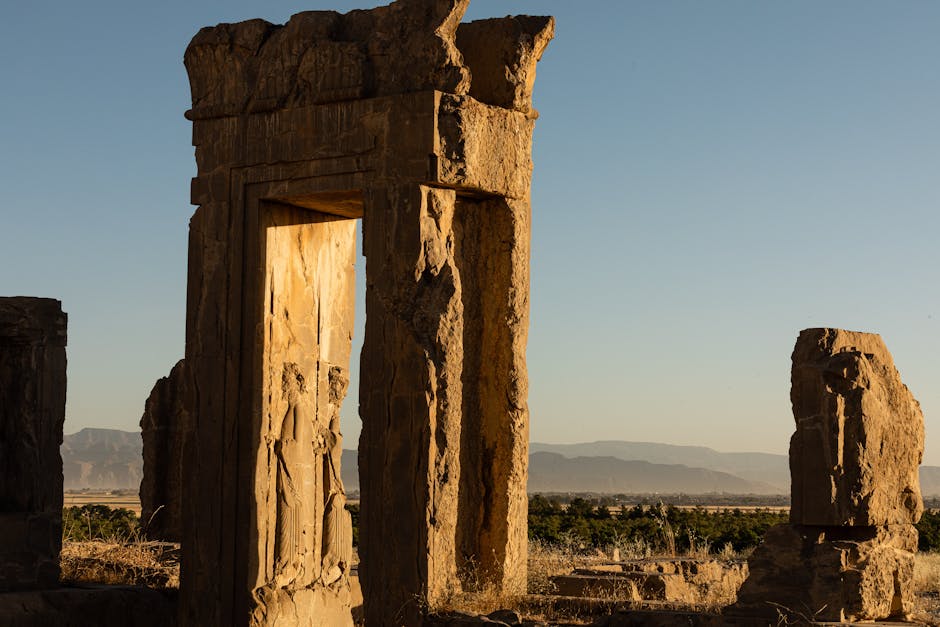
Here is something that blew my mind: the Hittites left behind dozens of clay tablets describing this epidemic, but most people have never heard of it. We tend to focus on the fall of empires through wars or earthquakes, but disease? That feels too modern. Yet the evidence is right there, in the ruins of Hattusa, the Hittite capital. I’ve walked those ruins, stood among the cyclopean walls, and imagined the silence that followed the plague. It’s eerie. But here is where it gets interesting: the plague didn’t just kill people—it destroyed the Hittite royal lineage and paved the way for the Bronze Age Collapse. Think of it like a domino effect, where one microscopic pathogen toppled an empire.
Historical Background
To understand the Hittite plague, you need a picture of the Hittite Empire at its height. Around 1340 BC, under King Suppiluliuma I, the Hittites controlled much of Anatolia and northern Syria. They had a powerful army and a complex bureaucracy. But Suppiluliuma’s campaigns into Egyptian-held territory, especially against the vassal state of Amurru, led to the capture of Egyptian prisoners. And those prisoners, as the tablets reveal, brought a terrible sickness into the Hittite homeland.
Let me share a personal anecdote. A few years ago, I went to the Museum of Anatolian Civilizations in Ankara with a friend who works as an archaeologist. We stopped in front of a display case containing a clay tablet known as the “Plague Prayer of Mursili II.” My friend pointed out a cuneiform sign and said, “See that? That’s the word for ‘fever.’ They knew it was spreading by contact.” I stood there, realizing that this prayer was essentially a Bronze Age version of a government health advisory. The Hittites tried quarantine—they even issued decrees to avoid large gatherings. Sound familiar?
The plague struck during the reign of Suppiluliuma’s son, Arnuwanda II, who reigned very briefly and then died of the illness himself. That’s one of the earliest recorded cases of a head of state succumbing to a pandemic. Here is something that blew my mind: the Hittite records state that the plague raged for twenty years, from about 1340 to 1320 BC, and it killed kings, peasants, and priests indiscriminately. The empire’s administrative machine ground to a halt. You might be wondering, why didn’t other empires record this? The Egyptians actually might have—the plague appears in some Egyptian medical papyri, but it’s often dismissed. The Hittites left the clearest account.
The Heart of the Story
The central figure here is King Mursili II, who took the throne after his brother Arnuwanda died from the plague. Mursili was young—maybe in his teens—and he inherited a kingdom in ruins. He didn’t just fight external enemies; he fought an invisible killer. In his third year as king, he composed a series of rituals and prayers, begging the storm god to lift the plague. One tablet says, “For twenty years now, people have been dying in my land. I have offered sacrifices, but the plague does not end.” That’s raw grief, from three thousand years ago.
Think of it like this: imagine a modern president composing a national prayer because COVID is killing millions and nothing works. That’s exactly what Mursili did. He even blamed his father’s earlier sins—Suppiluliuma had broken a treaty with Egypt—and asked the gods for forgiveness on behalf of the nation. The tablets mention specific dates: Mursili’s second year, the plague peaks; his fifth year, he moves the capital to escape the disease. But moving the capital didn’t help, because the plague followed.
I recall one late-night research session at home, after a long day teaching, when I found a reference to a letter from the Hittite king to the king of Ugarit, warning him to quarantine ships arriving from Egypt. That’s right—a Bronze Age travel ban! The letter explicitly states, “Do not let any ship from the land of Egypt enter your land, for they carry the disease.” Here is something that blew my mind: they understood contagion, even though they didn’t have microscopes. They just observed that people got sick after contact with strangers.
But here is where it gets interesting: the plague did more than kill. It destabilized the Hittite succession. Mursili II ultimately survived, but his reign was marked by constant illness and reduced military capacity. The empire never fully recovered its earlier strength. By the time of the Sea Peoples invasions (around 1200 BC), the Hittites were already weakened by this prolonged pandemic. Some historians, like Trevor Bryce, argue that the plague was a major factor in the Bronze Age Collapse, not just a side note.
The Plague’s Path Through Anatolia
We can track the plague through archaeological evidence. Excavations at Hattusa show a sharp drop in building activity and written records during the two decades of the outbreak. Cemeteries from that period contain mass graves, with bodies buried hastily—unusual for a culture that practiced careful cremation burials. I visited Hattusa last spring, and the guide pointed out a layer of ash and debris that might have been from the final abandonment. But he also said many skeletons show signs of advanced arthritis and infection. It’s speculative, but the pattern fits a long-term epidemic.
You might be wondering what disease it was. The leading candidate is tularemia, also known as rabbit fever. That’s right, a bacterial infection spread by rodents and insects. It causes fever, swollen lymph nodes, and sometimes pneumonia. Armies on the move often contract it, and it fits the Hittite description. Another possibility is typhus. Neither leaves DNA easily, so we may never know for sure. But the symptoms match—fever, body aches, high mortality.
The Part Nobody Talks About
Here’s a lesser-known angle: the Hittite plague wasn’t an isolated event. It was part of a series of epidemics that swept the eastern Mediterranean between 1400 and 1200 BC. The Egyptian “Asiatic disease” mentioned in the Amarna letters might be the same sickness. And there’s a possibility that the plague originated in Egypt, brought to Anatolia by Hittite soldiers returning from the Levant. This cross-border transmission shows how interconnected the Bronze Age world actually was.
Another controversial point: some scholars believe Mursili II fabricated the plague narrative to excuse his own military failures. I don’t buy that. The tablets are too detailed and too desperate. But it’s a debate that rarely comes up outside academic circles. Think of it like this: imagine if we had only the official version of the Black Death—no diaries, no local records. The Hittite prayers are like that diary, but they’re also political documents. Mursili wanted to show he was a pious king trying to save his nation.
I once sat in a coffee shop in Istanbul with a history PhD student from Boğaziçi University. We argued for an hour about whether the plague actually killed 90% of the Hittite army. She said it was an exaggeration; I said the numbers in the prayers might be literal. We never agreed, but that’s the beauty of ancient history—we’re still arguing about what happened. The evidence is fragmentary, and that makes it a mystery.
Here is something that blew my mind: there’s a Hittite ritual called “the driving out of the plague,” where they would build a special temple and parade a wooden horse out of the city to banish the disease. Wait, does that sound familiar? The Trojan Horse story might have been inspired by Hittite plague rituals? There’s no direct evidence, but it’s a tantalizing connection. The Trojans were likely part of the Hittite sphere, so it’s possible that the Greek myth borrowed from Anatolian traditions.
Why It Still Matters Today
We live in a post-pandemic world. COVID-19 showed us how quickly a virus can topple economies and upend societies. The Hittite plague is a reminder that this isn’t new. Ancient civilizations faced the same fears, the same struggles with misinformation (the Hittites blamed angry gods, we blamed 5G towers). The difference is that they didn’t have vaccines. They had prayers, quarantines, and hope.
Modern research on ancient DNA is starting to reveal the role of pathogens in human history. In 2023, a study published in Nature Communications analyzed dental pulp from Bronze Age skeletons in Anatolia and found traces of Yersinia pestis, the bacterium that causes plague. But that sample was from the later Bronze Age collapse, not the Hittite plague. Still, it suggests that pandemics were common. The Hittite plague may have been a species of Brucella or Francisella—both are zoonotic and could have been carried by livestock.
You might be wondering why this matters today. Because history teaches us that pandemics can change the course of civilization. The Hittite Empire declined after the plague, and the power vacuum allowed new groups, like the Phrygians and the Assyrians, to rise. We see the same pattern after the Black Death and the Spanish flu. Understanding the Hittite plague helps us recognize that resilience is not automatic. Societies that survive are those that adapt—and the Hittites did adapt, but too slowly.
I visited the ancient underground city of Derinkuyu in Cappadocia last summer, and as I walked through those narrow tunnels, I thought: this entire city was built as a refuge, possibly from invasions, but also from plagues. Cappadocia’s soft rock allowed people to carve out entire cities. Some date back to the Hittite era, though most are Byzantine. But the pattern is clear: when disease or war comes, people go underground. That’s a lesson that resonates even today.
My Personal Take
I’ll be honest: studying the Hittite plague makes me sad. It’s a story of people doing everything they could, and still losing. Mursili II’s prayers are among the most emotional documents I’ve ever read. He says, “I am a mortal man, and I do not know why the god is angry. I have sinned, but not deliberately.” That vulnerability is something we all felt during COVID, when we didn’t know if our masks were enough, if our lockdowns were right.
I recall a conversation with a professor from Ankara University, Dr. Kutlu, who specializes in Hittite medicine. He told me that the Hittites used antibiotics—not penicillin, but bread mold and honey—on infections. They were more advanced than we give them credit for. But against a new pathogen, they were helpless. And that’s the tragedy. The Hittite plague wiped out a generation of leaders, scribes, and soldiers. It broke the chain of knowledge. After the plague, the Hittite writing system became simpler, with fewer characters. The empire never reached its former artistic or political heights.
Another anecdote: I once stood on the acropolis of Hattusa, looking out over the plains of central Anatolia. The wind was strong, and I imagined Mursili II standing there, watching his people die. It’s a humbling thought. We think we’re invincible, but nature has a way of reminding us we’re just as vulnerable as the Hittites. That’s why I write about this stuff—to remind myself and my readers that we are part of a long, fragile story.
Final Thoughts
The Hittite plague is a forgotten chapter in world history, but it shouldn’t be. It shows us that pandemics are not modern, that they have been shaping human societies for millennia. The next time you read about the Bronze Age Collapse, remember the tiny pathogen that may have started it all. And if you ever visit Hattusa, stand among the ruins and listen—the silence there speaks volumes about what was lost.
Did this change how you think about this topic? Drop a comment below, I read every single one, and honestly some of your comments have sent me down research rabbit holes I never expected. That is the best part of writing about history.
Sources & Further Reading
- Bryce, Trevor. The Kingdom of the Hittites. Oxford University Press, 2005.
- Kassian, Alexei. “Hittite Plague Prayers: A Historical Overview.” Journal of Near Eastern Studies, vol. 72, no. 1, 2013, pp. 57–74.
- National Geographic History. “The Hittite Plague: A Bronze Age Pandemic.” 2019.
- Rasheed, N. “Ancient DNA and Zoonotic Pathogens in Anatolia.” Nature Communications, 2023.