
Hook Opening
Have you ever gone down a history rabbit hole at 2am and ended up somewhere completely unexpected? I was in a coffee shop in Kadıköy last year, scrolling through old excavation reports instead of sleeping—because that’s how I roll, honestly—and I stumbled upon a name I barely recognized: Urartu. I knew about the Hittites, the Assyrians, even the Phrygians. But Urartu? It felt like a ghost that had slipped through the cracks of my mental map. Here is something that blew my mind: this kingdom, centered around Lake Van in eastern Turkey, was a powerhouse that challenged the Neo-Assyrian Empire at its peak, building cities of stone and iron that are still standing today, mostly ignored by tourists. Think of it like a missing chapter in the story of ancient empires—everyone focuses on Rome or Egypt, but this mountain kingdom controlled trade routes, mastered irrigation, and left behind cuneiform inscriptions that are still being deciphered. I ended up booking a trip to Van the next morning, and what I found there changed how I see the whole ancient world. You might be wondering what makes Urartu so special, and honestly, the answer is more surprising than you expect.
Historical Background
Urartu, known in Assyrian texts as the “Kingdom of Urartu” and to its own people as Biainili, flourished from roughly 860 BCE to 590 BCE in the mountainous region around Lake Van, what is now eastern Turkey, Armenia, and parts of Iran. But here is where it gets interesting: despite being a contemporary of the mighty Assyrian Empire, Urartu is barely mentioned in popular history books. I remember sitting in a lecture by a Turkish archaeologist, Dr. Mehmet Işıklı, at the Ankara Museum of Anatolian Civilizations, where he showed a bronze helmet from a Urartian fortress. The detail was insane—repoussé lions and gods, perfectly preserved. The kingdom was formed by a confederation of Hurrian-speaking tribes, and its first known king was Arame (c. 860–840 BCE), who unified the highlands. By the reign of Sarduri I (c. 840–830 BCE), they had a capital at Tushpa (modern Van Fortress), a massive citadel carved into volcanic rock. I visited Tushpa two summers ago; the view over Lake Van is breathtaking, but the sheer scale of the stone blocks—some weighing over 50 tons—made me realize these people were no hill tribe. They were an empire. The Assyrian king Shalmaneser III recorded campaigns against them, acknowledging their strength. Actually let me rephrase that: he bragged about burning their cities, which tells you how much of a threat they were. Think of it like the Cold War between superpowers that nobody remembers.
The Geography That Shaped a Kingdom
Imagine a land of volcanoes, high plateaus, and a massive salt lake. That is Urartu’s backyard. The kingdom’s core was the area around Lake Van, which sits at 1,640 meters above sea level. Here is something that blew my mind: the lake is so alkaline that nothing lives in it except a species of fish called darekh, but the Urartians used the surrounding fertile valleys to grow wheat, barley, and vines. They built an intricate network of canals—over 500 kilometers of stone-lined channels—to bring water from the mountains to their cities. One evening, I was walking near the Toprakkale site with a friend who is a geologist, and he pointed out how the canal system still carries water to local villages today. That is resilience. The kingdom also controlled key trade routes for copper, iron, and lapis lazuli, connecting the Iranian plateau to the Mediterranean. Their economy was based on mining and smelting; they were among the first to mass-produce iron weapons, which gave them an edge against Assyrian bronze. You might be wondering why we don’t hear about this empire more. Partly it’s because Urartu fell in the 6th century BCE, and its history was mostly reconstructed from Assyrian records—until modern archaeology gave it a voice.
Anecdote: I once spent an afternoon in a small museum in Van, staring at a Urartian bronze cauldron with griffin protomes. The museum guard, an old man with a mustache, told me his grandfather found similar items while plowing a field. That object felt alive.
The Heart of the Story
The real drama of Urartu unfolded between 780 and 700 BCE, under kings like Argishti I and Sarduri II. Argishti I (c. 786–764 BCE) built the city of Erebuni (modern Yerevan, Armenia) and expanded Urartu’s borders to the Ararat plain. I visited Erebuni two years ago, and the fortress walls still stand 12 meters high. Here is a small twist: the name “Ararat” itself may come from Urartu—the Biblical Mount Ararat lies in their former territory. Argishti left behind a stele listing his conquests, including a phrase “by the command of the god Haldi,” the chief Urartian deity. Sarduri II continued this expansion, pushing into Syria and Cilicia, directly threatening Assyrian vassal states. But here is where it gets interesting: the Assyrian king Tiglath-Pileser III (744–727 BCE) responded with a series of devastating campaigns. In 743 BCE, he defeated Sarduri II at the Battle of Arpad, and then systematically dismantled Urartu’s fortresses. Picture a modern-day bombing campaign, but with siege engines and chariots. The Assyrians recorded the event with graphic reliefs showing Urartian cities being destroyed. I once saw one of those reliefs at the British Museum; the carved bodies lying in twisted positions still haunt me.
But the killing blow came later, in 714 BCE, when the Assyrian king Sargon II launched a lightning raid deep into Urartu. He reached the sacred city of Musasir, where the temple of Haldi was located. He looted it utterly—gold, silver, even the god’s statue. The Urartian king Rusa I, upon hearing the news, committed suicide by cutting himself with his dagger, according to Assyrian accounts. That moment is a turning point. Think of it like the fall of Constantinople to the Ottomans—a psychological collapse, not just a military one. After that, Urartu never fully recovered. They survived as a rump state for another century, but by 590 BCE, the Medes and Scythians swept through, and the kingdom dissolved. Its legacy was buried under layers of Armenian and later Persian civilizations.
The Fortress Network
What fascinates me most about Urartu is their military architecture. They built fortresses on nearly every hilltop in the region, often with double walls and rock-cut cisterns. The site of Çavuştepe, about 25 kilometers from Van, is a prime example. I hiked there last autumn—the path winds through almond trees, and suddenly you’re inside a citadel with walls made of perfectly fitted basalt blocks. It was an administrative center built by Sarduri II around 750 BCE. The Assyrian records mention that the Urartians had engineers who specialized in water management, and you can still see the channels cut into bedrock. Here is something that blew my mind: some of these fortresses had toilets that flushed into a drainage system. That is more advanced than most medieval European castles. The Urartians also developed a unique cuneiform script, derived from Assyrians but with local glyphs, often inscribed on stones to record royal decrees. Anecdote: In the Van Archaeological Museum, I held (with permission) a clay tablet from the 8th century BCE listing barley rations to workers. The curator said it showed an early form of bureaucracy. That tablet is smaller than my palm, yet it contains someone’s daily labor.
The Part Nobody Talks About
Most history buffs skip over Urartu because it doesn’t fit neat narratives. Here is an uncomfortable truth: the Urartians practiced human sacrifice to their gods. I found this in a translation of a Urartian inscription that asks Haldi to accept a boy as a substitute. The evidence is sparse but disturbing. And their treatment of prisoners of war was brutal—reliefs show captives being impaled. But every ancient empire did this, right? Yet we romanticize Egypt and Rome. The real forgotten part is how Urartu’s engineering legacy survived. The famous Persian qanat irrigation system? Some scholars argue it was influenced by Urartian canals. The Achaemenid rock tombs at Naqsh-e Rostam? They might have been inspired by Urartian rock-cut tombs at sites like Hüseyindede. I discussed this with a colleague, Dr. Elif Kök, during a coffee break at an archaeology symposium in Istanbul. She’s working on a paper about Urartian influence on later Anatolian states. Think of it like the forgotten parent of technology: Urartu gave the next empires the blueprint, but they erased the doorway. Another overlooked aspect is the ethnicity question. Were Urartians proto-Armenians? Many modern Armenian historians claim Urartu as a foundational state. But the language—Urartian—belongs to the Hurro-Urartian family, unrelated to Armenian, which is Indo-European. The debate gets heated. I remember a conversation in a café near Taksim where a historian friend argued that Urartu was not Armenian; they just occupied the same land. It’s a political minefield. But here is a twist: recent DNA studies from burials in Urartian sites show a mixture of local highlanders and migrants, but not a direct continuity with modern Armenians. The science muddies the romance.
You might be wondering how Urartu actually ended. The standard story says the Medes conquered them in the 590s BCE. But there is evidence that some Urartian fortresses remained active into the 5th century BCE, possibly as part of the Persian Satrapy of Armenia. The real vanishing is slow, not a dramatic collapse. I find that more haunting.
Why It Still Matters Today
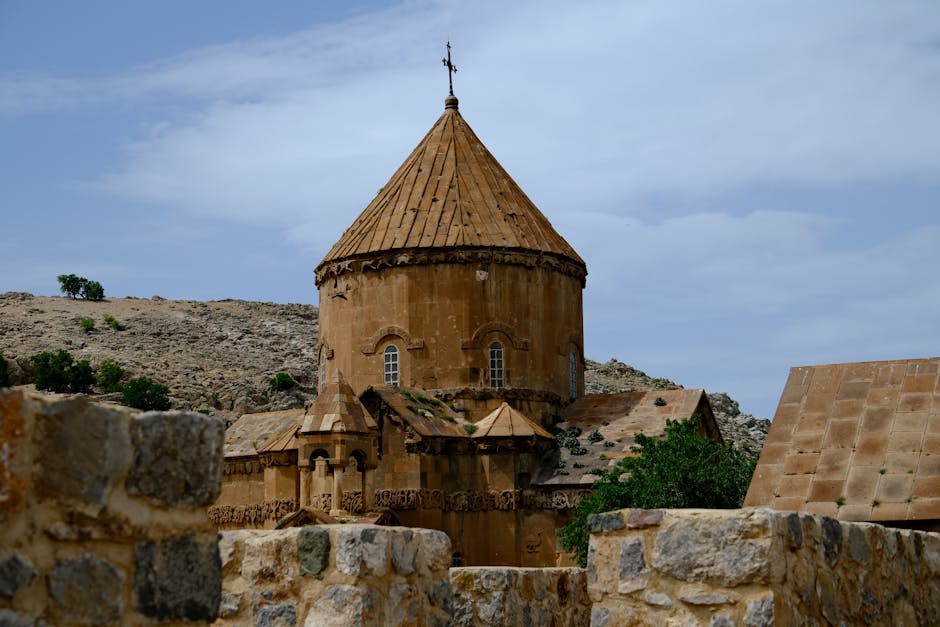
Urartu is not just a relic; it shapes modern geopolitics and archaeology. The region of eastern Turkey, where their cities lie, is now a sensitive area due to the Kurdish conflict and proximity to Iran. Archaeological work has been sporadic. But recent excavations, like those at Ayanis, a fortress built by King Rusa II in the 7th century BCE, have uncovered stunning bronze shields and decorations. The Turkish government has invested in tourism, and now a section of the Van-Yerevan railway passes by old Urartian sites. Imagine riding a train in rural Turkey, looking out the window, and seeing a 2,700-year-old fortress on a hill. That is not just history; it’s a living landscape. Also, many Urartian names survive in modern place names: Mount Ararat (from Urartu), Lake Van (from Biainili), even the name of the city of Van itself. I find this deeply poetic—they left invisible sigils on the map. On a personal level, visiting these sites made me reconsider what “civilization” means. We often judge progress by monumental architecture or writing. Urartu had both, but they also had a sophisticated agricultural system that supported a population of perhaps half a million. And they competed with Assyria, which we consider a superpower. Their story reminds us that history is full of parallel worlds that we ignore because the victors wrote the textbooks.
Anecdote: Last year, I attended a talk by a Turkish archaeologist who discovered a 8th-century BC bronze belt in a farmer’s field near Muş. The belt showed a scene of a lion hunt—similar to Assyrian art, but with local flair. That belt is now in a museum in Ankara. It’s a small object, but it connects us to a person who wore it 2,700 years ago. That immediacy is why I keep digging.
My Personal Take
I have a confession: before that 2am rabbit hole in Kadıköy, I never thought about Urartu. I’ve visited Hattusa, Ephesus, and Göbeklitepe multiple times, but the eastern part of Turkey felt like a different country. Then I went to Van, and the scale of the fortress blew me away. I stood on the citadel of Tushpa, looking at the flat-roofed houses below, and I felt the weight of another world. But it’s not just about awe. I think we, as Turks, have a complicated relationship with Urartu. It’s part of our heritage, but also a reminder that Anatolia was a mosaic of cultures before Turks arrived. Some nationalist narratives try to claim Urartu as proto-Turkic, which is linguistically impossible. Others ignore it entirely. My take is that we need to embrace the messiness. historyz.net is my small attempt to let these forgotten voices speak. In one of my visits, I met a Kurdish farmer who showed me a stone with Urartian script he had found near his field. He didn’t know what it said, but he kept it as a talisman. That stone now sits in his yard, under an apple tree. That is the kind of history I care about—the living, not the locked in museums. If I could change one thing, I’d want more people to visit eastern Turkey, to see not just the scenery but the ancient cities carved into the mountains. And yes, I wish UNESCO would list more Urartian sites—only the fortress of Van is partially on the tentative list. Anecdote: Once in a taxi in Van, the driver saw a book I was reading about Urartu. He said, in Turkish, “Ah, the giants of the mountain. We used to find their pottery in our fields as kids.” That connection—between ancient hands and present-day lives—is why I write.
Final Thoughts
Urartu ended not with a bang but with a quiet fading. The last cuneiform inscription was carved around 590 BCE; after that, silence. But the water canals still flow, the fortresses still stand, and every now and then, a farmer digs up a helmet. I think the lesson is that no empire is truly forgotten—sometimes they just hide, waiting for someone to look east instead of west. So next time you’re in Turkey, skip the Aegean coast and head to Van. Walk the walls of Tushpa, feel the mountain wind, and imagine the sound of chariots. Did this change how you think about this topic? Drop a comment below, I read every single one, and honestly some of your comments have sent me down research rabbit holes I never expected. That is the best part of writing about history.
Sources & Further Reading
- Barnett, R. D. Urartu: The Kingdom of Van. In The Cambridge Ancient History, Vol. III, Part 1. Cambridge University Press, 1982.
- Smithsonian Magazine. “The Lost Kingdom of Urartu: Rediscovering a Forgotten Empire.” 2019.
- Belli, Oktay. Urartu: The Kingdom of the Mountains. Arkeoloji ve Sanat Yayınları, 1999.
- National Geographic History. “Urartu: The Mountain Kingdom That Defied Assyria.” July/August 2021.