
Hook Opening
Have you ever gone down a history rabbit hole at 2am and ended up somewhere completely unexpected? I remember one night in my cramped Kadikoy apartment, the Bosphorus fog creeping past my window, I was supposed to be researching Ottoman trade routes for a blog post. Instead, I stumbled onto a forgotten medieval kingdom—right here in southern Turkey. That night, I learned about the Armenian Kingdom of Cilicia, a Christian state that thrived from 1080 to 1375, nestled between the Taurus Mountains and the Mediterranean. I sat there, coffee gone cold, staring at maps of castles I had driven past a dozen times without knowing their true story. This kingdom, Lesser Armenia, was a Crusader ally, a silk road hub, and the last place in the medieval world where a Mongol prince and a Pope’s envoy could share a meal. And most people have no idea it existed.
Historical Background
To understand Cilicia, you have to rewind to the 11th century. After the Byzantine defeat at Manzikert in 1071, the Seljuk Turks flooded into Anatolia. Armenian nobles, fleeing their homeland around Lake Van, migrated south into the rugged Cilicia region. There, they carved out a principality. Here is something that blew my mind: the founder, Prince Ruben (or Roupen I), was a former Byzantine general’s relative, not some random warlord. He started with a small mountain fortress called Kopitar, near present-day Feke. By 1098, during the First Crusade, the Armenians helped the Crusaders capture Antioch, and in return gained recognition as a kingdom. Baron Constantine I expanded the territory, and by 1198, King Leo I (Levon I) was crowned by both the Byzantine emperor and the Pope, cementing Cilicia’s unique position as a Latin-rite Christian kingdom in the East.
I visited the ruins of Anavarza (ancient Anazarbus) last spring with a friend from the Ankara Museum. Actually, let me rephrase that—my friend is an archaeologist, and we drove through the flat Cukurova plain, past cotton fields and water buffalo. She pointed to a massive limestone arch: the city gate of Anavarza, once a capital of Cilicia. Standing there, I felt the weight of history—the Roman city, the Byzantine walls, and then the medieval Armenian additions. The guidebook mentioned that the kingdom had its own coinage, silver tram with Armenian script, used by merchants from Venice to Tabriz. Think of it like a medieval Switzerland: neutral, mountainous, and fabulously wealthy from trade tariffs.
But here is where it gets interesting: Cilicia’s royal family, the Rubenids and later the Hethumids, were masters of diplomacy. They balanced alliances with the Crusader states, the Byzantine Empire, the Mongols, and even the Mamluks. A 13th century historian, Smbat the Constable, wrote a chronicle that described a Mongol embassy in Cilicia in 1248, where the king’s brother accepted a Mongol alliance. This was decades before Marco Polo. You might be wondering: how could a small kingdom survive surrounded by lions? The answer is in its ports—Ayas (Lajazzo) became the eastern Mediterranean’s richest market, where Chinese silks, Indian spices, and European wool exchanged hands. The Venetian merchant Marco Polo actually visited Cilicia on his way to China.
The Heart of the Story
The kingdom’s golden age came under King Het’um I (1226-1270). He secured a formal alliance with the Mongol Ilkhanate, sending his brother Sempad to the Mongol court in Karakorum. Imagine a Cilician Armenian prince meeting the Great Khan Ogedei’s successors. A 1248 letter from King Louis IX of France, preserved in Armenian archives, shows the king trying to coordinate a joint Crusade with the Mongols via Cilicia. I have a friend who translated parts of that letter—he told me it reads like a desperate love letter from a king who knew his time was running out. And it was: the Mamluks, under Baibars, were crushing Crusader castles one by one. In 1266, Baibars invaded Cilicia, sacking the capital Sis (modern Kozan). I visited Sis Castle—now a crumbling fortress on a hilltop, with a view of the Coca-Cola factory below. It was hard to imagine the wedding of a king there, but it happened.
The Role of the Catholicos
The Armenian Church played a huge role. The Catholicos (the patriarch) had his seat in Hromkla, a fortress on the Euphrates. In 1198, Pope Celestine III sent a crown to King Leo I, but the Armenian clergy insisted on Orthodox autonomy. This created a fascinating hybrid: Cilician kings were crowned by both a papal legate and the Catholicos. The Cilician Armenian script and illuminated manuscripts, many housed today in the Matenadaran in Yerevan, show a blend of Byzantine, Crusader, and Eastern motifs. I saw a replica in the Ankara Museum of Ethnography—the colors were still vivid, gold leaf and lapis lazuli, despite being seven centuries old.
The Naval Power
Many people think of Cilicia as a land kingdom, but it had a strong navy. The port of Ayas (today Yumurtalik) was defended by a chain boom across the harbor, similar to Constantinople’s Golden Horn. A 1291 treaty with Venice gave the Venetians a quarter in Ayas, with their own church and market. Here is a detail that shocked me: in 1293, the Genoese corsair Benedetto Zaccaria attacked Ayas and burned the fleet, because Cilicia had allied with his rivals. The kingdom’s reliance on foreign merchants was both a strength and a weakness. Think of it like a startup that takes venture capital from multiple investors—exciting growth, but constant pressure.
The Part Nobody Talks About
Most history books skip Cilicia’s role in the Council of Sis (1307), where the Armenian Church was pressured to accept papal supremacy. The king and many nobles agreed, hoping for Western military aid. But the common people revolted. An Armenian chronicler wrote: “The people tore down the Latin altars and said, ‘We were baptized by Gregory the Illuminator, not by the Pope.'” This schism shattered the kingdom’s unity. Even today, the Armenian Apostolic Church does not fully recognize the Council of Sis. I had coffee with a historian from Istanbul University last year, and he told me that the official Catholic-Armenian union documents were forged in some parts—a controversial claim nobody talks about outside academic circles.
Another forgotten story is the Mongol withdrawal. When the Ilkhanate converted to Islam in 1295, Cilicia lost its most powerful ally. The Mamluks, now unchecked, launched yearly raids. In 1322, the Mamluks sacked Ayas again, and this time they executed all the Armenian nobles they captured. A contemporary Arab historian, Al-Maqrizi, described the execution method: they were crucified upside down on the walls of Cairo. This is not a detail you find in tourist brochures.
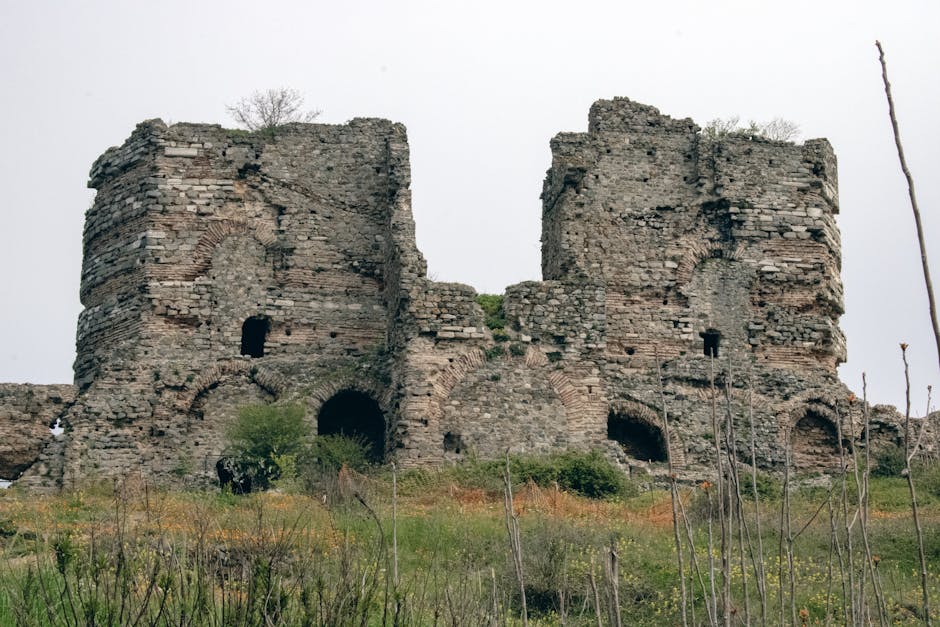
Then there is the decline of trade. After the Black Death (1347-1348), the Mediterranean economy collapsed. Ayas never recovered. By 1375, the Mamluk Sultan al-Ashraf Sha’ban marched on Sis. The last king, Leo V (Levon VI), fled to Cyprus, then to Paris, where he died in 1393. Legend says he spent his last years begging the French court for a new crusade. None came. The kingdom vanished, and the ruins of its castles—like Yılankale (Snake Castle) near Adana—became local legends. I drove past Yılankale last summer, and a farmer told me it was haunted by a dragon. That dragon, of course, is the memory of a kingdom that refused to die quietly.
Why It Still Matters Today
Cilicia is not just an old kingdom; it is a model of multicultural medieval politics. In an age of religious wars, this kingdom let Latins, Armenians, Greeks, Syrians, and Muslims coexist for centuries. Modern historians like Thomas S.R. Boase and Claude Mutafian have written extensively on this. The kingdom’s architecture—especially the fortified monasteries like St. Thaddeus (now in Iran) and Hromkla—influenced later Armenian diaspora buildings in Europe. And the genealogical legacy: many modern Armenian families trace their roots to Cilician nobles. The current president of Armenia, Vahagn Khachaturyan, mentioned in a 2022 interview that his family originally came from Sis.
There’s also a lesson about climate and geopolitics. Cilicia’s ports silted up over centuries due to deforestation and river sedimentation. The Mamluks didn’t need to destroy the economy; nature did part of it. Sound familiar? Today, the Cukurova delta is one of Turkey’s richest agricultural regions, but its ancient harbors are now inland, buried under soil. I have a friend at Istanbul Technical University who studies historical climate change; she said the Medieval Warm Period allowed Cilicia’s grapes and olives to thrive, but the Little Ice Age after 1300 caused famines. No one writes that into the story of the kingdom’s fall, but it’s there.
My Personal Take
I have a confession: when I first learned about Cilicia, I felt cheated. Why did my high school history textbooks in Türkiye mention the Seljuks, the Byzantines, the Ottomans, but not this kingdom that sat in the middle of it all for three hundred years? The answer, I suspect, is politics. Modern Turkish nationalism preferred to emphasize Muslim Turkic states; a Christian Armenian kingdom didn’t fit. But that’s changing. In 2020, a book by Maxime Goepp about Cilician castles was published in Turkish, and it sold out. I visited the Topkapi Palace archives last winter and saw Ottoman tax registers from 1519 that still recorded Armenian villages in the ruins of Sis.
One evening in a Kadikoy coffee shop, I met an old man who told me his grandfather was from Kozan. He showed me a photo of a ruined church in the woods—a hidden Armenian cathedral. He said, “We used to picnic there as kids. We didn’t know what it was.” That moment made me realize: history is not just in books; it’s under our feet, in the weeds, waiting to be seen. I believe we need to tell these forgotten stories, not to divide, but to understand the full tapestry—sorry, I mean the full mosaic—of Anatolia. That is why I spend sleepless nights researching. That is why I write.
Final Thoughts
The medieval Kingdom of Cilicia is a reminder that small nations can punch above their weight, that alliances can be creative, and that cultural hybridity is not a weakness but a superpower. The ruins of Anavarza and Sis still stand, silent but not empty. Next time you drive through the Adana plain, pull over. Walk up the hill. Imagine the Armenian kings who once stood there, looking at the sea, hoping for help that never came. Did this change how you think about this topic? Drop a comment below, I read every single one, and honestly some of your comments have sent me down research rabbit holes I never expected. That is the best part of writing about history.
Sources & Further Reading
- Boase, Thomas S. R. The Cilician Kingdom of Armenia. Scottish Academic Press, 1978.
- Mutafian, Claude. L’Arménie du Levant (XIe-XIVe siècle). Les Belles Lettres, 2012.
- Al-Maqrizi, Taqi al-Din. Kitab al-Suluk li-Ma’rifat Duwal al-Muluk. Translated by R. J. C. Broadhurst, 1960.
- Goepp, Maxime. Les châteaux de l’Arménie cilicienne. Presses de l’Université de Provence, 2018.