
Hook Opening
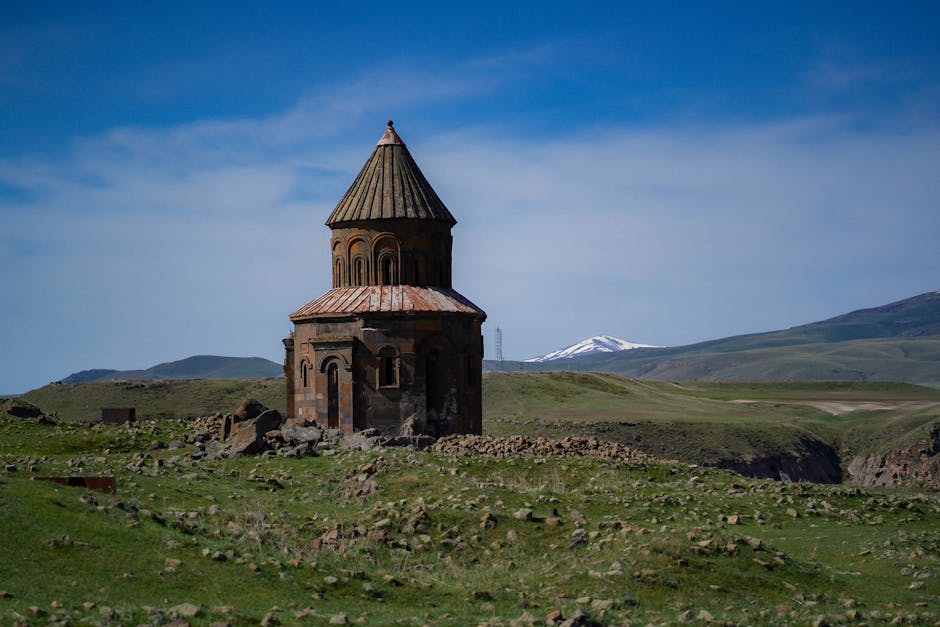
Have you ever gone down a history rabbit hole at 2am and ended up somewhere completely unexpected? For me, it was a sticky summer night in Istanbul, nursing a cold Turkish coffee at a tiny Kadıkoy coffee shop, when a friend archaeologist named Selim pulled out his phone and showed me a photo of crumbling stone walls against a stark blue sky. ‘That’s Ani,’ he said. ‘The city of a thousand and one churches. It’s sitting there in eastern Turkey, mostly ignored.’ I remember leaning in, squinting at the image—a cathedral with a collapsed dome, a mosque with a single standing minaret, and nothing else but grass and wind. At that moment, I had no idea I was about to fall into one of the deepest medieval rabbit holes I’ve ever known. Ani was once a metropolis of over 100,000 people, the capital of the Bagratid Armenian kingdom, and a crossroads of the Silk Road. But today it’s a ghost town, sealed off near the Turkish-Armenian border, visited only by a handful of tourists and shepherds. How did a city so mighty vanish so completely? That question kept me up for weeks, and it’s the story I want to share with you now.
Historical Background
Let me set the stage. The medieval city of Ani lies in what is now Kars Province, Turkey, right on the edge of the Akhurian River gorge. Its history begins long before the Bagratids—there were Urartian settlements here, then Persians and Byzantines. But Ani’s true rise came in the 9th century AD, when the Bagratid Armenian dynasty chose it as their capital. I remember standing at the ruins of the Ani Cathedral a few years ago, with Selim explaining that the Bagratid king Ashot III moved the capital here around 961 AD. Can you imagine the audacity? Building a new capital on a desolate plateau, using local volcanic tuff that would later give these walls that haunting pinkish glow. The city grew fast—by the 11th century it was a rival to Constantinople and Baghdad. Merchants from Persia, Byzantium, and even China passed through its gates. But here is something that blew my mind: despite its prosperity, Ani was a city under constant threat. Earthquakes shook it every few decades, and the political situation was like a knife fight in a dark alley—Seljuk Turks, Byzantines, and later Mongols all wanted a piece. One thing I love about Turkish history is how often Anatolia becomes the stage for epic collisions. Think of it like a medieval version of Dubai, only built on fault lines and border disputes. And that’s exactly what doomed it.
I recall a conversation I once had with a curator at the Ankara Museum of Anatolian Civilizations, who showed me a fragment of a fresco from Ani’s Church of the Redeemer. It depicted Christ with a stern expression, as if he knew the city would eventually be abandoned. The curator, a cheerful woman named Ayşe, said, ‘Ani was never meant to last. The location was chosen for defense, not stability.’ She wasn’t wrong. The city’s water supply was fragile, its trade routes vulnerable. But for two glorious centuries, Ani was the cultural heart of Armenia. It saw the construction of no fewer than 40 churches, two monasteries, a royal palace, and a sprawling market. Most of these were built between 970 and 1050 AD, a golden age that ended abruptly with the Seljuk capture of 1064. You might be wondering: how did a city with such wealth fall so fast? The answer lies in betrayal and bad luck.
The Heart of the Story
The Rise of the Bagratids
The Bagratid dynasty had been consolidating power since the 8th century. Their king, Ashot I, was recognized by the Abbasid Caliphate and the Byzantine Empire alike—a rare feat. By the time Ashot III took the throne in 953, the kingdom controlled most of modern Armenia and eastern Turkey. But what really put Ani on the map was the decision to make it the religious capital. In 961, the Catholicos (head of the Armenian Church) moved his seat to Ani. That turned the city into a pilgrimage destination. Over the next 70 years, builders competed to outdo each other. The Cathedral of Ani, designed by the architect Trdat, was completed in 1001 and was considered the finest church in the region. Today its dome is gone, but the walls still stand, pierced by a giant oculus that lets light stream in. I walked through that cathedral last October, and I tell you, the silence was heavier than any sermon. The wind whistled through the broken windows, and I could almost hear the chants of 11th-century monks. But here is where it gets interesting: the cathedral barely survived the 1064 Seljuk conquest. The Seljuk sultan Alp Arslan, after taking the city, chose to preserve the cathedral and even used it as a mosque. Why? Because he recognized that Ani was more valuable as a trading hub than a battlefield.
The Seljuk Takeover
In 1064, Alp Arslan’s army descended on Ani. The city had been weakened by internal squabbles between Armenian nobles and a recent earthquake. The siege lasted only 25 days. When the Seljuks entered, they did what medieval conquerors did—they looted and killed. But then Alp Arslan surprised everyone by ordering the restoration of the city walls and reopening the markets. Think of it like a fierce landlord who burns down your house but then rebuilds it so you can pay rent. Ani continued to flourish under Seljuk rule, with a mix of Armenian Christians, Muslim Turks, and Jews living side by side. I stumbled across a fascinating detail while reading a paper by the Turkish historian Oktay Aslanapa: the Seljuks built a mosque inside a former church, the Mosque of Manuchihr, which still stands today. That mosque has a minaret with a Kufic inscription that dates to 1072. It’s one of the oldest Islamic monuments in Anatolia. Can you imagine the religious tensions? Yet for a while, it worked. The city even minted its own coins, gold and silver, that circulated as far as the Volga River.
The Mongol Wrecking Ball
But here is something that blew my mind: the real destruction didn’t come from the Seljuks. It came from the Mongols. In 1236, the Mongol general Chormaqan attacked Ani. He wasn’t interested in trade—he wanted total submission. The city resisted, and the Mongols responded by systematically destroying the fortifications, burning the bazaars, and massacring thousands. After that, Ani never fully recovered. A series of earthquakes in the 14th century (notably one in 1319) toppled most of the remaining churches. By 1400, the city was a shadow. I remember reading a letter from a 14th-century Armenian bishop who described Ani as ‘a field of ruins where foxes make their dens.’ The population dwindled to a few hundred farmers. The final blow came in the 16th century when the Ottoman Empire and Safavid Persia fought over the region; the border shifted, and Ani was left isolated. No one wanted to live there. It became a literal ghost town, forgotten by history until Western travelers ‘rediscovered’ it in the 19th century.
The Part Nobody Talks About
The Environmental Factor
You might be wondering: why didn’t anyone rebuild Ani? The typical answer is war and earthquakes. But there’s a less glamorous reason—the environment. The plateau around Ani is arid and exposed. The topsoil is thin, and the wind is relentless. By the 13th century, deforestation had stripped the surrounding hills of their forests, leading to erosion and water shortages. I’ve stood on those hills, and I can tell you, the place feels drained of life. Selim once pointed out to me the old irrigation channels, now dry. He said, ‘Ani died because the land itself gave up.’ That’s a part of history that gets overlooked: cities aren’t just destroyed by armies; they’re killed by poor resource management. And here is where it gets interesting: there’s a theory among Turkish archaeologists that the decline of Ani was accelerated by the Little Ice Age, which began around 1300 and caused harsher winters in the region. Crops failed, trade routes shifted south, and Ani became a backwater. That’s a narrative you rarely hear—the Silent Killer of Climate.
The Nationalist Erasure
Another uncomfortable part of Ani’s story is how it’s been treated by modern nation-states. For decades after the Armenian genocide and the establishment of the Turkish Republic, Ani was essentially erased from official memory. The site was in a military zone near the Soviet border, and access was restricted. Turkish textbooks rarely mentioned it. Meanwhile, in Armenia, Ani became a symbol of lost glory, a wound in the national psyche. This tension meant that for most of the 20th century, Ani was neither preserved nor studied properly. The ruins were left to crumble—vandalized, looted, and used as target practice by soldiers. You might be shocked, but it’s true. Only after 2000, when Turkey began to open up for tourism, did UNESCO start pushing for protection. In 2016, Ani was designated a UNESCO World Heritage site. But the damage was done. I remember visiting the Church of the Redeemer and seeing bullet holes in the walls. Selim shook his head and said, ‘We shoot at our own past.’ It’s a bittersweet legacy.
The Mysterious Frescoes
Here’s a twist that not many people know: some of the frescoes in Ani’s churches are surprisingly well-preserved, especially in the Church of Saint Gregory of Tigran Honents. They show scenes from the life of Christ, but with distinct Armenian and Byzantine styles. I got a chance to see them up close (you need a special permit). The blues and reds are still vivid. Imagine that—paint applied in 1215, still bright after 800 years of earthquakes and neglect. A team from the University of Istanbul has been working on conservation, and they discovered that the pigments were made from lapis lazuli imported from Afghanistan. That’s how cosmopolitan Ani was—art supplies from Central Asia.
Why It Still Matters Today
So why should you care about a dead city in eastern Turkey? Because Ani is a case study in how political borders can destroy cultural heritage. Today, the site sits on a tense border between Turkey and Armenia, with the Akhurian River forming the frontier. You can actually see Armenia from the ruins—just a few hundred meters away. There’s no crossing, no interaction. The irony is that this medieval city was a place where Armenians, Turks, Georgians, and Persians coexisted for centuries. Now it’s a symbol of division. In 2021, the Turkish government announced a plan to restore the Cathedral and the Mosque of Manuchihr. That might sound good, but critics worry it’s a political move to claim Armenian heritage as Turkish. The debate is heated. But for me, Ani matters because it demonstrates that human civilization is fragile. The same forces that built Ani—trade, faith, ambition—also destroyed it. We are not so different today. Look at modern cities like Aleppo or Mosul, reduced to rubble by war and neglect. Ani is a warning carved in stone.
I also think Ani offers a lesson in humility. The Armenians who built it considered it eternal. They carved inscriptions saying ‘May this city stand forever.’ Forever turned out to be about 400 years. Every time I travel to a historical site like Hattusa or Ephesus, I feel the same humbling vulnerability. We think our skyscrapers are permanent, but the wind and time have other plans.
My Personal Take
I’ll be honest with you—writing this article has made me melancholic. There’s something deeply sad about walking through a city where millions of people once lived and loved and died, and now it’s nothing but grass and broken domes. I remember one afternoon at Ani, after Selim and I had spent hours photographing the ruins, we sat on the edge of a cliff overlooking the river gorge. The sun was setting, painting the tuff walls in shades of orange and purple. Selim said, ‘You know, the Armenians believed the end of the world would start here.’ I didn’t know that. It made sense, though. Ani feels like the end of something.
But I also feel a strange gratitude. Because Ani is still there, even as a ghost. It’s not a museum with glass cases and gift shops. It’s a real ruin, raw and exposed. You can touch the bricks, climb the staircases, stand in the sanctuary. That connection is visceral. I’ve visited many medieval sites in Turkey—Gobeklitepe, Cappadocia, Troy—but Ani affected me more than any. Maybe because it’s so lonely. No crowds, no noise. Just you and a thousand years of silence. I’ve told my friends: if you want to understand what “lost” really means, go to Ani.
Final Thoughts
So, back to that 2am coffee shop moment. I stared at Selim’s photo of Ani, and I thought, ‘I have to see this.’ Two years later, I did. And I’m still picking up the pieces of my understanding. Ani is not just a ghost city—it’s a mirror. It reflects our own fears of impermanence, our conflicts, and our capacity for creation and destruction alike. I hope that by sharing this story, you might feel a little of what I felt. History isn’t just dates and names; it’s these fragile places where humans left a mark, and then the wind erased it. Did this change how you think about this topic? Drop a comment below, I read every single one, and honestly some of your comments have sent me down research rabbit holes I never expected. That is the best part of writing about history.
Sources & Further Reading
- Smithsonian Magazine. ‘The Ghost City of Ani.’ 2020.
- National Geographic History. ‘The Rise and Fall of Ani.’ 2018.
- Aslanapa, Oktay. Ani: The Medieval Armenian Capital. Istanbul University Press, 2005.
- UNESCO World Heritage Centre. ‘Ani Archaeological Site.’ 2016.