
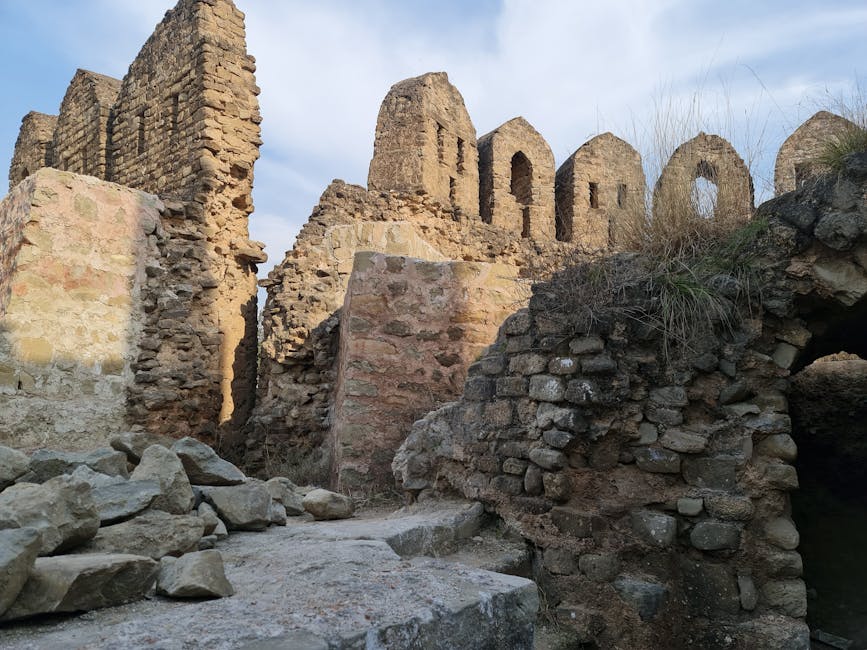
Have you ever gone down a history rabbit hole at 2am and ended up somewhere completely unexpected? I sure have. It was a Tuesday night—well, technically Wednesday morning—and I was sitting in my favorite coffee shop in Kadıköy, Istanbul, with a cold cup of tea and my laptop glowing in the dim light. I had been reading about the Hittite Empire, that ancient powerhouse that dominated Anatolia from 1650 to 1178 BC. Everyone knows about Hattusa, their grand capital with its massive walls and lion gates. But that night, I stumbled on a name that stopped me cold: Tarhuntassa. A Hittite capital city that vanished—completely, utterly, mysteriously. No ruins, no inscriptions pinpointing it, nothing. I remember leaning back in my chair, thinking: how can an entire capital city just disappear from history? That was the start of an obsession that has taken me to dusty museum halls, remote fields in central Anatolia, and heated debates with my archaeologist friends over çay.
Hook Opening
Here is something that blew my mind: Tarhuntassa was not some minor settlement. This was the capital of the Hittite Empire for at least thirty years—maybe longer. Around 1290 BC, King Muwatalli II moved the royal seat from Hattusa to Tarhuntassa, likely for strategic reasons against the rising power of Egypt. But after his death, his son Urhi-Teshub moved back to Hattusa, and then a civil war broke out. Tarhuntassa became the center of a rival dynasty. Think of it like moving the White House from Washington to some city we cannot find today, then losing all records of where it was. But here is where it gets interesting: after the Hittite Empire collapsed, Tarhuntassa seemed to linger as a shadow kingdom, mentioned in a few later inscriptions, but its location—and its fate—remained a total enigma.
Historical Background
To understand Tarhuntassa, you need to know the Hittite Empire. It was founded around 1650 BC by King Hattusili I, who made Hattusa his capital, near modern Boğazkale in Çorum province. The Hittites were masters of iron, diplomacy, and warfare. They fought the Egyptians at Kadesh in 1274 BC, signed the first known peace treaty, and built a complex state. I’ve visited Hattusa three times now, and every time I walk through the Lion Gate, I feel a shiver. You can still see the walls, the temples, the royal palace—it’s all there. But Tarhuntassa? Nothing. You might be wondering why Muwatalli II moved the capital. Most scholars believe it was to be closer to the Syrian border and to the Mediterranean, to better control the rebellious vassal states and confront Pharaoh Ramesses II. The move was a gamble, and it paid off for a while.
But here is a twist: after Muwatalli’s death, his son Urhi-Teshub became king and moved the capital back to Hattusa. That triggered a coup by his uncle, Hattusili III, who deposed him and took the throne. Urhi-Teshub was exiled, and Hattusili III erased his name from many monuments. This is a classic case of damnatio memoriae—the deliberate removal of a ruler from history. But Tarhuntassa was not erased; it was given to a younger brother, Kurunta, as a subordinate kingdom. Kurunta built his own palace and called himself “Great King” on an inscription found at Hattusa in 1986—a bronze tablet that shocked archaeologists. That tablet, now in the Ankara Museum of Anatolian Civilizations, describes the borders of Tarhuntassa in detail. It mentions rivers, mountains, cities. Yet scholars have spent decades trying to map those borders onto the landscape, and they still cannot agree.
Let me tell you about a conversation I had with a friend, Dr. Ahmet Ünal, a Hittitologist from Ankara University. One evening at a café near the museum, he spread out a map on the table and started tracing the Hulaya River—maybe the Göksu, maybe the Calycadnus. He pointed to the Konya Plain and said, “It should be here. But every time we dig, we find Byzantine or Roman layers, not Hittite.” I asked him if he thought Tarhuntassa was still out there, and he laughed. “Of course it is. You can’t lose a city. You just stop looking in the right place.” That night, I went home and Googled every known Hittite site in the region. There were dozens of mounds, but none matched the grandeur of a capital. The mystery deepened.
The Heart of the Story
So where is Tarhuntassa? Over the last century, several candidates have been proposed. Early archaeologists, like Hugo Winckler who excavated Hattusa in the early 1900s, thought it might be near Konya. Later, others pointed to sites like Kızıldağ or Karadağ, where crude rock reliefs of a king named Hartapu were found. These reliefs date to the 8th century BC, centuries after the Hittite Empire fell. King Hartapu calls himself “Great King,” which suggests he ruled a Neo-Hittite kingdom—maybe the successor of Tarhuntassa. But the problem is that no major city ruins have been found near those reliefs. Just a few walls and scattered stones. You might be wondering if Tarhuntassa was never a huge city at all—maybe it was a ceremonial capital, lightly inhabited. But the bronze tablet mentions palaces, a royal academy, and temples for the Storm God. That sounds like a real urban center.
Here is something that blew my mind: in 2019, a team of archaeologists from the University of Chicago’s Oriental Institute and Konya University discovered a massive stone block in a field near Türkmen-Karahöyük, about 30 kilometers north of Konya. The block, weighing over a ton, was covered in Luwian hieroglyphs—the script used by the Hittites. The inscription was commissioned by a king named Hartapu, the same one from the Kızıldağ reliefs. It says he conquered several cities and was a son of a king named Mursili. Now, there were several Hittite kings named Mursili. The most famous, Mursili II, was the father of Muwatalli II—the very king who founded Tarhuntassa. Could Hartapu be a descendant of the Tarhuntassan royal line? The inscription makes a strong case. The site of Türkmen-Karahöyük itself is a massive mound, about 30 hectares at its base. That is the size of a small city. And it has never been fully excavated.
I remember reading the news in my apartment in Istanbul, late at night, with my cat curled on the keyboard. My heart was racing. I called Ahmet the next morning, and he was already on it. “This could be it, Halil,” he said. “Hartapu’s capital. Maybe Tarhuntassa itself.” Since then, geophysical surveys at Türkmen-Karahöyük have revealed structures under the ground—walls, gates, a possible palace. The pottery found on the surface dates to the Hittite Empire period and the Iron Age that followed. But here is the catch: no definitive proof yet. The inscription does not name the city. It only mentions Hartapu’s conquests. So while the evidence is tantalizing, it is still circumstantial. Archaeologists like Dr. James Osborne, who led the survey, are cautious. “We need to dig,” he told National Geographic History in 2021. “Every season brings new surprises.”
The Bronze Tablet and the Royal Feud
To really appreciate the mystery, we have to go back to that bronze tablet found in 1986. It was unearthed in Hattusa, near the Great Temple—a place where state archives were kept. The tablet records a treaty between King Tudhaliya IV (who ruled around 1230 BC) and his cousin Kurunta, the king of Tarhuntassa. It confirms Tarhuntassa’s borders and independence. The language is precise: “The Hulaya River is the boundary; the city of Arimatta on the east, the city of Pata on the west…” Yet none of those places have been securely identified. Here is a comparison: imagine trying to find a city based on a description that says “it is west of the Red River and east of Blue Mountain.” That is what Hittitologists are faced with. The tablet also reveals the tension within the royal family. Kurunta was clearly powerful enough to demand a written treaty. Some scholars even think he might have usurped the throne for a short time, because a seal with his name was found in the Hattusa palace archives. The struggle for power between Hattusa and Tarhuntassa may have led to the intentional erasure of Tarhuntassa from the official records after the empire fell.
The Fall of the Empire and the Fate of Tarhuntassa
Around 1178 BC, the Hittite Empire suddenly collapsed. The causes are still debated: internal rebellions, the invasions of the Sea Peoples, a devastating drought, or perhaps all three. Hattusa was abandoned and burned. The royal family either died or fled. But Tarhuntassa, located farther south and closer to the Mediterranean, might have survived the chaos for a while. In the following centuries, the so-called Neo-Hittite kingdoms rose in southeastern Anatolia and northern Syria—places like Carchemish, Malatya, and Tabal. Some scholars argue that Tarhuntassa was the predecessor of Tabal. But again, no direct link. Think of it like this: the Roman Empire fell, but Constantinople carried on. Could Tarhuntassa have been a kind of “eastern Rome” for the Hittites? Possibly. But we simply lack the evidence.
The Part Nobody Talks About
Here is a controversial angle: maybe Tarhuntassa was never a single city at all. Some Turkish archaeologists, like Dr. Ali Dinçol from Istanbul University, have suggested that the name Tarhuntassa might have referred to a region—the “part of the Storm God”—rather than a specific urban center. The bronze tablet’s description could be of a whole territory, with the capital being a moveable royal camp or a series of palaces. That would explain why no grand ruins have been found. But most experts reject this. They point to the phrase “the city of Tarhuntassa” in Hittite texts, which clearly implies a settlement. Still, the idea persists. I remember discussing this with a group of friends at a café in Kadıköy, late into the night. One of them, a PhD student named Elif, argued that we are too biased by our own concept of a capital city. “Maybe it was like the Hittite version of a nomadic capital, like the Mughal court that moved between Agra and Delhi,” she said. It was a good point, but I’m not convinced.
But here is where it gets interesting: the political implications of finding Tarhuntassa today. Turkey is proud of its Hittite heritage—the government has heavily promoted Hattusa as a UNESCO World Heritage site. A lost capital would be a huge boost for tourism and national pride. But the location is sensitive. If Tarhuntassa is found in the Konya Plain, where there are already modern towns and farmland, excavations could be complicated. There is also the issue of competing claims. The region of Tarhuntassa likely extended into Cilicia, which is partly in modern Syria. With the current political situation, a cross-border archaeological project is nearly impossible. You might be wondering if local farmers have already found artifacts but kept quiet. In Turkey, it is common for villagers to uncover ancient objects and sell them on the black market. I once visited a small museum in a village near Karaman and saw a Hittite bronze figurine that was “donated anonymously.” The curator smiled when I asked where it came from. “People find things,” he said. “But they don’t always tell us where.”
The Damnatio Memoriae Theory
Here is another twist: what if Tarhuntassa was deliberately destroyed and erased from memory? After the fall of the empire, the Neo-Hittite kings in the north may have wanted to suppress any rival claim to the Hittite throne. If Tarhuntassa was ruled by a rival branch, its monuments and records could have been smashed. The fact that we have only a few references—the bronze tablet, some mentions in Hattusa’s archives—suggests that someone tried to write Tarhuntassa out of history. A similar thing happened to the Hittite king Urhi-Teshub, whose name was erased from many inscriptions. So perhaps the city itself suffered the same fate. That would explain why no obvious ruins have survived above ground. The site might be a low mound, covered by later settlements, or even submerged under a modern reservoir. In fact, one candidate, the mound of Sirkeli Höyük, is partially flooded by a dam. Excavations there have revealed Hittite-period layers, but the scale is not that of a capital.
Why It Still Matters Today
The search for Tarhuntassa is not just an academic exercise. It has real implications for our understanding of the Hittite Empire’s final years and the transition to the Iron Age. If we find the city, we could learn about the political fragmentation that allowed the Sea Peoples to wreak havoc. We could also discover archives that might reveal diplomatic correspondence with Egypt or the Mycenaean world. In 2022, a team from the University of Pisa and the Turkish Ministry of Culture began a new project using satellite imagery and drone-mounted ground-penetrating radar over the Konya Plain. They have identified dozens of anomalies that could be buried structures. So far, they have not excavated any of them—funding is always a problem. I saw a public lecture online by Dr. Massa, one of the team leaders. He said, “Every year we think this will be the one. But the plain is huge, and the city could be under three meters of alluvial soil.” It gave me chills.
Modern technology is helping, but the mystery persists. In 2019, a Turkish historian named Dr. Gülnihal Kızılkaya published a controversial paper arguing that Tarhuntassa is located under the modern city of Silifke, on the Mediterranean coast. She based this on readings of the Hulaya River as the Göksu River. But no excavation has been done there because Silifke is a busy town. The local museum has some Hittite artifacts, but nothing that screams “capital.” Still, her theory has a following. The general public in Turkey is fascinated by the mystery. I have seen Facebook groups dedicated to the search, with armchair archaeologists arguing over satellite photos. It reminds me of the hunt for Troy in the 19th century—everyone thought they knew where it was, but only Schliemann’s obsessive digging found it. But here is something that blew my mind: the Turkish government recently allocated a significant budget for a major excavation in the Konya region, specifically targeting the Türkmen-Karahöyük mound. Work is scheduled to begin in 2024. I am already planning to visit the dig site next summer with my camera and notebook.
My Personal Take
If I am being honest, I think Tarhuntassa is sitting right under our noses, and we just haven’t recognized it yet. I have walked the fields near Türkmen-Karahöyük twice—once in the spring of 2022, when the wheat was high and green, and again in the autumn, when the soil was dry and cracked. Both times, I felt that something ancient was breathing just below the surface. I picked up a piece of pottery—a plain, reddish sherd—and showed it to a friend who works at the Konya Museum. She looked at it under a loupe and said, “Probably Middle Bronze Age. Could be Hittite.” That tiny fragment connected me to a world that was 3,200 years old. But the frustration is real. I have read every book I can find: Trevor Bryce’s The Kingdom of the Hittites, which devotes several pages to Tarhuntassa; and more recently, Mark Weeden’s Hittite Landscapes. They all say the same thing: the evidence is tantalizing but insufficient.
Let me share another memory. In 2018, I attended a conference at Istanbul University, where Dr. James Osborne gave a talk about the Türkmen-Karahöyük inscription. Afterward, a group of us went to a kebab restaurant in Beyoğlu. Over grilled meat and rakı, the conversation turned to politics and funding. One archaeologist lamented how Turkish heritage sites are often neglected. “We have so many mysteries right here in Anatolia, and we do not have the money or the will to solve them,” he said. That stuck with me. I realized that the mystery of Tarhuntassa is also a story about the limits of archaeology—what we can and cannot know. But I refuse to believe that a city that housed kings and gods is forever lost. I am betting that within the next decade, someone will dig in the right spot, and the world will wake up to a new lost capital.
Final Thoughts
So the next time you cannot sleep and your mind wanders through history, remember Tarhuntassa. It is a reminder that our knowledge of the past is full of holes, and some of those holes hide entire cities. The Hittites were not some obscure footnote—they were a superpower that fought Egypt and built an empire that covered most of Turkey. And they left behind a capital that we still cannot find. I like to think that Tarhuntassa is waiting, patient under the earth, for the right team of archaeologists, the right season, the right government grant. And when it is found, I will be one of the first in line to walk its streets—even if they are just stone foundations in a wheat field. Did this change how you think about this topic? Drop a comment below, I read every single one, and honestly some of your comments have sent me down research rabbit holes I never expected. That is the best part of writing about history.
Sources & Further Reading
- Bryce, Trevor. The Kingdom of the Hittites. Oxford University Press, 2005.
- Osborne, James et al. “The Türkmen-Karahöyük Inscription: A New Luwian Stela from the Konya Plain.” Journal of Near Eastern Studies, 2020.
- National Geographic History. “The Hunt for the Lost Hittite Capital.” 2021.
- Weeden, Mark. Hittite Landscapes: Spatial and Material Perspectives. Cambridge University Press, 2018.