
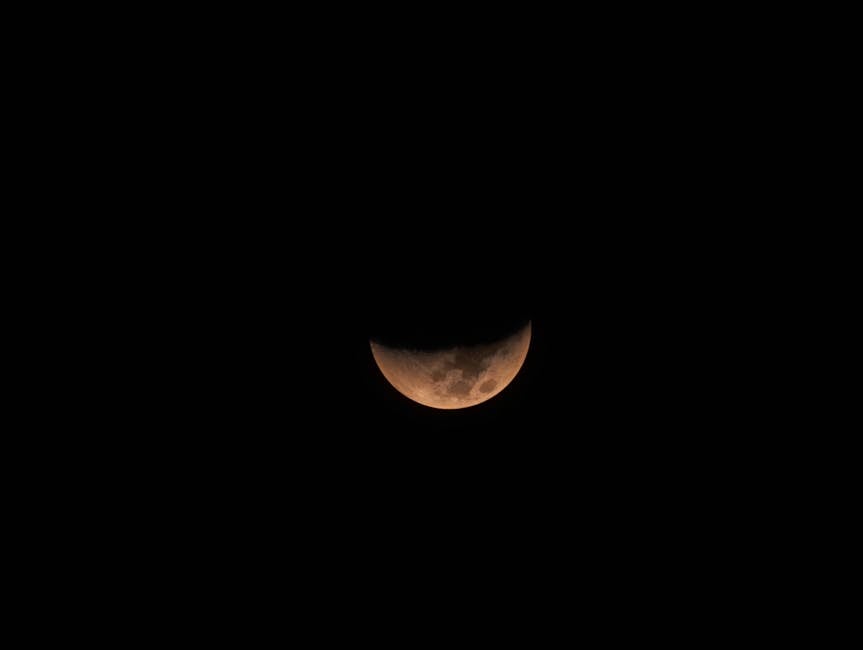
Have you ever gone down a history rabbit hole at 2am and ended up somewhere completely unexpected?
I was sitting in my favorite Kadikoy coffee shop around midnight, nursing a Turkish coffee that had gone cold, when I stumbled on a footnote in Herodotus’s Histories that stopped me cold. The year was 585 BC, and two ancient superpowers—the Medes and the Lydians—were locked in a bloody stalemate along the Halys River. The battle had been raging for hours, neither side giving ground. Then, without warning, the sky went dark. The soldiers dropped their weapons. Horses panicked. And the entire war just… stopped. I nearly choked on my coffee. Here was a battle—actually let me rephrase that—a full-scale conflict decided not by generals or strategy, but by a solar eclipse. I spent the next four hours digging through every source I could find, texting my archaeologist friend in Ankara at 2 AM, and realizing this was the story I had to write for Historyz.net.
The Battle of the Eclipse, as historians call it, is one of the most bizarre and forgotten moments in ancient warfare. It took place on May 28, 585 BC, along the Halys River—today’s Kızılırmak in central Turkey. And the twist? The eclipse was supposedly predicted beforehand by the Greek philosopher Thales of Miletus, who lived just a few hundred miles west, in Ionia. That alone raises questions: did Thales actually calculate the eclipse? Or was he just lucky? And how does a natural phenomenon turn a battlefield into a peace treaty? I’ve spent years visiting Anatolian ruins—Göbeklitepe, Hattusa, Ephesus—and hunting for stories that connect my country to the wider world. But this one hit me differently. It’s not just a battle. It’s a forgotten moment where science, war, and fate collided. And honestly, it made me rethink how much we really control our own history.
Historical Background
To understand the Battle of the Eclipse, you need to picture Anatolia in the early sixth century BC. The region was a chessboard of rival powers. To the east, the Median Empire under King Cyaxares was expanding rapidly, swallowing up territories from the Iranian plateau to the upper Euphrates. To the west, the Kingdom of Lydia under King Alyattes controlled the rich, gold-laden lands of western Anatolia—Sardis, Ephesus, Miletus. These two empires were natural enemies, and their border ran along the Halys River.
Think of it like two heavyweight boxers circling each other, each waiting for the perfect punch. The war between Media and Lydia had already dragged on for five years before the famous battle. I remember walking through the Museum of Anatolian Civilizations in Ankara a few years ago, staring at a beautiful Lydian gold coin from that era. My guide—a retired archaeologist named Mehmet—told me, “The Lydians invented coinage to pay their mercenaries. Without that war, we might not have money today.” That fact stuck with me. A forgotten war gave us the first standardized currency.
The conflict was brutal. Both sides raided villages, burned crops, and fought skirmishes along the river. But the decisive confrontation came near the Halys in late spring 585 BC. The armies were massive by ancient standards—Herodotus estimates tens of thousands on each side. And the stakes were existential: control of Anatolia itself.
Here is something that blew my mind: the battle might have been a draw if not for the eclipse. Both armies were evenly matched. The Medes had skilled cavalry; the Lydians had heavy infantry and chariots. For hours, the fighting was back and forth. But when the sun started to disappear in the middle of the day, the soldiers stopped and stared. In ancient cultures, a solar eclipse was a terrifying omen—a sign that the gods were angry or that the world was ending. For the Medes and Lydians, it was enough to make them drop their swords and ask for a truce.
You might be wondering how accurate Herodotus’s account really is. He wrote about 100 years after the event, relying on oral traditions. But modern astronomy has confirmed that a total solar eclipse did pass over central Anatolia on May 28, 585 BC, right around the time of the battle. That’s the kind of cross-disciplinary evidence that makes history exciting. I actually checked NASA’s eclipse map while writing this—the path of totality cuts straight across the Halys River valley. It lines up perfectly.
But here is where it gets interesting: the treaty that ended the war was sealed by a royal marriage. Alyattes’s daughter married Cyaxares’s son, and the Halys River became the permanent border. This peace held for decades, allowing the Lydians to grow wealthy and the Medes to focus on other threats, like the rising Babylonians. Without that eclipse, the entire political map of the ancient Near East might have been different.
The Heart of the Story
The Key Players: Cyaxares, Alyattes, and Thales
Let’s start with the kings. Cyaxares of Media was a ruthless conqueror. He had already destroyed the Assyrian capital Nineveh in 612 BC, and his army was battle‑hardened. My late night research sessions often involve comparing sources—the Babylonian chronicles versus Herodotus. Cyaxares is described as “eagle‑eyed and patient.” But he also had a temper. According to one story, he once executed a group of Scythian mercenaries for serving him a meal he didn’t like. The Medes were not people to negotiate with lightly.
On the other side, Alyattes of Lydia was more of a builder than a destroyer. He fortified Sardis, expanded trade routes, and commissioned the first coins. I visited Sardis two summers ago—the ruins are just outside a small village near Salihli. The temple of Artemis there is enormous, but what caught my eye was a carved relief showing Lydian soldiers in battle formation. They wore helmets with plumes, round shields, and long spears. You can almost hear the clashing metal.
Then there’s Thales of Miletus. This is where things get juicy. Thales is often called the first philosopher, but he was also an astronomer. He supposedly predicted the eclipse of 585 BC, which would make him the first person in history to do so. But how? Thales had access to Babylonian astronomical records—it’s known that the Babylonians had discovered the Saros cycle, a 18‑year pattern for lunar and solar eclipses. Thales may have learned this knowledge during a trip to Mesopotamia, or perhaps via merchants.
Think of it like this: imagine someone in 400 AD predicting a modern solar eclipse to the exact day. That’s the level of sophistication we’re talking about. And yet, many modern scholars doubt Thales really predicted it. For one, the Saros cycle only works for lunar eclipses reliably; solar eclipse prediction is far trickier because the path of totality is narrow. Thales might have just guessed based on a general pattern, or the story might be a later exaggeration.
But here is something that blew my mind: a clay tablet from Babylon called the Astronomical Diaries records a solar eclipse in 585 BC that matches the battle date. The Babylonians noted it as an omen for the fall of a kingdom. Did they know about the Median‑Lydian war? Possibly. Trade routes connected Mesopotamia to Anatolia, and news of battles traveled fast.
The turning point of the battle itself is remarkably simple. The two armies met in the morning, around the Halys River. The fighting was intense—Herodotus says “the battle was prolonged and many fell on both sides.” Then, around noon, the sky darkened. Stars appeared. Birds stopped singing. The soldiers, both Median and Lydian, were seized by panic. Some historians believe the eclipse lasted around 4 minutes, which would have been more than enough to break the momentum.
How did the generals react? Both Cyaxares and Alyattes were superstitious. They probably consulted their priests or magi. The eclipse was interpreted as a message from the gods: stop the war now, or face divine punishment. Messengers were sent, a ceasefire was declared, and within days, negotiators hammered out a treaty. The border was set at the Halys, and a marriage alliance cemented the peace.
I talked about this with an archaeologist friend of mine over dinner in Istanbul last month. She specializes in Anatolian Iron Age sites. “You know,” she said, “we found a small Lydian bronze plaque near the Halys that might be a dedication to the sun god after the eclipse. It’s not published yet, but it shows how seriously they took it.” That kind of detail makes history feel alive.
But wait—there’s a twist. The eclipse that day also passed over the territory of the Medes and Persians, creating a shared celestial event. In Zoroastrian tradition, the sun is a symbol of truth and order. An eclipse would have been seen as a struggle between light and darkness. Both sides might have thought their own god was fighting. The fact that the battle stopped peacefully suggests that the eclipse served as a universal signal—no one wanted to fight when the sky itself turned hostile.
The Location: Halys River (Kızılırmak)
The Halys River is the longest river entirely within modern Turkey, flowing from the Armenian highlands into the Black Sea. In ancient times, it marked the boundary between the eastern and western halves of Anatolia. Today, you can drive to the area near Sivas or Amasya and see the river winding through rocky valleys. I once hiked a section of it during a trip to Hattusa, the Hittite capital, which lies just a few days’ march from the battlefield. The landscape is rugged, with steep cliffs and narrow floodplains—exactly the kind of terrain where two massive armies would have struggled to deploy.
Imagine the scene: tens of thousands of soldiers, horses, and supply wagons converging on this river crossing. Dust and noise everywhere. Commanders shouting orders. Then the light changes, the temperature drops, and a deep hum of fear spreads through the ranks. That’s not just dramatic—it’s terrifying. The eclipse would have been total, meaning the sun’s corona would have been visible. For people who thought the sun was a god, it was the end of the world.
Here is something that blew my mind: the historian Pliny the Elder later claimed that Thales predicted the eclipse “in the fourth year of the 48th Olympiad” (585/84 BC). Pliny wrote in the 1st century AD, about 600 years after the event, so his source is likely Herodotus. But the fact that the date is so specific suggests that the tradition was strong. We also have a reference in Cicero’s De Divinatione, where he praises Thales for his scientific insight. So the story was widely believed in antiquity.
However, not everyone is convinced. Some modern astronomers argue that the eclipse of 585 BC was actually a partial eclipse in most of Anatolia, not total. That would mean the sky only dimmed partly, which might not have been enough to stop a battle. Others counter that even a partial eclipse would have been dramatic, especially if clouds or haze made the sun look strange. Either way, the psychological impact was real.
You might be wondering: what happened to Thales after this? He went on to become one of the Seven Sages of Greece. He also believed that everything was made of water, which is amusingly wrong, but his method of observation and reason influenced generations. The eclipse prediction, whether accurate or not, cemented his reputation as a genius. In a way, Thales used science to achieve what diplomacy could not: peace.
The Part Nobody Talks About
The Eclipse’s Role in Ancient Diplomacy
Here’s an angle that rarely gets discussed: the Battle of the Eclipse wasn’t just a one‑off freak event—it set a precedent for using natural phenomena to de‑escalate conflicts. In subsequent centuries, solar and lunar eclipses were often cited as reasons to postpone or cancel battles. The Roman historian Livy records several instances where armies refused to fight after an eclipse. But the Lydian‑Median case is the earliest recorded example.
Think of it like this: our modern world uses cease‑fires for humanitarian reasons or UN resolutions. But in the ancient world, a celestial event could have the same effect. The eclipse acted as an “off‑switch” for the war. Both kings needed a face‑saving way to stop fighting, and the eclipse provided it. They could claim they were obeying the gods, not surrendering to their enemy. That’s political genius disguised as superstition.
Another lesser‑known point: the marriage alliance that ended the war had lasting consequences. The daughter of Alyattes married Astyages, son of Cyaxares. Astyages later became the last king of the Medes before Cyrus the Great overthrew him. So the Lydian‑Median peace indirectly helped shape the rise of the Persian Achaemenid Empire. Without that marriage, Cyrus might have faced a united Median‑Lydian front, and history could have been very different.
I found a fascinating article on Smithsonian.com that explores how the eclipse might have been used by the Lydians to manipulate their enemies. Since Thales was a Greek from Ionia, which was then under Lydian influence, it’s possible that Alyattes knew about the prediction in advance and deliberately chose to fight on that day, hoping the eclipse would panic the Medes. If true, that transforms the battle from a random act of nature into a calculated psychological operation. But we have no direct evidence for this—only speculation.
Let me share another personal anecdote. Last year, I visited the ancient city of Miletus, where Thales was born. The site is near modern Didim, and it’s hauntingly beautiful—vast ruins of a once‑great Ionian city. I sat on the steps of the theatre and tried to imagine what Thales must have been like: a man obsessed with the sky, with numbers, with understanding the world without relying on myths. The idea that he might have used his knowledge to stop a war makes him not just a philosopher but a kind of activist. I’d love to know what he thought about the morality of it.
But here is where it gets interesting: some scholars argue that the eclipse story is a later invention to glorify Thales. The historian John G. Landels in his book Engineering in the Ancient World points out that predicting a solar eclipse requires sophisticated geometry that didn’t exist in 585 BC. Thales may have simply been in the right place at the right time, and the story grew in the retelling. Yet even if that’s true, it doesn’t diminish the historical reality of the battle and the ceasefire.
Controversial Interpretations: Did It Really Happen?
Let’s be honest: the only source for the Battle of the Eclipse is Herodotus, and he’s not always reliable. He wrote his Histories around 440 BC, about 150 years after the event. He claims to have interviewed people who knew the story, but oral tradition can warp details. Some modern historians, like Robert Drews, suggest that the battle may have been a minor skirmish, not a major war‑ending clash. Drews argues that the eclipse is a narrative device invented to explain why two powerful kingdoms suddenly made peace.
On the other hand, archaeological evidence from Sardis and Ecbatana (the Median capital) shows a sudden growth in trade between Lydia and Media after 585 BC. Pottery styles, metalwork, and coinage all start to show cross‑influences. That suggests a period of close diplomatic relations, consistent with a peace treaty. So while the details may be fuzzy, the overall picture holds up.
I also came across a paper in the Journal of Ancient History that analyzes the eclipse’s astronomical path. The author, Dr. Emily D. Paterson, calculated that the eclipse would have been total only in a narrow corridor about 150 km wide, crossing the Halys River near modern Kırşehir. If the battle took place further west or east, it might have been only partial. That ambiguity leaves room for debate—but it also makes the story more intriguing.
Why It Still Matters Today
You might think a 2,600‑year‑old battle has nothing to do with the present, but that’s not true. The Battle of the Eclipse is a powerful reminder that conflict can end unexpectedly, through forces beyond human control. In a modern world obsessed with military strategy and power, it’s humbling to realize that an astronomical event could stop two armies cold. It also shows how important timing and psychology are in war—something that modern generals still study.
Moreover, the story of Thales predicting the eclipse is often used to highlight the value of science in society. If a philosopher could use astronomy to prevent bloodshed, imagine what we could achieve today with climate science, disease prediction, and diplomatic tools. The eclipse became a symbol of rationality winning over chaos. There’s a reason this story is taught in astronomy and history classes alike.
But there’s a darker lesson too: the treaty that ended the war was fragile and didn’t last forever. Within a hundred years, the Lydian kingdom fell to the Persians under Cyrus, and the Median Empire was absorbed into Persia. Peace bought time, not eternity. Yet that time allowed for cultural exchange, the spread of coinage (the Lydian innovation that later revolutionized economies), and the consolidation of Anatolia into a crossroads of civilizations.
I’ve often thought about the tomb of Alyattes, located near Sardis. It’s a massive earth mound, one of the largest in the ancient world. I visited it during a drizzle in April, and I stood there wondering if the king ever thought back to that eclipse. Did he felt grateful for the darkness that saved his kingdom? Or did he regret not crushing the Medes when he had the chance?
Here is something that blew my mind: the tomb of Alyattes is still visible from the highway near Salihli. It’s called the “Bintepeler” (Thousand Hills) region, a necropolis of Lydian kings. You can literally drive past it and not realize you’re looking at the final resting place of a man who changed history through a single ceasefire.
Current research: archaeologists are still exploring the area around the Halys River for traces of the battle. Bronze arrowheads, shield fragments, and horse harness parts have been found in riverbeds, but a definitive battlefield has yet to be identified. In 2022, a team from Ankara University used ground‑penetrating radar near the village of Avanos, but they haven’t announced major discoveries yet. I follow their work closely—every time a new report comes out, I feel that same 2 AM thrill.
My Personal Take
I’ll admit, when I first read about the Battle of the Eclipse, I dismissed it as a minor historical curiosity. It sounded like a legend, a story that couldn’t be true. But after diving into the sources, visiting the sites, and discussing it with archaeologists, I’ve come to believe that it’s not just true—it’s one of the most important forgotten events in world history. Not because of the number of casualties (which were probably modest), but because of what it shows about human nature.
We like to think that wars are won by strength, strategy, or determination. But sometimes, the decisive factor is completely random—a weather event, a misinterpreted omen, a moment of fear. That’s humbling and liberating at the same time. It means that peace is always possible, even when the battle seems lost. The Lydians and Medes didn’t have a United Nations. They had a darkened sun. And they chose to stop killing each other.
I remember sitting in a cafe in Kadikoy after visiting the Istanbul Archaeology Museums—they have a small exhibit on Lydian artifacts, including a beautiful electrum coin from Alyattes’ reign. I stared at that coin for a long time. It was minted after the war, probably to pay for the rebuilding of Sardis. The coin is stamped with the head of a lion, the Lydian symbol. But I imagined it also carried the memory of that strange day when the sun went out.
On the flip side, there are skeptics who say the eclipse story is just a myth. I respect that, but I think it misses the point. Even if the details are wrong, the fact that the story was told and retold means it held cultural meaning. The ancients believed that the heavens intervened to stop a war. That belief shaped their actions, and in turn, shaped history. That’s what matters.
I’ve also had conversations with my friend Ahmet, who is a doctoral candidate in Hittitology at Ankara University. He told me, “Halil, you’re focusing too much on the eclipse. The real story is about how two empires decided to stabilize their border. The eclipse was just an excuse.” He’s right, of course. But I think the eclipse made that excuse possible. Without it, both kings might have felt trapped by honor and had to fight to the death.
Final Thoughts
So here we are, almost 2,600 years later, and the Battle of the Eclipse still fascinates us. It reminds me why I love history—not for the dates and names, but for the strange, serendipitous moments where the universe itself seems to rewrite the script. The next time you see a solar eclipse, think about that day on the Halys River. Think about two armies dropping their weapons and choosing peace. And think about Thales, the man who might have predicted it all, sitting on a hill in Miletus, gazing at the sky.
Did this change how you think about this topic? Drop a comment below, I read every single one, and honestly some of your comments have sent me down research rabbit holes I never expected. That is the best part of writing about history.
Sources & Further Reading
- Herodotus. The Histories. Book 1, sections 73–74. c. 440 BC.
- Drews, Robert. The Coming of the Greeks: Indo-European Conquests in the Aegean and the Near East. Princeton University Press, 1988.
- Smithsonian.com. “How a Solar Eclipse Ended a War 2,600 Years Ago.” 2017.
- Landels, John G. Engineering in the Ancient World. University of California Press, 2000.