
Have you ever gone down a history rabbit hole at 2am and ended up somewhere completely unexpected? I sure have. Last winter I was wide awake in my small Istanbul apartment, coffee gone cold, clicking through old Byzantine chronicles. I was supposed to be writing about something else entirely, but I stumbled onto a battle that I had only vaguely heard of: Myriokephalon. And let me tell you, it shook me. We all know Manzikert – 1071, the great defeat that opened Anatolia to the Turks. But Myriokephalon in 1176? That one is barely a footnote in popular history. Yet it sealed the fate of the Byzantine Empire in the East. Here is something that blew my mind: this battle happened less than a hundred years after Manzikert, and the Byzantine emperor Manuel I Komnenos actually went in with a massive army, thinking he could reverse everything. Spoiler: he didn’t. And the consequences rippled for centuries. You might be wondering why this battle matters if nobody talks about it. Think of it like a second punch after the first knockout – it kept the Byzantines down for good.
Historical Background
To understand Myriokephalon, you need to know what came before. After the Seljuk Turks crushed the Byzantines at Manzikert in 1071, Anatolia was up for grabs. Turkish beyliks and tribes poured in, and the Byzantine empire shrank to the western coast and parts of the north. But then the Komnenian dynasty revived things. Alexios I, John II, and especially Manuel I Komnenos (who ruled from 1143 to 1180) rebuilt the army, forged alliances, and even pushed back into Anatolia. By the 1160s, Manuel felt confident enough to take on the strongest Turkish power – the Sultanate of Rum, led by Kilij Arslan II. I remember visiting the Museum of Anatolian Civilizations in Ankara a few years ago. I stood in front of a relief showing Byzantine soldiers and Seljuk warriors locked in combat. It was from that very era. My archaeologist friend, who works there, pointed out the detail on a shield and said, “This is from the period when Manuel thought he could conquer them all.” But here is where it gets interesting: Manuel’s strategy was not just military. He wanted to re‑establish Byzantine sovereignty over the whole of Anatolia, maybe even push into Syria. He built fortresses, played diplomacy with the Crusader states, and demanded tribute from the Seljuks. The Seljuk sultan, Kilij Arslan II, was no pushover, though. He spent years consolidating his realm and watching Manuel’s every move.
I often think back to a conversation I had in a Kadikoy coffee shop with a fellow history nut. He told me about the Byzantines’ hubris in the 12th century. “They thought they could just march through the mountains and the Turks would run,” he said, stirring his tea. But the Turks knew the terrain intimately. Here is something that blew my mind: the Seljuks had built up a sophisticated state with a strong cavalry, and they used hit‑and‑run tactics perfectly suited for the broken landscape of central Anatolia. By 1175, tensions boiled over. Manuel broke the truce with Kilij Arslan by fortifying the town of Dorylaeum and rebuilding the fortress at Choma. The sultan retaliated by raiding Byzantine territories. It was a direct challenge, and Manuel, now overconfident after years of success, decided to launch a massive campaign in 1176. His goal: capture the Seljuk capital at Konya (Iconium) and crush the Sultanate once and for all.
The Heart of the Story
The March to the Pass
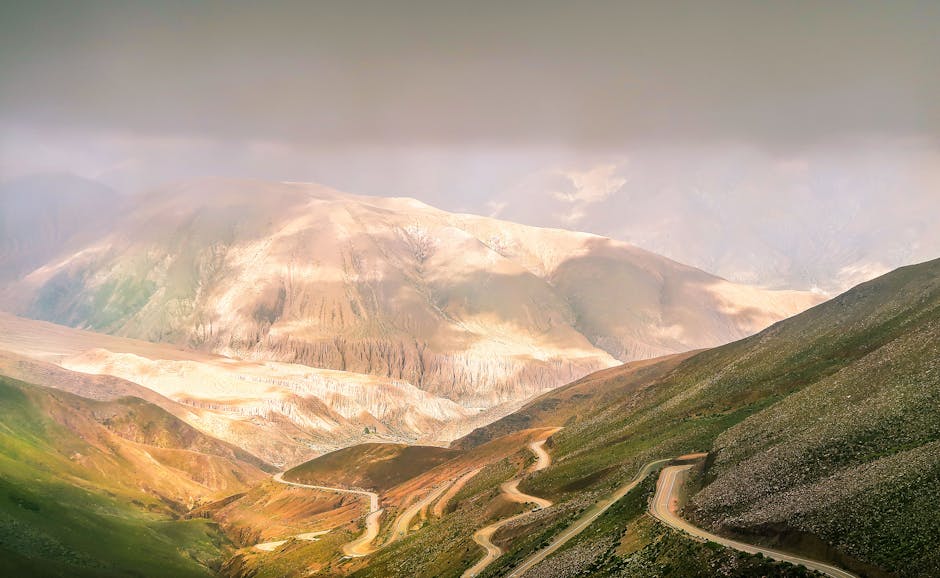
In the summer of 1176, Manuel assembled one of the largest Byzantine armies in decades. According to the historian John Julius Norwich, it numbered perhaps 35,000 to 40,000 men, including elite Varangian Guard, heavy cavalry, siege engineers, and a huge baggage train. Think of it like a Roman army reborn – but in a very different world. Manuel himself led from the front. He was a brave and experienced commander, but he had a flaw: he listened to his own sense of glory more than cautious advice. One of his best generals, Andronikos Kontostephanos, urged him to take a safer route through the plains. But Manuel chose a path that passed through a narrow defile near present‑day Çivril in Denizli province. The place was called Tzyvritze, but the ancient name stuck: Myriokephalon, meaning “the pass of the thousand heads.” Here is something that blew my mind: the name alone suggests how dangerous the location was. I once hiked a similar pass near Beyşehir, and you can feel how easy it would be to ambush an army. The sides climb steeply, and the path twists for miles. Manuel’s army entered the pass on September 17, 1176. He had not properly scouted the way. You might be wondering: why didn’t he send out reconnaissance? That is exactly what his officers asked. But Manuel was in a hurry, maybe afraid the sultan would escape. That haste cost him everything.
The Ambush
As the long column wound through the pass, the Seljuk army struck. Kilij Arslan had hidden his main force in the hills and forests on both sides. Archers rained arrows down on the packed Byzantine ranks, while faster Turkish cavalry sallied from side valleys and vanished again. The Byzantine heavy cavalry could not charge in the narrow space. The baggage train created chaos, blocking roads and trapping troops. I remember reading the account of the Byzantine historian Niketas Choniates, who wrote that “the air was filled with the screams of men and horses, and the dust rose like a dark cloud.” Manuel tried to rally his troops, but the battle soon turned into a slaughter. By midday, the Byzantine army was broken. The Varangian Guard fought to the death defending the emperor, but thousands were cut down. Here is a twist that nobody talks about: unlike Manzikert where the emperor was captured, Manuel managed to escape the pass with his life. He made a truce with Kilij Arslan, agreeing to dismantle the fortresses he had built. But the psychological damage was immense. Manuel returned to Constantinople a humiliated man. He never recovered his confidence, and the army’s elite corps was destroyed.
The Aftermath
The battle itself did not end the Byzantine empire, but it crippled it. Manuel died four years later, and his successors struggled to hold the remaining Anatolian territories. Anecdote: I once visited the ruins of the Byzantine fortress at Choma near Honaz. It stands crumbling in a field, and when I stood there, I felt the weight of what was lost. The Seljuks, on the other hand, emerged stronger. They now controlled the interior, and the Byzantines could never mount a serious invasion again. Over the next century, Turkish beyliks expanded west, and the empire shrank to a coastal strip. Then came the Fourth Crusade in 1204, which sacked Constantinople itself. And it’s no coincidence that Myriokephalon is often called the “second Manzikert” by historians. But here is the thing: the battle is virtually unknown outside of specialist circles. Go ask a random person on the street in Istanbul about Myriokephalon, and they will likely stare blankly. Even many Turks know the Battle of Dandanakan or Kösedağ but not this one.
The Part Nobody Talks About
The Seljuk Perspective
Let’s talk about Kilij Arslan II for a moment. This man was a brilliant tactician. He knew he could not beat the Byzantines in a pitched battle on open ground. So he lured them into a trap. Here is something that blew my mind: he actually sent an envoy to Manuel before the battle, offering peace and even hinting that he would submit as a vassal. But he did that to buy time and to make Manuel overconfident. According to the Arab chronicler Ibn al‑Athir, the sultan deliberately allowed the Byzantine army to enter the pass unchallenged, then closed the door behind them. It was a classic Parthian‐style ambush. But what the mainstream narrative misses is that Kilij Arslan was not just a raider; he was building a real state. He minted coins, built mosques, and patronized Persianate culture. After Myriokephalon, his prestige soared, and the Sultanate of Rum became a major power in the Islamic world. You might be wondering why this battle is not more famous in Turkey. Part of the reason is that the Seljuks were eventually overshadowed by the Ottomans. But another factor is that the battle site is not well‑preserved. I have been to the area around Çivril – it’s mostly farmland now, with a few crumbling Byzantine walls. The Turkish government has not turned it into a historical park like Manzikert. That is a shame, because this battle shaped the future of Anatolia just as much.
The Byzantine Loss of Nerve
Here is a small twist that most accounts downplay: the Byzantine army was not entirely destroyed. A significant portion escaped, and Manuel could have rebuilt. But the defeat broke the spirit of the Komnenian dynasty. After Myriokephalon, the Byzantines adopted a purely defensive posture in Anatolia. They sued for peace, paid tribute, and stopped trying to reconquer the interior. This passivity allowed the Turks to penetrate westward unchecked. By the time the Fourth Crusade shattered the empire in 1204, the Anatolian frontier was already lost. Some historians, like Paul Magdalino in his book “The Empire of Manuel I Komnenos”, argue that Myriokephalon was not the decisive factor – that the empire’s decline was inevitable. But reading the accounts, I cannot help but think that Manuel’s failure to scout, his arrogance, and the sheer psychological blow were pivotal. I remember a late night research session where I pored over a map of Byzantine Anatolia in 1175 and then in 1200. The change is staggering.
Controversial Theories
There is also a controversial theory that the battle was not as big as later sources made it. Some modern military historians suggest that the casualty figures were exaggerated. Here is something that blew my mind: the primary accounts – Niketas Choniates and the Syrian chronicler Michael the Syrian – differ wildly on numbers. Choniates, writing within a few decades, gave a dramatic narrative of near annihilation. But Michael the Syrian, a Syriac source, mentions that the Byzantines lost only about 5,000 men. That is still huge, but not the 30,000 claimed elsewhere. The truth likely lies in between. But regardless of numbers, the strategic effect was real. The campaign ended. Manuel dismantled the fortresses, and the Turks gained a free hand. I discussed this with an archaeologist friend last summer near Ephesus, and he pointed out that the lack of archaeological evidence for a massive battle site – no giant graves or weapon hoards – suggests that maybe the rout was not as bloody as the chronicles say. Still, the outcome was undeniable.
Why It Still Matters Today
The Battle of Myriokephalon is a case study in how overconfidence and bad terrain can ruin even the best armies. Think of it like Napoleon’s invasion of Russia – but in miniature. Today, the idea of a “decisive battle” is still studied in military academies. The pass of Myriokephalon, known locally as “Miryokefalon” is a site that Turkish historians like Prof. Dr. İsmail Hakkı Uzunçarşılı have written about. But there is more: this battle also has a modern political resonance. The Turkish–Byzantine struggle for Anatolia is often framed as a clash of civilizations. But the real story is about strategy, ambition, and geography. When I walk through the streets of modern Denizli or even Istanbul, I see the layers of history. The Byzantines left behind churches and walls; the Seljuks left caravanserais and mosques. Myriokephalon was the moment when the Byzantine dream of re‑conquest died. Current research by scholars like Dr. Koray Durak at Boğaziçi University focuses on the logistics of the Byzantine army, which I find fascinating. They analyze how Manuel’s supply train was too large and slow – a fatal weakness. If you ever visit the Denizli region, you can still see the remnants of the Seljuk fortifications. For me, every time I pass through the Taurus mountains, I think of that long column of doomed soldiers.
My Personal Take
Honestly, this battle haunted me for weeks after I first discovered it. I remember one night at a coffee shop in Kadikoy, I told my friend about Manuel’s mistake. He said, “It’s just like the Atatürk quote: ‘History is not a list of names, but lessons.’” That stuck. I think Myriokephalon teaches us that victory in history often depends on the little things – scouting, patience, knowing when to listen to advisors. I also visited Hattusa, the Hittite capital, last spring. While walking among the ruins, I thought about how empires rise and fall because of decisions made in a single valley. The Hittites had their own battles that decided their fate. And here we are, still digging up their bones. I am not a professional historian, just a guy with a deep love for the past. But I believe we neglect battles like Myriokephalon because they are not as dramatic as Manzikert or Lepanto. Yet they are just as important. You might be wondering if I think Manuel was a bad emperor. Actually, I think he was one of the ablest, but he let his ego get the better of him. Here is something that blew my mind: after the battle, Kilij Arslan sent a mocking letter to Manuel saying, “Did I not warn you? I told you to stay in your own land.” Hubris, pure and simple.
Final Thoughts
So the next time you learn about the Crusades or the Ottoman rise, remember Myriokephalon. It was the quiet disaster that sealed the Byzantines’ fate. It is a story of a proud emperor, a clever sultan, and a narrow pass that changed the course of history. I hope you will dig deeper – there are some great books on the Komnenian army and this campaign. Did this change how you think about this topic? Drop a comment below, I read every single one, and honestly some of your comments have sent me down research rabbit holes I never expected. That is the best part of writing about history.
Sources & Further Reading
- Norwich, John Julius. Byzantium: The Decline and Fall. Viking, 1995.
- Magdalino, Paul. The Empire of Manuel I Komnenos, 1143–1180. Cambridge University Press, 1993.
- Ibn al‑Athir. Chronicles. Translated by D. S. Richards, Ashgate, 2006.
- Choniates, Niketas. O City of Byzantium: Annals of Niketas Choniates. Translated by Harry J. Magoulias, Wayne State University Press, 1984.