
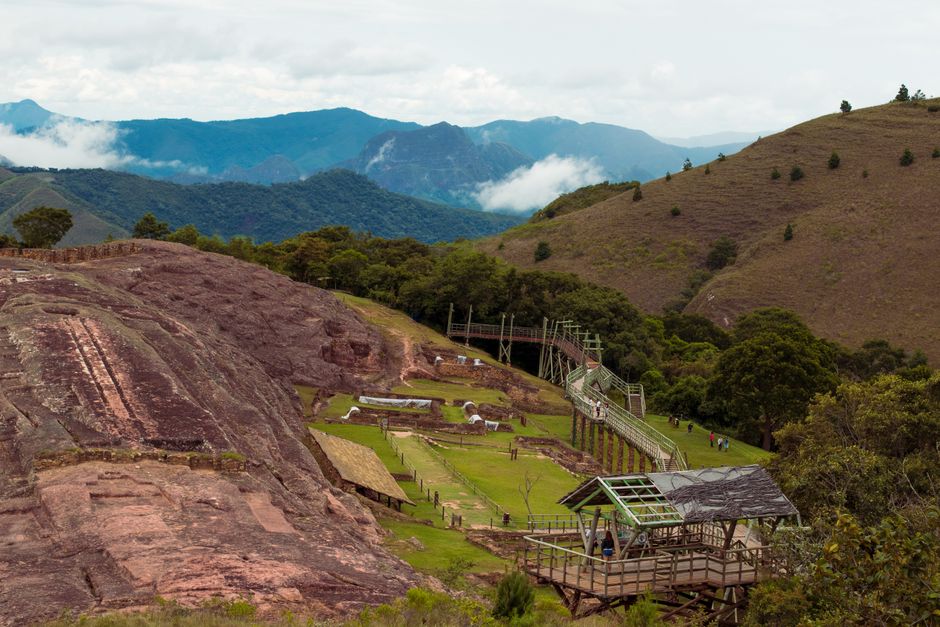
I remember the first time I stood on the ruins of Hattusa, the Hittite capital in central Anatolia. The wind carried whispers from three thousand years ago. As a history enthusiast, I had devoured accounts of the great chariot clash at Kadesh. But it was a far less famous conflict—the Battle of Nihriya (c. 1230 BC)—that haunted me after I read about it in a dusty monograph. Nihriya sealed the fate of an empire. And almost nobody knows about it.
Today, I want to take you to the banks of a river in eastern Anatolia, where the Hittite Empire met the Assyrian war machine. This is not a battle about divine kings or grand alliances. It is a story of hubris, shifting power, and a clash that sent ripples through the ancient world—one that still echoes in the soil I walk on.
The Stage: Two Empires on a Collision Course
By the 13th century BC, the Hittite Empire had reached its zenith under rulers like Suppiluliuma I and Mursili II. They controlled much of Anatolia and northern Syria. Yet to the east, a younger power was rising: Assyria. Under Tukulti-Ninurta I (reigned c. 1243–1207 BC), Assyria flexed new muscles. They had already subdued the Mitanni kingdom and now eyed the Hittite sphere.
The tension flared over the region of Nihriya, likely in the upper Tigris basin—modern-day southeastern Turkey. Both sides claimed it. You see, Nihriya was more than a dusty patch of land. It controlled key trade routes and symbolized dominance over the northern reaches of Mesopotamia. The Hittite king Tudhaliya IV (reigned c. 1230–1215 BC) was not about to let it go without a fight.
Archaeologist Trevor Bryce notes in The Kingdom of the Hittites that Tudhaliya IV was a reformer and builder, but also a warrior who inherited a fragile frontier. The Assyrian threat was real. And Tudhaliya chose to meet it head-on.
The Battle Unfolds
Our main source for Nihriya is the Tigris-King List and a few fragmentary Hittite tablets, including one from the site of Ugarit. The details are sparse, but we can piece together a brutal encounter.
In 1230 BC, Tudhaliya marched east with his army. Assyrian records boast that Tukulti-Ninurta I defeated the Hittites “in the midst of the mountains.” The battle was likely a large infantry and chariot engagement. The Hittites relied on their heavy chariots, but the Assyrians had learned from Mitanni tactics—agile archers and disciplined cavalry.
And here is where the story gets personal for me. Years ago, I visited a Bronze Age site near Diyarbakır—the possible location of Nihriya. The landscape is rugged, marked by rocky ridges and narrow passes. Standing there, I could imagine the dust, the clash of bronze swords, the cries of soldiers. It struck me: this was not a glamorous battle. It was a desperate, bloody affair.
The Assyrians won a decisive victory. Tudhaliya fled, leaving behind much of his army. The Hittite king survived but never fully recovered his prestige. Tukulti-Ninurta I later boasted of capturing “tribute and heavy gifts” from the Hittites, including a golden throne and bronze statues. The balance of power in the Near East had shifted.
The Aftermath: The Cracks in the Empire
The Battle of Nihriya did not immediately destroy the Hittite Empire. But it broke its momentum. The loss emboldened enemies on other fronts—the Kaskans in the north, rebellious vassals in Syria. Internal strife followed. Within a generation, the Hittite heartland began to crumble, and by 1180 BC, the empire collapsed during the Bronze Age Collapse.
Some historians argue that Nihriya was the first domino. Gary Beckman, in his analysis of Hittite diplomatic texts, points out that after Nihriya, Tudhaliya IV’s correspondence shows desperation—pleading for support from the king of Ugarit, which never came. The empire was hemorrhaging power.
Meanwhile, Assyria thrived. Tukulti-Ninurta I built a new capital, Kar-Tukulti-Ninurta, and styled himself as the king of the universe. But even he met a tragic end—murdered by his own son. Still, the Assyrian military machine continued to grow, eventually forging the Neo-Assyrian Empire centuries later.
Why Nihriya Matters Today—and to Turkey
As a writer based in Turkey, I often walk through landscapes that witnessed these ancient dramas. The Battle of Nihriya is a reminder that Anatolia has always been a crossroads—and a battleground. The Hittites are part of Turkish heritage, and their struggles resonate in the very earth beneath our feet.
Modern archaeological work at sites like Hattusa (Boğazköy) and Alacahöyük continues to uncover fragments of this story. In 2021, a team from the University of Chicago discovered new tablets at the site of Kayalıpınar that mention Tukulti-Ninurta—a direct link to the conflict. Each tablet is a puzzle piece.
I remember chatting with a local museum curator in Çorum near Hattusa. He told me, “People come for the famous things, but they leave knowing the quiet battles made the history.” That stuck with me. The Battle of Nihriya is a quiet battle. But it changed everything.
Lessons from a Forgotten War
What can we learn from Nihriya? First, that empires often fall not from a single knockout blow but from a series of cuts. Second, that geography matters—control of a small river could determine the fate of civilizations. And third, that even the mightiest leaders are human. Tudhaliya IV made a gamble. He lost.
The Hittites left behind magnificent ruins and legal codes, but their military hubris at Nihriya paved the way for their end. Assyria, too, would eventually collapse—but not before leaving its own mark. History is a chain of such choices.
Sources and Further Reading
- Bryce, Trevor. The Kingdom of the Hittites. Oxford University Press, 2005.
- Stone, Damien. The Hittites: Lost Civilizations. Reaktion Books, 2020.
- Collins, Billie Jean. The Hittites and Their World. Society of Biblical Literature, 2007.
- Beckman, Gary. “Hittite Foreign Relations.” In Journal of Near Eastern Studies, Vol. 49, No. 1 (1990), pp. 27–42.
Did this change how you think about this topic? Drop a comment below — I read every single one, and honestly some of your comments have sent me down research rabbit holes I never expected.