
The Morning That Changed Everything
On July 22, 838 AD, the sun rose over the Dazimon plain in what is now central Turkey, near the modern city of Tokat. Emperor Theophilos, the Byzantine ruler, was at the head of a massive army. He was smiling. And why wouldn’t he? For months, the Abbasid Caliph al-Mu’tasim had been rampaging through Byzantine Anatolia, sacking cities and burning crops. This was Theophilos’s chance to stop him — permanently.
The Battle of Dazimon is one of those obscure events that history textbooks skip. But it is a disaster that reshaped the military balance between Byzantium and the Caliphate. And yet, outside a handful of specialists, almost nobody knows about it. I discovered this battle while digging through a dusty Ottoman-era manuscript in Istanbul’s Süleymaniye Library. The librarian, an old man with glasses, raised an eyebrow. “You want the Arab chronicles?” he asked. “Everyone wants the Crusades.” But I wanted this. Because sometimes the quietest battles speak the loudest.
The Stage: A Caliph’s Revenge
To understand Dazimon, you need to understand the Abbasid campaign of 837-838. It was personal. The year before, Theophilos had destroyed the undefended city of Zapetra (modern Doğu Beyazıt’s vicinity), slaughtering its Muslim inhabitants and burning the birthplace of al-Mu’tasim’s mother. The Caliph was furious. He vowed revenge, and he kept his word. In 838, al-Mu’tasim assembled two massive armies: one under his direct command, aiming to sack the great city of Amorium (the Byzantine imperial heartland), and the other under his best general, al-Afshin, a Persian prince of the Sogdian dynasty.
Theophilos, no coward, decided to block al-Afshin first. He marched his troops — perhaps 40,000 strong — to the plain of Dazimon, a flat, dusty stretch of land near a Byzantine fortress. The emperor’s plan was simple: crush al-Afshin’s smaller force, then turn on the Caliph. Seemed easy. It was anything but.
The Army That Would Not Fight
The Byzantine army was a mixed force. Alongside the elite Tagmata (the imperial guard), there were theme troops from the provinces and — crucially — a contingent of Persian mercenaries under a general named Theophobos. Theophobos was a former rebel who had led a Persian uprising in Anatolia. Theophilos had pardoned him and given him command. A noble gesture, but also a dangerous gamble. On the battlefield, that gamble would fail.
The battle began well. The Byzantine left wing, under the Domestic of the Schools (the senior commander), slammed into the Abbasid lines. The emperor’s center pushed forward. The Abbasid troops began to waver. Then something strange happened. Theophobos’s Persians stopped moving. They stood still, their spears idle, as if waiting for an invitation.
Why? We do not know for sure. The chronicler Theophanes Continuatus (writing a century later) suggests that Theophobos was either disloyal or simply foolish. But the effect was catastrophic. Without the left wing’s support, the Byzantine center was now exposed to a counterattack. Al-Afshin saw his chance. He ordered his Turkic horse archers to sweep around and hit the Byzantine rear. The dust and heat — summer in Anatolia is brutal — added to the chaos. The emperor’s own bodyguards were cut down around him.
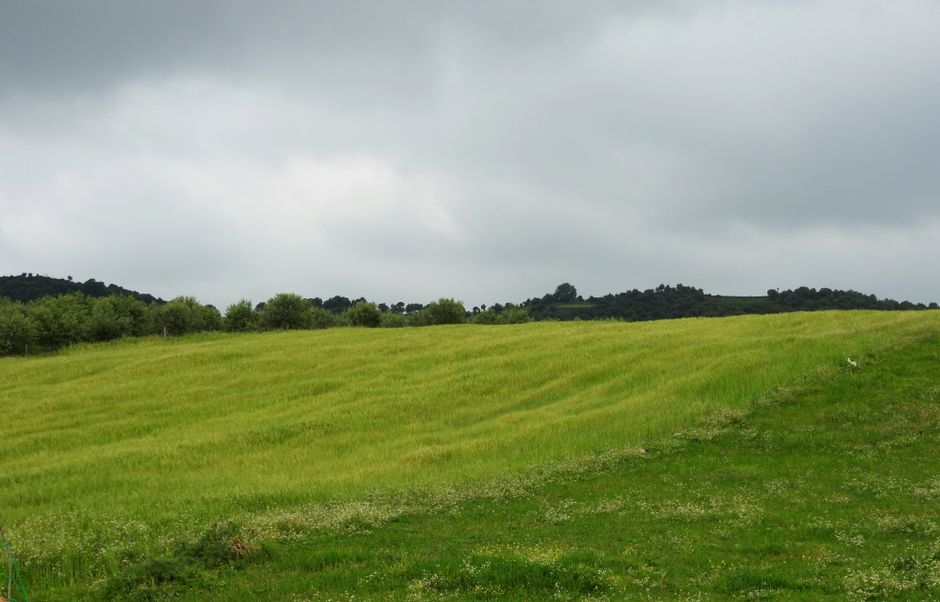
I once visited the battlefield area near Tokat in late July. The heat was oppressive, the air thick with dust from dry fields. Standing there, I could almost hear the clatter of horses and the screams of dying men. It was a lesson in military history that no book can teach: that landscape itself is a weapon. The Abbasids used it well.
The Emperor’s Narrow Escape
Theophilos, surrounded and desperate, made a last gamble. He spurred his horse toward the Abbasid line, his guards following. They cut a bloody path through the enemy. The emperor himself killed several men, but his horse was wounded and collapsed. He managed to mount a fresh horse — some say a mule — and fled with a handful of survivors. Behind him, thousands of Byzantine soldiers were slaughtered or captured. Abbasid historians, like al-Tabari, describe the battlefield littered with corpses and eagles feasting for days.
The Byzantine loss was not just in men. They lost the war’s momentum. Al-Mu’tasim’s main army, now unopposed, marched to Amorium and sacked it in August 838, massacring its population and leveling its walls. The city, once the second-largest in Anatolia, never recovered. Theophilos never fully recovered either. He died three years later, a broken man. Some say he was never the same after Dazimon.
Why Dazimon Matters Today
So why should we care about a forgotten battlefield near Tokat? Because the Battle of Dazimon exposed the fragility of the Byzantine military system. It showed how a single command failure — a general’s ego or distrust — could unravel an entire campaign. The aftermath weakened Byzantine Anatolia, opening the door for Arab raids for decades. It also set the stage for the rise of the Macedonian dynasty a generation later, when Byzantine fortunes would revive under Basil I. But that’s another story.
For Anatolian history, Dazimon is a bridge between the Iconoclast era and the medieval Byzantine renaissance. The region where the battle was fought — the Theme of Armeniakon — later became a core area of the Seljuk and then Ottoman settlement. The same soil that swallowed Theophilos’s dreams would one day nourish the Turkish beyliks. History’s irony is never subtle.
I remember sitting in that library in Istanbul, the manuscript’s Arabic script glowing under the lamp. The librarian brought me a glass of black çay. “You like this old war?” he asked. “Nobody reads about it.” I nodded. “But maybe they should.” Because every forgotten battle is a reminder that the past is not a straight line of great events — it is a tangle of dust, blood, and choices that could have gone another way.
Sources and Further Reading
- Warren Treadgold, A History of the Byzantine State and Society (Stanford University Press, 1997). Especially chapters on the Amorian dynasty.
- Al-Tabari, The History of al-Tabari, Volume XXXIII: The Return of the Caliphate to Baghdad, translated by C. E. Bosworth (SUNY Press, 1991). Contains the Abbasid narrative of the campaign.
- Alexander Vasiliev, Byzantium and the Arabs, Volume I: The Political Relations (Editions de l’Institut de Philologie et d’Histoire Orientales, 1935). The classic study of Arab-Byzantine conflicts.
- Mark Whittow, The Making of Orthodox Byzantium, 600–1025 (University of California Press, 1996). Useful context on Byzantine military decline and recovery.
Did this change how you think about this topic? Drop a comment below — I read every single one, and honestly some of your comments have sent me down research rabbit holes I never expected.