
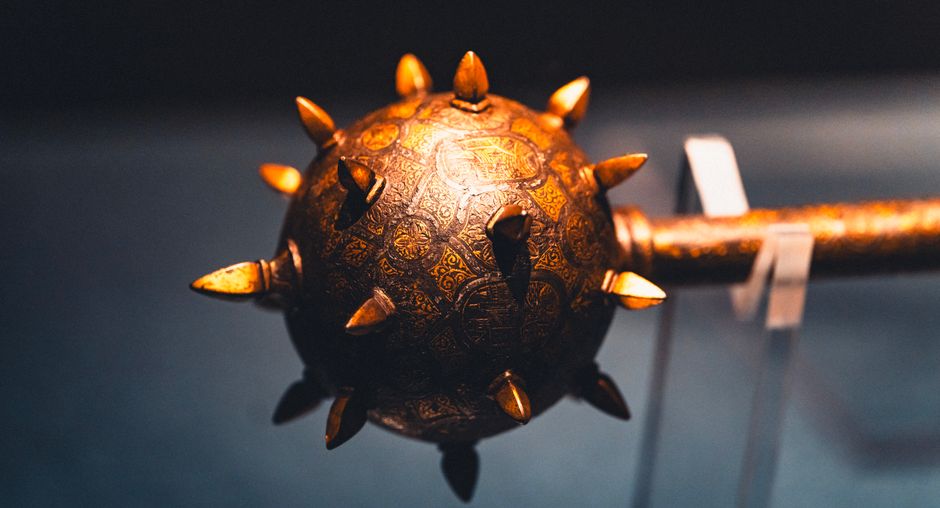
I remember the first time I saw one. I was in the Museum of Anatolian Civilizations in Ankara, wandering through the Roman gallery, when my eyes landed on a strange, palm-sized bronze object in a glass case. It looked like a geometric puzzle—a hollow ball with twelve flat pentagonal faces, each face with a circular hole of varying size, and small knobs at the corners. The label simply read ‘Dodecahedron, 2nd–3rd century AD, found in Pessinus.’ I stared at it for a long time, and no guard, curator, or sign could tell me what it was for. That moment hooked me. For years, I’ve chased the story of these mysterious objects—about 120 have been found across the Roman world, from England to Hungary, from France to Turkey. And after two centuries of study, we still have no definitive answer. Why did the Romans make these? What were they used for? Let’s dig into one of history’s most stubborn puzzles.
What Exactly Are Roman Dodecahedra?
Roman dodecahedra are small, hollow objects made of bronze or, rarely, stone. They measure anywhere from 4 to 11 centimeters in diameter. Each has twelve flat pentagonal faces, and on each face is a circular hole—the holes vary in size from face to face. At the corners where the pentagons meet, there are small spherical knobs. Some examples have a single larger hole, perhaps for a handle or attachment. They date from the 1st to the 4th century AD, and they’ve been found in Roman military camps, villas, and even graves.
The first recorded discovery was in 1739 in Aston, Hertfordshire, England. Since then, they’ve turned up mostly in the northern and western provinces—Roman Gaul, Germania, Britannia, and Dacia. But a few, like the one I saw in Ankara, come from Anatolia (the Roman provinces of Galatia and Asia). That’s curious, because Anatolia was far from the typical dodecahedron heartland. What were they doing there?
A Quick Look at the Evidence
Archaeologists have cataloged over 100 dodecahedra in museum collections worldwide. Most are unadorned, but a few have tiny decorative rings or incised lines. None have any inscriptions—no words, no numbers, no maker’s mark. They are completely silent. And that silence has fueled centuries of speculation. Because they appear only in the Roman Empire and only between the 1st and 4th centuries, we know they are Roman. But why would a practical people like the Romans produce hundreds of nearly identical objects with no obvious function?
Theories: From Candlesticks to Rangefinders
Over the years, historians, archaeologists, and even hobbyists have proposed dozens of theories. Some are clever, some are wild, and none are proven. Let’s walk through the most prominent ones.
The Candleholder Theory
The most popular explanation for a time was that dodecahedra were candleholders. The idea: you put a candle inside, and the different-sized holes allowed you to control the flame’s brightness by turning the object. But wait—wax drippings? On most dodecahedra, there’s no sign of wax residue. And why twelve faces? Why the knobs? It seems overengineered for a simple candle stand. Still, the theory persists in some corners of the internet.
The Surveying Instrument Theory
In 2008, a group of researchers suggested that dodecahedra were surveying instruments used to measure distances and angles. The holes could sight through, and the knobs might attach to strings or plumb lines. A retired engineer named John G. H. Simons even built a working replica and argued it could be used to calculate the distance to a tower. But critics point out that Roman surveyors had the groma—a perfectly good tool. Why invent a dodecahedron? And again, no wear marks from regular use.
The Knitting Aid (or Sewing Tool)
One of the more recent and intriguing theories comes from Dr. Michael Guggenberger, an Austrian archaeologist. In a 2017 paper, he proposed that dodecahedra were knitting tools—specifically, for making gloves or socks. The knobs could hold threads, and the holes allowed fingers to pass through. He even replicated the process and produced a Roman-style glove. This theory has gained traction because it explains the uniform size—hands come in standard sizes—and why they were often found in women’s graves. But again, no direct evidence like textile remains. It remains a strong possibility, but not a certainty.
The Religious or Cult Object Theory
Some scholars argue that dodecahedra had a ritual or symbolic purpose. The dodecahedron is a Platonic solid, associated with the universe or the heavens in Greek philosophy. Rome was steeped in Greek thought. Could these be religious artifacts used by secret cults? Or perhaps they were dice for a game? But no game rules have survived, and the knobs would make them uncomfortable to roll.
The Toy or Decorative Object Theory
Then there’s the simplest idea: they were toys, ornaments, or conversation pieces. Roman households loved decorative bronze items. A dodecahedron could be a paperweight or a curiosity. But then why are they found in military contexts? And why are they so uniform in design across provinces? A toy maker in Gaul and one in Anatolia making the same thing without trade? Unlikely.
What Do the Excavations Tell Us?
Let’s look at the archaeological context. Dodecahedra have been found in forts, civilian settlements, and graves. For example, in 1976, a hoard of five dodecahedra was discovered in Tongeren, Belgium—an ancient Roman city. They were buried together, perhaps by someone hiding them. In Bosnia, one was found in a soldier’s grave alongside his weapons. In Turkey, near Pessinus, the one I saw came from a temple complex, dedicated to the goddess Cybele. That last location is tantalizing: Cybele was a mother goddess, and her cult often used spherical or geometric symbols. Could the dodecahedron be a representation of her cosmic womb? We don’t know.
A Personal Side Note: The Ankara Exhibit
When I visited Ankara a few years ago, I spent an afternoon with that dodecahedron. The museum’s curator, a kindly older gentleman named Mehmet, noticed my curiosity. He told me that they had received it from a farmer who plowed it up near a Roman road in the 1960s. The farmer thought it was a strange rock and used it as a doorstop for years! Only when an archaeologist visited the village did it end up in the museum. I asked Mehmet what he thought it was. He shrugged and said, ‘I’ve been here thirty-five years. Every year someone comes with a new theory. I’ve learned to enjoy the mystery.’ I think he’s right.
Why Does This Mystery Matter?
You might wonder—why spend so much time on a little bronze object? Because the Roman dodecahedra remind us of a fundamental truth about history: the past is not a closed book. There are still things we don’t know, and probably never will. They challenge our assumptions about Roman society. Were they all practical, utilitarian masters? Or did they have room for whimsy, for objects whose purpose was aesthetic or spiritual? The dodecahedra sit in museum cases, silent, taunting us. And that’s okay. Not every mystery needs to be solved. The asking is the thing.
What’s the Current State of Research?
As of 2024, no consensus has emerged. A few academic papers—like “The Roman Dodecahedron: An Enigma Revisited” in the Journal of Roman Archaeology (2020)—have summarized the theories without settling on one. Online databases like RomanDodecahedra.com track new finds. The most recent discovery was in 2023 near Leiden, the Netherlands, in a Roman ditch. A 3D scan showed wear patterns consistent with handling, but no specific use. The mystery endures.
Could 3D Printing Help?
Modern technology might finally crack the case. Researchers at the University of Tübingen used CT scanning on a dodecahedron to create a precise digital model. They simulated various functions—as a knitting guide, a candle candelabra, a surveying tool—and compared wear patterns. Preliminary results (not yet peer-reviewed) suggest the knitting theory shows the most plausible wear marks. But even that is speculative. I’m following this research closely.
Connecting to Anatolia
Why did I start with a Turkish dodecahedron? Because Anatolia was a melting pot. The Romans who lived here were influenced by Greek, Phrygian, and Galatian cultures. The dodecahedron in Ankara came from a region known for the cult of Cybele, which embraced geometric and celestial symbols. Could the Anatolian examples be different from the northern ones? Maybe they were used in mystery religions that blended Roman and local traditions. Without more discoveries, we can only speculate. But it’s a reminder that even ‘Roman’ objects can carry local flavors.
Final Thoughts: The Joy of the Unknown
I’ll leave you with this: the next time you see an artifact in a museum that no one can explain, don’t feel frustrated. Feel lucky. You’re staring at a real mystery, a piece of the past that hasn’t given up its secrets. The Roman dodecahedra are my favorite example of that. They’ve outlasted the empire that made them, and they’re still waiting for someone to figure them out. Maybe it’ll be you. Maybe it’ll be me. But until then, we can enjoy the speculation, the arguments, and the wonder.
Sources and Further Reading
- Guggenberger, Michael. “Die römischen Dodekaeder – eine neue Interpretation.” Archäologie Österreichs 28 (2017): 12–25. (In German, but key summary in English available online.)
- Simons, John G. H. “The Roman Dodecahedron as a Surveying Instrument.” Journal of Ancient History and Archaeology 5.2 (2018): 25–34.
- Smith, S. A. “Roman Dodecahedra: A Mystery Solved?” Smithsonian Magazine, March 2021. Link
- Rüger, C. B. “The Roman Dodecahedron: An Enigma Revisited.” Journal of Roman Archaeology 33 (2020): 247–264.
Did this change how you think about this topic? Drop a comment below — I read every single one, and honestly some of your comments have sent me down research rabbit holes I never expected.