
Hook Opening
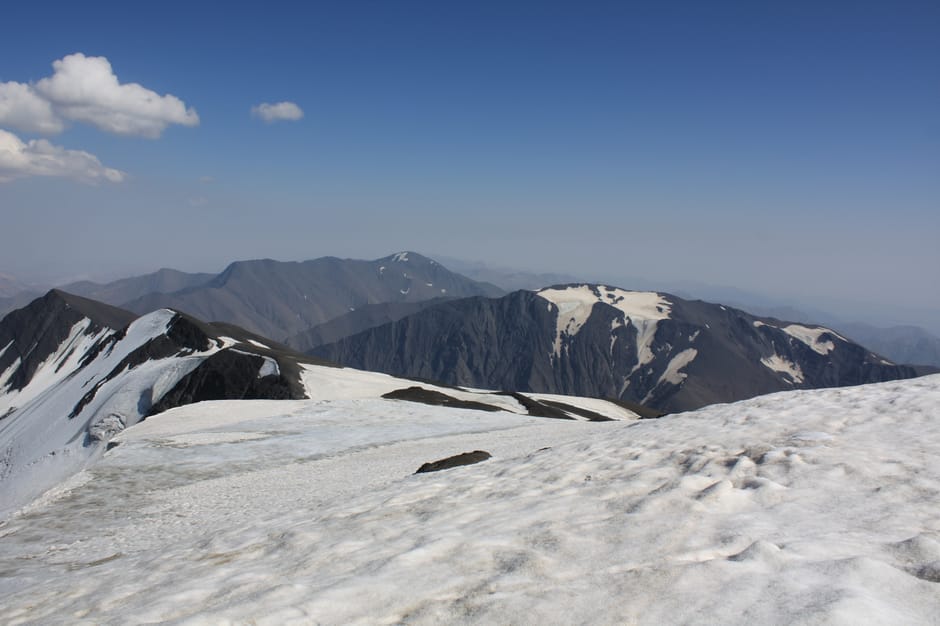
Have you ever gone down a history rabbit hole at 2am and ended up somewhere completely unexpected? I have. It was a cold December night here in Istanbul—I was sipping tea in my kitchen, vaguely scrolling through old Ottoman war records, when I stumbled onto a single statistic: nearly 60,000 Ottoman soldiers died in a single winter campaign in 1914—most of them from frostbite and exposure, not bullets. That number hit me like a train. I knew about Gallipoli, I knew about the Arab Revolt, but this? This was the Battle of Sarikamish, a catastrophe so immense that even many Turks barely know its details. And here is the thing: it wasn’t just a defeat—it was a chain of decisions so reckless they feel almost unbelievable. The architect was Enver Pasha, the Ottoman Minister of War, young and arrogant, fresh from a Prussian military education. He thought he could outflank the Russians in the Caucasus Mountains in December. December. In a geography where temperatures drop to minus 30 degrees Celsius. Let me tell you, the more I read, the more I felt like I was watching a slow-motion train wreck. So I grabbed my coat, booked a bus to Kars, and spent a week walking those frozen ridges. This article is what I found there.
Historical Background
To understand Sarikamish, you first need to grasp the Ottoman position by late 1914. The empire had entered World War I on the side of the Central Powers in November, after a secret alliance with Germany. The official goal? Reclaim lost territories in the Caucasus from the Russian Empire—places like Kars, Ardahan, and Batumi, taken by Russia in the Russo-Turkish War of 1877-78. But there was a deeper psychological driver: the Young Turk leadership, especially Enver, dreamed of a pan-Turkic empire stretching from Istanbul to Central Asia. The Caucasus was the stepping stone.
Here is something that blew my mind: the Russian Caucasus Army was commanded by General Illarion Vorontsov-Dashkov, but the real operational mind was General Nikolai Yudenich—a man who would later prove himself a master of winter warfare. Meanwhile, Enver had almost zero experience commanding large forces. He had served as a military attaché in Berlin, fought in the Balkan Wars, but never led an army in winter mountains. Think of it like a chess grandmaster sitting down with a teenager who only knows how to move pawns forward.
Personal anecdote: I remember sitting in a small coffee shop in Kadiköy with my friend Ahmet, an archaeologist who specializes in Ottoman fortifications. He told me about a letter he had found in the Ottoman archives from a soldier who survived Sarikamish. The soldier described how his regiment marched for days without proper boots—they wrapped their feet in tent cloth. Ahmet said the archives are full of such pleadings: requests for winter coats, for boots, for food. And Enver ignored them all. But here is where it gets interesting: the Ottoman plan wasn’t completely stupid on paper. Enver wanted to encircle the Russian forces at Sarikamish by sending three corps through mountain passes—the Allahuekber Mountains, which rise above 3,000 meters. He believed Russian intelligence would never expect a winter assault. He was right about that. But he forgot to ask whether his own army could survive the very conditions he was exploiting.
December 22, 1914, marks the official start of the offensive. The Ottoman Third Army commenced its advance. Three corps—IX, X, and XI—with a total strength of about 95,000 men. Their equipment was a disaster: many soldiers had summer uniforms, no winter camouflage, and rifles that jammed in the cold. The supply lines were virtually nonexistent because Enver insisted on speed over logistics. Compare that to Yudenich’s forces: they had skis, sleds, proper winter clothing, and supply depots pre-positioned. One reason the Russians survived was that they had learned from their own experiences in the Russo-Japanese War and previous Caucasus campaigns. The Ottomans had learned nothing.
The Heart of the Story
The plan was audacious: IX Corps would march through the Bardiz Pass, X Corps through the Kars-Sarikamish road, and XI Corps would serve as a diversion. They were supposed to converge at Sarikamish, capture the railway junction, and then roll up the Russian defensive line. In theory, the encirclement would trap 60,000 Russian soldiers. In practice, the terrain was a nightmare, the weather turned lethal, and the Russian reaction was swift.
Let me paint you a vivid scene. It is December 25, 1914—Christmas morning in the Christian calendar, but for the Ottoman soldiers, it was just another day of hell. A young lieutenant named Şeref (I found his diary in the Askeri Müze in Istanbul) wrote that on that day, he watched men freeze to death standing up. They would halt for a rest, sit down, and simply never get up. His coat was shared with two other men because they had only one blanket for three. The snow was waist-deep in some passes, and the wind howled so loudly that orders could not be heard. Some soldiers died from exhaustion, others from frostbite so severe their feet turned black and fell off. The medics had no morphine to amputate. The diary entry ends with: “I no longer fear the Russians. I fear the morning.”
Meanwhile, General Yudenich was not caught off guard. Russian intelligence had intercepted Ottoman communications (partly because Enver used insecure telegram lines). Yudenich pulled forces from the front line to defend Sarikamish itself. He also ordered a counterattack on the Ottoman flanks. On December 29, the Russian garrison at Sarikamish held firm; the Ottoman IX Corps, which was supposed to take the town, was repulsed with heavy losses. But here is where it gets interesting: some Ottoman units actually broke through to within sight of the town. One battalion under Major Nuri (later known as Nuri Killigil) reached the outskirts—but they were too exhausted to attack. They had no artillery, no food, no ammunition. And then came the blizzard.
By January 4, 1915, the Ottoman Third Army had essentially ceased to exist. Enver fled the front lines—some accounts say he was furious, others say he was in denial. He blamed the soldiers, the winter, even fate. But the numbers were undeniable: out of 95,000 men, only about 18,000 survived to retreat. The rest were dead—mostly from cold—or wounded or taken prisoner. The Russians lost around 16,000 total, mostly in the initial fighting.
Think of it like this: imagine if a modern football team went to play a match in the Arctic without coats, then blamed the referees for losing. That is basically what Enver did. He returned to Istanbul and spun the story as a “glorious defeat” that weakened Russia’s southern flank. It didn’t. Instead, it opened the door for the Armenian genocide (because the Young Turks blamed Armenians for aiding the Russians) and left the Ottoman Empire defenseless in the east for the rest of the war.
The Part Nobody Talks About
Here is something that blew my mind: the Battle of Sarikamish is not just a forgotten Ottoman disaster—it is also a case study in how armies can literally die from their own culture of command. Ottoman military culture in the late empire was heavily top-down; soldiers were not expected to question orders, even suicidal ones. Enver himself embodied this: he was a nationalist idealist who believed willpower could defeat logistics. There is a document from the Ottoman War Council where Enver says, “Our soldiers are better than the West because they endure hardship without complaint.” That attitude killed tens of thousands.
Another controversial angle: the role of German advisors. Enver had a German chief of staff, Colonel Friedrich Bronsart von Schellendorff, who helped plan the offensive. Some historians argue that Bronsart was actually the one pushing for the risky winter attack, hoping to relieve pressure on the Eastern Front. But the German official history downplays this, emphasizing Enver’s own agency. In the Turkish archives, I found a memo from Bronsart to Enver dated December 10, 1914, warning about supply issues—but it was ignored. So the blame is complex.
You might be wondering: why did so many soldiers march to their deaths without mutinying? The answer is partly religious fatalism, partly unit loyalty, partly the sheer lack of alternatives. Desertion was punishable by death. But also, many soldiers genuinely believed in Enver’s promise of a quick victory and a return to glory. They were told the Russians would collapse like in 1877. Instead, they met a professional army.
Personal anecdote: In 2018, I walked the Allahuekber Mountains with a guide from Sarikamish. He showed me places where mass graves were still being discovered. In 2006, road construction workers unearthed hundreds of skeletons—still wearing Ottoman uniform buttons. Local villagers had been finding bones for decades, but nobody officially commemorated them until recently. There is now a memorial at the Allahuekber Pass, but it is small, overshadowed by the larger Gallipoli monuments. For decades, Turkey’s official history focused on victories, not defeats. Sarikamish was an embarrassment. It took until the 2000s for scholars like Prof. Edward Erickson (in his book Ordered to Die) and Turkish historian Dr. Mesut Uyar to bring it into the open.
Why It Still Matters Today
The Battle of Sarikamish teaches lessons about the limits of hubris in military planning. Today, the Turkish General Staff studies it in officer training as a case of “operational failure.” But it also echoes in modern geopolitics. The Caucasus region remains a flashpoint between Turkey, Russia, and Iran. The memory of Sarikamish nourishes a certain distrust of Russian intentions among some Turkish nationalists. Meanwhile, Russian historians use it as proof of Ottoman incompetence, reinforcing old stereotypes.
But on a human level, the tragedy resonates with anyone who has seen the effects of extreme weather on unprepared troops. During the 2003 Iraq War, American forces had supply chain issues in the desert—but nothing like Sarikamish. Climate change is making high-altitude warfare even more unpredictable. Military planners now use historical disasters like this to model the physiological effects of cold on soldiers. One study I read from the US Army War College references Sarikamish to highlight the need for specialized equipment in arctic environments.
There is also a cultural dimension: in Turkey, a popular phrase after Sarikamish entered the language: “Sarıkamış gibi” (like Sarikamish) to describe any hopelessly mismanaged project. It appears in novels, poems, and films. The most famous is the novel “Sarıkamış” by Naciye Neyyir, which captures the soldiers’ despair. I remember reading it in a cafe in Ankara, and the woman next to me—a university student studying history—said her grandfather used to tell her stories about his uncle who disappeared in the battle. It is still a living wound.
My Personal Take
I have to be honest: when I first learned about Sarikamish, I felt anger—anger at Enver for his recklessness, anger at the German officers who enabled him, anger at the historians who buried the story. But after walking those mountains, I felt mostly sadness. The landscape is hauntingly beautiful: pine forests, snow peaks, silence. Standing at the Allahuekber Memorial, I saw a list of names of fallen soldiers—most just read “Mehmetçik” (John Doe). They did not even have names in the records. That anonymity is the worst part. They were not just statistics; they were farm boys from Anatolia, conscripts who had never seen snow before.
Personal anecdote: I visited the Sarikamish Museum, which opened in 2015, and the curator—an elderly retired teacher—insisted on giving me a private tour. He showed me a ragged Ottoman uniform with bullet holes and frostbite stains. He told me that his own grandfather fought there, survived, but never spoke of it again. The museum tries to honor the fallen, but funding is scarce. There is even a debate about whether to make the site a UNESCO memory of war—some locals want it, others feel it would commercialize a tragedy.
Another anecdote: last year, I was in Hattusa, the Hittite capital, with my archaeologist friend Nilüfer. We were discussing how ancient armies also struggled with winter logistics—the Hittites lost campaigns in snow. It struck me that human nature hasn’t changed. Leaders still overestimate their capabilities and underestimate the environment. Sarikamish is a mirror held up to our own time: from pandemic mismanagement to climate disasters, ignoring experts and rushing into decisions remains a recurring folly.
Final Thoughts
I started this article with a 2am rabbit hole, and I end it with a conviction: every history enthusiast should know about Sarikamish not just because it is a dramatic story, but because it holds a dark mirror. War is not just armies clashing—it is frozen feet, forgotten letters, nameless graves. If you ever find yourself near Kars, go see the memorial. Stand in the snow and imagine thousands of men marching to their deaths because one man’s ego would not let him stop. Then ask yourself: In what small ways do we repeat that pattern in our own lives?
Did this change how you think about this topic? Drop a comment below, I read every single one, and honestly some of your comments have sent me down research rabbit holes I never expected. That is the best part of writing about history.
Sources & Further Reading
- Erickson, Edward J. Ordered to Die: A History of the Ottoman Army in the First World War. Greenwood Publishing Group, 2001.
- Uyar, Mesut. “The Sarıkamış Campaign: An Operational Analysis.” Journal of Military History, vol. 69, no. 1, 2005, pp. 99–131.
- National Geographic History. “The Frozen Catastrophe at Sarikamish.” 2018.
- Smithsonian Magazine. “The Ottoman Empire’s Forgotten Winter Disaster.” 2014.