
Introduction: The Dawn of the Timurid Empire
In the annals of history, there are empires that rise with ferocity and ambition, leaving behind legacies that continue to echo through time. The Timurid Empire, founded by the warlord Tamerlane, also known as Timur, stands as a formidable testament to such a historical saga. This empire, which carved its territory across much of Central Asia, the Middle East, and parts of South Asia, is often remembered for its blend of cultural renaissance and ruthless military campaigns. In examining the Timurid Empire, we uncover not just the story of power and conquest, but also a glimpse into the world reshaped by its indelible influence. As we journey through the history of this enigmatic empire, we find a tale that continues to teach and inspire in our modern world.
Historical Background and Context
The Timurid Empire finds its origins in the late 14th century, during a period of turbulent political landscapes across Asia. Timur, the future founder of the empire, was born in 1336 in Kesh, near Samarkand in modern-day Uzbekistan. He was a member of the Barlas, a Mongol tribe that had settled in the region. However, much of Central Asia at the time was a fragmented tapestry of warring khanates and tribal confederations. The remnants of the Mongol Empire still cast a long shadow over the region, providing both a challenge and an opportunity for an ambitious chieftain like Timur.
Timur rose to prominence by capitalizing on the political fragmentation, employing strategic alliances, sheer military prowess, and a reputation for ruthless efficiency. By the 1370s, after a series of complex maneuvers, including the subjugation of the Chagatai Khanate, Timur had established himself as the de facto ruler of a vast territory stretching from the Oxus to the Himalayas. The nascent Timurid Empire, although initially fragile, soon embarked on an aggressive path of expansion, driven by both economic motives and Timur’s personal ambition for creating a legacy comparable to that of his predecessor, Genghis Khan.
Key Events in the Timurid Empire
1370: The Siege of Samarkand
The year 1370 marks a pivotal moment in Timur’s rise to power. The successful siege of Samarkand not only provided him with a strategic base of operations but also served as the inauguration of his rule. Under Timur’s leadership, Samarkand would soon transform into a hub of trade, culture, and military strength.
1391: The Battle of the Kondurcha River
One of the critical battles that underscored Timur’s military genius was the Battle of the Kondurcha River in 1391. Facing the Golden Horde, a formidable rival in the power struggle over the Eurasian steppes, Timur’s disciplined troops managed to decimate the enemy forces, extending his influence further into the territories of Rus and Eastern Europe.
1402: The Clash at Ankara
In 1402, Timur secured one of his most significant victories at the Battle of Ankara against the Ottoman Sultan Bayezid I. This encounter, not only showcased Timur’s tactical brilliance but also momentarily halted the rise of the Ottoman Empire. Bayezid was captured, creating a power vacuum that Timur exploited, leading to further Timurid expansion into the Anatolian Peninsula.
1405: The Failed Invasion of China and Timur’s Death
The year 1405 was a turning point, as Timur embarked on an ambitious campaign aimed at the Ming Dynasty in China, seeking to emulate and surpass the conquests of his ancestors. However, his untimely death near Otrar in the Syr Darya region led to the abrupt end of the campaign. Timur’s passing marked not only the end of his military expansions but also set the stage for internal strife within his empire.
Important Figures in the Timurid Empire
Timur – The Ruthless Founder
Timur, also known as Tamerlane, is undeniably the central figure in the history of the Timurid Empire. Known for his fearless military campaigns and strategic acumen, Timur was a tactician who survived numerous battles and expanded his influence across continents.
Shah Rukh – The Diplomat
Following Timur’s death, his son Shah Rukh assumed power and exhibited a stark contrast to his father’s methods. Where Timur had wielded the sword, Shah Rukh preferred diplomacy and consolidation of his father’s conquests, ruling effectively from Herat, which became a cultural capital under his guidance.
Ulugh Beg – The Scholar
One of the most celebrated figures of the Timurid dynasty, Ulugh Beg was renowned not for martial prowess but for his contributions to science and culture. His work in astronomy, particularly in developing the Ulugh Beg Observatory in Samarkand, was a landmark achievement in medieval science.
Causes and Consequences of the Timurid Expansion
The driving factors behind Timur’s conquests were manifold. Personal ambition intertwined with the desire for economic control over major Silk Road routes were primary motivators. Timur sought not only wealth and power but also legitimacy, aiming to establish a legacy rivaling the Mongols. The consequences of his conquests were profound. While Timur created a sprawling empire, his methods often involved immense bloodshed, which left trails of destruction. In the immediate aftermath, the political landscape of Central Asia and instances where Timur repelled Ottoman expansion showed immediate impacts. However, the empire’s instability after his death led to its rapid fragmentation, illustrating the challenges of sustaining such conquests without a unifying force like Timur.
Global Impact and Legacy
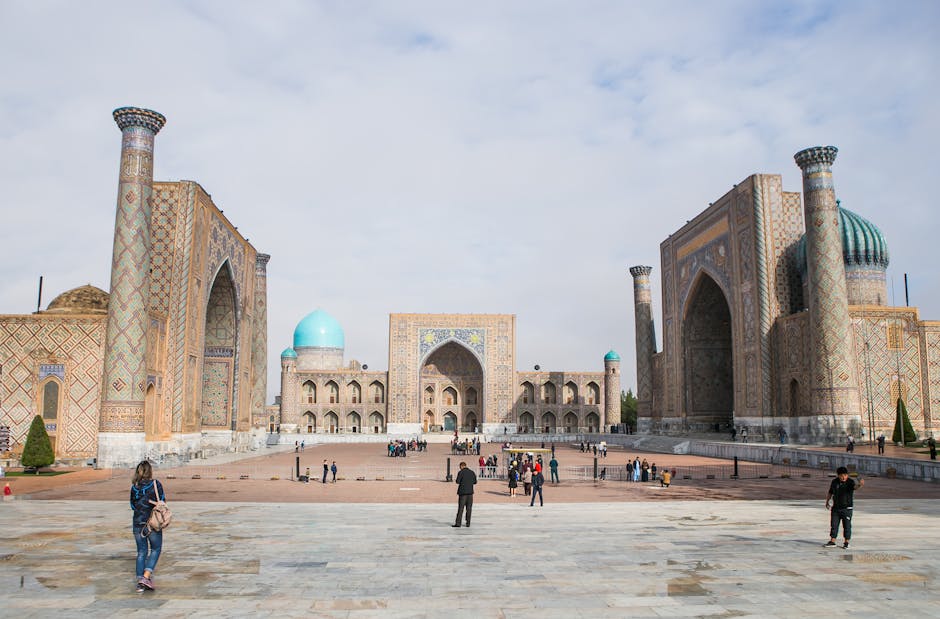
The Timurid Empire’s global impact is multifaceted. Culturally, it served as a bridge between various civilizations, nurturing an environment where Persian art, architecture, and scholarship thrived. The legacy of architectural marvels such as the Registan in Samarkand speaks to this cultural renaissance. Furthermore, Timur’s campaigns against the Ottomans delayed their expansion, inadvertently affecting European geopolitics during the late medieval era. The diffusion of Persian culture due to Timurid influence can also be identified in regions extending into Mughal India, where descendants of Timur, such as Babur, established the Mughal Empire, thereby continuing the cultural and political lineage initiated by Timur.
Fascinating Little-Known Facts
- Astronomical Legacy: Ulugh Beg’s observatory was one of the most advanced astronomical centers in the medieval world. His star catalog was remarkably accurate, influencing the field for centuries.
- Timur’s Pyramid of Skulls: A testament to his ruthless nature, Timur reportedly constructed pyramids of skulls of his enemies in conquered cities to instill fear and enforce compliance.
- Timur’s Tomb and the Curse: Timur was buried in the Gur-e-Amir mausoleum in Samarkand. Upon exhumation in 1941, a curse inscribed in his tomb was supposed to have predicted the onset of a great war if disturbed, eerily coinciding with Hitler’s invasion of the Soviet Union days later.
Conclusion: Modern Relevance of the Timurid Empire
The Timurid Empire, with its complex history of conquest, culture, and the intermingling of traditions, holds significant lessons for contemporary societies. Its story underscores the volatile nature of empires built on rapid expansion without sustainable governance structures. Yet, it also highlights the power of cultural synthesis in advancing human knowledge and the arts. In an era where global interconnectivity mirrors the ancient Silk Road, the legacy of the Timurids serves as a reminder of the enduring impacts of cultural and scientific advancements. The historiography of Timur’s empire encourages modern states to seek harmony through cultural dialogue and appreciation, learning from the past to secure a more integrated and peaceful future.