
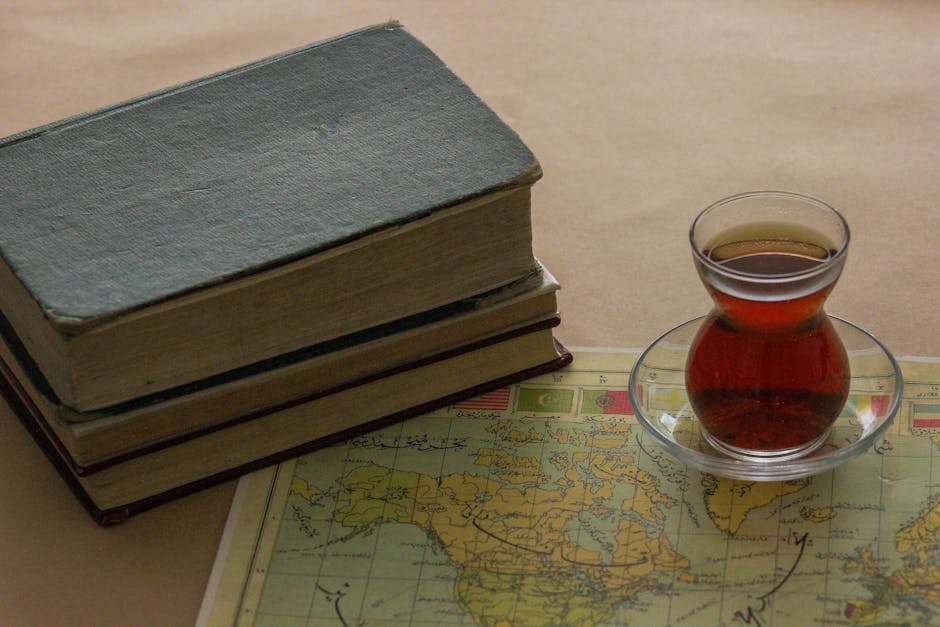
Introduction: An Empire that Shaped World History
Imagine a realm that spanned continents, binding together diverse cultures, languages, and religions. The Ottoman Empire was precisely such a tapestry of humanity, magnificently woven over six centuries. At its zenith, it stretched from the gates of Vienna in Europe to the deserts of the Arabian Peninsula, exerting influence over the Balkans, Middle East, and North Africa. The Ottoman Empire was not just a geographical expanse; it was a baton of power that played a pivotal role in world affairs, ushering changes that continued to echo through the corridors of history to this day. In seeking to understand its rise and fall, we unravel narratives of warfare, innovation, diplomacy, and the cultural amalgam that characterized its dominion.
Historical Background and Context
The Ottoman Empire’s roots trace back to the late 13th century in Anatolia, where it emerged among the fractious principalities left in the wake of the Seljuk Turks’ decline. It began as a small state led by Osman I, regarded as the empire’s founder. His successors, most notably his son Orhan and grandson Murad I, expanded their domain through strategic military campaigns and alliances. By the 15th century, the Ottomans had established control over the Byzantine Empire’s dwindling territories, culminating in the conquest of Constantinople in 1453 under Sultan Mehmed II. This monumental victory not only extirpated the last remnant of the Roman Empire but also escalated the Ottomans into a formidable force in Southeast Europe and the Eastern Mediterranean.
Spanning multiple epochs, Ottoman rule was defined by its unique administrative structure, epitomized by the millet system, which allowed significant autonomy to various religious communities. This system showcased an advanced level of governance for its time, allowing stable control over its diverse population of Christians, Jews, and Muslims. Furthermore, strategic trade routes coursing through Ottoman lands heralded prosperity, with cities like Istanbul becoming flourishing hubs of commerce and culture.
Key Events, Battles, and Developments
The Ottoman Empire’s breathtaking ascension and formidable presence on the world stage were marked by numerous key events and battles. After the fall of Constantinople in 1453, a transformative era began. The empire bolstered its status with a decisive victory at the Battle of Chaldiran in 1514 against the Persian Safavids, underscoring its military superiority. This victory secured Ottoman access to Eastern trade routes and solidified their control over the Anatolian plateau.
The Siege of Vienna (1529)
Perhaps one of the most significant but ultimately unsuccessful campaigns was the siege of Vienna in 1529, under the reign of the formidable Sultan Suleiman the Magnificent. This audacious attempt to expand into Central Europe exemplified Ottoman military prowess but also its limitations. Faced with a formidable defense and severe logistical challenges, the siege ended in withdrawal, marking the westernmost advance of the empire.
The Battle of Lepanto (1571)
The Battle of Lepanto is another critical juncture. As one of the largest naval battles of the pre-modern era, it saw the Holy League defeat the Ottoman navy decisively. Although the loss marked a significant setback, the Ottomans quickly rebuilt their fleet, illustrating their resilience and resourcefulness.
The Treaty of Karlowitz (1699)
The Treaty of Karlowitz in 1699 was a pivotal moment, as it marked the beginning of the empire’s territorial retraction. Following a series of defeats by the Holy League, the treaty forced the Ottomans to cede significant territories in Europe, signaling a gradual decline.
Important Figures and Their Roles
The pages of Ottoman history are filled with figures of towering influence. Osman I, the eponymous founder, set the nascent empire on its course with his adept leadership. Sultan Mehmed II, known as “The Conqueror,” orchestrated the fall of Constantinople, radically transforming the power dynamics of Europe and Asia.
Suleiman the Magnificent, reigning from 1520 to 1566, stands out as one of the most illustrious sultans, under whose governance the empire reached the apogee of its architectural, cultural, and political zenith. His administrative reforms and encouragement of the arts cemented his legacy.
Sultan Suleiman’s grand viziers, such as Ibrahim Pasha and Sokollu Mehmed Pasha, also played critical roles in centralizing the empire’s bureaucracy and carving its territorial dominions.
Causes and Consequences
The Ottoman Empire’s eventual decline was attributable to a myriad of intertwined factors. Internally, the complex succession system often led to power struggles, destabilizing the central authority. Inertia in adopting the technological advancements of the industrial revolutions compounded these issues, as military inequalities became apparent compared to rapidly modernizing European rivals.
Consequences of the decline were sweeping. Formerly subjugated territories gained independence or were absorbed by emerging nation-states. The Treaty of Sèvres in 1920, part of the post-World War I settlement process, effectively dismantled what remained of the empire, redrawing the map of the Middle East.
Global Impact and Legacy
The Ottoman Empire’s enduring legacy is manifest in various aspects. The westernization and modernization efforts under leaders like Mustafa Kemal Atatürk in forming the Republic of Turkey can be seen as a continuation of attempts to merge tradition with contemporary advancements. The empire’s architectural marvels, like Istanbul’s Hagia Sophia, continue to inspire awe. Furthermore, cultural exchanges initiated during Ottoman rule have left a lasting imprint on cuisine, language, and music across its former territories.
Fascinating Little-Known Facts
Among the Ottoman Empire’s legacies are intriguing, little-known tales. Did you know that the empire was once home to the world’s largest Jewish community after the Spanish Inquisition, which saw many Jews find sanctuary within its borders? Additionally, the empire’s postal system, ‘Tatar’, was so renowned that European powers sought to emulate its efficiency in communication.
Conclusion: The Modern Relevance of Ottoman Legacy
Understanding the Ottoman Empire is instrumental in comprehending the current geopolitical and cultural pallet of the Middle East, Balkans, and beyond. The challenges faced by modern nations in these regions often have roots in the complex histories shaped by Ottoman governance. For instance, present-day Turkey’s efforts in embracing both Asian and European identities echo the empire’s historical role as a bridge between continents and cultures. While the Ottoman Empire has long vanished, its impact reverberates, underscoring the intricate tapestry of history that molds the modern world.