
The Rise and Fall of the Byzantine Empire: A Journey Through its Glorious Millennium
Introduction: A Thousand Years of Glory
The Byzantine Empire, often overshadowed by its Western Roman counterpart, presents a fascinating saga of resilience and grandeur that spanned over a millennium. From its establishment in the remnants of the Roman Empire to its ultimate fall to the Ottoman forces in 1453, the Byzantines epitomized a blend of Greek, Roman, and Christian influences, creating an enduring legacy. This narrative unravels the intertwined strands of cultural richness, strategic prowess, and the dynamic succession of emperors, setting the stage for an empire that would become the cornerstone of Eastern Orthodoxy and a shield of Europe against eastern invasions. Join us as we embark on a journey through the exquisite tapestry of the Byzantine Empire’s history, exploring its ascendancy, pivotal figures, and enduring impact on the world stage.
Historical Background and Context
The Byzantine Empire, known as the Eastern Roman Empire, emerged in the vibrant matrix of late antiquity when Emperor Constantine I, in 330 AD, established Constantinople—previously known as Byzantium—as the new capital of the Roman Empire. This strategic location at the crossroads of Europe and Asia came to symbolize the blend of cultures that characterized Byzantine society. During this period, the Western Roman Empire was embroiled in chaos and decline, facing constant barbarian incursions and political instability. In contrast, the Eastern Roman Empire thrived, due largely to its fortified capital, robust economy, and strategic trade routes. The administrative reforms introduced by Diocletian and further refined by Constantine were crucial in stabilizing the Empire, enabling it to withstand centuries of external threats.
Central to its identity was Christianity, which became the empire’s official religion, influencing political, cultural, and social life. This was a significant shift that contrasted sharply with the pagan traditions of the Roman state, as it now sought to establish itself as a Christian polity. The division between the Latin West and the Hellenistic East was already pronounced, fostering an environment that nurtured distinct Byzantine art, architecture, and theology.
Key Events, Battles, and Developments
The Byzantine Empire witnessed numerous pivotal events that shaped its history. The reign of Emperor Justinian I from 527 to 565 AD marked a zenith in Byzantine power and cultural achievement. Justinian’s ambitious campaigns to reclaim Western territories—such as Italy, North Africa, and parts of Spain—highlighted the empire’s military potential. The monumental codification of Roman law, known as the Corpus Juris Civilis, was another hallmark of his reign, influencing European legal traditions for centuries.
In 626 AD, the Byzantine Empire faced the Avar-Sasanian siege of Constantinople, a defining moment where strategic defenses and the leadership of Emperor Heraclius were instrumental in repelling the invaders. This victory solidified the empire’s resilience against combined external forces.
The 7th and 8th centuries were marked by the iconoclastic controversy, a tumultuous period wherein the veneration of icons was hotly debated, leading to deep ecclesiastical and social divisions. Emperor Leo III initiated the ban on religious images in 726 AD, culminating in the restoration of icons in 843 under Empress Theodora, which gave rise to the triumph of Orthodoxy celebrated in the Eastern Orthodox Church.
The Battle of Manzikert in 1071 AD was another turning point, where defeat against the Seljuk Turks led to the loss of much of Anatolia, severely weakening the empire’s military hold. This defeat set in motion the chain of events leading to the Crusades, where the interactions between Byzantines and Latin Crusaders would ultimately deepen the cultural and religious rift between Eastern and Western Christianity.
Important Figures and Their Roles
Emperor Constantine I played a foundational role in the formation of the Byzantine Empire, choosing Constantinople as a new heart of the empire that would thrive for centuries. Theodora, wife of Justinian I, emerged as a formidable influence, known for her political acumen and support of women’s rights and religious policies.
Emperor Basil II, known as the ‘Bulgar Slayer,’ reigned from 976 to 1025 AD and was pivotal in expanding Byzantine influence in the Balkans, securing borders, and consolidating imperial power. His military campaigns significantly bolstered the empire’s prestige and territorial reach.
Saint Cyril and Saint Methodius, two Byzantine missionaries, played crucial roles in the spread of Christianity into Slavic territories, developing the Glagolitic alphabet, which laid foundations for written Slavic languages and bolstered cultural influence.
Anna Comnena, a princess and historian, provided invaluable insights into the Byzantine world through her work, The Alexiad, chronicling her father Alexios I Komnenos’s reign and military exploits during the First Crusade, offering a unique perspective from within the imperial court.
Causes and Consequences
Numerous factors contributed to the Byzantine Empire’s longevity, including its strategic geographical position, the fortified city of Constantinople, and the sophisticated bureaucratic system that supported a strong economy and military. However, internal strife, frequent palace coups, and the challenge of maintaining long borders led to periods of decline.
The fall of Constantinople on May 29, 1453, to the Ottoman Empire under Sultan Mehmed II marked the end of Byzantine rule, concluding a long era of cultural and political influence. This event significantly shifted the balance of power, leading to the consolidation of Ottoman control and paving the way for the Renaissance in Western Europe, as Greek scholars fled west, bringing with them classical knowledge and texts.
Global Impact and Legacy
The Byzantine Empire’s legacy is foundational to Eastern Orthodox Christianity, influencing liturgical practices, theological doctrines, and ecclesiastical art. The preservation of Greek and Roman scholarly traditions in Byzantine libraries became the bedrock upon which the Renaissance was built.
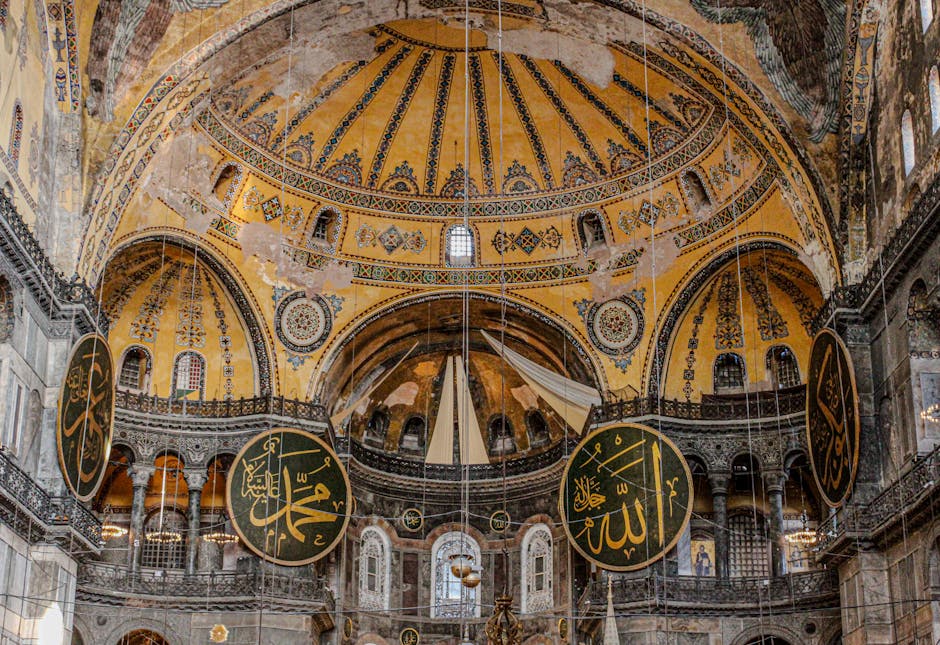
Politically, Byzantine diplomacy and military strategies influenced both Islamic and Western Christian powers, serving as a bridge between the ancient and medieval worlds. The empire’s richly crafted mosaics, iconography, and architectural innovations such as the Hagia Sophia, continue to inspire and attract scholars and tourists alike.
Fascinating Little-Known Facts
One intriguing aspect of Byzantine life was the use of Greek fire, a formidable incendiary weapon whose composition remains a mystery to this day. This weapon was crucial in protecting Constantinople during several sieges.
An early form of the hospital system emerged in Byzantine society, with institutions closely linked to religious establishments, emphasizing care for the poor and sick as central tenets of Christian charity.
The Byzantine court was renowned for its elaborate ceremonies and intricate rituals, reflecting the complex social hierarchies and the perceived proximity of the emperor as God’s representative on earth.
Conclusion: The Modern Relevance of Byzantium
The story of the Byzantine Empire is not merely one of rise and fall but of enduring influence across religious, cultural, and political spheres. As modern geopolitics echoes ancient conflicts and alliances, the Byzantine legacy provides insightful perspectives on the resilience of institutions, the fusion of cultural identities, and the power dynamics of faith and statecraft.
Today, Byzantine studies continue to enrich our understanding of history, offering lessons in adaptability and the transformative power of culture. As the light of Constantinople continues to flicker through the annals of history, its stories remind us of the perpetual interplay between preservation and innovation, a balance that remains as relevant now as ever.