
The Rise and Fall of the Byzantine Empire: A Tale of Survival and Legacy
Compelling Introduction With Hook
In the grand tapestry of history, empires come and go, leaving their marks and lessons for the generations that follow. Among these, the Byzantine Empire stands as a testament to resilience and cultural endurance. Spanning over a millennium, it witnessed the transformation of the ancient world into the medieval age. From its majestic capital, Constantinople, the Byzantine Empire became a beacon of art, culture, and religious authority. Its story is one of both continuity and change, marked by pivotal moments and legendary figures. But how did this extraordinary civilization rise to power, resist countless adversaries, and ultimately fall, yet leave a legacy that persists to this day? In this exploration, we dive deep into the rich historical tapestries of the Byzantine Empire, unraveling its origins, its key episodes, and its enduring impact on the world.
Historical Background and Context
The Byzantine Empire, also known as the Eastern Roman Empire, traces its roots back to the fourth century CE when it was established by Emperor Constantine the Great. In 330 CE, Constantine moved the Roman capital from Rome to Byzantium, renaming it Constantinople. This city would become a vital cultural and economic hub, strategically positioned between Europe and Asia. The Byzantine Empire was the direct continuation of the Roman Empire’s eastern provinces, carrying forward the legacy of Roman governance while evolving unique cultural and religious characteristics.
The empire’s historical context is enriched by its geographical setting, surrounded by rival powers and engaged in constant interplay with neighboring civilizations, such as the Persians, Arabs, and later, the Turks. The blend of Roman legal structures and Greek cultural influences gave rise to a distinct society that firmly adhered to Eastern Orthodox Christianity. This fusion led to innovations in architecture, art, and scholarship, with the Cyrillic alphabet and Byzantine architecture being notable keystones that influenced Eastern Europe.
Key Events, Battles, or Developments With Specific Dates and Details
Several key events and developments marked the Byzantine Empire’s storied history. One of the earliest decisive moments was the reign of Emperor Justinian I (527-565 CE). His ambitious plans to reconquer lost Western Roman territories resulted in the successful but costly campaigns, including the Gothic War (535-554) that temporarily reunified large parts of the Roman Empire.
Another significant event was the Iconoclast Controversy, beginning in 726 CE, where the prohibition of religious images caused decades of religious and political upheaval. This controversy coincided with, and perhaps accentuated, the empire’s vulnerability to external threats such as the Islamic Caliphates.
In 1071, the disastrous Battle of Manzikert significantly weakened Byzantine military power when Sultan Alp Arslan’s Seljuk forces severely defeated Emperor Romanos IV Diogenes. This defeat precipitated the loss of much of Anatolia, a blow from which the empire never fully recovered.
Yet another crucial episode was the Fourth Crusade in 1204, when Constantinople was sacked by Western European Crusaders. This tragic event severely damaged the Byzantine state, fragmenting it and leading to the establishment of rival successor states such as the Empire of Nicaea.
Important Figures and Their Roles
The Byzantine Empire owes much of its legacy to prominent figures whose leadership and vision shaped its fate. Constantine the Great, the founding father of Constantinople, not only established the new capital but also played a crucial role in the spread of Christianity.
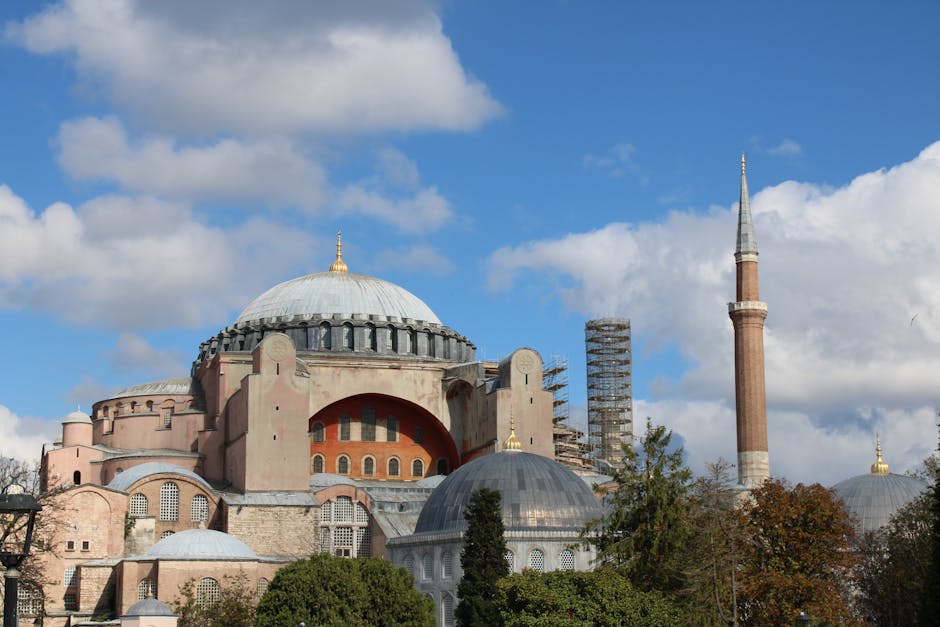
Emperor Justinian I, celebrated for his comprehensive codification of Roman law—Corpus Juris Civilis—also spearheaded the construction of the Hagia Sophia, a masterpiece of Byzantine architecture.
Empress Theodora, Justinian’s wife, remains a pivotal figure, wielding significant influence over imperial decisions and advocating for social reforms that advanced women’s rights.
The military prowess of leaders such as Emperor Heraclius, who defended the empire against Persian advances in the 7th century, demonstrated the resilience of Byzantine leadership amid relentless threats.
Causes and Consequences
The Byzantine Empire’s decline can be attributed to multifaceted causes, including economic difficulties, repeated military defeats, and internal strife exacerbated by religious controversies. Its geographical location made it a target for numerous military campaigns by emerging powers, particularly following the critical losses post-Manzikert and the devastating Fourth Crusade.
The consequences were profound: the empire’s territorial losses diminished its economic capacity, and prolonged internal conflicts eroded the central government’s power. Despite these challenges, the empire managed to maintain a rich cultural and intellectual legacy that profoundly influenced the Renaissance and shaped the foundation of the Eastern Orthodox Church.
Global Impact and Legacy
The Byzantine Empire’s legacy is vividly felt across the globe. Its preservation and transmission of classical knowledge were foundational to the Renaissance in Western Europe. Byzantine art and architecture influenced Eastern Orthodox Christianity, with churches designed in the distinctive Byzantine style seen today from Russia to Greece.
The legacy of Byzantine governance and law also persisted, as many Byzantine administrative practices influenced the development of modern statecraft and civil justice systems in Europe and beyond.
Fascinating Little-Known Facts
Beyond its widely known history, the Byzantine Empire harbors several fascinating anecdotes. The legendary Varangian Guard, comprising Viking warriors, served as elite protectors of the Byzantine emperors, reflecting the empire’s diverse and dynamic nature.
The Imperial Byzantine Hippodrome of Constantinople was a central sporting center that could accommodate tens of thousands of spectators, symbolizing the social and political life of the city.
Remarkably, in the wake of its military declines, the Byzantine Empire embarked on a golden age of culture and economy during the Comnenian restoration in the 12th century, showing its remarkable ability to adapt and survive.
Strong Conclusion With Modern Relevance
The Byzantine Empire’s story serves as a window into historical resilience and adaptability. Its strategic navigation of cultural, religious, and political landscapes provides key insights into how civilizations endure adversities and transition over time. Today, its architectural marvels, especially the Hagia Sophia, continue to inspire awe and reverence, while the empire’s cultural and religious legacy plays an ongoing role in shaping Eastern European identity and geopolitics.
In reflection, the Byzantine Empire exemplifies not just the survival of a civilization against the odds, but also its enduring influence, offering lessons on the complexity of empire-building and the intricacies of cultural integration—a narrative as relevant today as it was centuries ago.