
The Byzantine Empire: An Epic Tale of Rich Culture and Historical Power
Compelling Introduction to the Byzantine Empire
In the annals of history, certain empires stand out not just for their power, but for their deep cultural and historical footprints. Among these, the Byzantine Empire, often overshadowed by its Roman predecessor, offers a fascinating tale of resilience and transformation. With its genesis rooted in the Roman Empire’s eastern flanks, Byzantium not only succeeded but thrived for over a thousand years. Enriched by its strategic geographic positioning between Europe and Asia, the Byzantine Empire became a beacon of culture, learning, religious evolution, and military strength. This narrative explores the intriguing saga of Byzantium—a civilization that encapsulated the complexities of maintaining a vast empire over centuries, and whose fall marked a pivotal moment in global history.
Historical Background and Context
The Byzantine Empire traces its origins to the city of Byzantium, which was founded by Greek colonists from Megara around 657 BCE. However, its true evolution into an empire began with Emperor Constantine I. In AD 330, Constantine established a new imperial residence at Byzantium—renaming it Constantinople, which today is known as Istanbul, Turkey. This city rapidly ascended as the epicenter of the Eastern Roman Empire, signaling the division of the Roman domain into Western and Eastern halves.
The Roman Empire split definitively in 395 AD, following the death of Theodosius I, leaving his two sons with both Western and Eastern rule. The Western Roman Empire faced significant internal strife and external invasions, leading to its eventual collapse in 476 AD. Meanwhile, the Eastern Roman Empire survived these turbulent times, transforming into what is historically recognized as the Byzantine Empire.
The Byzantines saw themselves as Romans, but over time, their culture diverged significantly from that of their Western counterparts. Their official language transitioned from Latin to Greek, and Orthodox Christianity became central to their way of life, distinguishing the Byzantines from their Western Latin-speaking Catholic brethren.
Key Events and Developments
The Reign of Justinian I (527-565 AD)
One of the most illustrious figures of Byzantine history is Emperor Justinian I, whose reign from 527 to 565 AD witnessed several pivotal developments. Justinian sought to revive the Western Roman Empire’s territories, embarked on military campaigns, and succeeded in reclaiming significant parts of North Africa, Italy, and the Iberian Peninsula. Notably, the capture of Rome in 536 AD marked a temporary revival of Roman glory.
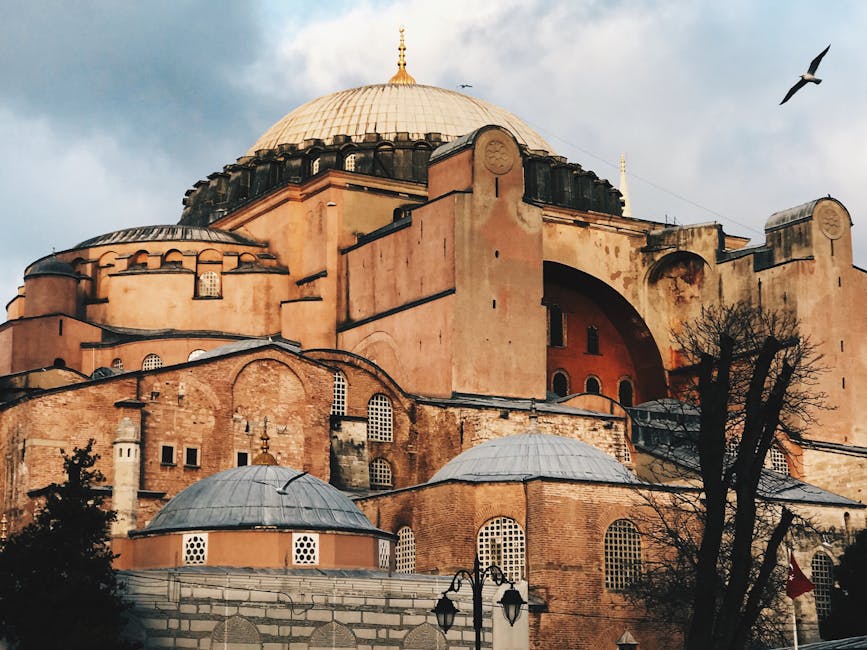
Justinian’s most enduring achievement was the Corpus Juris Civilis, a comprehensive codification of Roman laws that would influence legal systems throughout Europe in subsequent centuries. His architectural ambition also led to the construction of the Hagia Sophia in 537 AD—the embodiment of Byzantine architectural brilliance.
The Iconoclastic Controversy (726-843 AD)
A series of disputes over the creation and veneration of religious images, known as the Iconoclastic Controversy, marked the 8th and 9th centuries. Initiated by Emperor Leo III in 726 AD, the controversy stemmed from theological and political concerns, escalating into widespread destruction of icons and persecution. The policy was reversed in 843 AD, heralding the end of iconoclasm.
These theological divisions caused significant internal strife and religious rifts that would have lasting implications beyond Byzantine borders.
The Fall of Constantinople (1453 AD)
After enduring for over a millennium, the Byzantine Empire witnessed its decline exacerbated by both incremental loss of territories to Ottoman forces and internal discontent. The final blow came in 1453 when the Ottomans, led by Sultan Mehmed II, launched a decisive siege on Constantinople. On May 29, 1453, the Ottomans breached the city walls, leading to the city’s fall. The collapse of Byzantium marked the end of Roman imperial legacy and the beginning of Ottoman dominance in the region.
Important Figures and Their Roles
Emperor Constantine the Great
As the founder of Constantinople, Emperor Constantine the Great set the foundations for Byzantine identity. His conversion and subsequent endorsement of Christianity also paved the way for the Empire’s religious orientation.
Emperor Justinian I
Under Justinian’s rule, the Empire saw extensive territorial gains and legal reformations. His vision and determination were pivotal in shaping Byzantine law, culture, and architecture.
Empress Theodora
Theodora remains one of the most influential empresses of Byzantium, known for her intelligence and political acumen. She was instrumental in advocating for women’s rights and influencing imperium policies.
Causes and Consequences
In the grand scheme of history, the Byzantine Empire’s extended lifecycle was both a result of and challenge to various factors. Its centralized bureaucracy, strong urban culture, and capable military leadership positioned it for survival, even as surrounding empires fell.
However, recurring challenges such as religious disputes, invasions, and costly wars strained its resources. The final siege by the Ottomans was not only a culmination of military pressure but the result of shifting military technology and alliances that even Byzantine diplomacy couldn’t maneuver around. The fall of Constantinople disrupted Christian trade routes and indirectly spurred exploration, leading to the Age of Discoveries and colonial expansion.
Global Impact and Legacy
The Byzantine Empire bequeathed a profound cultural and religious legacy. It acted as a buffer between Europe and potential early Islamic expansions, allowing Western kingdoms time to consolidate and evolve.
The Orthodox Church today owes its liturgical traditions and theological nuances to Byzantine developments. Art, architecture (notably the iconic domes), and the Cyrillic script are testaments to Byzantine cultural diffusion.
Additionally, the preservation of Greco-Roman heritage by Byzantine scholars significantly influenced Renaissance humanism, underscoring Byzantium’s cultural bridge to modern Europe.
Fascinating Little-Known Facts
The Secret of Greek Fire
One of the most intriguing aspects of Byzantine military technology was Greek Fire, an incendiary weapon used effectively in naval battles. The exact composition and method of deployment were closely guarded secrets, now lost to history, which helped the Byzantines repel numerous invasions.
Byzantine Bureaucracy
Byzantium’s administrative system was sophisticated, featuring an extensive network of spies known as the ‘Bureau of Barbarians’ that provided intelligence on foreign kingdoms, epitomizing their advanced political intrigue and diplomacy.
Strong Conclusion with Modern Relevance
In reflection, the Byzantine Empire’s saga is a tapestry of historical, cultural, and spiritual interconnections that resonate with modern sensibilities. Today’s geopolitical landscapes echo Byzantine strategies of balance between cultures and political entities, exemplifying lessons in diplomacy and resilience.
The Empire’s contributions to governance, arts, and religious structures have bequeathed a legacy still visible in Eastern Europe’s Orthodox traditions and Western legal frameworks.
The story of Byzantium emphasizes the significance of cultural endurance and transformation, offering a narrative of tenacity and adaptation relevant to any age. The living memory of this empire epitomizes a bridge to the past, enveloped in lessons for a harmonious future.