
Introduction
On May 29, 1453, the world witnessed a historic transformation that marked the end of the Middle Ages and the dawn of a new era—the Fall of Constantinople. This event did not just alter the course of a single city; it reshaped the geopolitical landscape of Europe and Asia, demonstrated the devastating power of new military technology, and ignited centuries of conflict and cultural exchanges. Imagine a city revered as the ‘Second Rome,’ a bastion of Christianity, and a multicultural hub, falling to the forces of a burgeoning Ottoman Empire, forever changing the trajectory of history. The fall of this vibrant city-state was not merely a political shift but a significant moment that reflected the profound tensions of its time, shaping the fates of nations and peoples.
To understand the significance of the Fall of Constantinople, we must delve into its historical context, explore key events that led to the siege, and examine the pivotal figures involved. Each layer reveals the complexity of a world on the cusp of monumental change, where a pioneering blend of military strategy, technological innovation, and human ambition played leading roles. By unraveling the intricacies of this event, we gain insight not only into the historical moment itself but also its lasting global impact. From the rise of the Ottoman Empire to the subsequent waves of migration and cultural exchange, the Fall of Constantinople continues to resonate in our modern world, reminding us how history can irrevocably transform societies.
Historical Background and Context
The city of Constantinople, founded by the Roman Emperor Constantine I in 330 AD, was a vital center of trade, culture, and Christianity for over a millennium. By the mid-15th century, however, the Byzantine Empire, of which Constantinople was the capital, was in a state of decline. The empire had been reduced to a fraction of its former glory, hemmed in by the encroaching forces of the Ottoman Turks and plagued by internal strife. The Ottomans, who began as a small Turkish tribes over 100 years earlier, had rapidly expanded under leaders like Osman I and later, his grandson Mehmed II, who would earn the moniker ‘the Conqueror’ for his ambitious designs.
As early as 1402, the power of the Ottomans was momentarily checked by the Mongol invasion of Timur (Tamerlane). However, following the defeat of Timur, the Ottomans regrouped, reasserting their influence over the region. Over the decades leading up to the siege, the Byzantine Empire struggled against a series of sieges and territorial losses. By the time of the Fall, Emperor Constantine XI Palaiologos found himself presiding over an empire that had lost much of its territory—only a few territories in the Peloponnese remained in Byzantine hands.
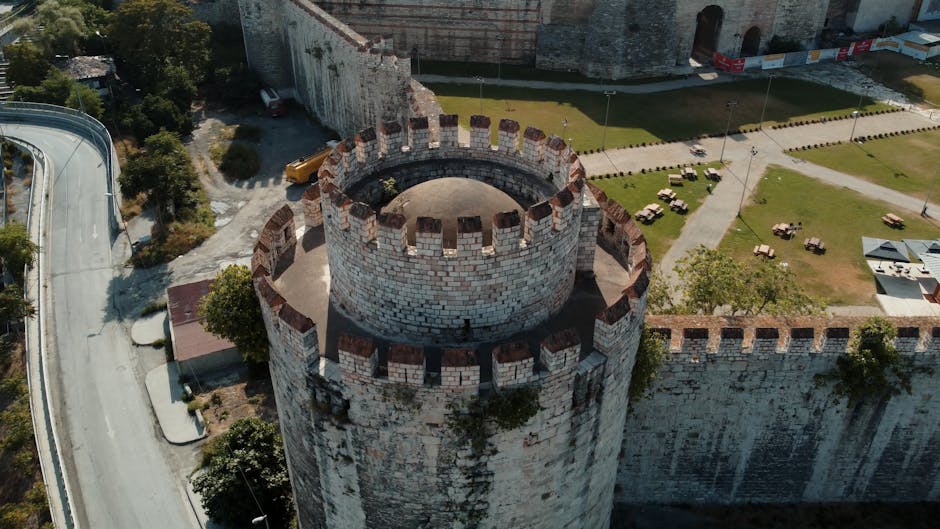
The context of the siege is also essential to understand the technological advancements occurring during this time. The war machines of the era evolved; the Ottomans began to employ large cannons and artillery, which were crucial to the success of their siege against the city’s towering walls. The famous cannon designed by the Hungarian engineer Urban, fired massive cannonballs that could breach the walls that had withstood sieges for centuries. Thus, the Fall of Constantinople symbolized not only the end of Byzantine rule but also the beginning of an age marked by military innovation and creativity.
Key Events, Battles, and Developments
The events leading up to the Fall of Constantinople began well before May 1453. By 1452, Sultan Mehmed II had prepared deeply for the siege. Knowing the city’s fortifications well, Mehmed understood that the walls of Constantinople were formidable, having survived numerous attacks. In the spring of 1453, he successfully completed the construction of the Great Bombard, a massive cannon capable of hurling large stone projectiles at the city’s fortifications.
On April 2, 1453, the Ottomans began the siege. Mehmed’s forces, numbering around 80,000 soldiers, surrounded the city and commenced a series of skirmishes to test the walls. The Byzantine defenders amounted to only about 7,000 troops, leading to a stark asymmetry between the besiegers and defenders. The initial assaults on the walls were met with dogged resistance, aided by the strategic use of Greek fire and crossbowmen, who picked off Ottoman soldiers attempting to scale the walls.
Throughout April and May, the siege intensified. The Ottoman cannon fire continued relentlessly, and the bravado of both sides shone as individual acts of courage surfaced amidst the chaos. On May 22, the Ottomans launched a massive assault, utilizing their superior numbers and artillery capabilities. In a turn of events emblematic of desperate defense, the Byzantines launched a nighttime counterattack that caused initial chaos. Yet, as dawn broke on May 29, the Ottomans unleashed their full force.
The most consequential moment of the siege came when Mehmed ordered a final massive assault on May 29. As waves of soldiers poured through the breaches created by cannon fire, the defenders fought valiantly but were slowly overwhelmed. Emperor Constantine XI, who had famously declared, “I will not leave my city,” fought to the last and ultimately perished in the fray. As the Ottomans breached the city, chaos ensued, and thousands of civilians fled in terror. By the end of the day, Constantinople had succumbed to Mehmed’s relentless determination—the city fell, and the Byzantine Empire collapsed.
Important Figures and Their Roles
Central to the Fall of Constantinople were several significant figures whose actions helped shape the course of history. Sultan Mehmed II, known as Mehmed the Conqueror, played the foremost role as the mastermind behind the siege and subsequent take-over. Born in 1432 to Sultan Murad II, Mehmed spent his early years preparing for leadership under the tutelage of his father. His vision for the conquest of Constantinople was fueled by aspirations of restoring the glory of the Roman Empire. His tactical ingenuity, including the innovative use of artillery and military strategy, made the success of the siege possible.
In contrast, on the other side stood Emperor Constantine XI Palaiologos, the last emperor of the Byzantine Empire. His leadership amid chaos and his heroic resolve to defend his city inspired the remaining defenders, despite overwhelming odds. Traditionally seen as a tragic hero, Constantine embodied the spirit of resistance that characterized the Byzantine struggle during the final days of the siege. His decision to fight to the end rather than abandon his city helped solidify his legacy as a valiant leader.
Another noteworthy figure was the Hungarian engineer Urban, whose expertise in cannon manufacturing provided the Ottomans with a decisive technological advantage. Urban’s rocket and cannon designs resonated across military tactics, and his inventions in heavy artillery shaped warfare for centuries. In many ways, he crafted the tools that facilitated the conquest, bringing forth a radical change in siege technology.
The supreme military command among the defenders was held by Giovanni Giustiniani, a Genoese captain who led the defense of Constantinople. He coordinated various troops, provided strategic advice, and rallied the defenders until the siege’s final moments. His dedication and determination characterized the last stand of the city’s inhabitants, although he eventually fled the battlefield amidst the collapse of defense.
Causes and Consequences
The causes of the Fall of Constantinople are manifold, stemming from a combination of internal and external pressures. Internally, the Byzantine Empire endured decades of political instability, with frequent changes in leadership creating a weakened response to external threats. The lack of resources and military support left Constantinople vulnerable, as alliances fell through and calls for help from Western Europe were routinely ignored.
Externally, the rise of the Ottoman Turks, under Mehmed II’s dynamic leadership, signified a critical challenge for the remnants of the Byzantine Empire. The shifting balance of power in the Mediterranean realm, coupled with technological advancements that favored offensive strategies, steadily eroded Byzantine defenses. Ottoman armies utilized superior military tactics, most notably heavy artillery, and showcased unparalleled coordination that overwhelmed the city’s defenders.
The consequences of the fall were profound. The immediate aftermath saw the Ottoman Empire expand its territories, marking the beginning of a new era in East-West relations. The newly established Ottoman control not only erased Byzantine influence but also led to a massive cultural shift within the region. With the fall of Constantinople, the Ottomans transformed the city into an Islamic center, repurposing its churches, including the famed Hagia Sophia, into mosques, thereby signaling a stark cultural transformation.
Furthermore, the fall had lasting effects on Europe at large. It prompted some Christian states to reconsider their military strategies, marking a shift towards more unified approaches to confront emerging Ottoman threats. Additionally, it prompted the migration of scholars and artists fleeing the impending Ottoman rule, which would have a significant influence on the Italian Renaissance. The circulation of ancient manuscripts in the West catalyzed a reawakening of intellectualism that would shape European Enlightenment.
Global Impact and Legacy
The global impact of the Fall of Constantinople extends well beyond its immediate geographical confines. It marked the end of the Byzantine Empire, a vital entity in world history that had bridged the gap between East and West for over a thousand years. The Ottomans continued to expand their influence throughout the Balkans, the Middle East, and North Africa, changing the socio-political landscape of these regions for centuries.
This shift also had profound implications for trade. With Constantinople’s fall, European nations sought new trade routes to Asia, leading to the Age of Exploration. Mariners such as Christopher Columbus and Vasco da Gama sought alternative paths to the East, culminating in the discovery of the Americas and ocean routes around Africa. The quest for trade led to a scramble for more territory and resources, altering the course of global interactions, economic ties, and cultural exchanges.
One of the legacies of this monumental event can also be seen in contemporary interfaith relations. The fall transformed the Christian-Muslim dynamic in a lasting way, reshaping how societies viewed each other and spurring conflicts and dialogues that persisted into the modern era. The Ottoman Empire’s control over Constantinople and subsequent regions established a Muslim-majority city at the crossroads of Europe and Asia, laying the groundwork for numerous cultural exchanges that wouldn’t occur without this pivotal event.
Fascinating Little-Known Facts
1. Contrary to popular belief, the fall of Constantinople did not happen overnight; it was the culmination of an 53-day siege characterized by intense conflict and resistance.
2. Sultan Mehmed II, while known as a conqueror, also recognized the importance of the arts and education, which breathed new life into the city post-conquest, leading to what many consider the golden age of Ottoman culture.
3. Many of the Byzantines who survived the fall fled and settled in various parts of Europe, contributing significantly to the Renaissance movement through the reintroduction of classical knowledge and art.
4. The engineering feats behind the Great Bombard, which could hurl stones weighing up to 1,200 pounds, had never been seen before in battle and revolutionized siege warfare thereafter.
5. The fall led to the establishment of a deep-rooted Ottoman presence in Europe, with control over multiple regions lasting until the early 20th century, contributing to the tension in Eastern and Western relations that persists today.
Conclusion: Modern Relevance
The Fall of Constantinople remains a profound turning point in history with lessons that reverberate through time. It served as a reminder of the volatility of power and emphasizes how technology reshapes warfare and societies. The ramifications of the fall extend into modern geopolitics, highlighted by evolving relationships between the East and West. As Europe continues to grapple with its historical relationship with the Ottoman influence, it also navigates its implications on current interfaith relations and cultural diversity.
In an age of globalization, the echoes of the Fall of Constantinople can still be heard, particularly in dialogue surrounding cultural coexistence and conflict. The need to understand shared histories and communicate across divides has never been more urgent, reflecting the legacy of a city that stood for unity even as it fell to division and conquest. In today’s diverse world, the remembrance of what transpired during those fateful days can serve as both a warning and a call to recognize the inherent complexities of our shared human experience, emphasizing the importance of dialogue, understanding, and collaboration amongst cultures. By considering the past—and learning from it—there exists an opportunity to forge a harmonious future that acknowledges the legacies of those who came before us.