
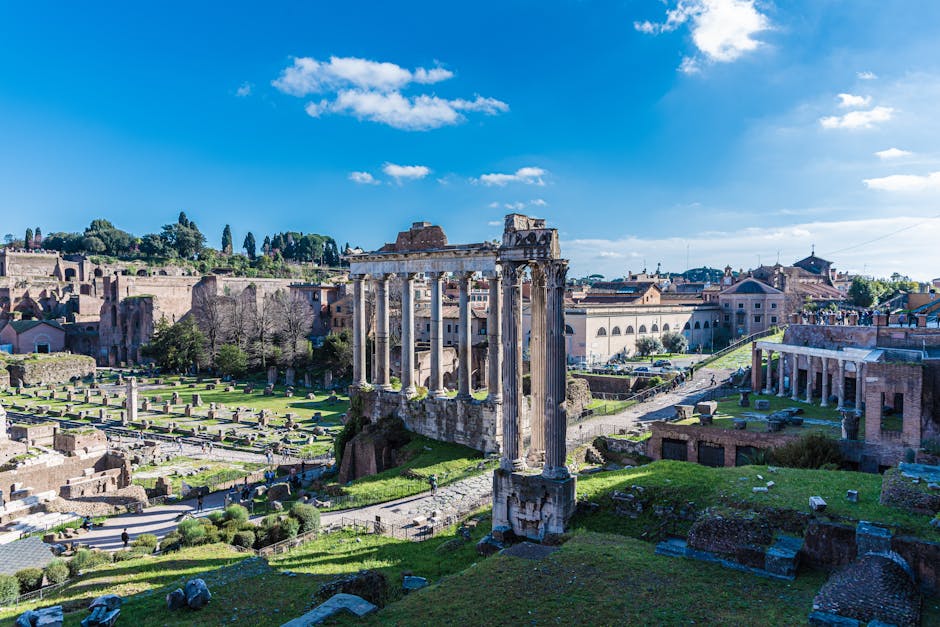
Introduction: The Fall of a Giant
The fall of the Roman Empire is often hailed as one of the most significant turning points in world history. Spanning over a millennium, the empire was a beacon of culture, politics, and military power. Yet, by the late 5th century AD, this colossus had crumbled, leaving behind an intricate legacy that would shape the medieval world. What led to this monumental collapse? The answers are multifaceted and complex, interwoven with a tapestry of internal strife, external pressures, and profound societal changes. In this article, we will delve deep into the factors leading to the empire’s decline, explore key events that marked its downfall, and highlight significant figures who played pivotal roles in shaping this epic narrative. The topics we will cover will illuminate how the fall of Rome was not just an end, but also a transformative moment that laid the groundwork for the emergence of Europe as we know it today. Join us on this historical journey as we navigate through the corridors of time, from the zenith of Roman glory to the ashes of its eventual demise. Discover the lessons learned and the echoes of Rome’s fall that resonate through our modern world.
Historical Background and Context
To fully understand the fall of the Roman Empire, we must first explore the rich historical context in which it thrived and the complexities that contributed to its decline. Established in 27 BC under the rule of Augustus, the Roman Empire grew from a small city-state into one of the most powerful civilizations in history. At its height around 117 AD, it stretched from Britain in the northwest to Egypt in the southeast, encompassing vast territories across Europe, North Africa, and the Near East. The empire was characterized by remarkable achievements in governance, architecture, law, and the arts, setting standards that would influence future civilizations.
However, even during its most glorious phases, Rome faced various internal and external challenges. The extensive reach of the empire made it difficult to manage effectively, and as the centuries progressed, political instability became rampant. Emperors were frequently overthrown or assassinated, and civil wars weakened the state. The substantial population, estimated at over 50 million at its peak, also posed logistical challenges in terms of resource distribution and military enlistment.
The empire’s economy was primarily reliant on agriculture, but reliance on slave labor stunted innovations that could have improved productivity. As expansion slowed, financial pressures grew; debts increased, and inflation eroded wealth. Socially, the empire was also challenged by the widening gap between the rich and the poor, leading to civil unrest and dissatisfaction among the populace.
Adding to these internal adversities were external threats, notably from various barbarian tribes. From the late 300s AD onwards, figures like the Visigoths, Vandals, and Huns began to encroach on Roman territory. The sack of Rome in 410 AD by the Visigoths under King Alaric was a significant symbolic event that underscored the empire’s vulnerability. The seeds of disintegration were being sown, paving the way for a more profound decline.
Key Events, Battles, and Developments
410 AD: The Sack of Rome
The sack of Rome in 410 AD marked a pivotal moment in the decline of the Roman Empire. Following years of increasing pressure from barbarian groups, Alaric I, leader of the Visigoths, besieged and successfully captured the city. This event sent shockwaves throughout the empire and the rest of the world, symbolizing the end of Roman invincibility. The once-mighty city, which had stood as the heart of the empire for centuries, was now vulnerable to plunder. Estimates suggest that over 40% of the city was ravaged during this tumultuous episode, instigating a crisis in confidence not only among Romans but also within their foreign adversaries.
476 AD: The Fall of the Western Roman Empire
The traditionally accepted date marking the fall of the Western Roman Empire is September 4, 476 AD, when the last Roman Emperor, Romulus Augustulus, was deposed by the Germanic king Odoacer. This event signaled the end of over a thousand years of Roman dominance in Europe. Odoacer’s rebellion marked a shift in power structure, promoting the rise of Germanic kingdoms in the Italian Peninsula and the eventual emergence of medieval states.
Transitions in Governance and Military Structure
The Roman Empire experienced significant changes in its governing approach and military organization leading up to its decline. As the 3rd century approached, the empire was burdened with economic burdens and military threats, leading to the establishment of the Tetrarchy by Emperor Diocletian in 284 AD. This division aimed to improve administration by splitting the empire into East and West and further into smaller regions governed by co-emperors.
Despite these attempts, the military became increasingly decentralized, experiencing a shift from loyal Roman legions to a reliance on mercenaries from barbarian tribes. This reliance bred loyalty issues, as soldiers often held allegiance to their tribal leaders rather than the Roman state itself. Consequently, the empire faced difficulties in maintaining internal order and effective defense against ongoing invasions.
Devaluation of Currency and Economic Crisis
Another critical component contributing to the decline was the economic crisis characterized by rampant inflation. By the 3rd century, gold and silver were in severely short supply, leading to the debasement of currency. The constant increase in taxes to fund military campaigns further burdened the populace, creating discontent among the citizenry. As trade routes became perilous due to barbarian invasions, the supply of essential goods diminished, exacerbating the economic downturn.
Christianization of Rome
The rise of Christianity during the late Roman Empire also played a significant role in its transformation. As the state recognized Christianity, especially under Constantine the Great in the early 4th century, the traditional Roman values began to erode. The 380 AD Edict of Thessalonica established Nicene Christianity as the state religion, leading to tensions with pagans. This shift diverted attention from military and territorial pursuits toward spiritual concerns, which some historians argue weakened Rome’s resolve to defend its frontiers.
Important Figures and Their Roles
Romulus Augustulus
Romulus Augustulus, often regarded as the last Emperor of the Western Roman Empire, ascended the throne in 475 AD. His reign was short-lived, with little power attributed to him as a puppet ruler under his father, Orestes. Though his deposition by Odoacer marked the formal end of the Western Roman Empire, Augustulus’s existence signifies the fragmentation of authority in Rome at the time.
Odoacer
Odoacer, the first king of Italy after the fall of Rome, became a pivotal figure in shaping post-Roman governance. After deposing Romulus Augustulus, he declared himself ‘King of Italy’ and initiated a new era characterized by the integration of Roman and Germanic cultures. His reign represented a significant transition, as he maneuvered to maintain stability in a landscape rife with conflict from various barbarian tribes.
Constantine the Great
Constantine the Great emerged as one of the most notable emperors in Roman history for his reforms that laid the groundwork for the future Byzantine Empire. His establishment of Constantinople as the new capital in 330 AD symbolized a shift in the center of power and allowed the Eastern Roman Empire to endure long after the fall of its Western counterpart.
Alaric I
Alaric I, the King of the Visigoths, played a crucial role in the sack of Rome. His leadership and military tactics demonstrated the capabilities of barbarian tribes against the once-mighty Roman legions. Alaric ultimately sought land for his people within the empire, and while the sack was a victory, it was his demands for settlement that signified the changing power dynamics of the empire.
Causes and Consequences
Causes of the Fall of the Roman Empire
The decline of the Roman Empire was never attributable to a single cause but rather a combination of factors. Internally, political instability, economic decline, and social unrest weakened the foundation of Roman power. Externally, relentless invasions from barbarian tribes eroded the eastern and western frontiers, leading to further territorial losses.
Consequences of the Fall
The collapse of the Western Roman Empire resulted in profound consequences not only for Europe but also for the Mediterranean world. The fragmentation of authority paved the way for the emergence of feudalism as local lords assumed power in the absence of a centralized government. This period of instability, known as the Dark Ages, saw a decline in population and a loss of classical knowledge and architectural advancements. However, it also laid foundations for future nations and cultures, heralding a significant transformation in European history.
Global Impact and Legacy
The Influence on Modern Governance
The legacy of the Roman Empire has permeated through subsequent generations, influencing modern governance structures and legal frameworks. Core principles of democracy, citizenship, and legal systems can trace their origins back to Roman innovations.
Cultural and Religious Influence
Christianity, which emerged during the Roman period, became a major religious force, shaping Western civilization. The church filled the power void left by the collapse of the empire, becoming a critical force in Europe during the Middle Ages.
Architectural and Engineering Legacy
Roman engineering achievements, particularly roads, aqueducts, and architecture, have influenced urban planning and infrastructure developments throughout history. Many modern cities still employ Roman designs as foundational principles in their constructions.
Fascinating Little-Known Facts
1. The term ‘barbarian’ was originally coined by the Greeks to describe those who did not speak Greek. It eventually came to represent various tribes that threatened the Roman Empire.
2. Despite its fall, the Eastern Roman Empire, or Byzantine Empire, flourished for nearly another thousand years, preserving Roman law and culture.
3. The fall of the Western Roman Empire contributed to the spread of the Dark Ages in Europe, characterized by a significant reduction in literacy and stability.
Conclusion: Lessons from Rome’s Fall
The fall of the Roman Empire serves as a powerful reminder of the fragility of great nations. Rome’s decline unfolded over centuries, exacerbated by internal weaknesses and external pressures. Today, historians analyze this monumental collapse for insights into political, economic, and social dynamics that resonate in contemporary society. The cyclical nature of history reminds us that vigilance, effective governance, and societal unity are paramount to maintaining stability in any era. The echoes of Rome’s fall still speak to modern challenges, from the complexity of global governance to the consequences of cultural shifts. As we take heed of these lessons, we remain ever-aware that the legacies of the past can illuminate the path ahead.