
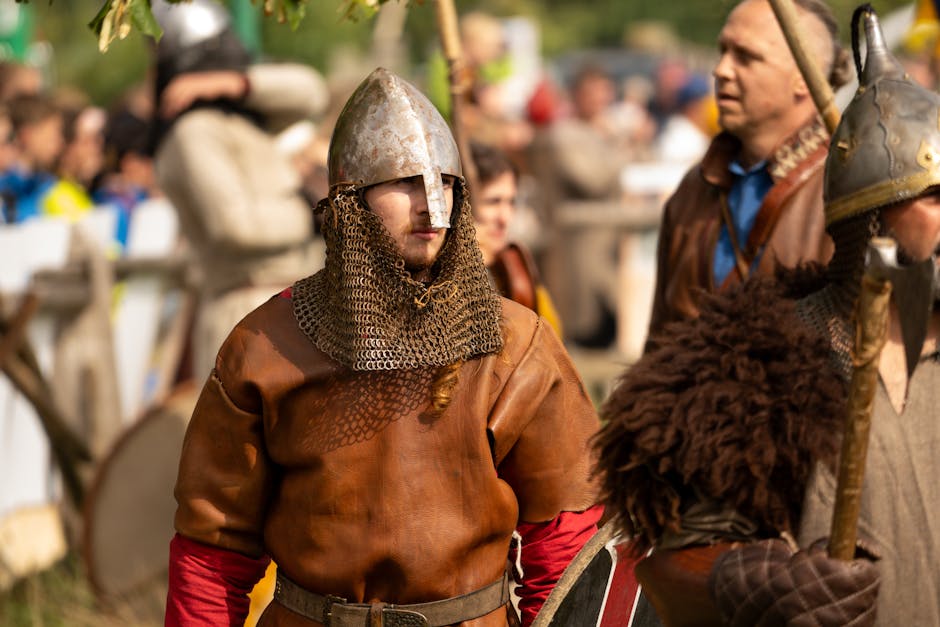
Introduction: A Clash of Faiths and Cultures
The Crusades, a series of religious wars between Christians and Muslims, shaped the course of medieval history in profound ways. Spanning nearly two centuries, from 1096 to 1291, these conflicts did not merely revolve around territorial ambition; they represented a complex tapestry of faith, cultural exchange, and political intrigue. At the heart of these wars lay the sacred city of Jerusalem, a symbol of divine promise contested by two of the world’s major religions.
Imagine a world where holy lands were seen as gateways to divine favor, where the fervor of faith fueled massive migrations and violent confrontations. The Crusades drew thousands from distant lands, lured not just by the allure of salvation but also the prospect of adventure, wealth, and glory. These epochal events connected disparate worlds, leading to an exchange of ideas, technologies, and even cuisines—transforming Europe and the Middle East in ways that resonate to this day.
But what were the real motivations behind these fervent campaigns? Who were the key players in this historical drama? And how did these events alter the paths of nations and cultures? As we delve into the intricate world of the Crusades, we unearth stories not only of conflict and conquest but also of diplomacy, cooperation, and legacy.
Historical Background and Context
The roots of the Crusades can be traced back to the rise of Islam in the 7th century. Following the death of the Prophet Muhammad in 632 AD, the Islamic Caliphate expanded rapidly, spreading its influence across Africa, the Middle East, and into parts of Europe. By the 11th century, the Seljuk Turks, who had converted to Islam, had established control over large territories, including Jerusalem, which had remained a significant pilgrimage site for Christians since the time of Christ.
During the early Middle Ages, the Christian Byzantine Empire had already suffered territorial losses to the Muslim conquests. In 1071, the Battle of Manzikert resulted in the decisive defeat of Byzantine forces by the Seljuk Turks, paving the way for their advance into Anatolia. This event created a sense of urgency among Christian leaders, who viewed the rising power of Islam as a direct threat to Christendom. In response, Byzantine Emperor Alexios I Komnenos sent a plea to Pope Urban II in 1095 for military assistance to reclaim lost territories and defend his empire.
The stage was thus set for the First Crusade. The call to arms resonated throughout Europe, fueled by religious fervor, a sense of knightly duty, and the promise of indulgences and salvation. Pope Urban II, at the Council of Clermont, delivered a passionate sermon urging Christians to rise against the Muslim forces, emphasizing the need to liberate the Holy Land and aid fellow Christians in the East. His rallying cry marked the genesis of the Crusades, igniting a wave of enthusiasm that swept across the continent.
Key Events, Battles, and Developments
The First Crusade (1096-1099)
The First Crusade, often considered the most successful of all the Crusades, commenced in 1096 with multiple waves of pilgrims and knights. Hundreds of thousands embarked on the journey to the Eastern territories, facing treacherous conditions, logistical challenges, and internal disputes. Key figures included Godfrey of Bouillon, Raymond IV of Toulouse, and Bohemond of Taranto.
By June 1099, after a grueling journey marked by battles, sieges, and hardships, the Crusaders reached Jerusalem. The city was besieged in July, culminating in an intense assault on July 15, 1099. The Crusaders managed to capture Jerusalem, leading to a bloody massacre of its Muslim and Jewish inhabitants. The establishment of the Kingdom of Jerusalem marked a pivotal moment in the Crusades, as it stood as a symbol of Christian victory against perceived threats.
The Second Crusade (1147-1150)
The Second Crusade was initiated in response to the fall of the County of Edessa in 1144 to the Muslim leader Zengi. Led by European monarchs like Louis VII of France and Conrad III of Germany, the Second Crusade aimed to reclaim lost territories. However, it ended in failure as the Crusaders faced logistical problems and were defeated at the Battle of Damascus in 1148. This failure highlighted the challenges of coordinating multiple European powers and shifting geopolitical realities in the region.
The Third Crusade (1189-1192)
Following the capture of Jerusalem by Saladin in 1187, the Third Crusade was launched, featuring iconic leaders such as Richard the Lionheart of England, Philip II of France, and Frederick Barbarossa of the Holy Roman Empire. The motives varied from personal glory to political gain, and the Crusade witnessed fierce battles such as the Battle of Acre, where the combined forces of Richard and Philip sought to retake the city.
Although Richard succeeded in negotiating a truce with Saladin, allowing Christian pilgrims to visit Jerusalem, the Third Crusade fell short of its ultimate goal, leading to a sense of disillusionment among the crusaders and diminishing support for future campaigns.
Important Figures and Their Roles
Pope Urban II
Pope Urban II was instrumental in initiating the Crusades through his compelling speeches and efforts to rally Christian support. His call to arms at the Council of Clermont sparked the fervor that would propel thousands to undertake the arduous journey to the Holy Land.
Richard the Lionheart
One of the most famed leaders of the Crusades, King Richard I of England, known as the Lionheart, epitomized the valor and chivalry associated with crusading knights. His leadership skills during the Third Crusade established his reputation as a formidable military commander and a symbol of Christian resistance against Muslim forces.
Saladin
Saladin, the Sultan of Egypt and Syria, was pivotal during the Crusades, representing Muslim unity against the external threat posed by the European crusaders. His significant victory at the Battle of Hattin in 1187 and subsequent efforts in capturing Jerusalem reaffirmed his status as a legendary leader and a chess master of strategy.
Godfrey of Bouillon
As one of the primary leaders of the First Crusade, Godfrey of Bouillon exemplified the ideal of knightly leadership and Christian zeal. He played a crucial role in the Siege of Jerusalem and emerged as the first ruler of the newly established Kingdom of Jerusalem, albeit refusing the title of king to preserve his piety.
Causes and Consequences
Causes
The Crusades were influenced by multiple intertwined factors—religious zeal, political aspirations, and socio-economic circumstances. The call from Pope Urban II was a pivotal catalyst, igniting a collective sense of mission among Christians desperate to reclaim the Holy Land. Locations of pilgrimage and increasing Muslim dominance in previously Christian territories further reinforced the urgency for action.
Consequences
While the Crusades succeeded in briefly establishing Christian states in the Middle East, their longer-term consequences involved entrenched animosity between Christianity and Islam. They fueled religious intolerance, solidified divisions, and escalated violence that would ripple through history and resonate in contemporary times. Additionally, the Crusades triggered increased trade and cultural exchanges between Europe and the East, fundamentally altering medieval societal structures.
Global Impact and Legacy
Shaping Europe
The Crusades had a profound impact on medieval Europe, resulting in changes in political structures, trade networks, and sociocultural interactions. The influx of knowledge and goods from the Islamic world helped stimulate the European Renaissance, altering perspectives on science, philosophy, and art.
Religious Tensions
Centuries later, the legacy of the Crusades manifests in ongoing tensions and conflicts in regions like the Middle East. The divisive historical narrative remains relevant today, reminding individuals of the consequences of religious fanaticism and warfare.
Fascinating Little-Known Facts
The Crusaders’ Culinary Influence
During their encounters with the Muslim world, the Crusaders brought back not just relics and religious artifacts but also culinary traditions such as the use of spices and recipes that would significantly influence European cuisine.
The Role of Women
While often overshadowed by their male counterparts, women played vital roles during the Crusades, both in supporting efforts at home and participating in campaigns as warriors and leaders.
Conclusion: Reflection and Modern Relevance
The Crusades stand as a complex legacy—a deep-rooted chapter in history marked by conflict, cultural exchange, and the interplay of faith. The lessons derived from this period remain relevant; today, global relationships continue to be impacted by historical sentiments shaped through centuries of conflict and cooperation. Understanding the Crusades fosters awareness of how historical narratives influence contemporary perspectives on religion, identity, and geopolitics. As we reflect on this past, it is essential to pursue dialogue and mutual understanding in a world often still divided by faith and conflict.