
Introduction
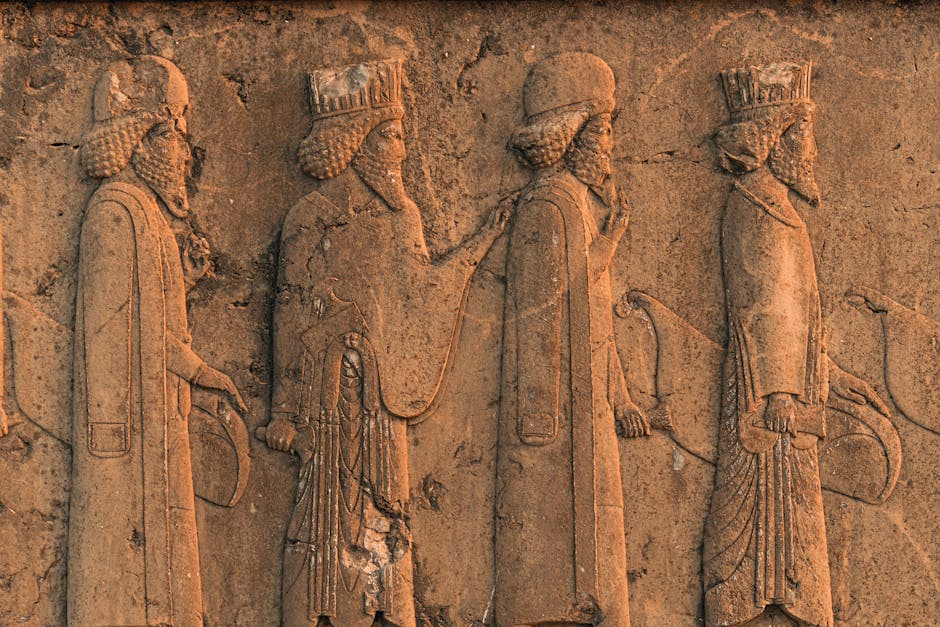
The history of the Persian Empire is nothing short of extraordinary, defined by grand ambitions, remarkable achievements, and a legacy that has shaped the world as we know it today. At its zenith, the Persian Empire was one of the largest empires in history, stretching from the Mediterranean to the Indus River, encompassing diverse cultures, languages, and religions. Known for its remarkable infrastructure, including the Royal Road and the impressive Qanats, the empire was not only a political entity but a melting pot of ideas and innovations that influenced civilizations for generations.
In an era where communication took months and travel was fraught with danger, the Persians introduced a level of governance and civic responsibility that was revolutionary. Yet, like many great empires, it too faced challenges that ultimately led to its demise. From internal strife to external conquests, the Persian Empire’s story is one of glory and tragedy, casting a long shadow on subsequent societies.
This article will delve into the historical nuances of the Persian Empire, exploring its breathtaking rise, the key events that shaped its course, the iconic figures who defined its era, and the lasting impact it had on global history. Understand the complexities of a civilization that, despite its fall, continues to echo through time, inviting us to learn from both its triumphs and its failures.
Historical Background and Context
The origins of the Persian Empire can be traced back to the early Iron Age, around 1000 BCE, when the Iranian plateau began to unify under various tribal kingdoms. By the mid-6th century BCE, two significant dynasties, the Medes and the Persians, emerged as dominant forces in the region. The Medes, particularly, were known for their resistance against Assyrian expansion, establishing a confederation that effectively resisted outside influence.
Yet, it was under Cyrus the Great, the founder of the Achaemenid dynasty, that the Persian Empire truly began to take shape. Ascending to power around 559 BCE, Cyrus unified the Persian tribes and quickly expanded his territory by conquering the Median Empire, which laid the groundwork for future conquests. His campaigns were characterized not only by military might but also by strategic tolerance and respect for local customs—a hallmark of Achaemenid rule that would later define the governance style of the empire.
Following Cyrus, the empire expanded further under his successors, notably Cambyses II, who conquered Egypt, and Darius I, the empire’s third ruler, who is credited with significantly boosting administrative efficiency through a comprehensive system of satrapies or provinces. This organizational prowess allowed the Persian Empire to thrive and manage a vast and diverse population comprised of various cultures, languages, and religions.
The Achaemenids were skilled in diplomacy and governance, often embracing the local ruling elites and integrating their traditions into the imperial framework. For instance, Zoroastrianism—the predominant religion of Persia—became intertwined with governance, emphasizing the role of a just ruler and the struggle between good and evil.
As the Persian Empire grew, it became a vital center for trade that linked the East with the West, facilitating cultural exchange, and contributing to advancements in art, science, and architecture.
Key Events, Battles, and Developments
The history of the Persian Empire is dotted with pivotal events and battles that shaped the course of its development. Following are some of the most significant:
The Unification of Persia (559–550 BCE)
Cyrus the Great’s consolidation of power marked the foundation of the Persian Empire. By 550 BCE, he successfully defeated Astyages, the last king of the Median Empire, and claimed the title of ‘King of the Medes and Persians.’ This victory not only established the Achaemenid dynasty but also initiated a series of further conquests across the Middle East.
Conquest of Lydia (546 BCE)
In 546 BCE, Cyrus achieved a stunning victory against Croesus, the wealthy king of Lydia. The fall of Lydia not only brought vast wealth into the Persian coffers but also signaled the beginning of Persian expansion into Asia Minor. The capture of Sardis, Croesus’s capital, showcased Cyrus’s military strategy and ability to secure longer supply lines, which was unprecedented for the time.
Egyptian Campaign (525 BCE)
Following the conquests of Lydia, Cambyses II, the son of Cyrus, turned his sights towards Egypt. In 525 BCE, after a remarkable campaign characterized by speed and deception, he successfully annexed Egypt, making it a satrapy of the Persian Empire. This victory further solidified Persian strength and expanded its territory into northeastern Africa.
The Persian Wars (499–449 BCE)
Despite the strength of the empire, it was faced with resistance from the Greek city-states, leading to the Persian Wars. The first significant confrontation came in 490 BCE when Darius I sought to punish Athens for its support in the Ionian Revolt (499-493 BCE). The resultant Battle of Marathon not only highlighted the resilience of the Athenian hoplites but also marked the beginning of a series of conflicts characterized by Greek resistance against Persian expansion.
Battle of Thermopylae (480 BCE)
One of the most famous encounters during the Persian Wars was the Battle of Thermopylae in 480 BCE, where King Xerxes, Darius’s successor, faced an alliance of Greek city-states led by the Spartan king, Leonidas. Though the Persians ultimately won, the heroic stand of the vastly outnumbered Greek troops became a defining tale of bravery and sacrifice that was celebrated in later culture.
Battle of Salamis (480 BCE)
The naval engagement at the Battle of Salamis, contemporaneous with Thermopylae, proved to be a turning point in the Persian Wars. The Greek fleet’s strategic use of narrow straits allowed them to outmaneuver the larger Persian fleet, leading to a decisive Greek victory. This defeat weakened Xerxes’s strategic ambitions in Greece and significantly lessened Persian influence in the region.
The End of the Persian Empire (330 BCE)
The decline of the Persian Empire culminated in 330 BCE with the invasion of Alexander the Great. After a series of crucial battles, including the Battle of Granicus and the Battle of Gaugamela, Alexander’s forces decisively defeated the Persian army. His conquest not only brought an end to Achaemenid rule but also marked the beginning of Hellenistic influence across the former Persian territories.
Important Figures and Their Roles
Several noteworthy figures shaped the trajectory of the Persian Empire, each contributing to its rise and eventual fall:
Cyrus the Great (c. 600–530 BCE)
Cyrus the Great is heralded as the founder of the Persian Empire. His innovative approach to governance, which respected local customs and religions, set the standard for future Persian rulers. His legacy includes the Cyrus Cylinder, often considered the first charter of human rights, emphasizing tolerance and respect for diversity.
Darius I (c. 550–486 BCE)
Darius I, also known as Darius the Great, expanded the empire to its greatest territorial extent and is credited with implementing significant administrative reforms. His introduction of the satrapy system allowed for efficient governance over vast areas and diverse populations, while the construction projects—including the famed Persepolis—underscored his commitment to Persian culture and power.
Xerxes I (c. 519–465 BCE)
Xerxes, the son of Darius, is perhaps most infamous for his role in the Persian Wars. Illustrative of Persian ambition and persistence, his massive invasion of Greece solidified his place in history, albeit as a king who faced considerable setbacks. His egregious miscalculation at Salamis marked a turning point for the empire as he returned to Persia defeated.
Alexander the Great (356–323 BCE)
Although not a Persian ruler, Alexander the Great is crucial to the narrative of the Persian Empire’s fall. His military genius, coupled with the Greek passion for freedom, fueled his campaign against Persia. His eventual conquest laid the foundations for the Hellenistic world, forever altering the cultural landscape of the vast territories once ruled by Persia.
Causes and Consequences
The rise and fall of the Persian Empire can be attributed to several interlinked causes. The empire’s ascent was marked by military innovation and effective governance strategies that brought vast territories under a single rule. However, internal strife, overextension, and the challenges posed by external enemies contributed significantly to its decline.
Causes of the Fall
One key factor that precipitated the fall of the Persian Empire was the overextension of its boundaries. As the empire expanded, governance became increasingly complex, leading to administrative challenges. Darius’s satrapy system was designed to manage this complexity, yet local satraps often exercised autonomy that undermined central authority.
Moreover, the resistance from Greek city-states exemplified the difficulties inherent in maintaining control over diverse cultures. The frequent rebellions, catalyzed by both internal dissatisfaction and external pressures, weakened the empire’s cohesion. Alexander the Great’s incursions further exploited these vulnerabilities.
Consequences
The consequences of the Persian Empire’s fall were profound, not only for Persia itself but for the entire ancient world. With the rise of Hellenistic culture, the subsequent blending of Greek and Persian traditions led to significant advancements in art, philosophy, and science. Moreover, the model of governance and cultural tolerance established by the Achaemenids influenced many subsequent empires, including the Seleucid Empire and the Roman Empire.
Global Impact and Legacy
The legacy of the Persian Empire extends far beyond its immediate historical context. It laid the groundwork for concepts of governance and cultural tolerance that resonate in modern states today. The charisma of Cyrus and the administrative brilliance of Darius served as prototypes for future leaders seeking to unify diverse populations under a single rule.
Linguistic and Cultural Influence
The Persian Empire’s linguistic contributions, primarily through the use of Aramaic as the administrative language, fostered communication and trade across conquered territories. Additionally, the blending of Persian customs with those of conquered peoples enriched the empire’s cultural tapestry, promoting art, architecture, and philosophy that would influence future civilizations.
The Concept of Human Rights
Cyrus’s tolerance and policies towards conquered peoples are often seen as precursors to contemporary human rights philosophy. The idea that a ruler should respect the traditions and beliefs of other cultures has reverberated through history, shaping ideals of governance and justice in various civilizations.
Fascinating Little-Known Facts
1. The Royal Road: One of the greatest feats of engineering, the Royal Road stretched over 2,500 kilometers, facilitating trade and communication throughout the empire. It featured several post houses for horse riders to replace tired animals and ensure quick relay services.
2. A Multicultural Empire: The Persian Empire was characterized by its remarkable diversity, with up to 70 different languages spoken across its territories, including Elamite, Babylonian, and Aramaic.
3. Religion and Governance: Zoroastrianism, the state religion of Persia, promoted the belief in two opposing forces: Ahura Mazda, the god of good, and Angra Mainyu, the spirit of evil. The dualistic nature of this belief bolstered the ideological foundations for Persian monarchy.
Conclusion: Modern Relevance
The history of the Persian Empire is a testament to the complexities of power, cultural integration, and governance in a multi-ethnic landscape. Its rise and fall offer valuable lessons in political strategy, diplomacy, and the importance of cultural respect that echoes in the contemporary world. As we navigate today’s globalized society, marked by ethnic diversity and interconnectedness, the Persian Empire’s legacy urges us to recognize that unity does not necessitate uniformity. Understanding history—the triumphs and failures of civilizations like Persia—can aid modern leaders in their quest for peace, stability, and inclusive governance. Recognizing and appreciating the rich tapestry of human history is imperative for fostering unity in an increasingly polarized world.