
Introduction: The Eternal City and Its Enigmatic Empire
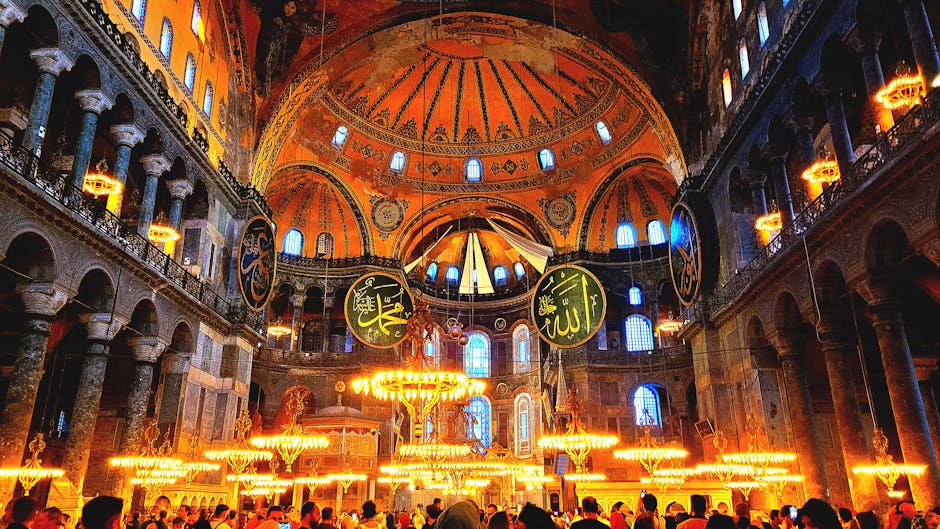
The Byzantine Empire, often referred to as the Eastern Roman Empire, stands as a testament to the resilience and complexity of human civilization. Spanning over a thousand years, from its inception in 330 AD to its fall in 1453, this empire navigated a myriad of challenges, shaping both European and Middle Eastern history profoundly. Imagine a city so strategically situated that it became the crossroads of trade, culture, and politics—Constantinople, a place crafted by its emperors, was not only the heart of the Byzantine Empire but also a beacon of knowledge, architecture, and art. The golden-glazed mosaics and immense churches, such as the Hagia Sophia, symbolize the remarkable achievements of a civilization that blended Greek, Roman, and Christian elements.
This historical analysis aims to unravel the rich tapestry of the Byzantine Empire, exploring its origins, key events, prominent figures, and its eventual decline. In particular, readers will discover intriguing insights into how this empire managed to survive the tides of time, maintain cultural continuity, and influence societies far beyond its borders. What were the nuanced political strategies employed by Byzantine emperors? How did the empire’s unique position contribute to its wealth? What lasting legacy has the Byzantine legacy left behind? This article will delve into these questions, painting a vivid picture of a compelling civilization that still echoes through the annals of history.
Historical Background and Context
The Byzantine Empire traces its origins back to the Roman Empire, which dominated much of Europe, North Africa, and parts of the Middle East by the 1st century BC. Following the division of the Roman Empire in 285 AD by Emperor Diocletian, the eastern half, known as the Byzantine Empire, flourished while the western half succumbed to barbarian invasions and internal strife. The decisive moment marking the emergence of the Byzantine Empire occurred in 330 AD with the establishment of Byzantium, later known as Constantinople, as the new capital of the Roman Empire by Emperor Constantine the Great. He sought to create a Christian city that would serve as the new Rome and a focal point for cultural and economic life.
Throughout the 4th and 5th centuries, the Byzantine Empire experienced significant transformations, including the adoption of Christianity as a state religion, which would later define its cultural and religious landscape. The Theodosian Code, established in 438 AD, laid the legal framework that governed the empire and drew heavily from earlier Roman laws. As the western Roman Empire faced increasing pressure from migratory tribes, the Byzantine Empire utilized its strategic geographic position as a bridge between Europe and Asia, tapping into trade routes that enriched its coffers.
Byzantium’s diplomatic acumen and military prowess became apparent during confrontations with the Persians, Slavs, and later the Islamic Caliphates, as the empire protected the Christian territories of Eastern Europe. The rise of themes, or military districts, under Emperor Heraclius in the 7th century allowed the Byzantine Empire to effectively respond to external threats while strengthening local loyalties. The complex interactions between different cultures in this melting pot of civilization—rich in Greek, Latin, and Persian heritage—matured the Byzantine identity, which was distinct and particularly notable in the fields of art, architecture, and theology.
Key Events, Battles, and Developments
The Reign of Justinian I (527-565)
The Golden Age of Byzantine history is often associated with Emperor Justinian I, who ruled from 527 to 565 AD. Justinian’s vision of a restored Roman Empire led to a series of military campaigns known as the Reconquista that aimed to reclaim lost territories in the West, notably Italy and parts of North Africa. His ambitious campaigns were led by his formidable general, Belisarius, who successfully captured Carthage in 533 and proceeded to conquer much of Italy, including Rome itself by 540.
Alongside military successes, Justinian initiated a comprehensive program of legal reform, known as the Corpus Juris Civilis, or the “Body of Civil Law,” developing a coherent legal code that would influence legal systems throughout Europe for centuries. Moreover, his building projects, particularly the reconstruction of the Hagia Sophia, exemplified the empire’s architectural ingenuity and religious devotion, establishing Christianity’s role as a unifying force within the empire’s diverse populace.
The Plague of Justinian (541-542)
However, the empire’s prosperity was disrupted by the outbreak of the Plague of Justinian in 541, which devastated the population and ravaged the economy. The pandemic swept through the Mediterranean world, exacerbated by the movement of troops and trade, claiming millions of lives. The ripple effects of this disaster diminished the empire’s ability to maintain its conquests in the West and reinstated the threat of external aggressions.
The Iconoclast Controversy (726-843)
Another pivotal event was the Iconoclast Controversy, arising during the late 8th to mid-9th centuries. This theological and political conflict spurred debates over the veneration of icons (religious images) within the Byzantine Church. Emperor Leo III’s edict against the use of icons in 726 marked the beginning of state-sponsored iconoclasm, leading to backlash from those fervently supporting the veneration of icons, including prominent theologian John of Damascus. The conflict created fissions in society and the church, ultimately leading to the restoration of icon veneration in 843, which was commemorated in the feast of the Triumph of Orthodoxy.
The Fall to the Ottomans (1453)
The closing chapter of the Byzantine Empire’s extensive saga came with the fall of Constantinople on May 29, 1453, marking the end of centuries of Byzantine rule. The Ottomans, led by Sultan Mehmed II, launched a siege that employed advancements in artillery, notably massive cannons, to breach the formidable walls of the city. Sultan Mehmed II’s tactical ingenuity and use of psychological warfare against the besieged population culminated in the city’s capture after a relentless two-month siege.
The fall of Constantinople had lasting implications, marking not just the end of the Byzantine Empire but also the beginning of a new era in world history, effectively transitioning European power dynamics from a Mediterranean focus to the overall rise of the Ottoman Empire, which expanded into southeast Europe, thus reshaping the continent’s geopolitical landscape.
Important Figures and Their Roles
Justinian I
One of the most significant figures of the Byzantine Empire is undoubtedly Emperor Justinian I, remembered for his ambitious reforms, military campaigns, and the cultural renaissance that occurred under his rule. His dedication to restoring a semblance of the Roman Empire’s lost territorial integrity remains one of his hallmark achievements. His codification of Roman law laid down foundations that would ultimately influence many Western legal systems.
Theodora
Alongside Justinian stood his formidable wife, Empress Theodora, whose political acumen played an instrumental role in guiding the empire’s governance. Originally a dancer, Theodora rose to secure her position as an influential co-regent, championing women’s rights and promoting policies that improved the legal status of women in Byzantine society. During the Nika Riots in 532, it was Theodora’s resolute stance that encouraged Justinian to remain and suppress the rebellion rather than flee, showcasing her pivotal role in the empire’s affairs.
Heraclius
Emperor Heraclius, who reigned from 610 to 641, is notable for his military reforms that modernized the Byzantine army and established the theme system, which fortified the empire’s defenses during the Islamic conquests. Furthermore, his advocacy for Greek over Latin as the official language of the empire symbolizes the cultural shift that marked the Byzantine identity.
Constantine XI Palaiologos
The last Byzantine emperor, Constantine XI Palaiologos, became a symbolic figure during the fall of Constantinople. Known for his steadfast courage, he reportedly fought valiantly to defend the city against the Ottoman forces, embodying the spirit and tragedy of the empire’s decline. His death during the siege may have marked the final defeat of a once-mighty empire, but it also sparked legends surrounding his legacy and the hope for the return of Byzantine glory.
Causes and Consequences
Causes of Decline
The decline of the Byzantine Empire unfolded through a confluence of factors rather than a singular cause. Internally, political instability characterized the late empire, with succession crises, regencies, and court intrigues leading to ineffective governance. Economic pressures from fluctuating trade dynamics and the rise of rival powers, such as the Seljuk Turks and the burgeoning Ottoman Empire, further compounded these difficulties. The contributions of social unrest, including peasants’ revolts and class divisiveness, contributed to weakening the social fabric of Byzantine society.
Consequences of the Fall
The consequences of the Byzantine Empire’s fall were multifaceted, sending ripples across Europe and shaping the post-medieval world. The fall of Constantinople signified the end of the Christian Byzantine authority in the region, leading to the Ottoman consolidation of power and the establishment of Islam as a predominant religion in Southeastern Europe. Additionally, the Ottoman Empire’s expansion instigated a mass migration of scholars from the fallen empire to Western Europe, bringing with them Greek texts and knowledge that ignited the Renaissance—culminating in an intellectual revival that transformed European culture and learning.
Global Impact and Legacy
The global impact of the Byzantine Empire extends beyond territorial boundaries; it served as a crucial buffer between Europe and emerging Islamic states, fostering cultural exchanges that enriched both civilizations. Byzantine diplomacy was essential in maintaining trade routes and protecting Christendom during the early Middle Ages. Furthermore, the legacy of Byzantine art, architecture, and theology profoundly influenced the development of Christianity and provided the aesthetic foundations for Islamic architecture. The preservation of classical knowledge and literature through manuscript translations into Arabic and later Latin served as a bridge for the Renaissance and the Enlightenment.
Moreover, the Byzantine concept of empire, blending politics with divinity, found resonance in future European monarchs, establishing notions of governance interwoven with religious legitimacy that would continue beyond the empire’s fall. Byzantine practices in administration, law, and military organization set precedents that would shape the governance of future European states.
Fascinating Little-Known Facts
1. The Byzantine Empire had a rich palate; they incorporated food from various cultures, with dishes like “boreks” and “kebabs” reflecting a fusion of both Greek and Middle Eastern cuisines.
2. Byzantine women had more rights compared to their contemporaries in Western Europe; they could own property, run businesses, and even participate in church gatherings as active members.
3. The term “Byzantine,” while commonly used today to refer to the empire, originated during the empire’s decline, with historians retroactively applying the name to distinguish it from the Roman Empire.
Conclusion: Echoes of the Byzantine Legacy in Modern Society
The Byzantine Empire’s rise, flourishes, and eventual decline provide a unique narrative that echoes through history, touching on themes of resilience, cultural intermingling, and the complexity of governance. In an era where modern politics frequently reflect on past empires’ successes and failures, understanding Byzantine history becomes increasingly relevant. The delicate balance between tradition and innovation that set the Byzantines apart serves as an invaluable lesson for contemporary societies grappling with globalization and multicultural dynamics.
The empire’s enduring legacy can be seen in numerous domains, from legal frameworks that underpin modern governance to the rich art and architecture that remain cornerstones in our cultural heritage. As we traverse this modern landscape, the Byzantine Empire stands as a reminder of the enduring power of culture, the transitory nature of political power, and the indelible marks left by history.