
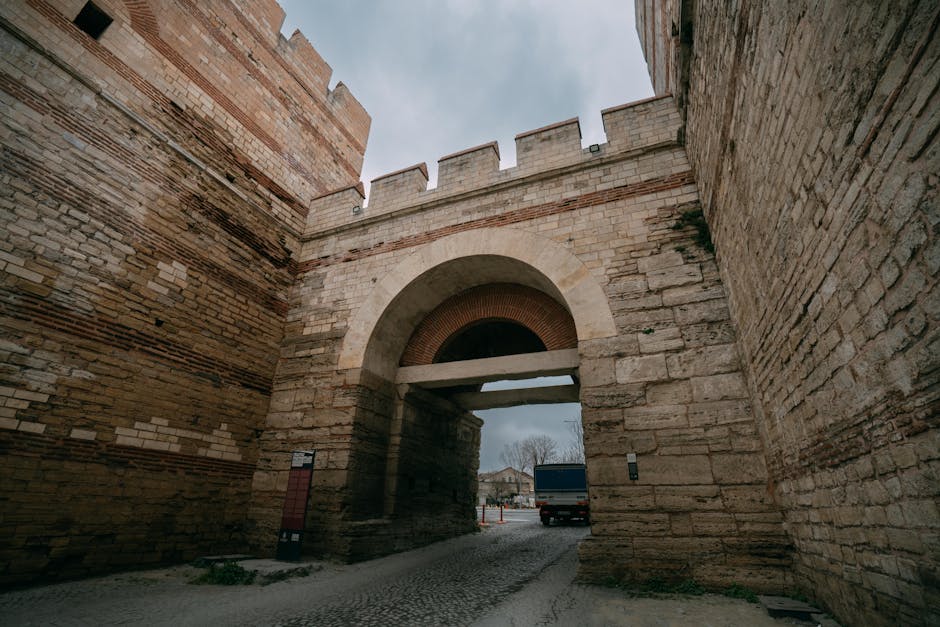
The Siege of Constantinople: A Turning Point in History
The history of humanity is punctuated by significant events that have shaped the course of civilizations across the globe. Among these landmark moments, the fall of Constantinople in 1453 stands as a monumental episode that not only marked the end of the Byzantine Empire but also heralded the dawn of a new era in both Europe and the Near East. Nestled at the crossroads of Europe and Asia, Constantinople was more than just a city; it was a symbol of medieval Christian might, splendor, and cultural heritage. The siege that led to its fall was a defining confrontation that still echoes in historical narratives today. This profound event offers a captivating tale of military strategy, religious fervor, and the inexorable march of progress that no history enthusiast can resist unraveling.
Historical Background and Context
Founded in 330 AD by Emperor Constantine the Great, Constantinople served as the capital of the Byzantine Empire and was a vital center of trade, culture, and politics for over a millennium. Its strategic location made it an unparalleled hub, connecting the East and West through both land and maritime routes. The city’s profound wealth and monumental architecture, including the majestic Hagia Sophia, spoke to its historical significance and influence. However, by the 15th century, the Byzantine Empire was but a shadow of its former glory. Political intrigues, religious schisms, and external threats had gradually chipped away at its might, leaving Constantinople vulnerable to the encroaching powers of the world’s growing empires.
One such formidable force was the Ottoman Empire under Sultan Mehmed II. Hungry for expansion and the glory of conquest, Mehmed saw in Constantinople not only a city of wealth but also a strategic prize that would cement his dominance in the region. The Byzantine Empire, weakened by centuries of warfare and internal strife, struggled to amass support from the fragmented Christian domains of Europe, many of whom were embroiled in their own disputes or wary of past grievances with the Eastern Orthodox sphere.
Key Events, Battles, and Developments
The Siege Begins
On April 6, 1453, Sultan Mehmed II began his ambitious campaign to conquer Constantinople. He amassed a formidable force estimated at over 80,000 troops, commanded by seasoned generals and supported by an impressive armada designed to blockade the city and cut off any potential reinforcements or supplies. Meanwhile, Constantinople’s defenders, under the leadership of Emperor Constantine XI, numbered less than 10,000, including some Genoese and Venetian allies. Their defense was further bolstered by the city’s renowned walls, engineered by Theodosius II, which had withstood previous sieges over the centuries.
The Military Innovations
One of the transformative aspects of this siege was the use of massive artillery by the Ottomans. Equipped with colossal cannons cast by the Hungarian engineer Urban, the Ottomans unleashed a powerful bombardment upon the city’s walls. These cannons, some exceeding 27 feet in length, delivered destructive blows that eventually compromised sections of the ancient fortifications, thus marking a new era in military engineering and warfare tactics.
The Final Assault
As the siege dragged on, both defender and attacker grew weary. A pivotal moment arrived on May 29, when Mehmet unleashed a coordinated assault that broke through Constantinople’s last defenses. Constantine XI and his men fought bravely but were ultimately overwhelmed by the sheer numbers and ferocity of the Ottomans. The city, once a glorious bastion of Christian resilience, fell to the advancing Muslim forces, marking a cataclysmic shift in regional power dynamics.
Important Figures and Their Roles
Sultan Mehmed II – The Conqueror
Sultan Mehmed II, later known as Mehmed the Conqueror, was the driving force behind the Ottoman campaign to capture Constantinople. His ambitious vision for expanding Ottoman territories, combined with his strategic acumen and invested resources, made this siege a defining achievement of his reign.
Emperor Constantine XI – The Last Byzantine Emperor
Emperor Constantine XI Paleologus, the last Byzantine Emperor, embodied resilience and resolve in the face of overwhelming odds. Described as valorous and dedicated to his city, he refused multiple offers to leave, choosing instead to lead his troops in defense and ultimately perishing in the battle.
Urban – The Engineer
Urban, the Hungarian engineer, played an instrumental role by providing the Ottomans with the large arsenal of cannons that proved decisive in breaching the city’s walls. His expertise in gunpowder weaponry was revolutionary and became a defining feature of future warfare.
Causes and Consequences
The siege and subsequent fall of Constantinople were precipitated by both long-term factors and immediate catalysts. From a macro-perspective, the Byzantine Empire’s protracted decline due to internal discord, financial insolvency, and military weaknesses created an opportunity ripe for Ottoman expansion. Additionally, reluctance among European powers to unite behind the Byzantines reflected ongoing religious and political rifts.
The consequences of the city’s fall were profound. It effectively ended over a thousand years of Byzantine rule in the East, symbolized the passing of an era in medieval history, and heralded the rise of the powerful Ottoman Empire. It shifted trade routes and geopolitical alliances, spurred cultural exchanges, and indirectly contributed to the Age of Exploration as Europeans sought new paths to East Asia.
Global Impact and Legacy
The impact of Constantinople’s fall extended far beyond the immediate territorial shifts. It prompted a cultural renaissance as Byzantine scholars fled to Italy, carrying classical knowledge that fueled the flowering of humanism and innovation in the Renaissance. The city’s reinvention as Istanbul became central in the broader Islamic world, influencing trade, culture, and politics for centuries to come.
Furthermore, the fall reinforced the Ottoman Empire’s status as a dominant Mediterranean power and altered economic and military landscapes, laying foundations for future conflicts and interactions between the Christian West and Muslim East.
Fascinating Little-Known Facts
An intriguing aspect of the siege involves the legendary story of the Byzantine tunnel defender, Johannes Grant, an engineer who devised counter-tunnels and thwarted several Ottoman mining efforts, showcasing the era’s advanced engineering combat techniques. Another myth emerged post-siege; the tale of the “marble king,” suggesting Constantine XI survived and would return to reclaim the city, reflecting the deep cultural impact and nostalgia for Byzantium.
Additionally, Mehmed II’s approach was surprisingly pragmatic concerning religious policies; he granted rights to Christians to continue worshipping, utilizing an ethos that peaceful governance was more effective than relentless conquest.
Strong Conclusion with Modern Relevance
The fall of Constantinople in 1453 marked the end of an era and the beginning of a new chapter, deeply influencing world history. Its legacy continues to be felt in contemporary cultural, religious, and socio-political landscapes. Today, the city of Istanbul remains a poignant testament to this rich, multifaceted history, serving as a bridge across continents and cultures. Understanding the complexities of this siege offers insights into modern geopolitical strategies, cultural engagements, and military tactics, reminding us that in studying the past, we often find the keys to unraveling present challenges.