
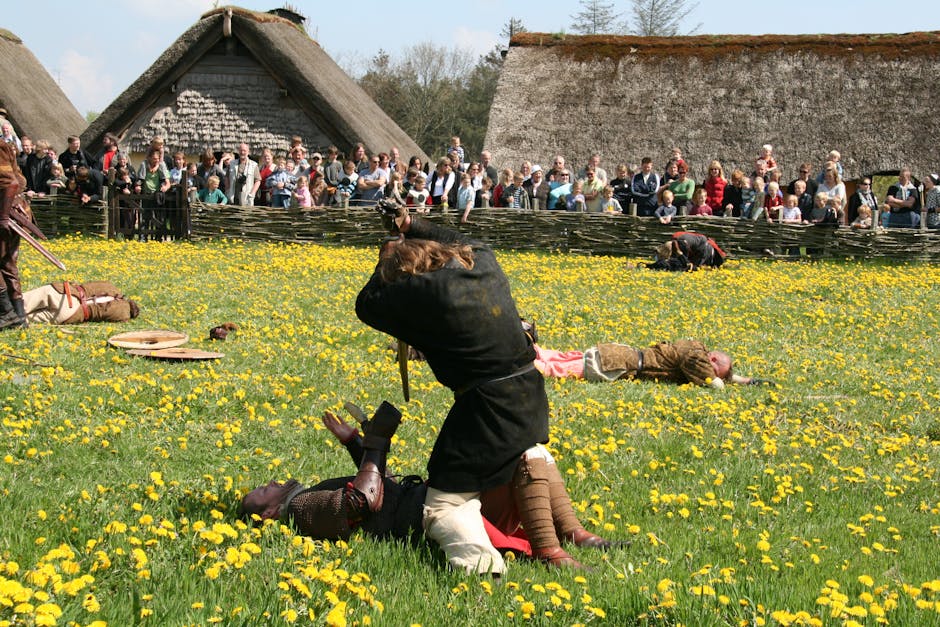
Introduction: The Battle That Shaped a Nation
On October 14, 1066, a battle unfolded on the Senlac Hill, near Hastings, that irrevocably changed the course of English history. Known now as the Battle of Hastings, it was more than just a clash of arms; it marked the beginning of a new era in medieval Europe. Like a watershed, it spanned the divide between England’s Anglo-Saxon past and its Norman future, serving as a prelude to centuries of transformation. With William the Conqueror’s victory, the traditional Anglo-Saxon governance, culture, and social structure were forever altered. In this article, we explore the origins, key events, and lasting legacy of this pivotal encounter, offering insights into how it shaped the world as we know it today.
Historical Background and Context
Before the climactic confrontation on the fields near Hastings, England had been a landscape of relative peace under the rule of Edward the Confessor. However, Edward’s death in January 1066 left a vacuum, thrusting the kingdom into a succession crisis. This was a time when thrones were claimed not by birthright alone but through might and influence. The principal claimants to the English throne were Harold Godwinson, an Anglo-Saxon noble and a powerful earl; Harald Hardrada, the Viking King of Norway; and William, Duke of Normandy, a distant cousin of the late king. The seeds of the conflict were sown deeply in 1051, when Edward allegedly promised William the succession. This promise was, however, complicated by Harold’s assertion that Edward named him as successor on his deathbed. This conundrum fostered the factions, each intent on claiming England as their domain.
The landscape of England, a mix of hills, dense forests, and open plains, was well-suited to the defensive-underpinned Anglo-Saxon military strategies. Yet, the martial Norman way was starkly different, crafting a military narrative defined by mobility, discipline, and advanced horseback tactics. The embodiment of these dynamics set England on a powder keg, ready to explode into conflict as the year 1066 unfolded.
Key Events and Battles
The Precursor: The Battle of Stamford Bridge
Even before the armies met at Hastings, 1066 was a tumultuous year marked by notable skirmishes. On September 25, 1066, Harold Godwinson’s forces clashed with the Viking army led by Harald Hardrada. The ferocity of the Battle of Stamford Bridge, which took place in Yorkshire, resulted in a decisive victory for Harold, effectively ending the Viking’s ambitions for the throne. Unfortunately for King Harold, the victory had come at a cost: his army was exhausted and his forces diminished. News soon arrived of William’s landing in England, prompting a hurried march south.
The Battle of Hastings
On October 14, the English forces, led by Harold, formed defensive lines on the ridge at Senlac Hill. The Normans, under Duke William, initiated the confrontation at dawn. The battlefield, a tapestry of strife, saw the Normans employing cavalry and archers to punctuate and fracture the Anglo-Saxon shield wall. Despite initial gains, the battle swung with fortune’s unpredictable hand—a withdrawal by Norman forces, possibly a feigned retreat or perceived retreat, drew Anglo-Saxon forces into pursuit. William, seizing on this error, turned upon the pursuing English with vigor.
Throughout the day, the balance of power shifted like gusts of wind over the battlefield. Key tactical maneuvers, such as William’s successive charges and use of feigned retreats, ground down the once formidable English shield wall. The decisive blow came late in the day, when King Harold was struck down—reportedly by an arrow to the eye—a moment immortalized in the Bayeux Tapestry. Harold’s death marked the collapse of the English resistance.
Important Figures and Their Roles
William the Conqueror
William’s leadership qualities were vital in the Norman conquest. As Duke of Normandy, he was renowned for his shrewdness, prowess in battle, and political acumen. William’s unyielding claim to the English throne was rooted in his relationship with the earlier English king, Edward the Confessor, underscoring his resolve with a dual strength of diplomacy and martial might. His victory at Hastings paved the path for a new Norman dynasty that would stimulate transformations in feudal governance and culture.
Harold Godwinson
King Harold II, crowned in January 1066, saw his reign challenged from the onset. Leading the English forces, Harold epitomized the valor and determination of the Anglo-Saxon warriors. His early triumph at Stamford Bridge demonstrated strategic brilliance, yet the strain from constant battles diminished his ability to repulse the Norman threat at Hastings.
Causes and Consequences
The complex tapestry of claims to the English throne ignited the Battle of Hastings. William’s belief, rooted both in promise and ambition, saw the Duke mobilize his Norman forces for conquest. Harold’s own ascension was moored in practicality rather than Norman diplomacy. The consequences of the battle resonated through England’s societal and political fabric. The immediate outcome saw William crowned King of England, enforcing Norman customs and initiating sweeping land reforms. The Normans established feudalism, redistributing land to loyal followers and ensuring a tight grip on power, fundamentally altering the Anglo-Saxon aristocracy and laying foundational stones for modern British governance.
Global Impact and Legacy
The Battle of Hastings was not confined in consequence to the British Isles. It introduced feudal structures emblematic of contemporary European society, fostering ties across the channel and the continent. Normandy’s infusion of Continental practices into England rejuvenated cultural and architectural endeavors—most prominently seen in the Gothic and Romanesque cathedrals of Britain. With language and law melded, a new English identity was forged, establishing it as a precocious progenitor to the eventual British Empire. As William established his rule, the fluctuations of power laid groundwork for endless narratives that we continue to embolden today.
Fascinating Little-Known Facts
The Battle of Hastings is so steeped in legend and lore that some curiosities escape casual study. For instance, Duke William underwent a logistical marvel, constructing prefabricated castles transported across the sea to secure the new Norman holdings. Furthermore, fabrications and enhancements in the Bayeux Tapestry reveal a meticulous narrative control, embellishments serving as propaganda to legitimize the conquest. Finally, this was a rare battle in medieval times with its sheer clarity of change in rulership—a testament to its gravity and decisiveness.
Conclusion: The Modern Relevance of Hastings
As we delve into the far-reaching ripples of the Battle of Hastings, its modern counterpart can be seen in the continuous evolution of national identity and cultural integration. This watershed moment in history provides perspectives on leadership, succession, and the effects of cultural convergence. Today, the remnants of Norman architecture and societal structures serve as heritage echoes, chronicling a transformative juncture that is both a cautionary tale and a beacon of enduring progress. Through this understanding, the narrative of Hastings not only deepens the historical fabric of Britain but also underpins global conversations on change, adaptability, and legacy. In the end, Hastings stands not merely as a battle but as a pivotal chapter in the indelible story of civilization.