
Introduction
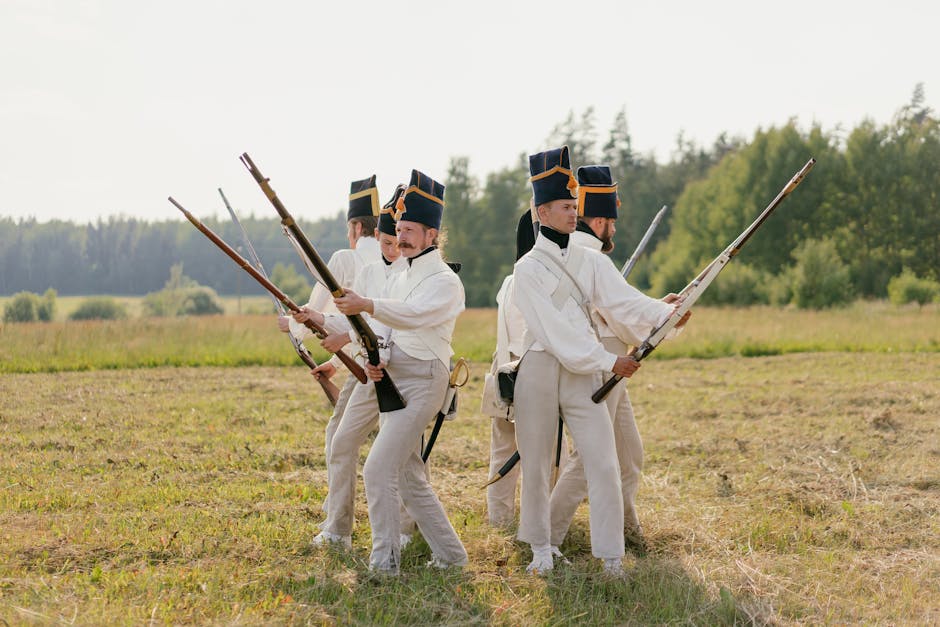
For over two decades, the Napoleonic Wars ravaged Europe, igniting revolutionary fervor, redrawing national boundaries, and altering the course of history. The sheer scale and complexity of these conflicts present a fascinating study of ambition, strategy, and transformation. At the epicenter of this tumultuous period was one of history’s most enigmatic figures, Napoleon Bonaparte, renowned for his military genius and imperial aspirations. What began as a struggle for power in France escalated into a sweeping conflict that would reshape not only Europe but also the trajectory of global affairs.
Have you ever wondered how a series of battles across the centuries can still echo in modern geopolitics? The Napoleonic Wars have been often credited as the crucible that forged modern Europe, but their influence extends far beyond just national borders and military tactics. Wars have the profound ability to reshape culture, and the Napoleonic Wars were no exception, giving rise to new ideologies and notions of citizenship, democracy, and governance that we associate with modern states today.
This article aims to take you on an enthralling journey through the Napoleonic Wars, exploring their historical context, significant events, key figures, and their lasting legacy. Brace yourself for an in-depth exploration that will reveal not only the grandeur of battles lost and won but also the human stories interwoven through this period of transformation—a time that pitted empires against each other and set the stage for the world we live in today.
Historical Background and Context
The seeds of the Napoleonic Wars were sown long before Napoleon Bonaparte came to prominence. To understand their origins, we must first explore the social, political, and economic climate that existed in France and Europe at the end of the 18th century. The French Revolution (1789-1799) served as a crucial backdrop for Napoleon’s rise to power. Emerging from a period of political discontent and economic instability, the Revolution marked a radical shift in French society, leading to the overthrow of the Bourbon monarchy and the establishment of a republic.
By dismantling feudal privileges and proclaiming the principles of liberty, equality, and fraternity, the Revolution inspired revolutionary movements beyond France and stimulated a widespread desire for reform throughout Europe. However, this period was marred by chaos, including the Reign of Terror (1793-1794), and violent power struggles among various factions. France’s increasing instability prompted neighboring monarchies, fearful of these revolutionary ideals taking root within their territories, to form coalitions aimed at suppressing the revolution and restoring order.
As France began consolidating its power, the Revolutionary government faced internal strife and external threats. In the midst of this turmoil, Napoleon Bonaparte emerged as a key military leader. His impressive victories against Austria and Prussia in campaigns such as the Italian Campaign (1796-1797) gained him significant political traction, ultimately leading to his rise as the leader of France in 1799 following the coup of 18 Brumaire.
Under Napoleon, revolutionary ideas were encapsulated in his reforms, while simultaneously being harnessed to serve his ambitions for French domination. In 1804, he proclaimed himself Emperor, thus signaling a shift from revolutionary principles to imperial authority. As a result, the Napoleonic Wars began, with Napoleon seeking to expand his empire while battling opposing coalitions, primarily composed of rival European powers.
Key Events, Battles, and Developments
Several key events, battles, and developments mark the course of the Napoleonic Wars, showcasing the strategies and ambitions of Napoleon and his adversaries:
1. The Battle of Austerlitz (December 2, 1805)
Also known as the Battle of the Three Emperors, Austerlitz represents one of Napoleon’s most significant military triumphs, often regarded as a masterpiece of battlefield tactics. Facing the combined forces of Russia and Austria, Napoleon meticulously planned his strategy, allowing his opponents to believe they had the upper hand.
The battle commenced in the early morning, with fog playing a crucial role in obscuring troop movements. As the day progressed, Napoleon executed a brilliant maneuver, luring the Allies into a vulnerable position before launching his decisive counterattack. By the end of the day, the French emerged victorious, solidifying Napoleon’s reputation as a tactical genius and leading to the Treaty of Pressburg, which altered the political landscape of Europe.
2. The Peninsular War (1808-1814)
The Peninsular War began when Napoleon invaded Spain to enforce the Continental System, aimed at blockading Britain. This move faced fierce resistance from Spanish guerrilla fighters, supported by British forces under the command of the Duke of Wellington. The war descended into a bloody conflict, characterized by a combination of conventional battles and guerrilla warfare.
Notable confrontations during this protracted struggle included the Battles of Salamanca (1812) and Vitoria (1813), which marked significant turning points in the campaign. Ultimately, the Peninsular War drained French resources, enraging a widespread resistance against Napoleon’s tyranny and contributing to the rising tide of nationalism across Europe.
3. The Invasion of Russia (1812)
Perhaps the most disastrous military undertaking of Napoleon’s career was the ill-fated invasion of Russia in June 1812. Commanding the vast Grand Army, comprising approximately 600,000 troops, Napoleon aimed to force Tsar Alexander I back into the Continental System. However, the Russians employed a scorched-earth policy, retreating deeper into their territory while systematically destroying supplies and resources.
The brutal Russian winter coupled with the lack of provisions decimated the French forces during the retreat from Moscow, which began in October 1812. By early 1813, only a fraction of the original army remained. This catastrophic campaign was a turning point that emboldened Napoleon’s enemies and marked the beginning of the decline of his empire.
4. The Battle of Leipzig (October 16-19, 1813)
Commonly referred to as the Battle of Nations, Leipzig became one of the largest battles in Europe prior to World War I, involving over 600,000 soldiers. Facing a coalition comprised of Russia, Prussia, Austria, and Sweden, Napoleon experienced a definitive defeat. Despite showcasing admirable tactical prowess, his weakened forces could not withstand the numerical superiority of the coalition.
This defeat compelled Napoleon to retreat back to France, heralding a series of subsequent losses that would undo his authority. The outcome of the battle not only signaled the dissolution of the French Empire but also the emergence of nationalistic sentiments among European nations previously subdued under Napoleonic rule.
5. The Fall of Paris (1814)
In early 1814, members of the Sixth Coalition marched on Paris, leading to battles at critical points, including the Battle of Montmartre. The campaign culminated with the capture of Paris on March 31, 1814. Following the fall, Napoleon abdicated on April 6, 1814, in favor of the Bourbon monarchy, specifically Louis XVIII. This moment marked a monumental shift in European history—with the restoration of traditional monarchies following the upheaval sparked by the French Revolution.
Important Figures and Their Roles
Several prominent figures emerged during the Napoleonic Wars, shaping the course of events through their actions and decisions:
1. Napoleon Bonaparte
As the central figure driving the conflicts, Napoleon’s military strategies, political reforms, and personal ambitions played a pivotal role in the wars. His establishment of the Napoleonic Code spread the principles of the Revolution across Europe, while his expansionist policies intensified the animosity of neighboring monarchies, spawning coalition after coalition against France.
2. Duke of Wellington (Arthur Wellesley)
The Duke of Wellington rose to prominence as a key military leader opposing Napoleon, demonstrating remarkable leadership during the Peninsular War and later at the decisive Battle of Waterloo in 1815. His tactical acumen and understanding of the terrain significantly contributed to the defeat of French forces.
3. Tsar Alexander I of Russia
Tsar Alexander I played a crucial role in opposing Napoleon and forming coalitions against him. Following the retreat from Moscow, Alexander emerged as a prominent leader advocating for the restoration of European monarchies while also expressing a desire for reforms within Russia.
4. Cardinal Richelieu
While not directly involved in the military conflicts, Cardinal Richelieu significantly influenced the political landscape of France, seeking to stabilize the nation following the upheaval of the Napoleonic Wars, promoting policies that would shape the future of French governance.
Causes and Consequences
The Napoleonic Wars were driven by a multitude of factors, ranging from nationalistic ambitions to revolutionary ideologies. Among the primary causes were:
1. Expansionism
Napoleon’s pursuit of territorial expansion was fueled by a desire for domination, establishing France as the pre-eminent power in Europe. This ambition placed him in direct conflict with other nations, leading to a series of coalitions aimed at curbing French influence.
2. Revolutionary Ideals
The principles of the French Revolution, such as liberalism and nationalism, inspired various uprisings across Europe. However, these very ideals led to a backlash among conservative and monarchic powers seeking to maintain the status quo.
3. Military Innovation
Napoleon’s military strategies and innovations, including extensive use of artillery and rapid maneuvering, redefined warfare. While initially giving him the upper hand, these tactics created a legacy that other nations sought to match or counter.
Consequences:
The consequences of the Napoleonic Wars were profound and far-reaching:
1. Collapse of Empires
Numerous empires crumbled under the pressures of war. The Holy Roman Empire, for instance, dissolved in 1806, giving way to emerging nationalist movements across Europe.
2. Rise of Nationalism
Nationalistic sentiments surged in various nations, reacting against imperial rule. These movements paved the way for future conflicts, including the unification of Germany and Italy in the later decades of the 19th century.
3. Shifts in Governance
The restoration of monarchy following Napoleon’s defeat catalyzed debates regarding constitutionalism and democracy, establishing a foundation for political ideologies in the 19th and 20th centuries.
Global Impact and Legacy
The legacy of the Napoleonic Wars is evident even in contemporary global politics and systems of governance. Several aspects are particularly noteworthy:
1. Impact on European Borders
Post-war treaties, including the Congress of Vienna (1814-1815), redefined European borders, establishing a balance of power that would endure for nearly a century. This reconfiguration sought to prevent further massive conflicts in Europe, but ultimately failed to contain rising nationalism.
2. Emergence of Modern Warfare
The Napoleonic Wars revolutionized military strategies, influencing tactics employed in later conflicts including World War I and the wider implications of modern warfare. The extensive use of conscription and national armies became a hallmark of modern military organization.
3. Political Ideologies
The ideas of liberalism, nationalism, and democracy espoused during the Napoleonic Wars created ideological frameworks that would shape various revolutions and reforms across the globe throughout the 19th and 20th centuries, paving the way for the formation of modern nation-states.
Fascinating Little-Known Facts
Here are a few intriguing tidbits that may surprise those less familiar with the Napoleonic Wars:
1. The Continental System
Napoleon’s attempt to block British trade through the Continental System backfired; it hurt French economic interests more than those of Britain.
2. Use of New Military Technologies
The wars saw the early use of the telegraph for communication and advancements in artillery that would shape subsequent warfare.
3. The Role of Women
Many women played essential roles in the conflicts, not just as caregivers but also as spies, messengers, and supporters of their troops, offering insights and aiding their families on multiple fronts.
Conclusion: Modern Relevance
The indelible mark left by the Napoleonic Wars on modern history cannot be understated. As we navigate our globalized world, the ideologies born from this tumultuous period continue to influence national boundaries, governance, and international relations. The echoes of nationalism, revolution, and the struggle for democratic governance remain prevalent today, intertwining our present with the complex narrative of past conflicts. Understanding the intricacies of the Napoleonic Wars allows us to contextualize current political landscapes and the continuing quest for individual and collective identities in an ever-changing world. In a time where ideological battles persist, the lessons drawn from this period serve as a poignant reminder that history—marked by wars, peace, and the pursuit of change—is intrinsically linked to our present, compelling us to learn and grow from the past.