
Introduction: A Tale of Intrigue and Power
In the grand tapestry of ancient history, the city-state of Carthage stands as a fascinating chapter marked by power, prosperity, and ultimately, devastation. Nestled on the northeastern coast of present-day Tunisia, Carthage once commanded the trade routes of the Mediterranean with unmatched prowess. This article embarks on a journey through the vibrant life of Carthage, unraveling the secrets of its rise to dominance and the path leading to its dramatic fall. As we delve into the annals of time, the story of Carthage serves as a poignant reminder of the fragile nature of empires.
Historical Background and Context
The roots of Carthage stretch back to the 9th century BCE, founded by Phoenician settlers from Tyre, a thriving city in present-day Lebanon. The Phoenicians were known for their seafaring abilities and trade acumen, which greatly influenced the establishment and growth of Carthage. By the 7th century BCE, Carthage had become a major hub for commerce, engaging actively in the trade of precious metals, textiles, and exotic goods across the Mediterranean.
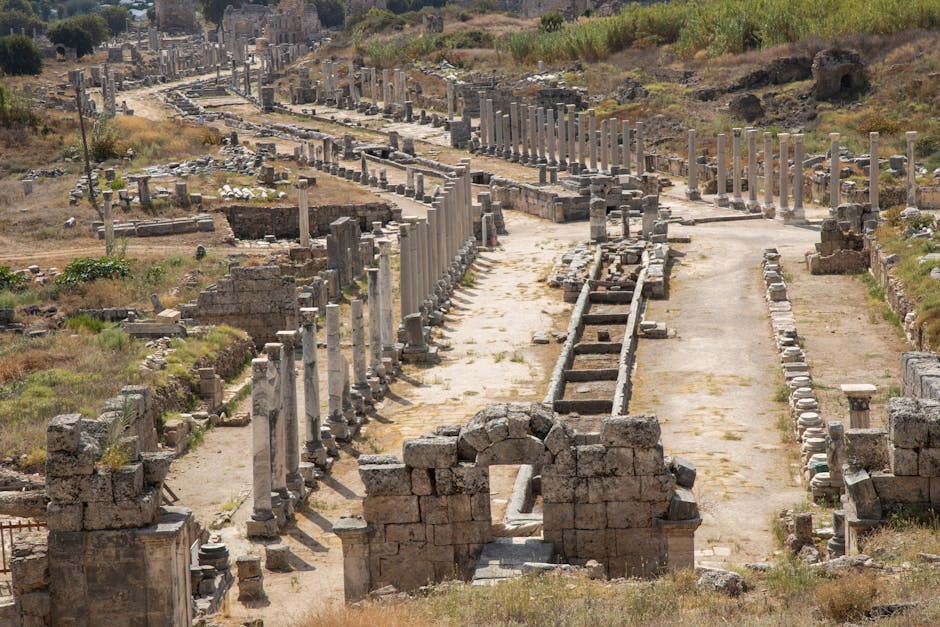
Strategically positioned near crucial maritime trade routes, Carthage quickly developed its distinct culture, blending Phoenician traditions with influences from indigenous Berber populations and other cultures encountered through trade. This cosmopolitan nature heralded a period of wealth and architectural innovation, as evidenced by the impressive remnants of Carthaginian urban planning and fortifications.
Yet, Carthage’s rise to prominence was neither unchallenged nor uncontroversial. As the city expanded and its influence grew, it became embroiled in conflicts with neighboring states, most notably the Greek colonies in Sicily and the increasingly powerful Roman Republic. These tensions set the stage for a series of confrontations that would ultimately reshape the course of Mediterranean history.
Key Events, Battles, and Developments
The First Punic War (264-241 BCE)
The First Punic War erupted in 264 BCE, catalyzed by rivalries over control of Sicily. Carthage, with its superior naval force, initially had the upper hand. However, the Romans, undeterred by their lack of maritime experience, swiftly constructed a navy and introduced innovations like the ‘corvus’ boarding device, shifting the tide of war. The prolonged conflict saw many fierce battles, culminating in the decisive Roman victory at the Battle of the Aegates Islands in 241 BCE. This defeat forced Carthage to cede Sicily to Rome and pay a hefty indemnity.
The Second Punic War and Hannibal’s Campaign (218-201 BCE)
The Second Punic War is perhaps one of the most renowned aspects of Carthage’s history, largely due to the military genius of Hannibal Barca. In 218 BCE, Hannibal embarked on an audacious campaign, crossing the Alps with a contingent that included war elephants, aiming to strike directly at the Roman heartland. His victories at battles such as Cannae in 216 BCE left Rome reeling. However, logistical challenges and the eventual Roman resilience, exemplified by Scipio Africanus’s counter-invasion of Africa, led to Carthage’s ultimate defeat at the Battle of Zama in 202 BCE.
The Third Punic War and the Fall of Carthage (149-146 BCE)
Amidst rising hostilities and Roman distrust, the Third Punic War broke out in 149 BCE. Rome, intent on eradicating Carthaginian power once and for all, laid siege to the city. After months of resistance, marked by extreme hardship and unyielding defense, Carthage fell in 146 BCE. The city was meticulously destroyed, its land salted to prevent future habitation, marking the tragic end of Carthaginian civilization.
Important Figures and Their Roles
Queen Dido: The Founding Legend
Often mythologized, Queen Dido remains a central figure in Carthage’s lore. According to legend, she established Carthage after fleeing the tyranny in Tyre, strategically negotiating land acquisition through wit. Her story has been immortalized in various works of literature, notably in Virgil’s “Aeneid.”
Hannibal Barca: The Military Genius
Hannibal Barca, the consummate military strategist, stands as a pivotal figure in Carthaginian history. His audacity and brilliance in devising tactics that outflanked larger Roman forces have cemented his legacy as one of history’s greatest military commanders. His campaigns left an indelible mark on military strategy, influencing countless generations of commanders.
Scipio Africanus: Rome’s Resilient Commander
Though a Roman, Scipio Africanus played a crucial role in Carthage’s history through his decisive campaigns against Hannibal. His victory at Zama not only marked the downfall of Carthage but also elevated Rome as the preeminent power in the Mediterranean, altering the region’s political landscape permanently.
Causes and Consequences
The rise and fall of Carthage were driven by a myriad of factors, from its strategic location and economic prowess to the intense rivalry with Rome. The Punic Wars epitomized the struggle for dominance in the Western Mediterranean. The immediate cause for the wars was competition over territories like Sicily, but underlying issues of power imbalance and mutual envy forged paths to conflict.
The consequences of Carthage’s fall were profound. It allowed Rome to establish unparalleled control over the Mediterranean, marking the rise of an era known as the Pax Romana. The obliteration of Carthage also led to a significant cultural and economic void in the region, altering the dynamics of inter-regional interactions for centuries to come.
Global Impact and Legacy
Carthage’s legacy extends beyond its conflict with Rome. Its innovations in agriculture, trade, and military tactics influenced Mediterranean civilizations for generations. The city’s rich culture and technological advances, such as its use of war elephants and intricate fortifications, remain subjects of admiration and study.
Moreover, Carthage’s story has been immortalized through classical literature, shaping perceptions of ancient maritime power in the Western imagination. The saga of its rise and fall is a reminder of the cyclical nature of history and the enduring impact of ancient civilizations on modern societies.
Fascinating Little-Known Facts
While Carthage is most famous for its conflicts with Rome, many lesser-known aspects of its civilization are equally intriguing. For instance, Carthage had an advanced judicial system and was one of the earliest cities to implement a quasi-republican form of government. Moreover, the Carthaginians were pioneers in agronomy, developing techniques to enhance agricultural productivity that influenced Roman practices.
Additionally, Carthage was renowned for its purple dye, extracted from local murex sea snails, which became highly prized across the Mediterranean world. This dye was a symbol of royalty and luxury, adding to Carthage’s economic and cultural prestige.
Conclusion: Modern Relevance of Carthaginian History
The rise and fall of Carthage continue to resonate in modern times as a story of ambition, innovation, and human resilience. In an increasingly globalized world, Carthage’s role as a center of trade and culture reminds us of the enduring importance of cultural exchange and economic interdependence.
Furthermore, the strategic and military lessons drawn from Carthaginian history are studied in military academies worldwide, underscoring the city’s lasting impact on strategic thought and practice. Carthage’s legacy, therefore, is an enduring testament to the complexities of geopolitical power dynamics, the impacts of warfare, and the resilience of human societies in the face of adversity.