
Introduction: The Byzantine Empire’s Mysterious Allure
In the grand annals of history, the Byzantine Empire stands as a beacon of enigmatic allure and unmatched sophistication. From its roots as the Eastern Roman Empire to its final days surrounded by relentless foes, the Byzantine Empire’s story is one of resilience, innovation, and cultural integration. This tale, spanning over a millennium, is not just about emperors and wars but also about a civilization that preserved and transformed ancient knowledge while paving the way for the Renaissance. The Byzantine Empire, with its iconic city of Constantinople at the helm, served as a pivotal crossroad between East and West. Understanding its complexities not only unravels the intricate patterns of medieval history but also presents insights crucial to grasping the evolution of modern Europe and the Islamic world.
Historical Background and Context: The Rise of Byzantine Glory
The Byzantine Empire’s foundation was laid in AD 330 when Roman Emperor Constantine the Great inaugurated Constantinople as the new capital of the Roman Empire. This strategic location was formerly known as Byzantium, a more than fitting name from which the later empire derived its moniker. The move came at a time when the Western Roman Empire was struggling under internal strife and external pressures from barbarian incursions.
With the fall of the Western Roman Empire in AD 476, Byzantium stood as the enduring eastern half, bearing the torch of Roman administration, culture, and governance. Unlike its western counterpart, the Byzantine Empire was shaped by a unique confluence of Greek, Roman, Christian, and Eastern influences. It was this fusion that defined its rich artistic and intellectual legacy. Spanning from the Eastern Mediterranean into parts of North Africa and the Middle East, the Byzantine Empire’s reach and influence were extensive during its peak under Justinian I in the 6th century.
Key Events, Battles, or Developments
Justinian I and the Nika Riots (AD 532)
One of the most remarkable emperors, Justinian I, reigned from AD 527 to 565 and is celebrated for his ambitious project to regain lost western territories. However, his rule was marked by significant internal challenges, notably the Nika Riots in AD 532. The riots erupted in Constantinople owing to political tensions between competing chariot racing factions, resulting in widespread destruction.
The Iconoclasm Controversy (8th to 9th Century)
The Iconoclasm period, perhaps one of the more divisive episodes in Byzantine history, began in AD 726 and spanned over a century. It witnessed the contentious debate over the veneration of icons in the Byzantine Church, leading to a series of edicts that either banned or restored their use. The controversy deeply affected the empire’s internal religious unity and its external relations with the papacy.
The Battle of Manzikert (AD 1071)
Another pivotal moment was the Battle of Manzikert on August 26, 1071, where the Byzantine forces suffered a catastrophic defeat against the Seljuk Turks. This battle marked the beginning of Byzantine territorial losses in Anatolia, which significantly weakened the empire.
Fall of Constantinople (AD 1453)
The fall of Constantinople in AD 1453 under the assault of the Ottoman Empire, led by Sultan Mehmed II, marked the end of Byzantine dominion. The city’s capture not only marked the extinction of the Byzantine Empire but also heralded a new era of Ottoman expansion and dominance in the region.
Important Figures and Their Roles
Emperor Constantine I
Emperor Constantine I, also known as Constantine the Great, was pivotal in laying the foundation of the Byzantine Empire. His vision to establish Constantinople as the new capital and his promotion of Christianity fundamentally shaped the empire’s religious and cultural landscape.
Justinian I
Justinian I, often referred to as the ‘Last Roman,’ significantly influenced Byzantine law with his comprehensive compilation, the ‘Corpus Juris Civilis.’ His endeavors to reclaim lost territories affirmed his ambition but also drained the empire’s resources.
Empress Theodora
Theodora, wife of Justinian I, wielded immense influence in Byzantine politics. A former actress who ascended to the pinnacle of power, Theodora played a crucial role during the Nika Riots and was instrumental in safeguarding her husband’s reign.
Causes and Consequences
The Byzantine Empire’s prolonged existence was both a consequence of and a catalyst for various geopolitical and religious dynamics. The strategic placement of Constantinople facilitated trade and cultural exchanges between continents, fortifying the empire’s economic might. Religious strife, such as the Iconoclasm, impacted Byzantine stability and contributed to the schism with the Roman Church in 1054. The empire’s decline was accelerated by external pressures from Islamic caliphates and later, the Ottomans. Despite its fall, the Byzantine legacy thrived, preserving classical knowledge that fueled the Renaissance.
Global Impact and Legacy
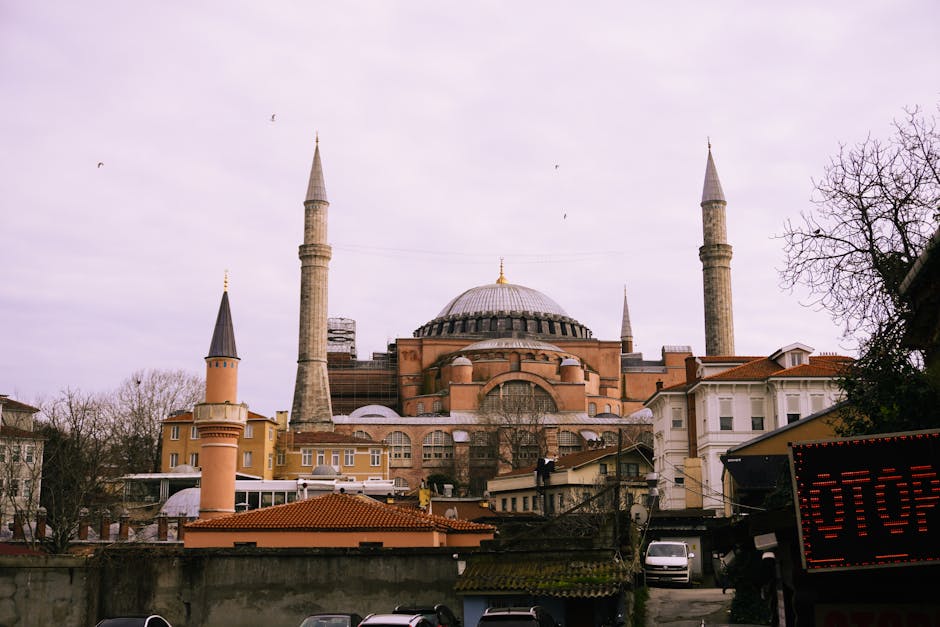
The Byzantine Empire’s influence transcended its military conquests and territorial limits. Its legal traditions laid foundations for modern European legal systems. Byzantine architecture, epitomized by the Hagia Sophia, inspired countless structures and iconography in Eastern Orthodox Christianity. The Empire’s legacy in art, literature, and theology has persisted, enriching cultures worldwide. Moreover, its role as a bulwark against Eastern invasions preserved European territories, allowing for the eventual emergence of modern Europe.
Fascinating Little-Known Facts
Few are aware that the Byzantine Empire boasted a vast intelligence network, which at times rivaled the modern CIA in its intricacy. The empire’s diplomats were renowned for their adept negotiation skills, often securing alliances with rivals. Additionally, the Byzantine navy was among the first to utilize ‘Greek fire,’ a formidable incendiary weapon whose composition remains a mystery to this day. Another curious anecdote involves the tradition of ‘purple ink,’ exclusively used for imperial decrees, symbolizing the emperor’s divine authority.
Conclusion: The Byzantine Empire’s Modern Relevance
The Byzantine Empire’s legacy is not confined to dusty history books; it continues to resonate in today’s geopolitical and cultural landscapes. Its survival strategies are studied in modern military academies, while its diplomatic prowess finds relevance in contemporary foreign policies. The preservation of classical wisdom and their contributions to art and religion continue to enrich modern societies. As globalization mirrors the diverse exchanges once seen in Byzantine markets, the empire’s story remains a testament to the enduring power of cultural fusion and resilience.