
The Rise and Fall of the Byzantine Empire: A Tale of Glory and Intrigue
Introduction: A Compelling Tale of Heritage and Intrigue
The Byzantine Empire, also known as the Eastern Roman Empire, stands as a monument to human ambition, resilience, and innovation. Spanning more than a thousand years, from its founding by the Roman Emperor Constantine I in 330 AD to its fall to the Ottoman Turks in 1453, the Byzantine Empire was a beacon of cultural and religious influence, a bridge between antiquity and the modern world. With its capital in Constantinople, modern-day Istanbul, this empire carved out a legacy that resonates through art, architecture, theology, and law. Yet, beyond its formidable achievements lies a history replete with intrigue, political machination, and military might, drawing historians and enthusiasts alike into its depths. What establishes the Byzantine Empire not just as a historical footnote but as a cornerstone of medieval history is not merely its longevity or geographic scope but the sophisticated civilization and complex political drama that unfolded within its majestic walls. To uncover the full tapestry of the Byzantine saga, one must deftly weave through layers of political alliances, religious discord, military strategy, and cultural innovation. Each thread bears testimony to an era of extraordinary power and profound vulnerability, encapsulating a story as magnetic as it is instructive.
Historical Background and Context
The Byzantine Empire was born out of the ashes of the Roman Empire, transforming the Mediterranean world from the 4th century onward. In 330 AD, when Emperor Constantine I established the city of Byzantium as the new imperial residence and renamed it Constantinople, he laid the groundwork for the empire’s future grandeur. This strategic location at the crossroads of Europe and Asia, benefiting from trade routes and natural defenses, allowed the Byzantine Empire to flourish. The city itself was designed to reflect the grandeur of Rome, with imposing defenses, lavish architecture, and a robust administrative structure.
The empire’s roots were deeply intertwined with the rise of Christianity; indeed, Constantine’s adoption of Christianity was pivotal, leading to significant theological and political transformations. The Council of Nicaea in 325 AD, less than a decade before Constantinople’s founding, set the stage for religious centrality within the empire, fostering a culture where religious and governmental spheres were inextricably linked. The fall of the Western Roman Empire in 476 AD marked a significant turning point. From this point, the Byzantine Empire positioned itself as the continuum of Roman authority, with an aim to reclaim its splendor and extend Christianity. The Byzantine model of government and society hinged on a delicate balance of old Roman traditions with Christian orthodoxy, creating a unique civilization that managed to repel invasions, manage internal disputes, and wield influence over vast territories.
Throughout the Byzantine Empire’s existence, its borders ebbed and flowed, affected by wars and treaties, economic ebbs and flows, and the persistence of religious conflicts. Yet, it was this adaptability that allowed it to persist for more than a millennium, acting as both a guardian of ancient traditions and a crucible of cultural renaissance, all while grappling with external threats from Persians, Arabs, Slavs, and eventually, the pervasive rise of Islam.
Key Events, Battles, and Developments
The Nika Riots (532 AD)
One of the early and decisive events in Byzantine history was the Nika Riots of January 532, during the reign of Emperor Justinian I. The riots broke out in Constantinople and stemmed from the growing dissatisfaction among the populace due to high taxes and oppressive policies. Sparked by chariot racing factions (the Blues and the Greens) at the Hippodrome, the unrest escalated, leaving tens of thousands dead and significant parts of the city in ruins.
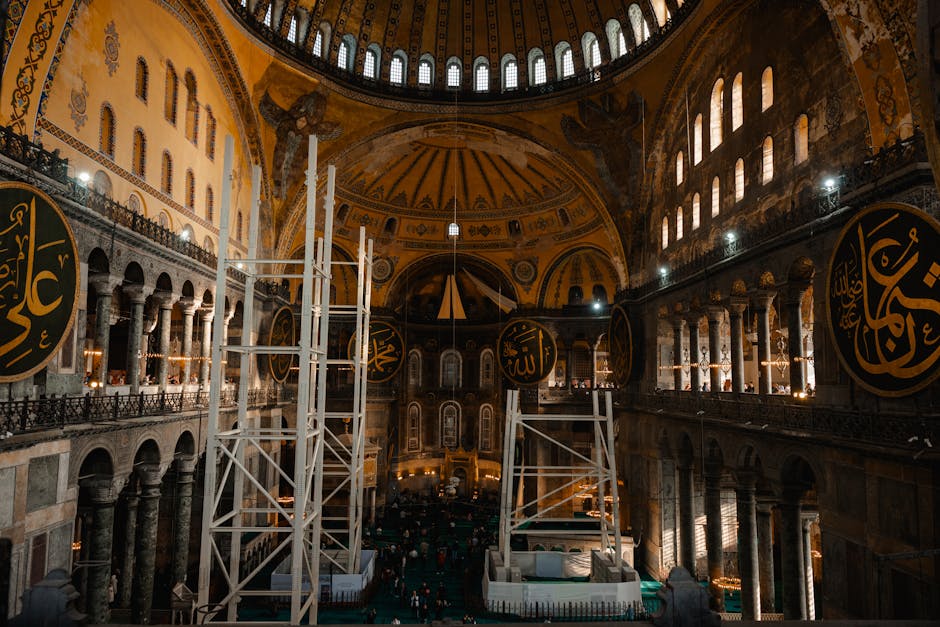
However, Justinian took this opportunity to rebuild and re-consolidate power, commissioning the construction of the Hagia Sophia, a marvel of architectural ingenuity that would become the heart of Eastern Orthodox Christianity.
Justinian’s Reconquests (527–565 AD)
Determined to restore the Roman Empire’s former glory, Justinian I embarked on an ambitious military campaign to reclaim lost territories in the West. Led by his skilled general, Belisarius, significant regions including North Africa, Italy, and parts of Spain were brought back under Byzantine control.
Though initially successful, these conquests over-stretched the empire’s resources and military capabilities, leaving it vulnerable to subsequent threats. Nonetheless, this era marked a pinnacle of Byzantine power and influenced a resurgence of Roman culture and law across Europe.
The Iconoclasm Controversy (726–843 AD)
The period of Iconoclasm was a theological and political conflict within the Byzantine Empire that involved the heated debate over the veneration of icons. Initiated under Emperor Leo III, it resulted in the systematic destruction of religious icons and images, polarizing the empire. The controversy not only deepened the rift between the Eastern Orthodox and Western Catholic churches but also affected the empire’s internal stability.
The Second Council of Nicaea in 787, which ultimately restored the veneration of icons, marked the end of the first phase of Iconoclasm. However, the divide it created lingered, reflecting the immense impact religious debates had on Byzantine society.
The Fourth Crusade and the Sack of Constantinople (1204 AD)
One of the most catastrophic events for the Byzantine Empire was the Fourth Crusade, which culminated in the sacking of Constantinople in April 1204. Originally intended to conquer Muslim-controlled Jerusalem, the crusaders instead diverted to Constantinople after Venetian influence and internal Byzantine power struggles facilitated a change in target.
The city was decimated, and treasures looted, deeply wounding the empire’s prestige and wealth. This event crippled Byzantine power, leading to the fragmentation of its territories and the establishment of the Latin Empire on Byzantine soil.
Important Figures and Their Roles
Emperor Constantine I (306–337 AD)
Constantine the Great was pivotal in the establishment of Constantinople and the propagation of Christianity as a major religion in the Roman Empire. As the first Christian emperor, his policies and patronage had long-lasting impacts on both the religious landscape and political sphere of the empire.
Emperor Justinian I (527–565 AD)
Renowned for his legal reforms and architectural achievements, Justinian I’s reign was marked by military conquests and cultural endeavors that aimed to restore the glory of the Roman Empire. His codification of Roman law, the Corpus Juris Civilis, remains a cornerstone of modern law.
General Belisarius (500–565 AD)
A key military leader under Justinian I, Belisarius orchestrated successful campaigns in North Africa, Italy, and Spain. His strategic acumen secured critical victories that expanded and stabilized the Byzantine Empire during its most prosperous periods.
Empress Theodora (500–548 AD)
Theodora, wife of Justinian I, was a powerful and influential empress known for her political acumen and advocacy for women’s rights. Her role in suppressing the Nika Riots and supporting religious tolerance showcased her significant influence over imperial policy.
Causes and Consequences
The intricate weave of causes and consequences within Byzantine history reveals a narrative of resilience amidst relentless pressure. The empire’s initial establishment stemmed from Rome’s recognition of the East’s strategic importance. Economic prosperity, cultural synthesis, and ecclesiastical authority were driving forces behind its initial expansions and influence.
Constant warfare and territorial ambition, exemplified in Justinian’s conquests, expanded the empire’s reach but exhausted Byzantine resources, making the empire vulnerable to external threats. Internally, religious discord, particularly during the Iconoclasm periods, destabilized the empire and widened the divide between Eastern and Western Christianity.
The sack of Constantinople in 1204 exemplified the culmination of these pressures; the empire’s fragile political state became evident, and its economic power was shattered. Nonetheless, the Byzantine Empire left a powerful legacy in the realms of art, law, and Christian orthodoxy that persisted long after its political demise.
Global Impact and Legacy
The Byzantine Empire’s global legacy is most profoundly felt in its role as a preserver and transmitter of classical knowledge during the Middle Ages. By housing ancient texts, fostering intellectual centers, and promoting the spread of Christianity, the empire served as a cultural and educational bridge to the Renaissance.
Architecturally, Byzantine styles influenced structures across Eastern Europe, Russia, and Islamic nations. Iconography developed in Byzantium enriched Christian art worldwide, with its religious paradigms shaping the Eastern Orthodox Church and delineating sharp contrasts with the Latin Catholic West.
The legacy of Byzantine jurisprudence, exemplified by Justinian’s Code, remains foundational in the legal systems of many Western nations, highlighting the enduring impact of Byzantine governance principles on modern civil law.
Fascinating Little-Known Facts
Many may not know that Constantinople was famed for its sophisticated defense system, known as the Theodosian Walls. These formidable barriers allowed the city to withstand numerous sieges over centuries, often withstanding assaults from empires with superior numbers.
Another intriguing facet is that Byzantine emperors engaged in secretive diplomacy often deploying eunuchs, for their reputed loyalty and diplomatic skills, as key negotiators and emissaries across rival courts.
Moreover, Byzantium’s culinary culture left a unique imprint on the Mediterranean diet, with exotic ingredients like pepper and cinnamon imported from afar, thanks to a vast trade network stretching from East Asia to the Mediterranean shores.
Conclusion: The Modern Relevance of Byzantine Lessons
As we reflect upon the Byzantine Empire through a modern lens, its story emerges as a poignant cautionary tale of the challenges that accompany empire-building. Yet, conversely, it serves as an inspirational model of cultural preservation and unification under national and religious identity. In a world witnessing complex political integration and tensions, the Byzantine balance of authority and faith, military might, and artistic proliferation provides invaluable insights.
Today, the echoes of Byzantine culture and history can be traced through Eastern European national identities, the preserved traditions of the Orthodox Church, and in architectural and artistic influences found globally. As modern governance wrestles with issues of cultural identity, religious divergence, and preservation of historical consciousness, the Byzantine Empire’s intricate history of endurance, adaptation, and contribution offers both a window into the past and a mirror reflecting enduring human challenges.