
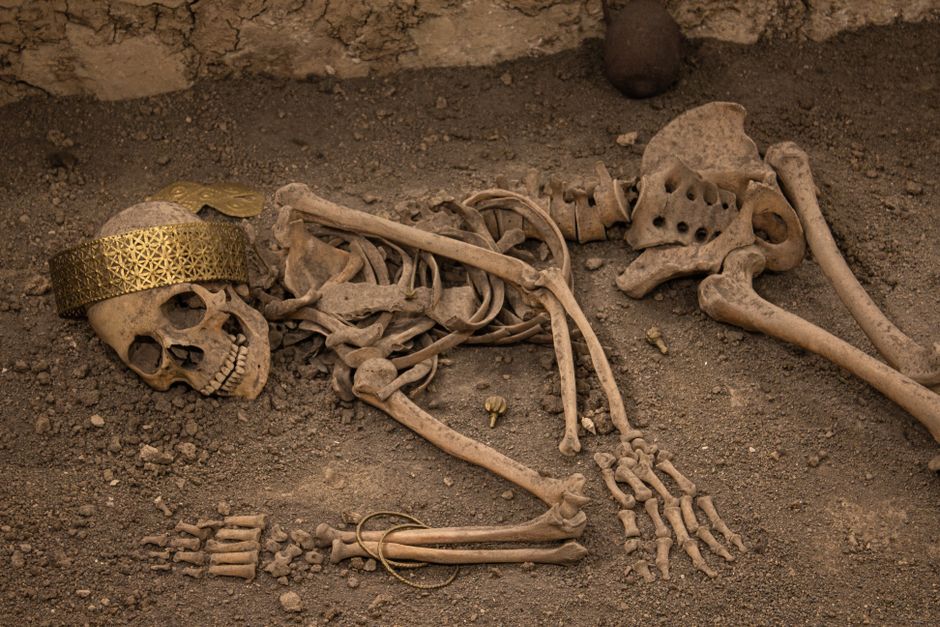
Imagine a world where the most powerful diplomat was a woman. A queen who traded letters with Pharaohs, commanded armies from a remote palace, and reshaped the political order of the ancient Near East. This isn’t fiction—this is Puduhepa, the Hittite queen who lived in the 13th century BC. Her name barely appears in textbooks, but her legacy echoes through the first ever internationally recognized peace treaty, the Treaty of Kadesh, signed between Hittites and Egypt. I stumbled upon her story years ago while wandering the ruins of Hattusa, the Hittite capital in central Turkey. A dusty replica of the treaty in the museum caught my eye. I remember asking the guide: ‘Who really made this happen?’ He smiled and pointed to a relief of a woman. That was the moment I fell into the rabbit hole.
The Making of a Queen: From High Priestess to Royal Powerhouse
Puduhepa wasn’t born into the Hittite royal family. She started as a priestess of the goddess Ishara in the city of Lawazantiya, a religious hub in what is now southern Turkey. Around 1250 BC, King Hattusili III met her during a military campaign. According to surviving tablets, Hattusili saw her as a divine omen—and took her as his wife. Her rise from priestess to queen wasn’t just ceremonial. She brought religious authority and political acumen. Within a decade, Puduhepa co-signed official decrees, managed state correspondence, and even oversaw the royal treasury.
Think about that for a moment. A woman in the Bronze Age, inside a patriarchal Hittite society, wielding actual executive power. Archaeologist Trevor Bryce in his book The Kingdom of the Hittites notes that Puduhepa’s seal appears on state documents alongside her husband’s, a rare phenomenon in ancient monarchies. She wasn’t just a queen consort—she was a co-ruler.
Letters to Pharaoh: The Diplomatic Coup
Puduhepa’s most significant contributions came through the intensive diplomatic correspondence between the Hittite and Egyptian empires. At the time, tensions were high. The Battle of Kadesh (around 1274 BC) had ended in a costly stalemate. Both sides needed peace. But it wasn’t the kings who drove the negotiations—it was Puduhepa.
We know this because dozens of clay tablets from the Hittite royal archives have survived, excavated at Hattusa. Many letters are addressed to Ramesses II and his wife, Queen Nefertari, in Puduhepa’s own words. In one tablet, she writes to Ramesses: “The king of Egypt is my brother, and I am his sister. We are together in this peace.” She used kinship language to frame the treaty as a family pact. She sent gifts—linen, lapis lazuli, horses—and carefully managed negotiations for marriage alliances between the dynasties. The result was the Treaty of Kadesh, signed around 1259 BC, a copy of which still hangs in the United Nations headquarters as a symbol of early diplomacy.
I remember visiting the Museum of Anatolian Civilizations in Ankara and seeing a reconstructed copy of that treaty. The cuneiform script is dense, like tiny wedges pressed into clay. But translating it opens a window into a woman’s mind—calculating, persuasive, relentless. One historian, Gary Beckman, called her “the most influential female diplomat of the ancient world.” Yet outside academic circles, her name remains obscure.
The Queen’s Dark Side: Religion and Control
Puduhepa wasn’t just a peacemaker. She also wielded religion with an iron fist. As chief priestess, she reformed Hittite religious practices. She wrote detailed ritual instructions, as recorded in tablets, dictating how priests should purify temples, what offerings to make, and how to interpret omens. In one text, she orders the execution of a priest who performed a ritual incorrectly. “Let him die,” she commands. This was a woman who demanded absolute order.
Her theology blended politics. She elevated the worship of the sun goddess Arrinniti as the supreme deity of the Hittite Empire, centralizing religious authority to strengthen the monarchy. This wasn’t just piety; it was statecraft. By controlling the gods, she controlled the empire.
Anecdote: During a trip to the Hattusa ruins in 2019, I stood in the so-called “Great Temple” complex. The foundations stretch across a field, and you can still see the bases of columns. I imagined her walking these grounds, receiving envoys from Egypt and Babylon, while priests trembled at her commands. That feeling—of standing where a forgotten giant once stood—is what keeps me digging into history.
The Son Who Became King
When Hattusili III died, their son Tudhaliya IV ascended the throne. Puduhepa didn’t step back. She continued to rule as Queen Mother, issuing orders and maintaining correspondence, including a famous letter to the King of Ugarit (a city in modern Syria) demanding hostages. The tablet reads: “Thus says Puduhepa, the Great Queen: … You shall send me the men I have requested, or I will send my army to collect them.” She was in her 60s by then, and still terrifying.
Her influence persisted until the collapse of the Hittite Empire around 1190 BC. After that, her name disappeared for three millennia—until modern archaeologists unearthed the Hattusa archives in the early 20th century.
Why Puduhepa Matters Today
Puduhepa challenges our assumptions about gender roles in antiquity. She proves that female leadership wasn’t a medieval invention or a modern anomaly. It existed in the Bronze Age, inside a warrior society, and it worked. The Treaty of Kadesh still holds the record as the oldest surviving peace treaty. And it was brokered largely by a woman.
In Turkey, she is gaining some recognition. A statue of Puduhepa stands in the town of Boğazkale, near the Hattusa ruins. A local school is named after her. But globally, she remains in the shadows. That’s why I wrote this article—not as a dry summary, but as a call to remember one of history’s most effective power players.
I think about her often. Not as a stone figure in a museum, but as a living person—calculating her next move, reading a clay tablet by lamplight, perhaps worrying about her son’s inexperience. She made the ancient world safer, richer, and more connected. And she did it without a smartphone or an army of diplomats. That earns my respect.
Sources and Further Reading
- Trevor Bryce, The Kingdom of the Hittites (Oxford University Press, 2005)
- Gary Beckman, Hittite Diplomatic Texts (Scholars Press, 1996)
- Ahmet Ünal, The Hittites in Anatolia (Turkish Historical Society, 1999)
- Smithsonian Magazine, “The Hittite Queen Who Bent Pharaohs to Her Will” (2018, online archive)
Did this change how you think about this topic? Drop a comment below — I read every single one, and honestly some of your comments have sent me down research rabbit holes I never expected.