
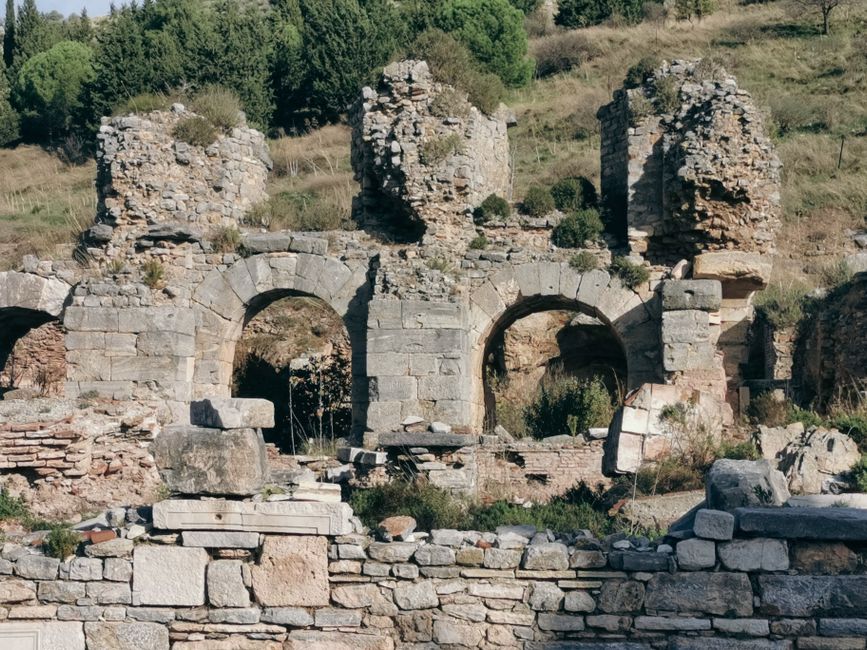
I still remember the day a shepherdess near Çivril pointed to a mound and said, “There is a city there, older than the Hittites.” She was talking about Beycesultan, a sprawling archaeological site in western Anatolia that 60 years ago proved the Hittites were not the only power in Bronze Age Anatolia. What she revealed to me that afternoon—over a glass of tea—was the story of Arzawa, a kingdom that for centuries held its own against the mighty Hittite Empire, yet today is barely a footnote in most history books.
Who Were the Arzawans?
Arzawa appears in Hittite cuneiform texts from around the 15th century BCE. The name means something like “the land of the setting sun”—fitting for a kingdom that controlled the fertile valleys and Aegean coast of what is now western Turkey. At its peak, Arzawa stretched from the shores of the Aegean to the headwaters of the Maeander River, now the Büyük Menderes. While the Hittites built their capital at Hattusa in central Anatolia, Arzawa developed its own distinct culture—and a fierce independent streak.
The Archaeological Evidence
The first major clue came from Beycesultan, excavated by British archaeologists in the 1950s. They uncovered a massive palace complex with advanced drainage systems, frescoes, and a layout that bore little resemblance to Hittite architecture. Pottery styles, burial practices, and what little writing we have (mostly in Luwian hieroglyphs) point to a sophisticated society that traded with Mycenaean Greece and Cyprus. But because Arzawans used perishable materials for many records, much of their story has to be pieced together from the Hittites—who, understandably, were biased narrators.
The Great Rivalry
Arzawa’s most famous moment came during the reign of the Hittite king Šuppiluliuma I (1344–1322 BCE). Before he rose to power, Arzawa was a thorn in the Hittite side. One of its kings, Tarhundaradu, even corresponded with the Egyptian pharaoh Amenhotep III, as revealed by the Amarna Letters. Imagine that: a letter from a Bronze Age king in what is now Denizli to a pharaoh in Egypt. Tarhundaradu called himself “Great King,” a title usually reserved for the Hittite and Egyptian rulers. The audacity! The Hittites were not amused.
Šuppiluliuma, however, was a military genius. In a series of campaigns, he crushed Arzawa, and later Hittite kings kept it under a tight leash. But the resistance didn’t die. The kingdom splintered into smaller states—Seha River Land, Mira, Hapalla—each waiting for a chance to rebel.
Connections to Turkish History
Walking through the ruins of Beycesultan today, you see layers: Bronze Age palaces, then Roman villas, then Byzantine churches, then Ottoman caravanserais. The same landscape that hosted Arzawa now grows figs and olives. In a way, the Arzawan spirit of regional independence lives on in western Turkey’s local pride. Diyarbakır and İzmir might not know it, but they share roots with a kingdom that never bowed easily to central power.
The Enduring Mystery
Why did Arzawa disappear? The Hittite texts suggest internal strife and eventual assimilation into the Hittite state, but when the Hittite Empire itself collapsed around 1180 BCE, Arzawa’s name vanished. Some scholars believe its people merged with the Phrygians or were absorbed into the Lydian kingdom that later produced King Croesus. Without their own written records, we may never know.
Yet every summer, when the sun sets over the Aegean, I think of the Arzawans. The Hittites had their chariots and laws, but the Arzawans had something else: a determination to be remembered, even if only through a shepherd’s whisper.
Sources and Further Reading
- Mellaart, James. Beycesultan: A City in Anatolia. British Institute of Archaeology at Ankara, 1962.
- Bryce, Trevor. The Kingdom of the Hittites. Oxford University Press, 2005.
- Beckman, Gary. “The Hittites and the Aegean World,” American Journal of Archaeology, Vol. 106, No. 4 (2002), pp. 595-616.
- “Amarna Letter EA 32: Tarhundaradu of Arzawa to Pharaoh,” British Museum.
Did this change how you think about this topic? Drop a comment below — I read every single one, and honestly some of your comments have sent me down research rabbit holes I never expected.