
Ancient empire · decipherment evidence
The Behistun Inscription: How a Cliff Text Opened Cuneiform
The Behistun Inscription is often introduced as the “Rosetta Stone of cuneiform.” That comparison is useful, but only if it does not flatten the monument into a simple decoding anecdote. Behistun is also royal propaganda, carved geography, a multilingual archive, and a reminder that decipherment depends on copies, risks, and arguments.

What the cliff actually preserves
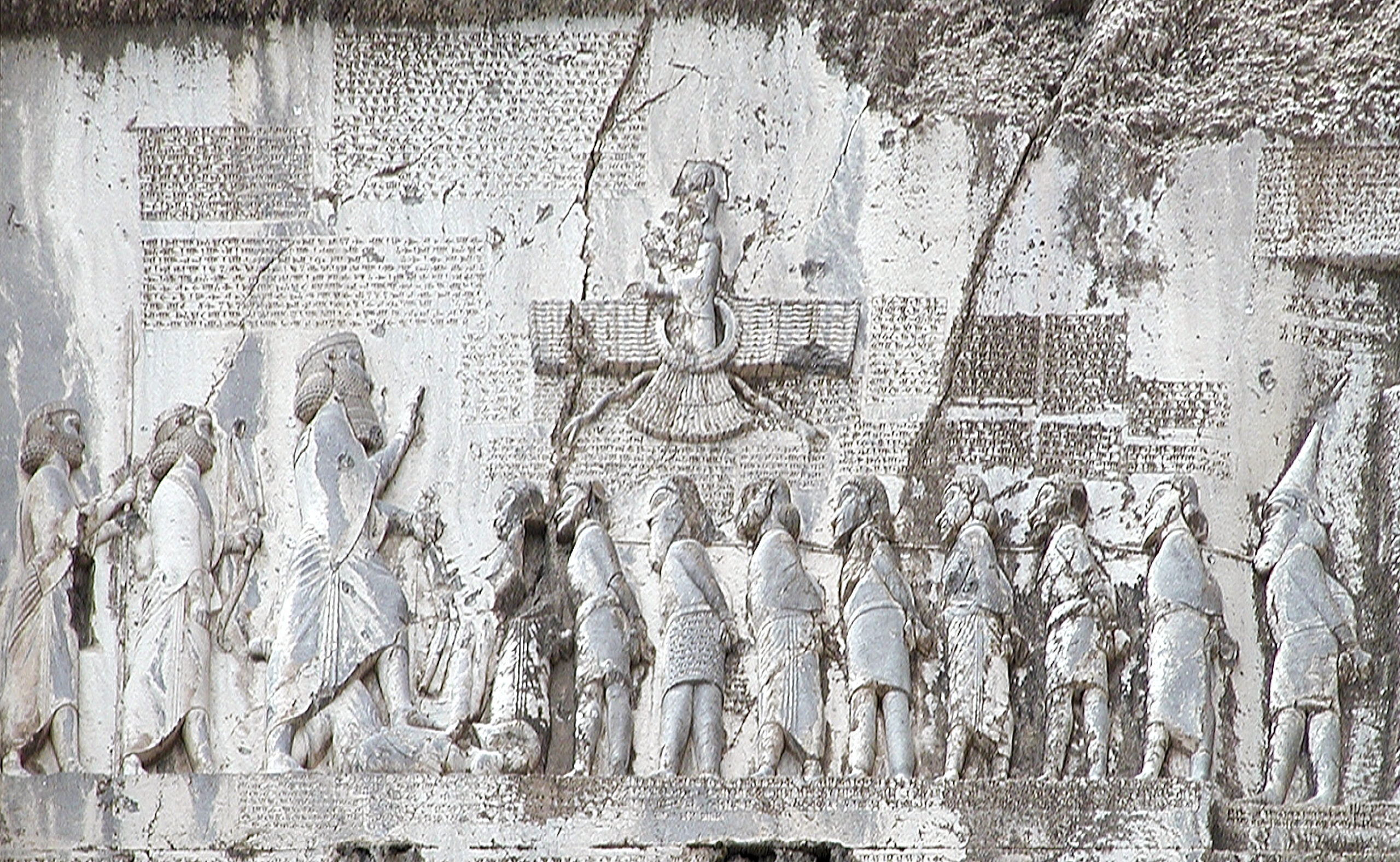
Behistun, also written Bisotun, stands in western Iran on a route that connected the Iranian plateau with Mesopotamia. UNESCO describes the principal Achaemenid monument as a relief and cuneiform inscription ordered by Darius I after his rise to power in 521 BCE. The scene shows Darius with a bow, a row of defeated figures, and a fallen opponent under the king’s foot. Around and below the relief are roughly 1,200 lines of text.
The inscription matters because the same royal narrative appears in three cuneiform languages: Old Persian, Elamite, and Babylonian. That does not make it a neutral transcript of events. It is Darius’s case for legitimacy after a violent succession crisis. But the multilingual form gave later scholars a rare comparative key. A reader should hold both facts together: Behistun is a political monument and a technical doorway into scripts that had become unreadable.
Why “Rosetta Stone of cuneiform” is only a starting point
The Rosetta comparison helps because both monuments put related text in more than one writing system and both became central to decipherment. The limit is just as important. The Rosetta Stone was a movable decree found in Egypt; Behistun is high on a cliff, exposed to weather, damage, and the practical difficulty of copying signs accurately. Nineteenth-century scholars did not simply glance at the monument and read the ancient Near East. They had to produce copies, compare sign patterns, test royal names, and argue over readings.
Behistun contains Old Persian, Elamite, and Babylonian versions associated with Darius I’s account of rebellion and restoration of rule.
The narrative is royal self-presentation. It can be historical evidence without being an unbiased report.
The value is not just “translation happened”; it is that repeated names, titles, and parallel passages created a testable route into cuneiform.
The Rawlinson story, minus the hero myth
Henry Rawlinson’s work at Behistun is famous because access to the inscription required dangerous copying from the rock face, and because his publications helped make Old Persian readings available for wider comparison. Encyclopaedia Iranica’s research history notes Rawlinson’s studies in the 1830s and 1840s, and the way his copies helped subsequent work on Elamite and Babylonian. That is a major achievement, but the safest history does not turn decipherment into one person’s solitary triumph.
Behistun became useful because copies circulated, previous and parallel scholarship existed, and philologists could compare languages, scripts, names, and versions. The stronger story is collaborative and cumulative: a cliff inscription, copied at physical risk, became a shared dataset. Once Old Persian was understood well enough, it provided leverage for reading other cuneiform traditions and for building Assyriology as a discipline.
What Behistun can and cannot prove
Behistun can prove that Darius’s court wanted a particular version of legitimacy displayed in a highly visible sacred and political landscape. It can document names, places, rebels, claims of divine favor, and the administrative confidence of an empire that used multiple languages for power. It can show the technical maturity of Achaemenid monumental writing and its relationship to older Near Eastern practices of royal display.
It cannot, by itself, prove every detail of Darius’s account exactly as stated. The inscription was commissioned by the victor. Claims about impostors, rebels, punishment, and divine approval need to be compared with other evidence where possible. A people-first reading should therefore resist two easy mistakes: treating the text as pure propaganda with no evidentiary value, or treating it as a courtroom transcript from 521 BCE.
Sources and image rights
- UNESCO World Heritage Centre: Bisotun
- UNESCO nomination file for Bisotun
- Encyclopaedia Iranica: Bisotun III, Darius’s inscriptions
- British Museum / King and Thompson, 1907 collation at Internet Archive
- Wikimedia Commons public-domain image record
