
For several centuries before 1200 BCE, the eastern Mediterranean was one of the most connected regions on earth. Palaces in Mycenaean Greece traded with ports in Cyprus, scribes in Ugarit wrote letters in multiple languages, Egyptian rulers watched the coast, and Hittite kings in Anatolia negotiated with vassals, rivals, and merchants. Bronze, the military and prestige metal of the age, depended on tin and copper moving across long routes. Grain, timber, textiles, horses, diplomats, royal brides, and skilled workers moved with it.
Then, within a few generations, much of this palace-centered world fractured. Cities burned or were abandoned. The Hittite imperial capital at Hattusa was deserted. Ugarit disappeared from the written record. Mycenaean palace administration collapsed. Egypt survived, but it emerged poorer and more defensive. The event is often called the Bronze Age Collapse, but that phrase can be misleading. It was not a single night of destruction, and it was not caused by one mysterious invader. It was a regional systems failure: a chain reaction in which climate stress, political fragility, migration, disrupted trade, warfare, and palace overdependence turned ordinary crises into a historical break.
What Was the Bronze Age Collapse?
The Bronze Age Collapse refers to the breakdown of several Late Bronze Age states and palace economies around the eastern Mediterranean and Near East, roughly between 1250 and 1150 BCE. The affected world stretched from mainland Greece and Crete to western Anatolia, Cyprus, Syria, the Levant, and Egypt. Not every society collapsed in the same way. Some settlements were destroyed by fire; others shrank, changed political masters, or lost the administrative systems that had once produced written records.
The term “collapse” describes the disappearance of a particular political and economic order. In many areas, people did not vanish. Farmers still farmed, local communities adapted, and new cultures eventually emerged. But the palace networks that had organized taxation, craft production, international diplomacy, and military power were severely damaged. When written bureaucracy vanished, historians see a darker record not because life stopped, but because the old institutions that left archives stopped working.
A World Built on Interdependence
The Late Bronze Age was sophisticated because it was connected. Egyptian pharaohs exchanged letters and gifts with Hittite, Babylonian, Assyrian, and Mitanni rulers. Merchant ships carried copper from Cyprus, luxury goods from the Levant, and finished objects across the sea. Palaces collected agricultural surplus, redistributed rations, commissioned workshops, and controlled high-value trade. This created impressive wealth, but it also created dependence.
Bronze itself shows the vulnerability. Copper was relatively accessible in places such as Cyprus, but tin was rarer and often came from distant sources. If trade routes became unsafe, if a port city was destroyed, or if a kingdom could no longer guarantee caravans, weapon and tool production suffered. Palace elites needed steady flows of material to reward followers and maintain armies. A shock to trade could therefore become a shock to political legitimacy.
This interdependence resembles a tightly coupled machine. When all parts function, the system looks strong. When several parts fail at once, there is little slack. A drought can reduce harvests; poor harvests can increase tax pressure; tax pressure can cause unrest; unrest can weaken armies; weakened armies can invite raids; raids can damage trade; trade damage can deprive palaces of the resources they need to recover. The Bronze Age Collapse is best understood through this kind of cascading pressure.
Climate Stress and Food Insecurity
Environmental evidence suggests that parts of the eastern Mediterranean experienced periods of drought and climatic instability around the time of the collapse. Climate was not a magic switch that destroyed kingdoms by itself, but harvest failure could make every other problem worse. Palace systems depended on storing and redistributing grain. If bad years followed one another, rulers had fewer resources to feed workers, soldiers, and dependent populations.
Food insecurity also encouraged movement. Groups under pressure might migrate, raid, hire themselves as mercenaries, or seek land elsewhere. In a region of fortified cities and competing states, large movements of people could be interpreted as invasion, refugee crisis, or political opportunity depending on the observer. Egyptian sources describe hostile coalitions and displaced groups moving by land and sea. Those records are valuable, but they are also royal propaganda designed to glorify the pharaoh. They should be read as evidence of turbulence, not as a complete explanation.
The “Sea Peoples” and the Problem of Simple Answers
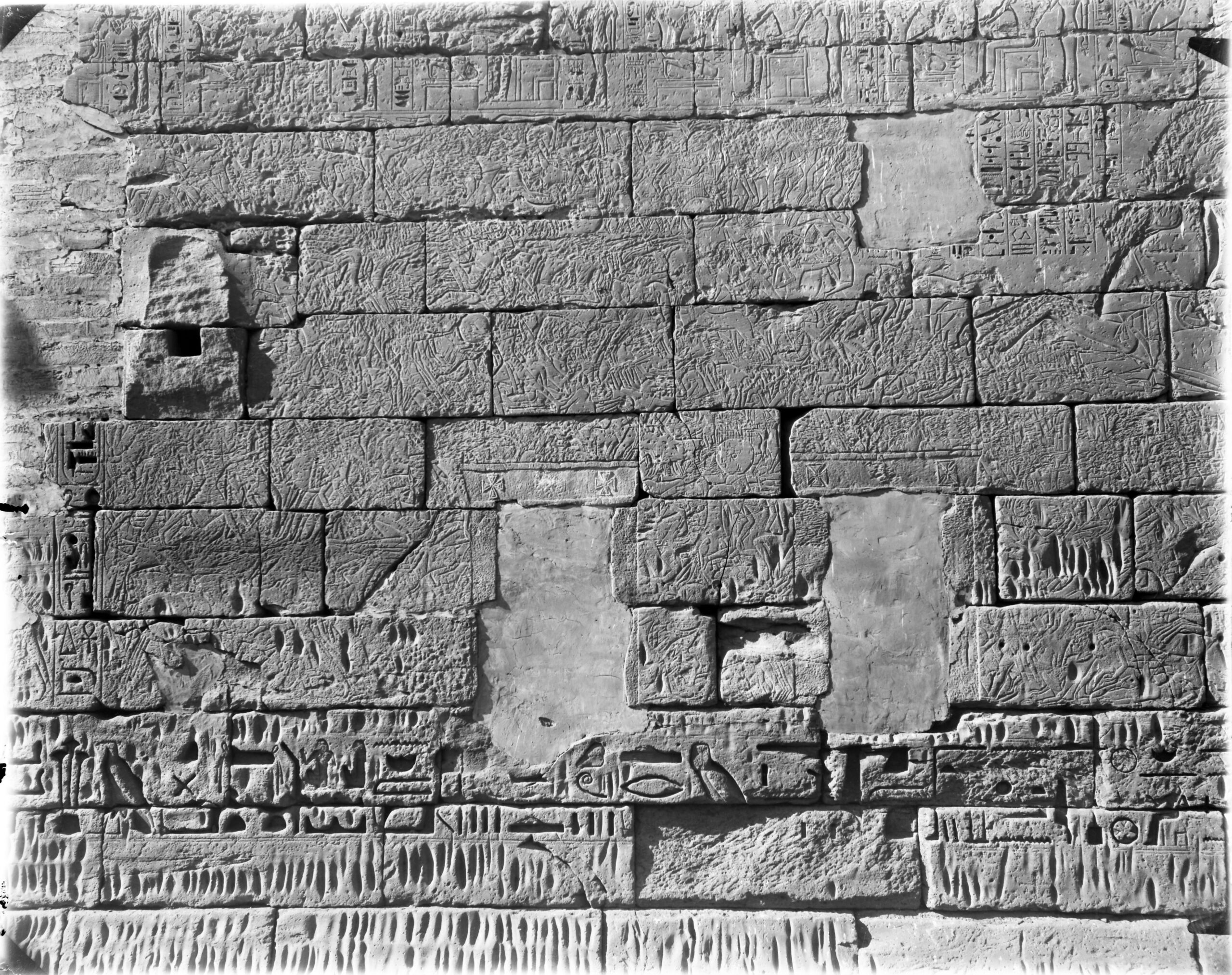
No subject in the Bronze Age Collapse has attracted more attention than the so-called Sea Peoples. Egyptian inscriptions from the reigns of Merneptah and Ramesses III describe groups with names such as the Sherden, Shekelesh, Peleset, Tjeker, and others. Ramesses III’s temple at Medinet Habu presents dramatic scenes of battles against enemies arriving with families, carts, and ships. For a long time, popular histories treated the Sea Peoples as the main cause of the collapse.
That explanation is too simple. The Egyptian texts do not identify one unified nation, and they do not explain why these groups were moving. Some may have been migrants, raiders, displaced warriors, former mercenaries, or communities uprooted by the same instability that damaged the palace world. They were part of the crisis, but they were also products of it. To blame everything on mysterious invaders is to miss the deeper fragility of the system they entered.
The more careful question is not “Who destroyed the Bronze Age?” but “Why were so many societies unable to absorb shocks that earlier generations had survived?” The answer lies in a combination of pressures: overcentralized palaces, vulnerable trade, military competition, social unrest, and environmental strain.
Palaces, Fire, and the Loss of Administration
Archaeology shows destruction layers at several important sites, but fire does not always tell us who lit it. A city might burn during war, rebellion, accident, or abandonment. What matters is that many centers did not recover their old administrative role afterward. In Mycenaean Greece, Linear B tablets preserve glimpses of palace bureaucracy shortly before the end. They record allocations, personnel, animals, and military preparations. After the palaces fell, that writing system disappeared for centuries.
Ugarit, on the Syrian coast, provides another vivid example. Its archives show a literate, cosmopolitan city connected to Hittite, Egyptian, Cypriot, and Levantine networks. Letters from its final years suggest anxiety over enemy ships and calls for help. Once Ugarit was destroyed, its role as a diplomatic and commercial hub ended. The loss was not only local; it removed a node from the wider network.
Egypt Survived, but the World Around It Changed
Egypt is sometimes presented as the victor that resisted the collapse. Ramesses III did repel attacks and maintained royal authority, but survival came at a cost. New Kingdom Egypt after the crisis was weaker than the empire that had dominated earlier centuries. Its influence in the Levant contracted, internal economic strains grew, and later rulers struggled to maintain the same level of power.
This matters because it shows that “collapse” can include partial survival. A state may keep its name, temples, and kings while losing wealth, reach, and confidence. Egypt’s experience reminds us that historical crises do not produce identical outcomes. Geography, state capacity, food supplies, and leadership all shaped how each society responded.
What Came After the Collapse?
The centuries after 1200 BCE were not simply an age of darkness. They were a period of reorganization. Smaller kingdoms, city-states, and new identities took shape. In the Levant, groups associated with the Philistines, Israelites, Phoenicians, Arameans, and others appear in the record. Phoenician maritime networks later helped reconnect the Mediterranean in new ways. In Greece, the end of Mycenaean palaces eventually gave way to the communities that would develop into the Archaic and Classical Greek world.
Iron technology also became more important over time. Iron did not instantly replace bronze because it was superior in every respect; early iron could be difficult to produce consistently. But iron ore was more widely available than tin, and the changing political economy made local production increasingly attractive. The post-collapse world was less palace-centered and, in some regions, more flexible.
Why It Still Matters
The Bronze Age Collapse still matters because it warns against confusing complexity with invincibility. The Late Bronze Age powers were not primitive societies waiting to fail. They had diplomacy, archives, craft specialization, international trade, and military organization. Their weakness came partly from the same networks that made them successful. When climate pressure, conflict, migration, and economic disruption converged, the system transmitted shocks instead of containing them.
Modern comparisons should be made carefully. The ancient world was not the globalized twenty-first century. Yet the historical pattern is useful: resilient societies need redundancy, adaptable institutions, credible leadership, food security, and the ability to protect trade without depending on a single fragile arrangement. The Bronze Age Collapse is not a prophecy, but it is a powerful case study in how connected systems can fail.
A Better Way to Understand the Collapse
The most responsible interpretation is multi-causal. Drought alone is insufficient. Invaders alone are insufficient. Earthquakes, rebellions, and trade disruption each explain parts of the evidence, but none explains the whole region. The collapse happened because several pressures interacted. Once major nodes failed, the costs spread outward.
That is why the Bronze Age Collapse remains one of global history’s most important turning points. It ended one international order and opened the path to another. The world of Hittite emperors, Mycenaean palace scribes, and Ugaritic diplomats disappeared. In its place came new peoples, new political forms, new trade routes, and eventually the foundations of the Iron Age Mediterranean. The story is not simply about destruction. It is about the painful transformation of an interconnected world.
Suggested Internal Reading on HistoryZ
- How the Silk Road Changed World History — another example of how trade networks shaped civilizations far beyond their starting points.