
Introduction
The year was 1453, a time when the world stood at the brink of monumental change. The vibrant city of Constantinople, known as the jewel of the Byzantine Empire, was nestled precariously between the East and the West. For centuries, it had been a bastion of Christianity, a flourishing center of trade, culture, and learning. It was also the target of relentless attacks from the rising Ottoman Empire, which sought to expand its territory and influence. As the spring of that fateful year dawned, the tension in the air was palpable; would this month witness the end of an era? The siege of Constantinople, waged by the ambitious Sultan Mehmed II, unfolded like a grand historical drama, with each character—both fateful and noble—playing a crucial part in this compelling narrative. This article takes you on a journey through history’s corridors, diving deep into the multifaceted aspects of the fall of Constantinople, analyzing its implications that resonate through time to the modern world.
Historical Background and Context
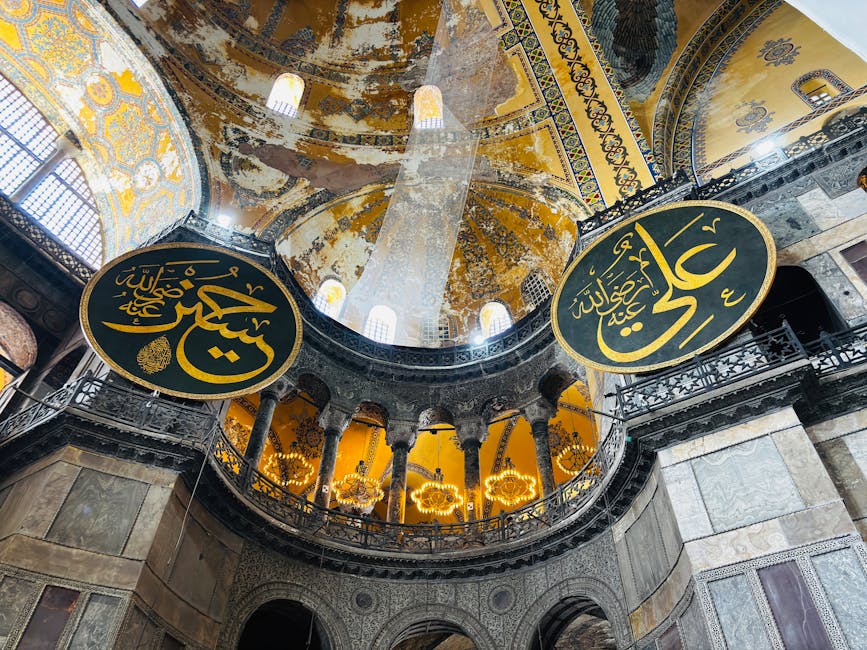
To understand the significance of the fall of Constantinople, one must first appreciate the historical context of the city itself. Founded in 330 AD by the Roman Emperor Constantine the Great, Byzantium was transformed into Constantinople, the new capital of the Roman Empire. Over the following centuries, it grew to become the heart of Byzantine culture, renowned for its architectural marvels such as the Hagia Sophia and the vast Byzantine church network, and the intricate systems of trade and commerce that thrived within its walls.
By the 11th century, however, the Byzantine Empire began to face a host of challenges. The Great Schism of 1054 divided Christianity into the Eastern Orthodox and Roman Catholic branches, weakening the Empire’s religious cohesion. The emergence of powerful nations and the incursions of various nomadic groups, particularly the Seljuk Turks, further complicated matters. These events set the stage for the Byzantine Empire’s gradual decline, which continued throughout the 13th century, culminating in the Fourth Crusade (1202-1204). Instead of aiding the Byzantines against the Muslim invaders, Western Crusaders turned on their fellow Christians, looting Constantinople in 1204, and leading to the establishment of the Latin Empire.
Though the Byzantines managed to reclaim the city in 1261, the damage was done. Thereafter, the Empire continued to shrink, losing vast territories to the Ottomans, who emerged as a powerful force in the early 14th century. Under the reign of Osman I, the empire founded a new Islamic state that expanded rapidly. By the time of Sultan Mehmed II, known as Mehmed the Conqueror, the Ottomans had encroached upon the regions surrounding Constantinople, encircling the city like a coiled serpent ready to strike.
Strategically located for trade and military expeditions, Constantinople’s fall would not only reshape the geopolitical landscape of Europe and the Middle East, but would also act as a defining moment in the clash between Islam and Christianity. The threats posed by the Ottoman forces loomed ever larger, and by 1453, it became clear that the final countdown had begun for this ancient city.
Key Events, Battles, or Developments
Prelude to the Siege
By early 1453, Sultan Mehmed II had amassed a formidable army, reportedly numbering around 80,000 soldiers, alongside advanced artillery technology—such as giant cannons designed to breach the formidable walls of Constantinople. The Byzantine Empire faced a stark reality; the defense was coordinated under the leadership of Emperor Constantine XI Palaiologos, who recognized that time was against him. The walls of Constantinople, built by Emperor Theodosius II in the 5th century, were its last defense, and they stood as a formidable barrier against the Ottoman onslaught.
The Beginning of the Siege: April 6, 1453
The siege officially began on April 6, 1453, when Mehmed ordered his troops to surround the city, cutting it off from reinforcements. During this time, the defenders struggled valiantly to rally the populace for the siege. Despite their determination, the odds were increasingly against them as reports emerged of the empire’s dwindling resources, with severe food shortages looming.
The Ottoman Strategy: Heavy Artillery and Psychological Warfare
Mehmed II’s innovative tactics proved crucial for the siege’s success. Understanding the importance of psychological warfare, Mehmed arranged for his cannons to bombard the ancient walls of the city relentlessly, causing tremors of fear among its inhabitants. The most famous of his cannons, the Great Bombard, was capable of launching stones weighing over a ton, which battered the defenses starting on April 22, 1453. The walls that had withstood centuries of assaults began to show signs of significant wear.
The Final Assault: May 29, 1453
On May 29, 1453, the climax of the siege occurred. After weeks of relentless bombardment and sporadic skirmishes, Mehmed ordered a full-frontal assault on the city. Despite fierce resistance from the Byzantine forces, the Ottomans poured into Constantinople using determined waves to breach the defenses. The final push came through the breaches made in the walls, and after hours of intense fighting, the Ottomans overwhelmed the Byzantine defenders.
Aftermath and Immediate Consequences
The fall of Constantinople marked a significant transition, characterized by the end of the Byzantine Empire. Constantine XI fought valiantly during the last moments, reportedly donning his armor and leading a final charge only to disappear in the chaos of battle. Reports circulated that he died heroically in battle, symbolizing the ultimate sacrifice of the Byzantine legacy.
Following the conquest, Mehmed II declared the city to be the new capital of the Ottoman Empire, meticulously planning its reconstruction and repopulation, which included the resettlement of Christian and Jewish communities. The once spectacular city was transformed into a thriving Islamic metropolis, known then as Istanbul. The last remnants of a bygone civilization faded into the annals of history as the Ottomans took charge.
Important Figures and Their Roles
Constantine XI Palaiologos
As the last Byzantine Emperor, Constantine XI is a figure synonymous with bravery and sacrifice. He assumed the throne during the darkest days of the Empire, raising morale amidst despair. Known for his ability to inspire loyalty, he commanded his troops with valor and led many successful skirmishes despite overwhelming odds. His demise marked the tragic end of a dynasty spanning over a millennium, and his legacy persists through folklore and historical accounts as a symbol of resistance.
Mehmed II
Mehmed II, the Sultan of the Ottoman Empire, demonstrated military genius and visionary leadership. Known as ‘the Conqueror’, Mehmed’s strategies, including the use of massive cannons and innovative military tactics, allowed him to achieve a historic milestone. His ambition extended beyond conquest; he sought to unify diverse cultures under Islamic rule. The fall of Constantinople symbolized his successful ambitions, and his rule redefined the civilization of Istanbul.
Giustiniani Longo
The Genoese commander Giustiniani played a pivotal role in defending Constantinople by leading a key contingent of elite troops known as the Genoese mercenaries. His strategic acumen was crucial in holding the northern walls against the initial Ottoman onslaught. However, despite his valor, he was severely wounded during the onslaught, which significantly weakened the morale of the Byzantine defenders.
Causes and Consequences
Causes of the Fall
The fall of Constantinople can be traced to several interlinked causes: the decline of the Byzantine Empire itself, characterized by territorial losses, weakened military forces, and persistent internal strife among the nobility. The rise of the Ottoman Empire heralded a new era of expansionism, driven by advancements in military technology and ruthless ambition. Additionally, the decreasing support from Western Christian powers—stemming from political divisions within the Catholic Church—left the Byzantines largely isolated.
Consequences of the Fall
The direct consequences of the fall of Constantinople were profound. The Byzantine Empire dissolved, and the Ottoman Empire emerged as a dominant power in both Europe and Asia. This marked the beginning of an era characterized by Islamic conquests and expansion, reshaping the religious and political landscape. The event also intensified the religious divide between Islam and Christianity, leading to centuries of conflict and rivalry. Furthermore, the fall of Constantinople played a crucial role in the migration of scholars and the preservation of ancient Greek and Roman texts, which laid the foundations for the European Renaissance.
Global Impact and Legacy
The fall of Constantinople did not just signal the end of an empire; it reverberated beyond its walls to have a global impact. It marked the decline of Christian dominance in the Eastern Mediterranean and resulted in significant changes in trade routes. As the Ottomans took control, they redirected trade through their new capital, encouraging a shift in commerce from the traditional routes passing through Venice and Genoa.
This change would also contribute to the Age of Exploration, prompting European nations to seek new trade routes to Asia. As a direct consequence, expeditions led by figures such as Christopher Columbus and Vasco da Gama were driven by the desire to circumvent the Ottoman intermediaries and establish new trade links. The discovery of the New World by Columbus in 1492 can arguably be traced back to these shifts in trade dynamics that were set in motion by the fall of Constantinople.
Fascinating Little-Known Facts
1. The fall of Constantinople experienced a significant ‘cultural exchange.’ Following the conquest, many Greek scholars fled to Western Europe, bringing manuscripts and knowledge of classical antiquity that fueled the Renaissance.
2. Despite its reputation, the Ottoman Empire allowed religious tolerance. Following the conquest, Mehmed II formally recognized the rights of Christians and Jews within his empire, establishing a system that later contributed to the cohabitation of diverse faiths.
3. The Ottomans transformed the Hagia Sophia, a monumental church, into a mosque, symbolizing a fundamental shift in religious practices and cultural identity.
Conclusion with Modern Relevance
The fall of Constantinople symbolizes a pivotal moment in history, marking the end of the Byzantine Empire and the establishment of the Ottoman Empire. Its impacts are felt even in contemporary discussions around identity, culture, and geopolitics. Today, as we witness rising tensions between Islam and the West, the echoes of this historical confrontation remind us of the interconnected threads of our shared past. Understanding these historical dynamics is essential as they frame modern identity conflicts and shape international relations in a globalized world. The lessons learned extend beyond mere military tactics; they remind us of the fragility of civilizations and the importance of fostering dialogue among diverse cultures to avert the cycles of conflict that plague our societies.